mon-fri 9-13 / 14.30-18.30
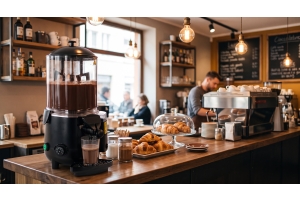
There professional chocolate maker This is equipment designed for the preparation and serving of hot chocolate in bars, cafes, hotels, and other foodservice establishments. The choice of model should be based on the operational needs of the establishment, as capacity, heating system, dispensing method, and frequency of use can impact the organization of the service. A machine designed for a small number of drinks throughout the day has different needs than one used during peak periods.
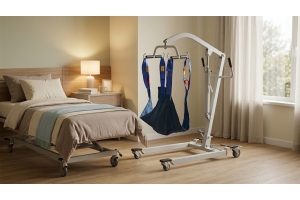
There maintenance of the lifts for the disabled This is a necessary activity to maintain the functionality of equipment used to transfer people with reduced mobility. In healthcare facilities, residential care homes, and home care settings, these devices are subject to frequent handling, affecting their mechanical and electrical components and support systems. Scheduling regular checks allows you to identify any anomalies before they compromise the safety of the transfer or cause a downtime. Checks must be performed according to the manufacturer's instructions, distinguishing between routine inspections and specialized technical interventions.
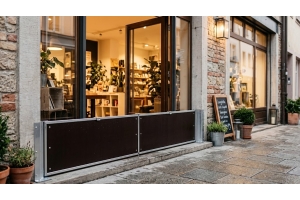
The arrival of rainier periods leads homes, shops, warehouses and street-level businesses to check how protected their most exposed access points are. Flood barriers can create temporary protection in front of doors, garages and vulnerable openings, but they must be chosen and installed before the emergency begins. Correct measurements, seals in good condition and speed of installation affect the functioning of the system. Seasonal preparation is above all useful to avoid improvised interventions when the water has already arrived.
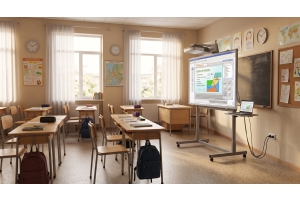
A multimedia station shared between multiple classrooms must be designed as a system, not as a simple sum of devices placed on a trolley. Notebook, video projector, any monitor or interactive whiteboard, accessories and connections must be arranged in a manner consistent with the way the institution intends to use the equipment. The trolleys for interactive whiteboards and video projectors for school respond precisely to the need to organize the equipment in a mobile structure, reducing the need to set up a complete station in each room.
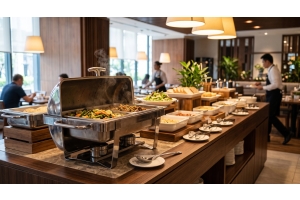
In a hotel breakfast service, an abundant buffet does not necessarily equate to efficient management. Preparing and displaying large quantities right from the start may seem like the simplest way to ensure availability for guests, but it makes it more difficult to adapt the offering to the actual progress of the service. The issue of hotel food warmers and waste must therefore be addressed within a broader strategy, in which equipment, quantities prepared, replenishments, and guest flows are coordinated. The food warmer does not eliminate surpluses on its own, but it can support a more rationally organized buffet.
A professional electric food warmer must be chosen considering much more than just the declared power. Capacity, temperature regulation, tank size and service duration in fact affect the way in which the equipment is used in restaurants, hotels, buffets, catering and canteens. A model suitable for a small self-service station may be impractical in a high-rotation line. The choice should therefore start from the actual operational flow of the structure.
Understanding the road manhole cover classes is essential to selecting a device consistent with the location where it will be installed. Acronyms such as B125, C250, D400 and F900 do not simply describe more or less robust manhole covers, but identify different performance levels linked by the regulations to the place of use. For this reason, it is not enough to know that a model is "drive-over". The evaluation must start from the surface area involved, the expected traffic and the product's technical documentation.
On a rainy day, the entrance to a store or shopping center can quickly become a critical point to manage. Dozens or hundreds of people enter carrying wet umbrellas, and water can be dragged into internal areas, increasing the need for cleaning interventions and making it more complex to manage traffic flows. umbrella bag dispensers for shops allow you to intervene directly at the entrance, providing customers with a simple solution to contain umbrella dripping while they are in the shopping spaces.
THE patio portable heaters They represent a solution worth considering when a business wants to make its outdoor area more usable during periods of lower temperatures. However, the choice shouldn't be made solely based on the power of the appliance or the size of the outdoor space. Tables, staff routes, entrances, the layout of the outdoor area, and frequency of use all contribute to determining which solution best fits the layout of the business. Heating must fit into a space already designated for both service and customer permanence.
The relationship between electric hand dryers and hygiene is often simplified into opposing judgments, but scientific research provides a more complex picture. Complete hand drying is an important part of hygiene, because residual moisture facilitates the transfer of microorganisms to other surfaces. At the same time, several studies have analyzed the dispersion of bacteria and aerosols produced by air systems, obtaining results that are not always consistent. To correctly evaluate an electric hand dryer, it is therefore necessary to distinguish the theoretical risk, the characteristics of the machine and the real conditions of the bathroom in which it is installed.
 English
  Italian
 French
 German
 Spanish