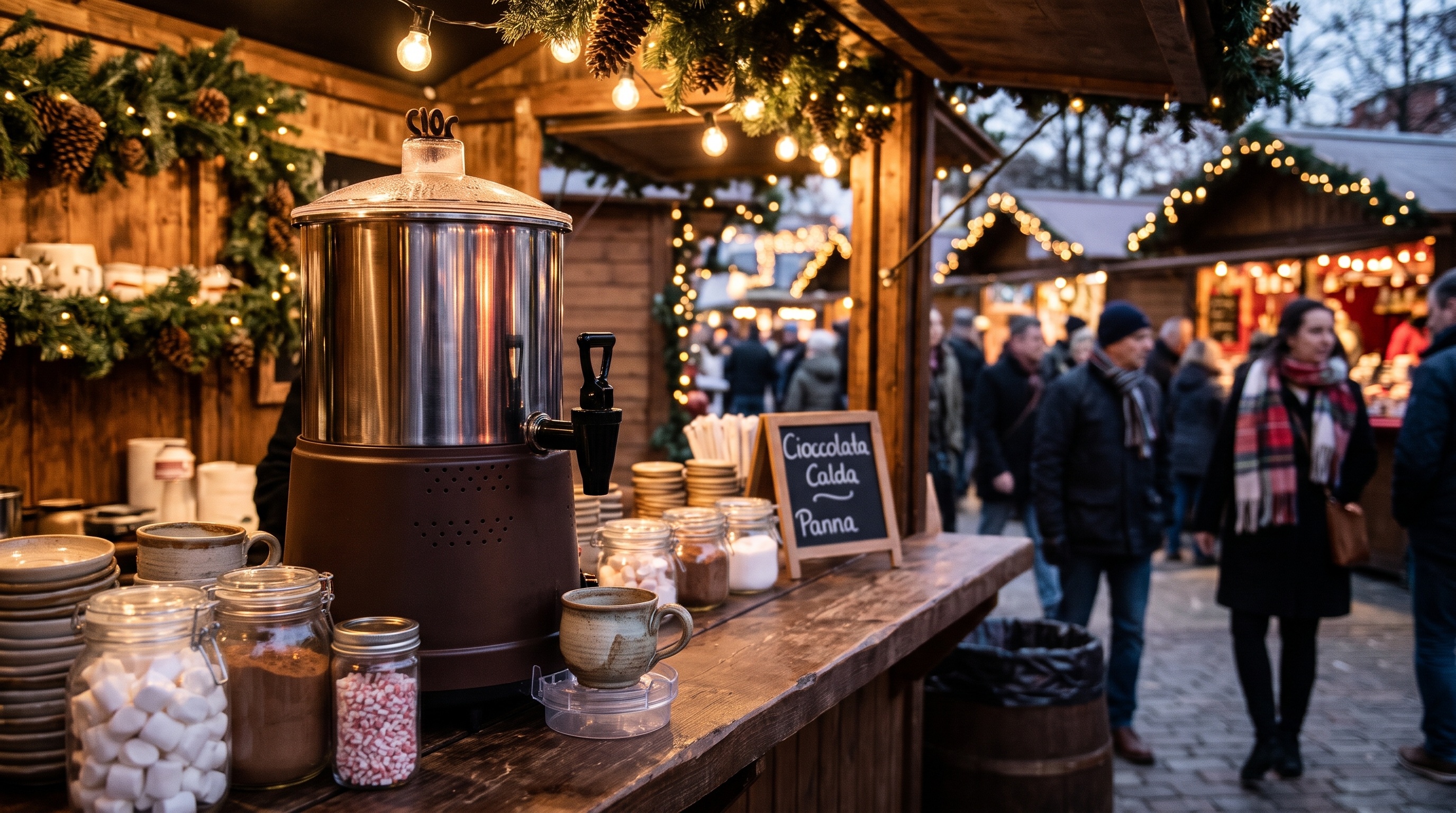
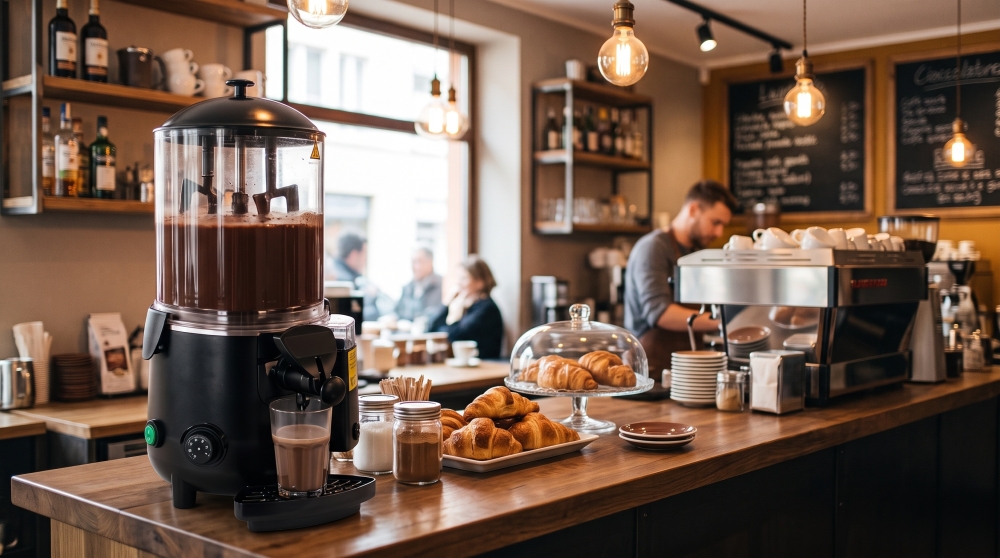
At Christmas markets, hot chocolate is one of the drinks that best fits the festive atmosphere. For exhibitors, food service operators, and temporary stand managers, however, preparing and serving it to numerous customers requires precise organization. professional chocolate maker It allows you to manage the preparation and maintenance of the drink according to the manufacturer's specifications, but the model must be chosen based on the number of people and the serving method. Container capacity, heating system, mixing system, and ease of cleaning are features to consider before purchasing.
One of the most common concerns is the quantity of product to prepare. A 3-liter chocolate maker may be sufficient for a stand with occasional sales, while 5- or 10-liter capacities allow for larger volumes between refills. However, the size of the tank alone doesn't indicate how many people can be served throughout the day.To choose one chocolate maker for Christmas markets It is necessary to connect capacity, portion volume, expected demand and preparation times, always distinguishing theoretical calculations from the quantities that can actually be distributed.
Why choose a professional chocolate maker for Christmas markets?
Selling hot chocolate at a Christmas stand presents different requirements than preparing a few cups at home. During an event, there may be periods of low attendance alternating with times when numerous customers request the drink almost simultaneously. professional chocolate maker Designed for administration, it allows for preparation and dispensing using dedicated equipment. Actual performance, however, depends on the model's features, the ingredients used, and the operating conditions specified by the manufacturer.
The main advantage of a suitable machine is the ability to structure the service around repeatable procedures. Staff can define the quantities to be prepared, filling methods, and the steps required to serve each glass. This doesn't mean every chocolate maker can operate without interruption or handle every recipe. Compatibility with prolonged use must be verified in the technical specifications, also paying attention to the environmental conditions and the availability of electrical power at the stand.
What features to evaluate before purchasing
 The nominal capacity represents one of the first comparison criteria, but it must be evaluated together with the other characteristics of the machine. It is necessary to check the actually usable capacity, the declared electrical power, the heating modes, and the presence of a mixing system. The type of tap, the container configuration, and the accessibility of components can also affect convenience during serving. These specifications should be taken from the documentation for each model, avoiding assuming they are common to all professional chocolate makers.
For a Christmas stand, the operations that precede and follow service are also important. A machine that's easy to fill, use, and clean can be more manageable when space is limited and staff must perform multiple tasks simultaneously. It's also important to check the installation conditions, the stability of the supporting surface, and any ambient temperature limits set by the manufacturer. The right chocolate maker is not necessarily the one with the largest reservoir, but one whose performance corresponds to the actual needs of the event.
3, 5, and 10-liter chocolate makers: differences and intended uses
A 3-liter professional chocolate maker It can be considered for locations with low demand or for businesses where hot chocolate is a complementary offering. The small volume limits the quantity available before the next refill, but it can be consistent with preparation organized in small batches. 5-liter professional chocolate maker It offers a higher nominal capacity and can be a mid-range solution for stands that expect more frequent sales. In both cases, the choice depends on estimated demand and the ability to quickly prepare new quantities.
A 10-liter professional chocolate maker In theory, it allows for a larger quantity of beverage between refills. This feature can be useful during high-traffic events, but requires careful consideration of the size of the appliance, its weight when filling, and the time required to reach serving temperature. A larger capacity does not automatically mean faster preparation or proportionally more economical energy consumption. Therefore, before choosing, it's important to compare the declared performance and the number of servings you plan to dispense during busy periods.
How many servings of hot chocolate do you get with 3, 5 and 10 liters?
To calculate the theoretical number of servings, simply convert the capacity into milliliters and divide it by the expected volume for each glass. Considering, as purely indicative example, 150 ml or 200 ml portions, a 3-liter chocolate pot corresponds to 3,000 ml and allows you to calculate 20 or 15 theoretical portions, respectively. With 5 liters, equivalent to 5,000 ml, the result is 33 complete 150 ml portions, with 50 ml remaining, or 25 portions of 200 ml. With 10 liters, equal to 10,000 ml, you obtain 66 complete 150 ml portions, with 100 ml remaining, or 50 portions of 200 ml.
These numbers describe only one theoretical volumetric yield and should not be interpreted as a guarantee of actual saleable portions. The actual dispensed volume may be lower due to the minimum operating level, residues in the container, product characteristics, and service operations. Furthermore, the nominal capacity of the machine does not necessarily coincide with the volume usable for each preparation. When planning purchases, it is therefore advisable to apply a prudential margin, defined on the basis of the equipment's characteristics and operating experience.
How many liters of hot chocolate do you need for a Christmas market?
Your hot chocolate needs depend on the number of servings you plan to sell and the volume you choose for each serving. To get a rough estimate, you can multiply the number of glasses you plan to sell by the amount of beverage each contains. For example, 80 150ml portions theoretically require 12 litres of hot chocolate, while 100 200 ml portions correspond to 20 liters. These are sample calculations, not sales forecasts valid for any market. A margin must be added for any residues and dosage differences.
To estimate sales, it's helpful to consider the event's duration, booth location, audience type, weather conditions, and the presence of other food and beverage outlets. Not all visitors purchase a beverage, and the proportion of those interested can vary significantly. In the absence of historical data, it's best to develop multiple demand scenarios rather than rely on a single forecast. The total quantity to be prepared during the day does not necessarily coincide with the capacity of the chocolate maker., because the tank can be refilled several times according to the methods established by the manufacturer and by food procedures.
To choose the best professional chocolate maker for Christmas markets, simply evaluating the capacity in liters is not enough: the ideal model must calibrate the number of servings to peak attendance, ensuring rapid heating times and continuous service without interruptions.
How to choose capacity based on peak attendance
To correctly size a chocolate maker It's useful to distinguish the overall demand for the day from that concentrated in a short period. A stand that sells 100 portions spread out over several hours has different needs than one that receives most of its orders during an evening time slot. As a planning example, 30 requests for 200 ml concentrated in a busy period correspond to 6 liters of drinkA 5-liter car could not hold all this volume at once, while a 10-liter car could offer greater autonomy, always within the limits of the actually usable capacity.
The choice must also consider the time required to prepare a new batch and restore it to serviceable condition. If refilling requires a significant interval, a larger capacity can reduce the frequency of interruptions, but it doesn't eliminate the need for scheduling preparation. Conversely, a smaller machine may be adequate when demand is regular and refilling operations are compatible with the stand's organization. The most useful data is not only how many litres the machine contains, but how many portions it can make available during the period of greatest demand..
Power and heating system: what to check
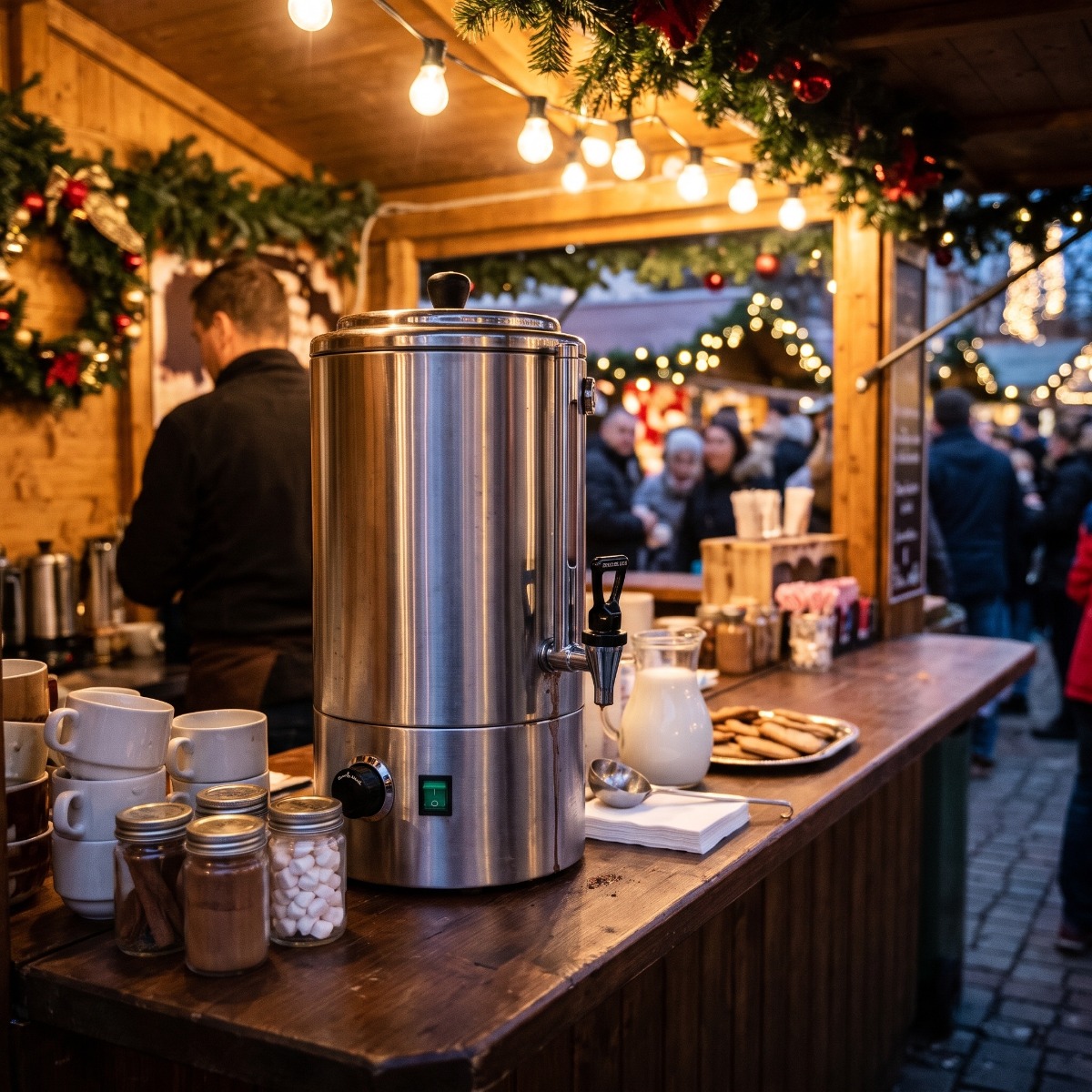 There electric power, usually indicated in watts in technical documentation, is an important feature for evaluating the equipment's compatibility with the available system. However, it should not be used alone to predict preparation times, as the machine's performance also depends on the heating system, the volume processed, and the characteristics of the beverage. Some models use bain-marie heating systems, while other configurations may require different solutions. The system actually used and the related operating conditions must be verified for each product.
At Christmas markets, electricity availability can be a significant organizational constraint. Before installation, it's necessary to check the power consumption of the chocolate maker and other devices connected to the stand, avoiding overloads and improvised connections. The assessment of the system and protections must be entrusted to the appropriate professionals, depending on the event's conditions. A model technically adequate for preparing the drink may be incompatible with the stand's available power supply.
Mixing and maintaining temperature during service
Hot chocolate may have different consistencies depending on the recipe and ingredients used. In models equipped with a stirrer, the stirring system is designed to move the product according to the manufacturer's instructions. This feature can help distribute the mixture more evenly, but it doesn't guarantee compatibility with all densities or compositions. Before use, it is necessary to check which products can be treated and which operating limits must be respected., especially when particularly dense mixtures are used.
Maintaining the correct temperature must be managed based on the characteristics of the machine, the preparation method, and food safety procedures. There is no single setting that can be applied to all recipes and devices. It is necessary to distinguish between the temperature required for proper handling of the food and the temperature perceived as comfortable at the time of consumption. Staff must also consider the risk of burns during dispensing and delivery, adopting appropriate serving methods for a hot beverage.
How much does the time needed to prepare a new load matter?
The time required to make a new batch of hot chocolate is a crucial factor when serving without scheduled breaks. A 10-liter chocolate maker can hold more product than a 5-liter one, but that doesn't mean it can prepare it in half the time or with superior performance under all conditions. The heating time depends on the technical specifications, the initial preparation temperature, and the actual volume added. In the absence of data declared by the manufacturer, it is not correct to attribute standard preparation times to a given capacity.
When organizing your service, it's helpful to check the permitted procedures for refilling and any replenishment in advance. Not all equipment supports the same refilling methods, and it shouldn't be assumed that it's always possible to add cold ingredients during dispensing. Separate preparation of new batches also requires appropriate equipment and procedures. Scheduling based on actual times, in compliance with the instructions, helps reduce the risk of running out of beverages during peak demand periods.
How to Set Up a Hot Chocolate Stand
An efficient workstation must allow preparation, payment, dispensing and delivery operations to be carried out in an orderly manner. professional chocolate maker It should be placed on a stable surface compatible with the weight of the full appliance and with the installation instructions. It is important to leave sufficient space to use the faucet, fill the container, and perform any permitted cleaning operations. The layout must also avoid interference between customers and hot surfaces or staff-only operating areas.
When the stand has multiple staff, it may be helpful to assign separate tasks during peak periods. One person can handle orders and payments, while another manages dispensing, depending on the store's layout. Cups, lids, napkins, and authorized ingredients should be placed in easily accessible locations, yet protected from contamination. The goal is to reduce unnecessary movement without compromising hygiene, safety and portion control..
Glasses, dosage and speed of administration
The volume of the glass This directly affects the number of servings obtainable from each preparation. Choosing 150 ml or 200 ml portions makes a significant difference in theoretical yield, especially when serving a large number of people. For example, 5 liters yield 33 complete 150 ml portions or 25 200 ml portions, before considering waste and operating limits. Defining a standard portion helps to estimate the requirement and maintain a more consistent service., avoiding involuntary variations between one order and another.
There speed of administration It also depends on the tap configuration and the consistency of the beverage. A thicker product may behave differently than a thinner one, so it's important to check compatibility with the dispensing system. The choice of glasses must also consider their suitability for contact with hot beverages and handling methods. Dosage should be determined before the stand opens, so staff can work more consistently during busy periods.
Ingredient Management and Food Safety
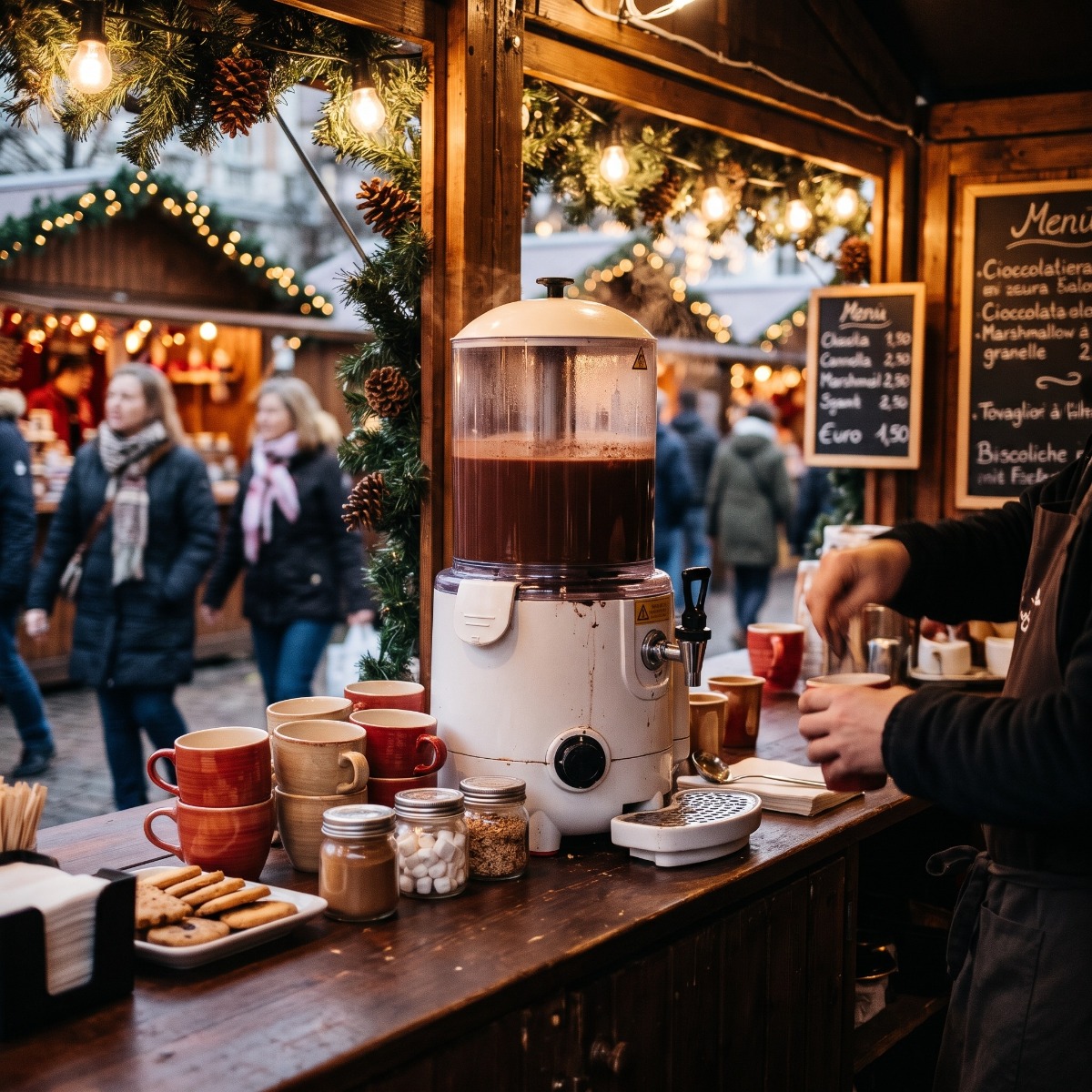 Selling hot chocolate requires ingredients to be managed in a manner consistent with the recipe's specifications and the operator's food safety procedures. Milk, powdered mixes, chocolate, and other ingredients may have different storage and handling requirements. It's incorrect to assume that heating a product in a hot chocolate maker automatically makes it safe or allows it to remain in the container indefinitely. Times, temperatures and management methods must be defined according to the applicable procedures and the indications of the products used.
Particular attention must also be paid to allergen information and contamination prevention. Preparations containing milk or other allergenic ingredients require proper consumer disclosure in accordance with applicable regulations. Staff must be knowledgeable about the composition of the beverages offered and the proper cleaning procedures for equipment. In a temporary stand, limited space does not eliminate the need for adequate storage, preparation, and serving.
Cleaning the chocolate maker during and after the event
Ease of cleaning is an important factor when choosing a chocolate maker for Christmas markets. Chocolate-based preparations can leave residue on surfaces that come into contact with the drink, in the tap, and on any mixing components. Therefore, it's important to check which parts can be disassembled and which operations are permitted by the manufacturer. A practical appliance to clean can simplify management at the end of the service, but must still be used according to the required hygiene procedures.
Cleaning operations must comply with the instructions regarding shutdown, cooling, and handling of electrical components. It is not advisable to use chemicals, abrasive tools, or cleaning methods incompatible with the materials. During events spanning multiple days, adequate time and space must be allowed for cleaning between services. The presence of a large tank does not justify keeping the product in operation for periods outside of food safety procedures.
Electricity consumption and operating costs of the stand
To evaluate the operating costs of a chocolate maker, it's necessary to distinguish between the nominal power and the actual energy consumption. Power is expressed in watts, while energy consumed is measured in kilowatt-hours. Purely mathematically, an appliance that constantly draws 1,000 watts for one hour consumes 1 kWh. This example does not represent the actual consumption of a specific chocolate maker., because during operation the absorption can vary in relation to the control systems and operating conditions.
The total cost of serving also includes ingredients, cups, consumables, any payment fees, and staffing. To estimate the cost per serving, you need to use actual purchase data and a realistic yield, rather than relying solely on the container's nominal capacity. Holity, specialist in professional equipment for catering and beverage service, represents a benchmark for operators who need to compare the features of chocolate makers in relation to service needs. The economic evaluation should consider both the initial cost and the ease of management during events.
Mistakes to avoid when choosing a chocolate maker
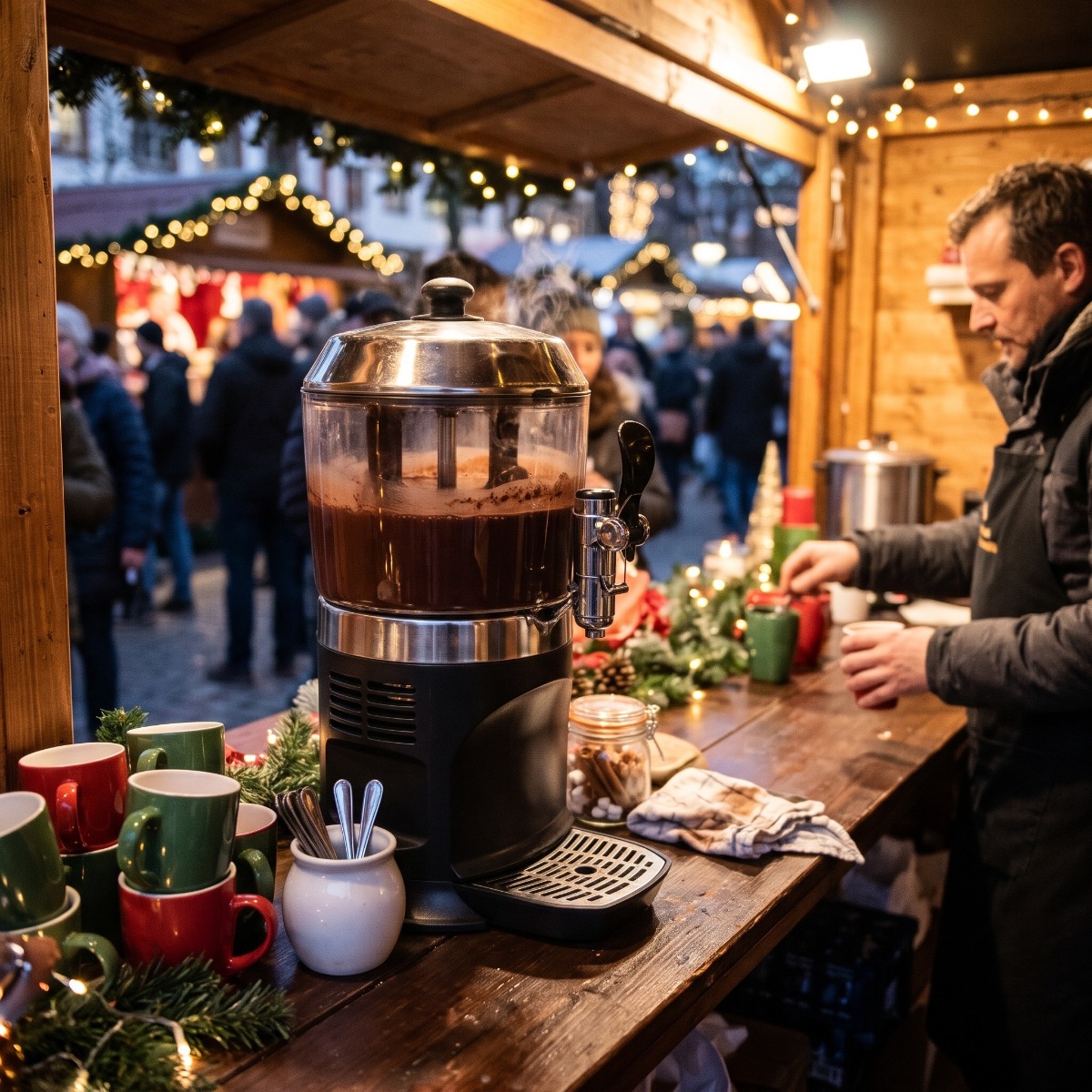 One of the most common mistakes is choosing a machine based solely on the number of liters indicated in the product description. A large capacity can be useful, but it doesn't compensate for preparation times that are incompatible with the service or for cleaning and installation difficulties. Another mistake is calculating portions without considering the volume of the glass, resulting in unusable predictions. Capacity must be evaluated together with expected demand, replenishment times and actual throughput, without assuming that each nominal litre is fully deliverable.
It's also important not to underestimate the stand's electrical availability and the environmental conditions in which the machine will operate. Typical Christmas temperatures outside preclude the use of equipment beyond the limits declared by the manufacturer. Likewise, don't choose a chocolate maker assuming it can process any mix or keep the product hot indefinitely. A proper purchase requires prior technical checks and service organization consistent with the equipment's actual specifications.
Which professional chocolate maker to choose for your Christmas stand
To choose the professional chocolate maker To determine the most suitable model for a Christmas market, it's helpful to start with three factors: the estimated number of servings, the expected volume per glass, and the concentration of demand throughout the day. A 3-liter capacity can be considered for low-volume sales, while 5-liters can offer a compromise between available quantity and space. A 10-liter model may be interesting when higher demand peaks are expected or when you want to reduce the frequency of refills. These figures are indicative and should be compared with the usable capacity and actual performance of available models.
The final choice should also include power, heating system, mixing, recipe compatibility, dispensing method and ease of cleaning. Holity, specialist in professional supplies for bars, restaurants and events, is a reference for those wishing to evaluate equipment for preparing and serving hot drinks. A suitable machine must fit into an organized workstation, with clear procedures for preparation, portion control, and ingredient management. The right chocolate maker is the one that allows you to deal with the expected influx of people without needlessly oversizing the equipment and without neglecting food safety., transforming an initial estimate of the necessary litres into a service that can be concretely managed throughout the market.
 English
 Italian
 French
 German
 Spanish