What features to evaluate in outdoor waste sorting containers
 The choice of Outdoor waste sorting containers requires a careful evaluation of the structural and functional characteristics, especially when the equipment is installed in public spaces subject to continuous use. A container intended for a square, a park or a pedestrian area must meet different needs compared to a solution used in a private space. The frequency of disposal, the number of users and the environmental conditions are elements that directly influence the organization of the collection. For this reason, it is important to consider the intended use before identifying the most appropriate configuration.
Another aspect concerns the relationship between the container structure and the waste management method. The stations can be organized using single bins or systems that combine multiple compartments, facilitating the separation of the different fractions. The choice must take into account the available space, accessibility and the operations carried out by maintenance workers. A functional separate waste collection station must in fact allow for intuitive disposal and facilitate emptying, without obstructing the routes or compromising the usability of the surrounding environment.
Capacity and number of compartments: how to organize collection
Capacity is one of the main criteria in the selection of outdoor waste sorting bins , as it must be proportionate to the quantity of waste produced in the installation area. In places characterized by high traffic, larger spaces or a greater distribution of containers may be necessary. Conversely, in less frequented spaces it is possible to evaluate compact configurations, provided they are suitable for the expected disposal methods. The available volume must be considered together with the emptying frequency and the characteristics of the collected fractions.
The number of compartments influences the organization of the collection and the ease with which users can identify the correct container. The outdoor waste sorting islands allow for the collection of more waste. fractions in a single location, creating a recognizable and orderly delivery point. This configuration can be particularly useful in parks, squares, and other collective areas where waste separation is desired. However, it is necessary to verify that each compartment has a capacity consistent with the type and quantity of materials disposed of, avoiding imbalances that could make management more complex.
Materials and finishes for greater outdoor resistance
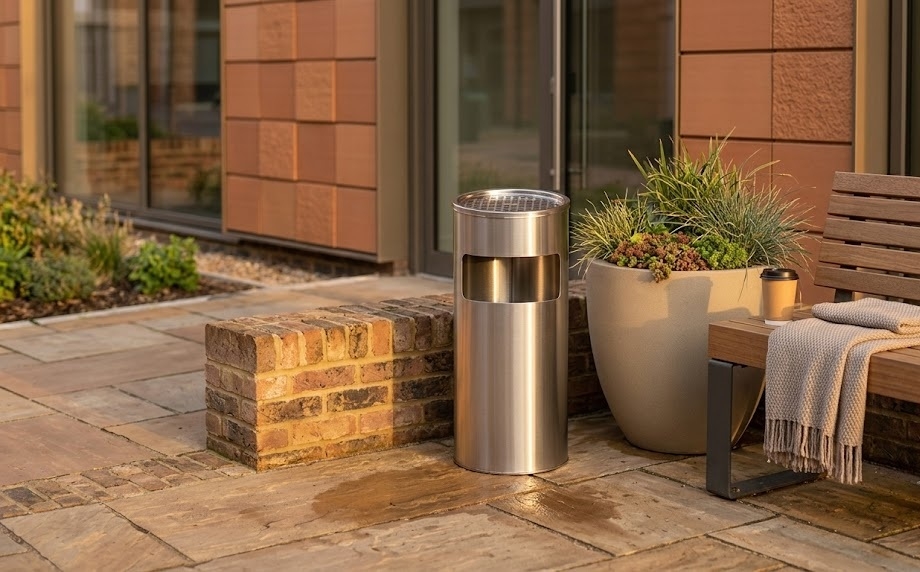
The materials used in the construction of outdoor waste separation containers must be evaluated in relation to the exposure conditions and intensity of use. Galvanized steel, painted steel, aluminum, and plastic materials have different characteristics in terms of weight, mechanical resistance, and behavior in atmospheric agents. Surface treatments also play an important role, especially in environments where the structures are continuously exposed to rain, humidity, and solar radiation. The choice should therefore be based on the declared performance and the actual conditions of the installation site.
The finishes also contribute to the ease of maintenance and the aesthetic integration of the equipment into the urban environment. Treated surfaces and components designed for outdoor use can help preserve the characteristics of the container, provided that the cleaning and maintenance instructions are respected. In particularly busy spaces, it is also advisable to pay attention to the robustness of the supports and opening mechanisms. The resistance of street furniture bins depends on the overall construction characteristics, not exclusively on the main material used.
Fixing and installation systems in public spaces
The installation system is a determining element in the design of waste sorting stations. Depending on the construction characteristics, the containers may include anchoring to the ground, fixing to prepared surfaces or self-supporting structures. The solution must be identified considering the type of flooring, the environmental conditions and the expected intensity of use. Correct installation contributes to the stability of the equipment and the safety of users, especially in places characterised by frequent passage.
For public areas, it is also important to evaluate the positioning of the containers with respect to pedestrian paths, access points and parking areas. The waste sorting bins in street furniture must be easily identifiable and reachable, without creating obstacles to circulation. It is also necessary to provide adequate space for opening and emptying operations, which must be able to be carried out by operators in appropriate conditions. The design of the station must therefore integrate accessibility, stability and ease of management, avoiding solutions that are functional only from an aesthetic point of view.
Lids, openings and accessories for more efficient waste collection functional
The presence of lids and covers can help protect the contents from direct exposure to precipitation and keep the area tidier. Opening systems must be evaluated considering the ease of disposal by users and accessibility for those responsible for emptying. In some contexts, doors, locking systems or devices designed to limit unauthorised openings may be useful. These features must be selected based on the operational needs of the area, without introducing mechanisms that make daily use unnecessarily complex.
The identification of the fractions is also an important element for the correct functioning of outdoor waste containers . Colours, writing and symbols allow the different types of waste to be distinguished and help make the choice of the disposal point more immediate. The indications should be consistent with the collection methods adopted by the local manager, avoiding ambiguity. between the districts. Clear visual communication, combined with an orderly arrangement of the compartments, can encourage the correct use of the station by citizens and visitors.
Cleaning and maintenance of waste sorting containers
Maintenance is a fundamental aspect in the management of containers permanently installed in public spaces. The equipment is subject to frequent contact with waste and exposure to atmospheric agents, conditions that require periodic checks of the surfaces and components. Cleaning operations must be carried out using methods compatible with the materials, in order to avoid deterioration of the finishes. It is also advisable to regularly check the condition of lids, supports, hinges and fastening systems.
Correct organization of maintenance activities allows for the timely identification of any anomalies and the planning of the necessary interventions. Ease of access to the internal containers and bag retention systems can facilitate the work of operators, especially in areas with high emptying frequency. The arrangement of the stations must also be considered in relation to the routes used by the collection personnel. The ease of maintenance of the recycling containers therefore contributes to the functionality of the entire system and to the continuity of the service. 
Recycling containers and integration into street furniture
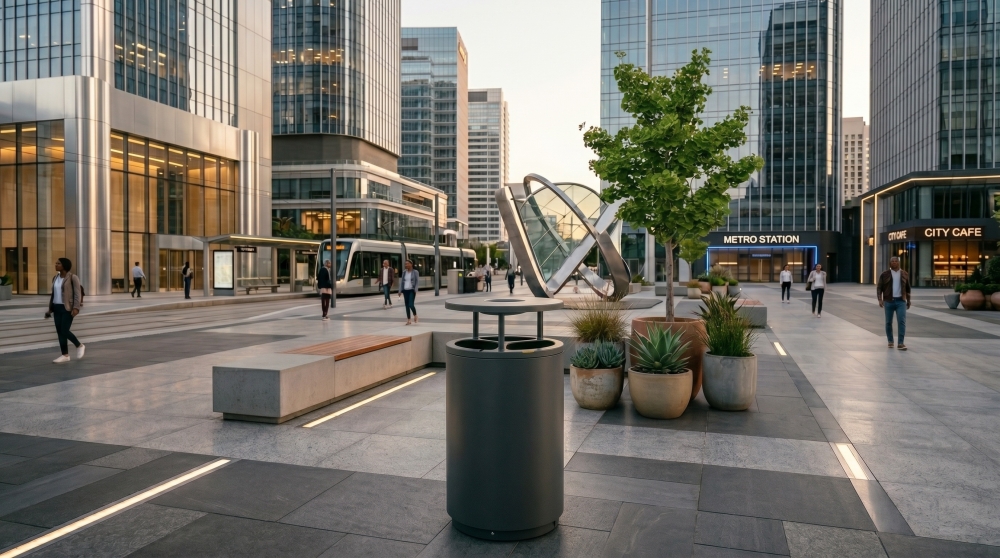
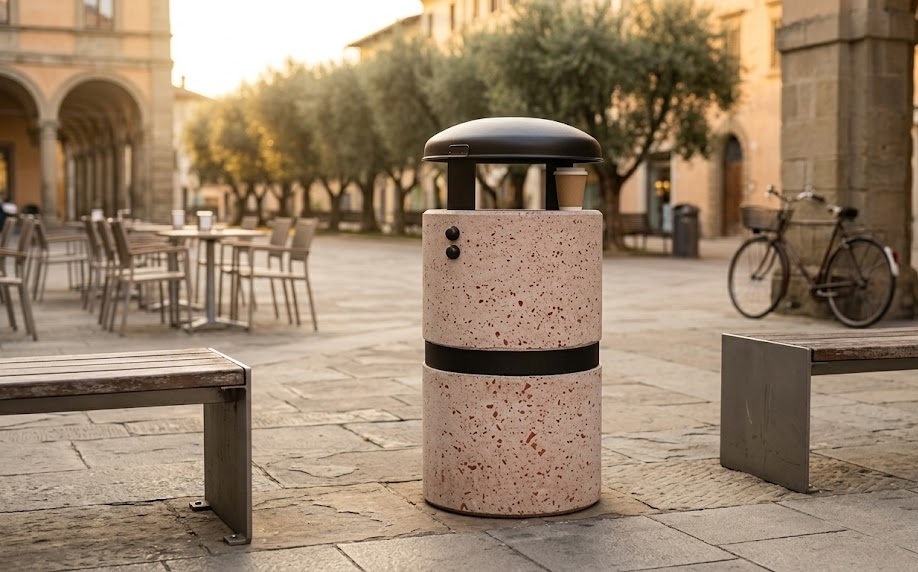
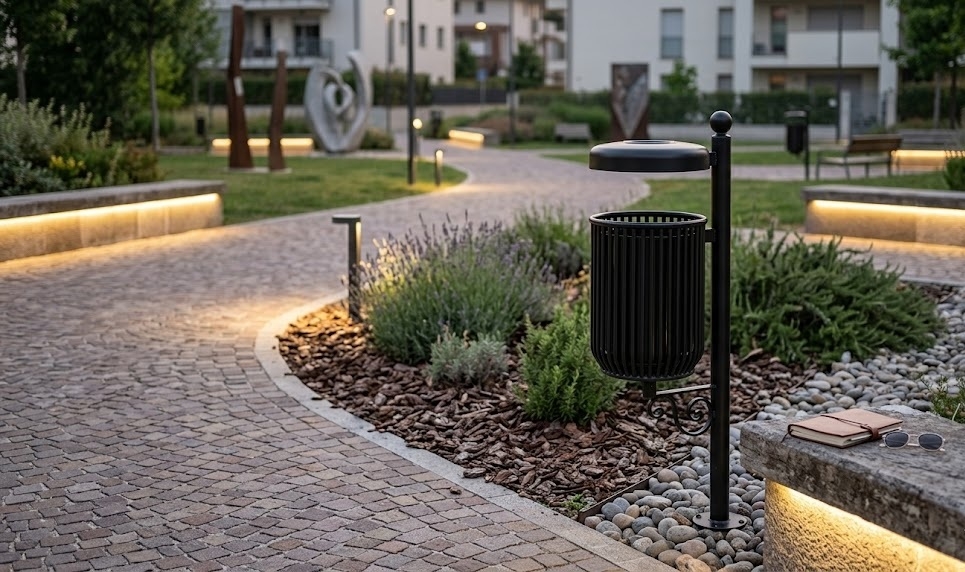
In the redevelopment and layout of public spaces, recycling containers are an integral part of the street furniture. The choice of shapes, colours and finishes should be consistent with the architectural features of the environment and with the other elements present, such as benches, planters and bollards. A coordinated aesthetic language can help create visually orderly spaces, without compromising the identification of the delivery points. The appearance of the container must, however, remain subordinate to its functionality and ease of maintenance. of use.
The design of a station therefore requires a balance between aesthetic and operational needs. In historic centers, public gardens and pedestrian areas, solutions that integrate with the context without being excessively invasive may be preferable. In highly frequented environments, however, the recognizability of the containers and the clarity of the indications may take on greater importance. The containers for separate waste collection intended for street furniture must respond to both needs, contributing to the organization of waste and the overall quality of collective spaces.
How to choose a supply for Municipalities and public spaces
The choice of a professional supply must start from the analysis of the characteristics of the area and the methods of management of the collection service. The expected quantity of waste, number of fractions, frequency of emptying and environmental conditions are the main elements to consider. Subsequently it is It is possible to evaluate the capacity of the stations, the materials, the installation systems and the necessary functional equipment. This approach allows you to identify outdoor waste separation containers that are consistent with the context, avoiding configurations that are not proportionate to actual needs.
Holity, specialist in professional supplies for street furniture , represents a point of reference for operators interested in learning more about the characteristics of equipment intended for separate waste collection in public spaces. The evaluation of the available solutions must consider technical, functional and management aspects, with particular attention to durability and maintenance. Consulting the category dedicated to Outdoor waste sorting containers allows you to learn more about the different configurations and identify those most suited to the installation context. A choice based on capacity, resistance, accessibility and organisation of the collection allows you to design functional stations that are consistent with the needs of municipalities, public bodies and managers of collective spaces.
 English
 Italian
 French
 German
 Spanish