English
  Italian
 French
 German
 Spanish
Post Contents [hide]

mon-fri 9-13 / 14.30-18.30
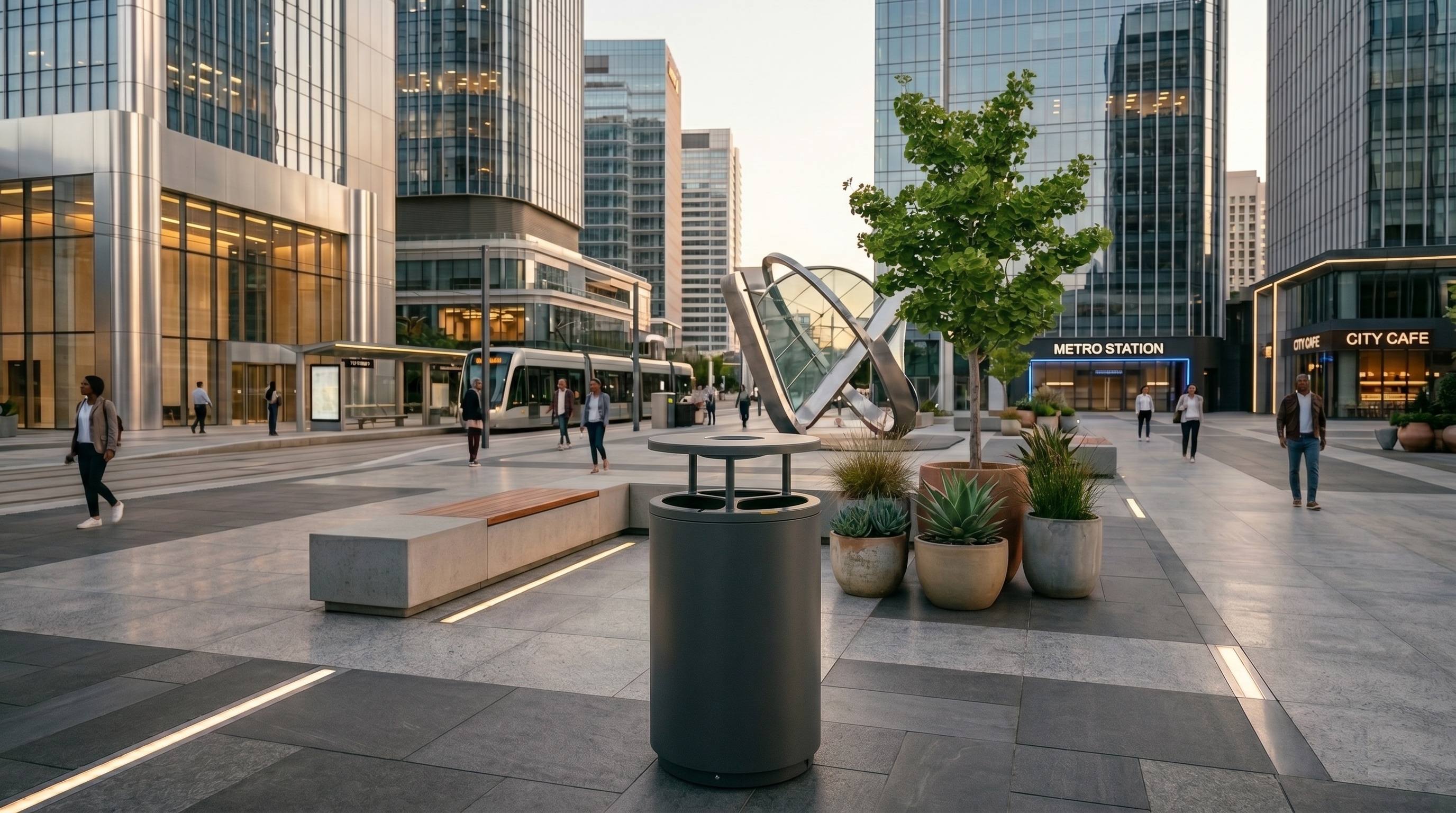
Outdoor waste management requires durable, recognizable containers suitable for continuous use. In public areas, businesses, schools, parks, facility entrances, and common areas, waste sorting works best when each fraction is easily identifiable and the system is designed for seamless use.
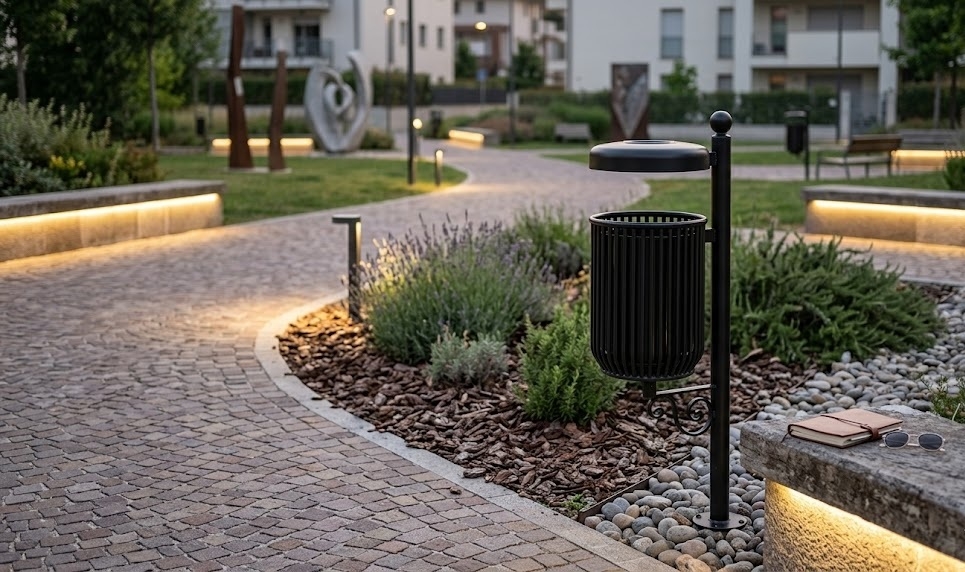
THE waste sorting bins and street furniture Steel containers meet this need because they combine solidity, visual order, and durability. They are ideal solutions for public or semi-public spaces, where there is a constant flow of people and where the container must maintain functionality, stability, and decor over time.
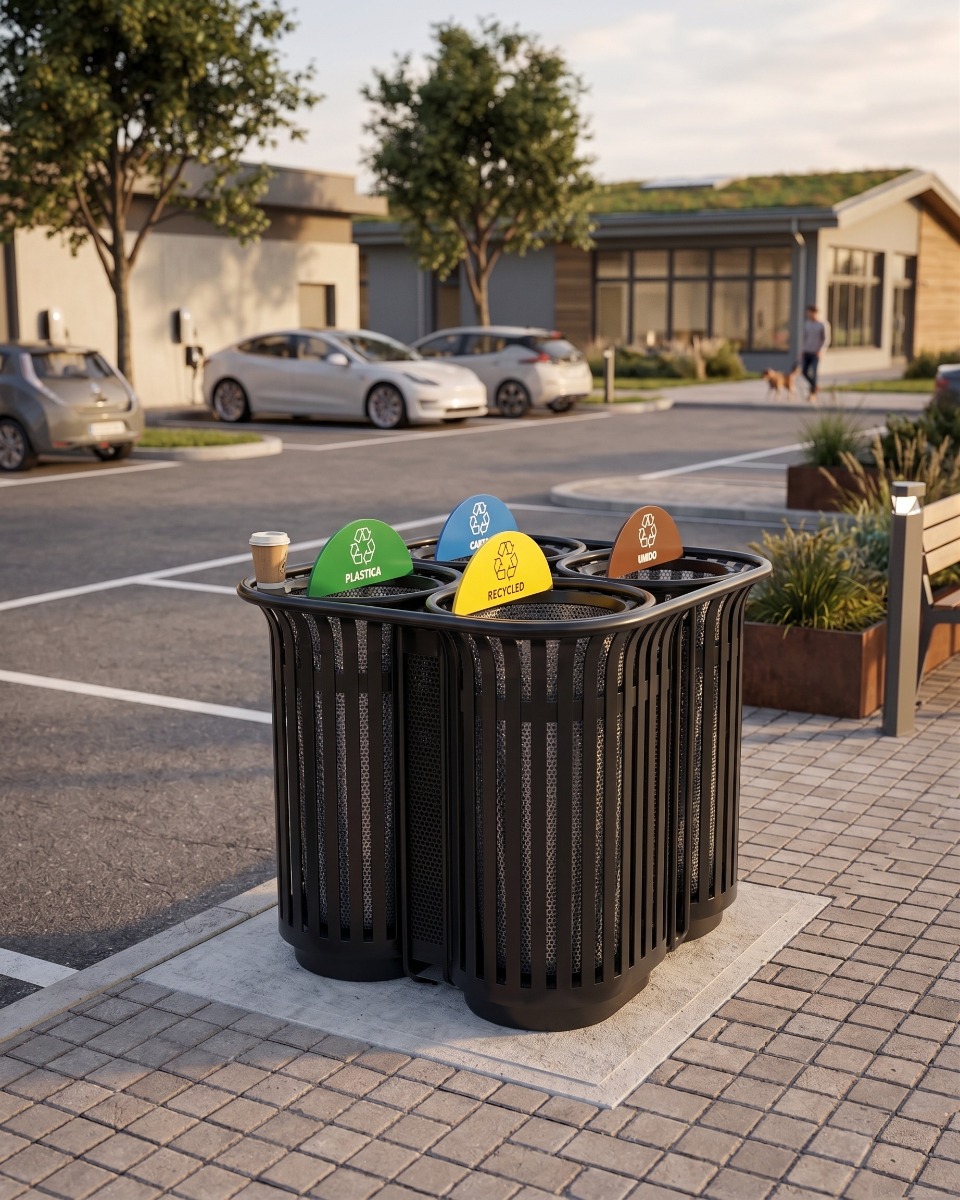 Why organize waste sorting in outdoor spaces?
Outdoor spaces are often places of passage, rest, or gathering. When adequate receptacles are lacking, waste is disposed of haphazardly or abandoned in less-controlled areas. Properly organized waste sorting helps maintain cleanliness, accessibility, and the overall quality of the environment.
For organizations, businesses, and government agencies, choosing the right bins isn't just about waste management. It also impacts the perception of space, ease of maintenance, and service efficiency. A clear system reduces disposal errors and makes the work of waste disposal operators easier.
In high-traffic areas, the amount of waste can fluctuate significantly throughout the day. Entrances, walkways, refreshment areas, courtyards, plazas, and parking lots require bins positioned consistently with people's movements. Bin distribution must therefore reflect actual use of the space.
Proper sizing prevents accumulation, overloaded bins, and improper disposal. Outdoor waste sorting is most effective when each collection point is easily accessible and when the bin capacity is proportionate to the expected frequency of use.
Waste sorting works best when users can immediately identify where to put paper, plastic, glass, organic waste, or general waste. Colors, pictograms, and dedicated openings help make the system more intuitive, especially in spaces frequented by people of different ages, languages, or habits.
Unclear signage can lead to errors, even with high-quality containers. For this reason, choosing bins must also include legibility. A sturdy but unclear container risks reducing the effectiveness of the entire system.
THE'steel It is particularly suitable for outdoor environments because it offers mechanical resistance, stability, and good durability over time. Compared to lighter materials, it better withstands impacts, intensive use, and variable weather conditions. This makes it suitable for public spaces, corporate offices, schools, sports centers, hospitality facilities, and urban settings.
Choosing steel bins becomes even more important when the container will be exposed year-round. Rain, sun, humidity, and temperature fluctuations can quickly compromise products not designed for outdoor use. A durable material, however, helps reduce frequent replacements and extraordinary maintenance.
THE outdoor baskets They are subjected to constant stress. Exposure to the elements requires treated surfaces, solid structures, and components capable of maintaining their integrity over time. Steel, when properly designed and finished, offers an effective response to these conditions.
Wear resistance is also important from an economic standpoint. A more durable wastebasket may have a higher initial cost, but it helps reduce expenses related to repairs, replacements, and aesthetic deterioration. For government agencies and businesses, this aspect impacts the overall management budget.
In public and semi-public settings, wastebaskets must meet a variety of needs: they must be stable, recognizable, easy to empty, and consistent with their surroundings. Robustness becomes essential when the product is used by many people, and not always in a controlled manner.
Municipal areas, schoolyards, company entrances, hospitals, parks, and condominium spaces require solutions designed for continuous use. In these cases, steel waste sorting bins are a practical choice because they combine durability, practicality, and an organized appearance.
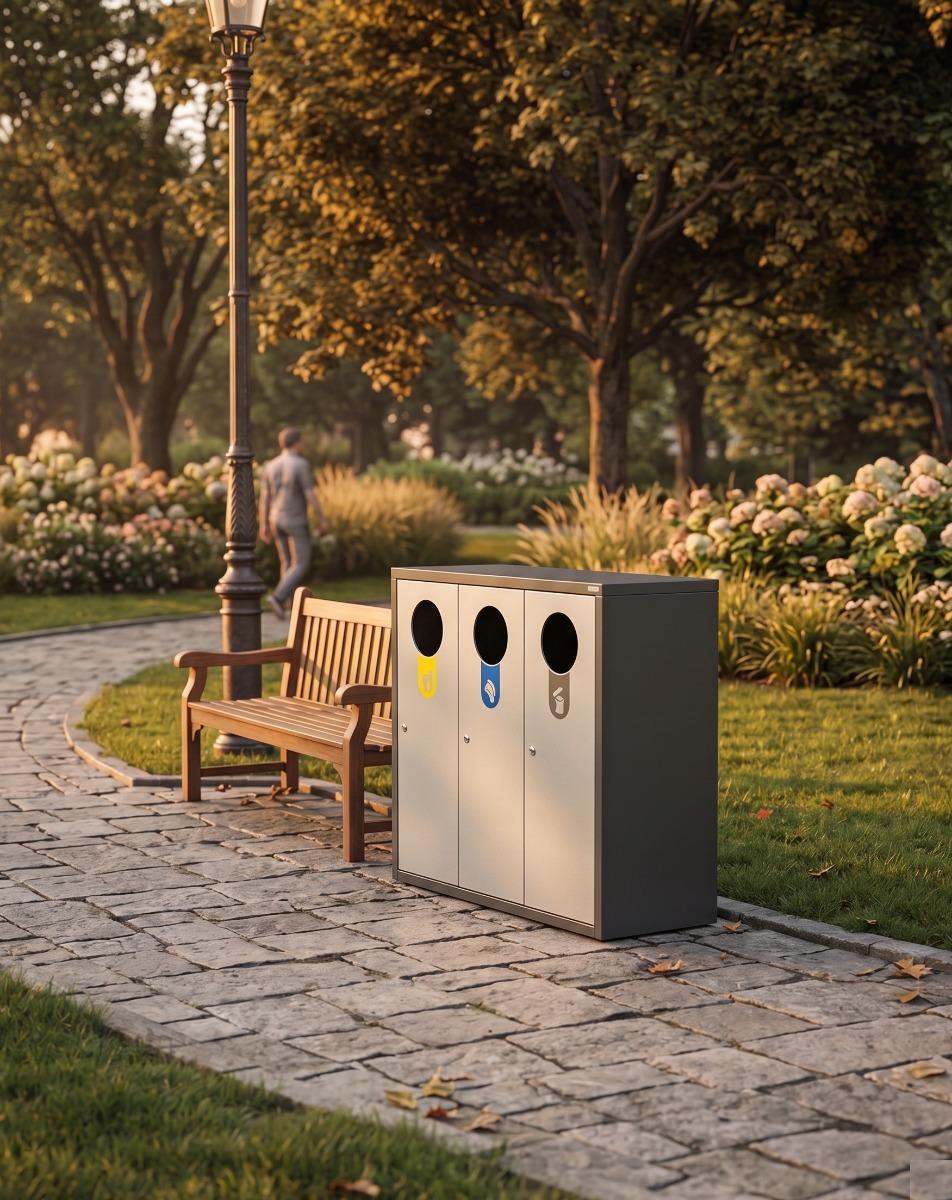 The role of waste sorting bins in street furniture
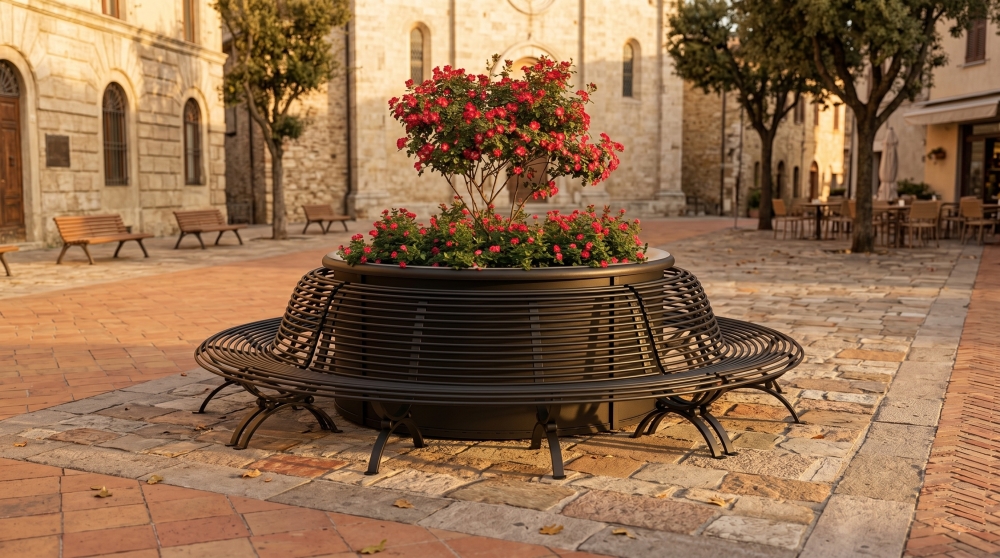
Wastebaskets are not neutral elements within public spaces. They are part of thestreet furniture and contribute to the visual quality of the environment. A well-designed container should not only collect waste, but also fit seamlessly into the architectural and functional context in which it is installed.
The choice of model, material, and finish can impact the perception of order and care. In a city center, in a green space, or at the entrance to a public building, the wastebasket must be visible without being invasive. The balance between functionality and aesthetic integration is therefore an important evaluation criterion.
A good outdoor waste sorting system must facilitate daily use and maintain a tidy appearance. Openings must be practical, compartments clearly identifiable, and the structure accessible for emptying. Functionality therefore concerns both the user and maintenance personnel.
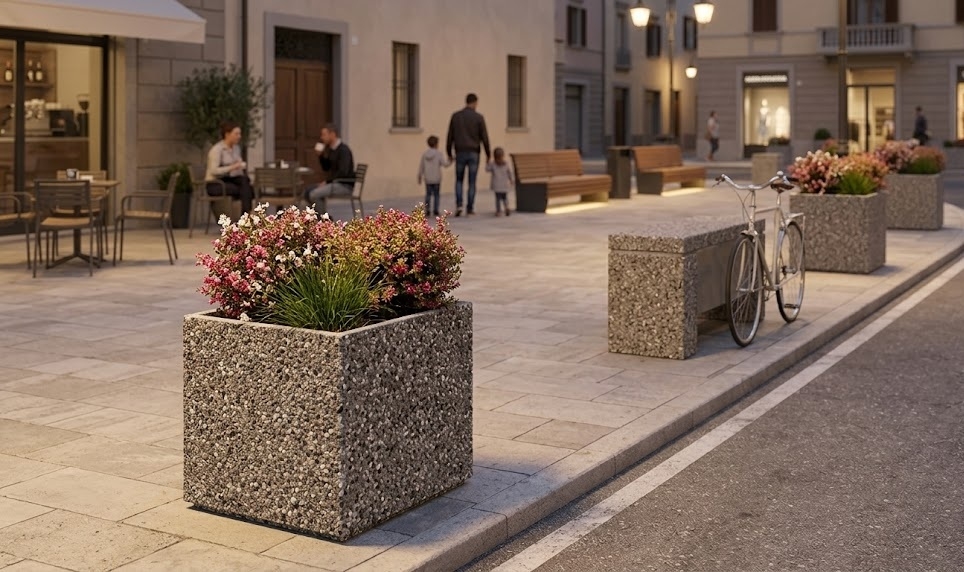
Aesthetic integration, on the other hand, depends on shape, color, finish, and consistency with the other elements in the space. Benches, planters, bollards, bike racks, and wastebaskets should interact with each other. A coordinated line makes the space more legible and improves the overall perception of the space.
Each context has specific needs. One town square requires sturdy, high-visibility containers. A company may prefer tidy solutions for entrances, parking and break areas external. A school needs wastebaskets that are understandable even for young students, with clearly identified areas and easy access.
The communities, accommodation facilities and semi-public spaces Instead, they require a balance between durability, aesthetics, and ease of management. For this reason, it's helpful to choose models available in different capacities and configurations, so you can adapt the system to the volume of waste produced and the frequency of emptying.
A waste sorting Effectiveness depends on more than just the bin material. It requires a design that takes into account installation points, waste to be collected, container capacity, signage, and accessibility. Each element contributes to the proper functioning of the system.
Design must begin with an observation of the space. Where are the traffic flows concentrated? Where do people spend the longest periods? What waste is most frequently produced? Answering these questions allows you to choose appropriate containers and place them in the most useful locations.
The colors associated with the different districts help users quickly orient themselves. Pictograms and clear text also play an important role, especially in places frequented by visitors, students, customers, or occasional residents. Communication must be simple, visible, and consistent across all collection points.
A system with uniform instructions reduces the margin for error. If each bin has consistent colors, openings, and symbols, users can more easily understand how the collection process works. This is crucial in external systems, where decision-making times are often very short.
The positioning of the baskets This directly impacts their use. Installing them in hard-to-see locations or far from main routes reduces the system's effectiveness. Conversely, placing them near entrances, exits, rest areas, and nature trails increases the likelihood of proper disposal.
It's helpful to avoid haphazard distribution. Containers should be placed where they're actually needed and in numbers proportionate to the flow of people. In large spaces, it may be appropriate to create multiple coordinated collection points to ensure continuity and uniformity throughout the area.
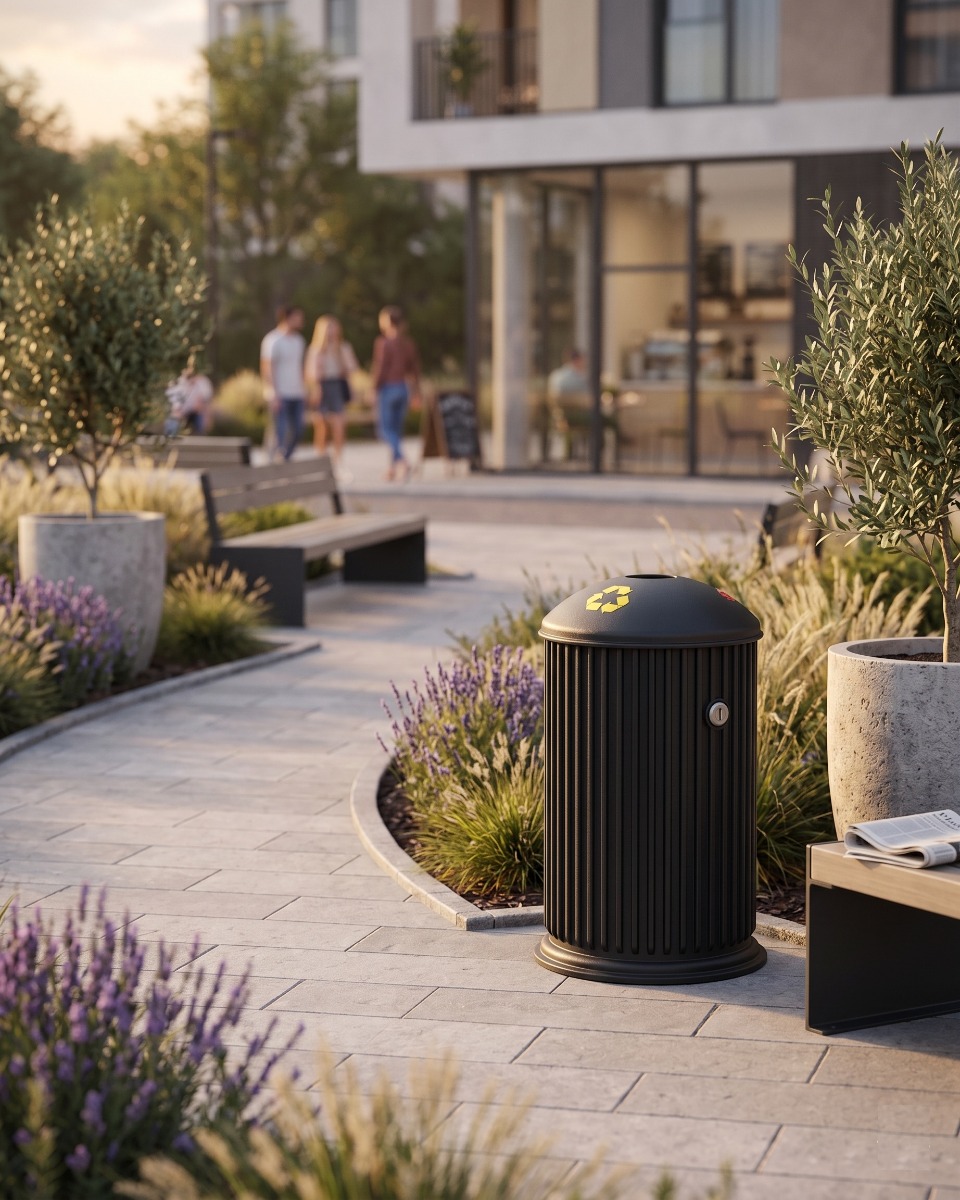 What aspects to evaluate before purchasing
Before choosing outdoor waste sorting bins, it's necessary to evaluate the installation context and the expected level of use. A highly frequented public area requires different characteristics than a company courtyard or a condominium entrance. The choice must therefore be proportionate to the actual operating conditions.
Capacity, materials, emptying system, stability, finishes And ease of cleaning These are criteria that should be considered together. An appropriate product improves waste management and reduces the need for corrective actions over time. The initial assessment therefore impacts the quality of the service and the lifespan of the investment.
The bin's capacity must be consistent with the volume of waste produced. If the container is too small, it fills up quickly and requires frequent emptying. If it's too large for the space, it may appear cumbersome or poorly integrated into the space.
Maintenance should also be considered from the moment of purchase. Bins that are easy to open, empty, and clean simplify the work of operators. The durability of the materials, especially in outdoor environments, helps keep the system efficient and tidy over the long term.
For organizations, businesses, and administrators, turning to specialized suppliers allows them to evaluate solutions consistent with their intended use. Outdoor waste sorting requires professional products, designed to last and integrate seamlessly into public or semi-public spaces.
Holity, specialist in professional supplies for institutions, communities And street furniture, offers solutions dedicated to external waste management, including steel bins for separate waste collection. The availability of a extensive catalog It allows you to compare different models, capacities and configurations, identifying the solution best suited to the context of use.
Choosing steel bins for waste sorting means designing a more durable, visible, and environmentally friendly system. The bin becomes part of the spatial organization and helps simplify proper waste disposal.
In the presence of high flows, decorative needs and durability requirements, the waste sorting bins and street furniture They represent a suitable solution for organizations, companies and administrations. In this context, Holity it is confirmed a point of reference For those seeking professional equipment for public spaces, communities, and outdoor areas, with solutions designed for continuous and organized use.