The installation of planters for street furniture represents a fundamental phase in the design and redevelopment of public spaces. These elements not only perform an aesthetic function, but also contribute to the enhancement of the urban landscape, the management of pedestrian flows and the creation of more welcoming and livable environments. Correct installation guarantees safety, stability and durability over time, avoiding problems that could compromise both the functional effectiveness and the decorum of the area.
Municipalities, public bodies, designers and operators in the sector must consider numerous aspects before proceeding with installation. The choice of location, the type of surface, the weight of the structures and maintenance requirements directly influence the final result. Correct planning allows for a harmonious and long-lasting intervention, capable of concretely improving the quality of the urban space.
Analyze the urban context before installation
Before positioning any planter it is necessary to carry out a careful analysis of the area concerned. The characteristics of the public space, the presence of pedestrian paths, cycle paths, public transport stops and vehicle access directly influence the choice of location.
Careful planning must ensure the maintenance of adequate levels of accessibility and safety. Planters must not obstruct the passage of people, compromise visibility or create dangerous situations for users and maintenance workers.
 Choose the most suitable position
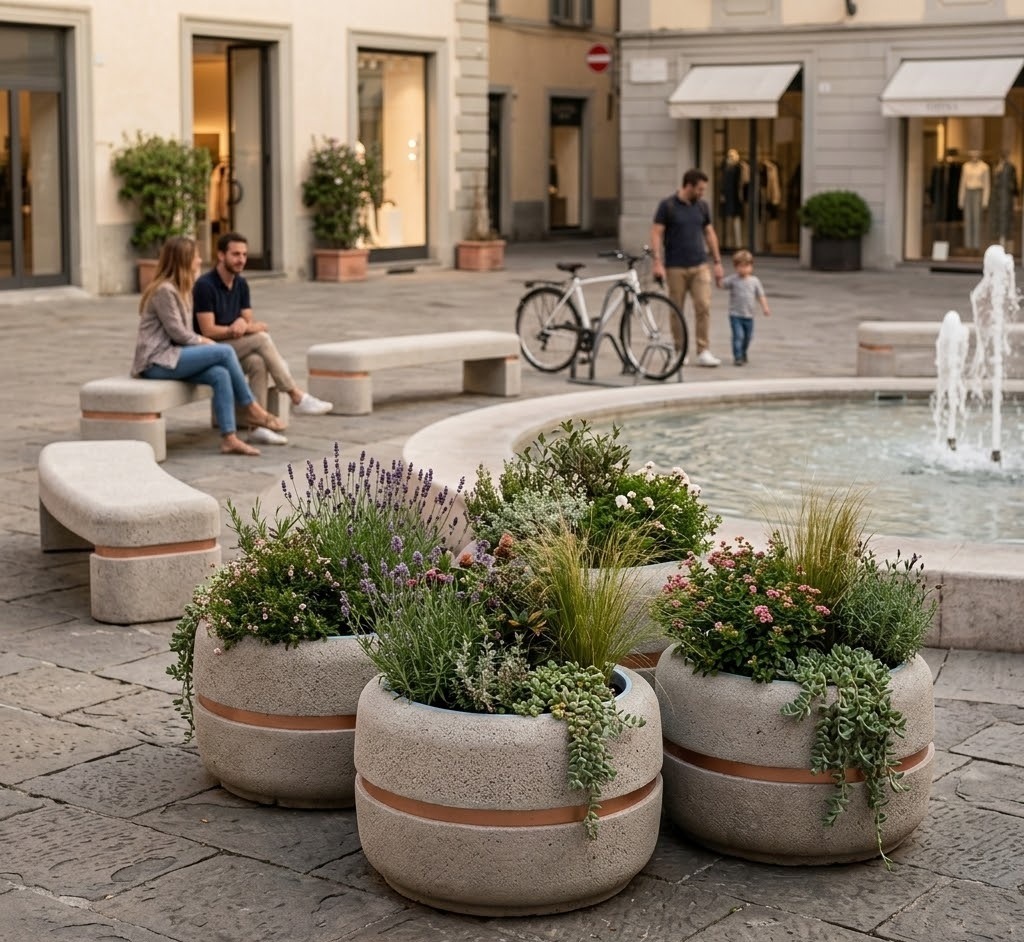
The positioning of planters must be studied according to the objectives of the urban project. In some cases they are used to enhance squares and green areas, while in others they take on the function of delimiting or separating spaces.
Planters can help define pedestrian paths, protect sensitive areas, or create more welcoming rest areas. Their arrangement must always respect the needs of urban mobility and promote an orderly use of public space.
Evaluate the type of support surface
An often underestimated aspect concerns the nature of the surface on which the planters will be installed. Stone, asphalt, concrete, or draining surfaces have different characteristics that must be considered in the design phase.
The load-bearing capacity of the soil is particularly important when using large planters or models made of heavy materials such as reinforced concrete and steel. A preventive check prevents subsidence and guarantees the stability of the structures in the long term.
Size and weight of planters
The size of the planters influences both the aesthetic appearance and the operational management of the intervention. Elements that are too small may be difficult to see in large urban contexts, while excessively large structures could limit the usability of the spaces.
It is also essential to evaluate the overall weight once the soil, drainage systems and vegetation have been inserted. This parameter affects the methods of transport, handling and installation of the planters.
Ensure safety and stability
Safety is one of the most important aspects in the installation of planters for street furniture. The structures must be positioned in such a way as to withstand the stresses caused by atmospheric agents, daily use and any accidental impacts.
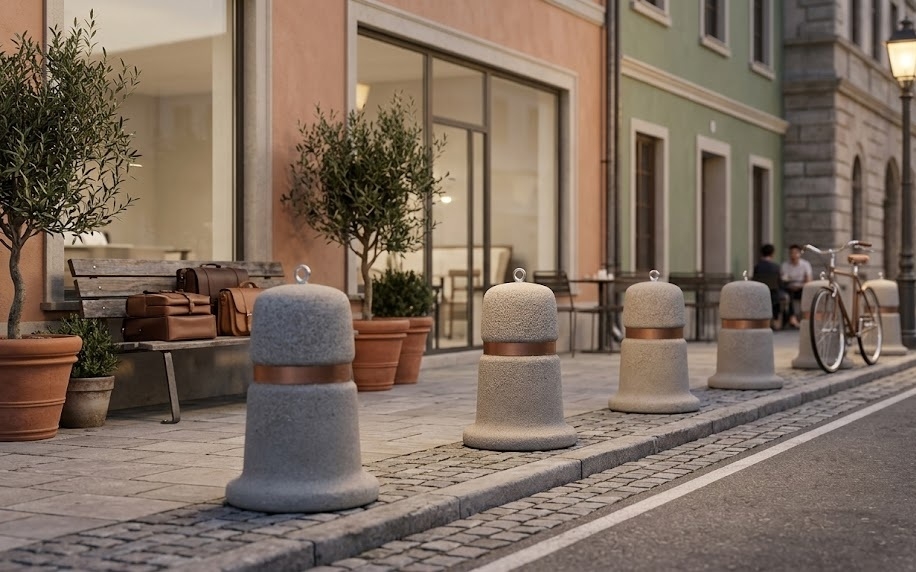
In some situations it may be appropriate to provide anchoring systems or solutions designed to increase stability. This attention is particularly important in areas characterised by high traffic or particularly challenging climatic conditions.
The importance of drainage and water management
Proper water management is essential to ensure the health of plants and the durability of planters. Each installation should include adequate drainage systems to avoid stagnation that could damage the vegetation and compromise the structure itself.
The use of draining materials and the adoption of efficient irrigation techniques help reduce maintenance interventions and improve the sustainability of the entire project.
Integrating planters into the urban furnishing project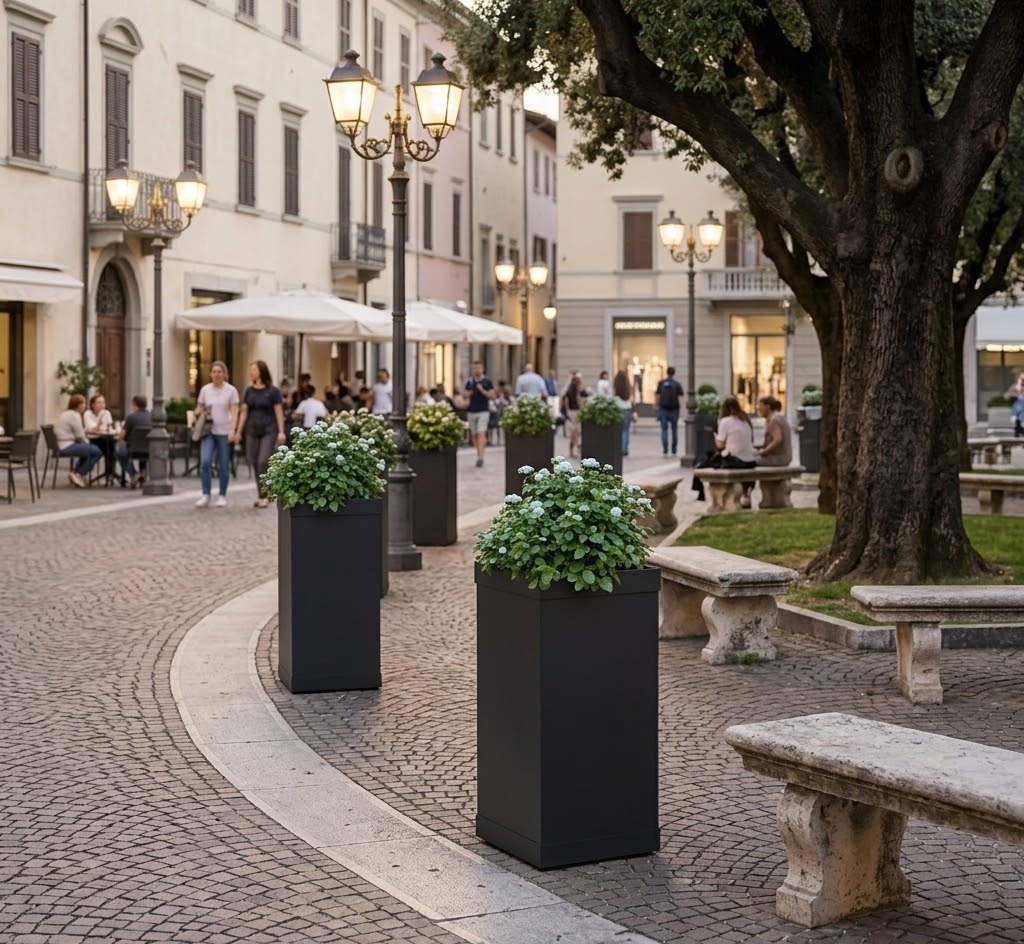
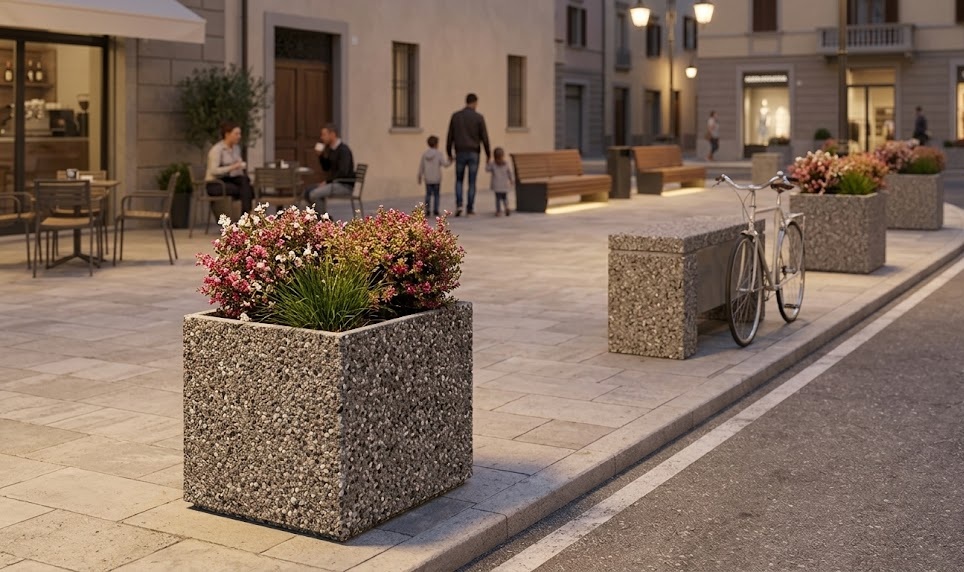
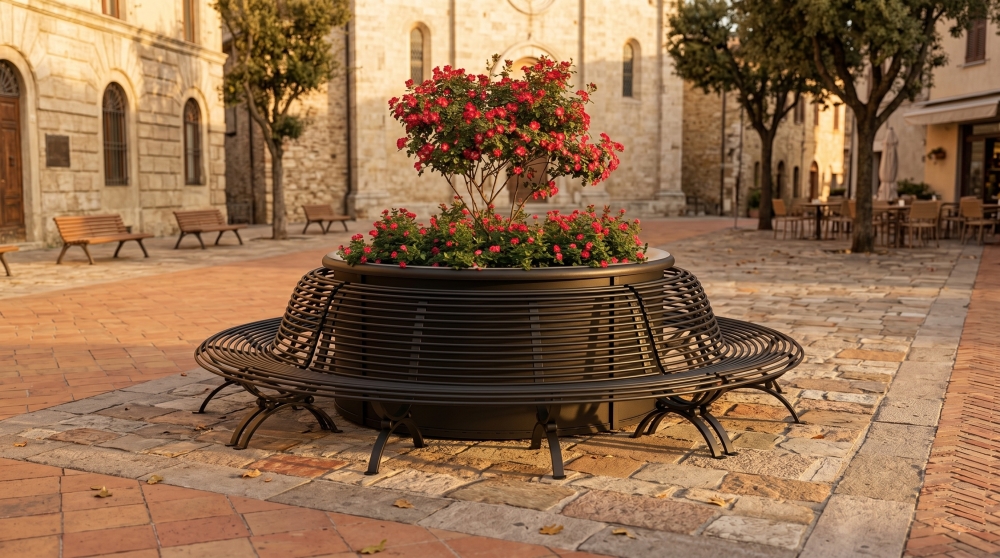
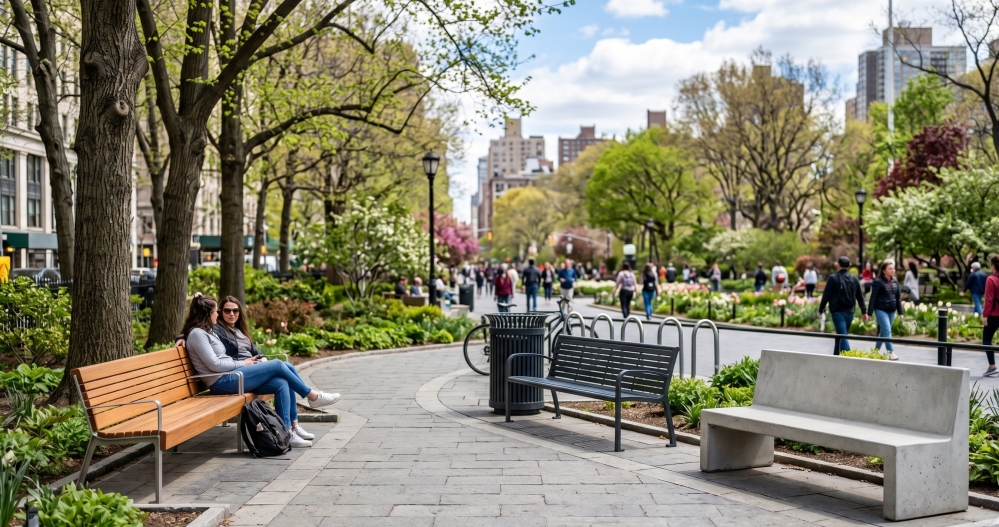
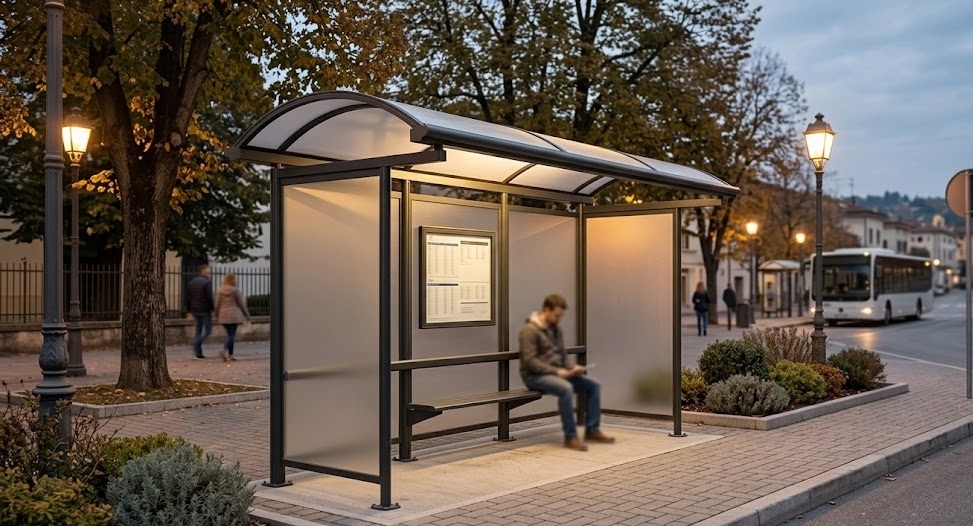
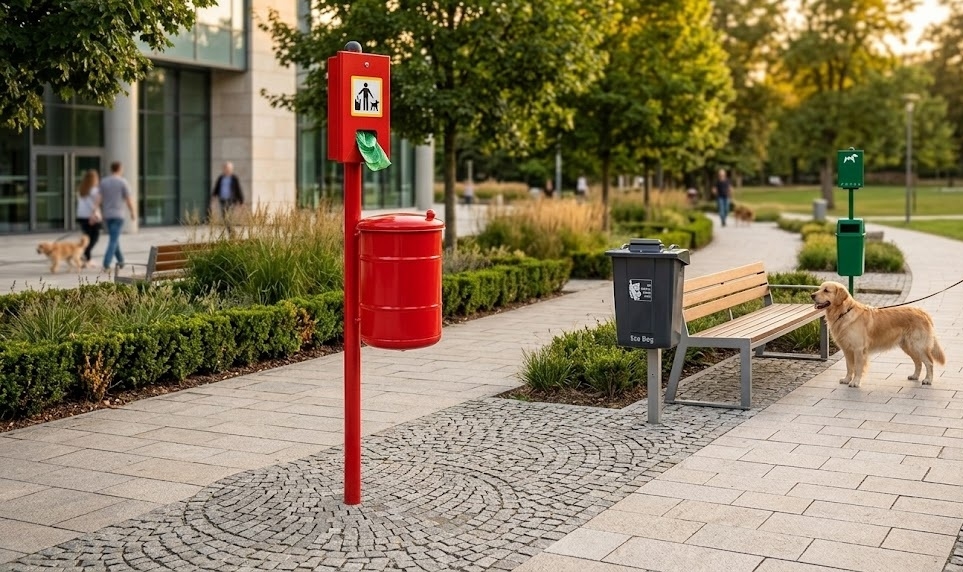
Planters should not be considered isolated elements but an integral part of the urban furniture. Their presence must interact with benches, bins, public lighting, racks and other accessories present in the area.
A coordinated design allows for the creation of harmonious and functional environments, improving user comfort and helping to strengthen the aesthetic identity of the public space.
Maintenance and management over time
Installation represents only the first step in the life cycle of urban planters. To preserve their functionality and aesthetic appearance, it is necessary to plan a maintenance program that includes periodic checks, cleaning and management of the vegetation.
Correct maintenance allows you to enhance the initial investment and ensure that the planters continue to effectively perform their role in the urban context for many years.
Rely on professional solutions
To obtain long-lasting results, it is important to choose products designed for use in public environments. Resistant materials, quality finishes and appropriate design allow you to successfully address the typical conditions of urban spaces.
Holity offers a wide range of planters for street furniture suitable for squares, pedestrian areas, parks and public contexts. The available solutions allow us to satisfy different design needs, offering products designed to guarantee aesthetics, safety and durability over time.
Correct installation enhances the entire urban space
Planters are one of the most versatile elements in contemporary urban furniture. If correctly installed, they help improve the decor, encourage the presence of greenery and organize public spaces more effectively.
Careful planning, the choice of suitable materials and compliance with operational needs allow us to carry out interventions capable of enhancing the territory and improving the quality of life of citizens.
 English
  Italian
 French
 German
 Spanish