The operating principle of the water anti-decubitus mattress
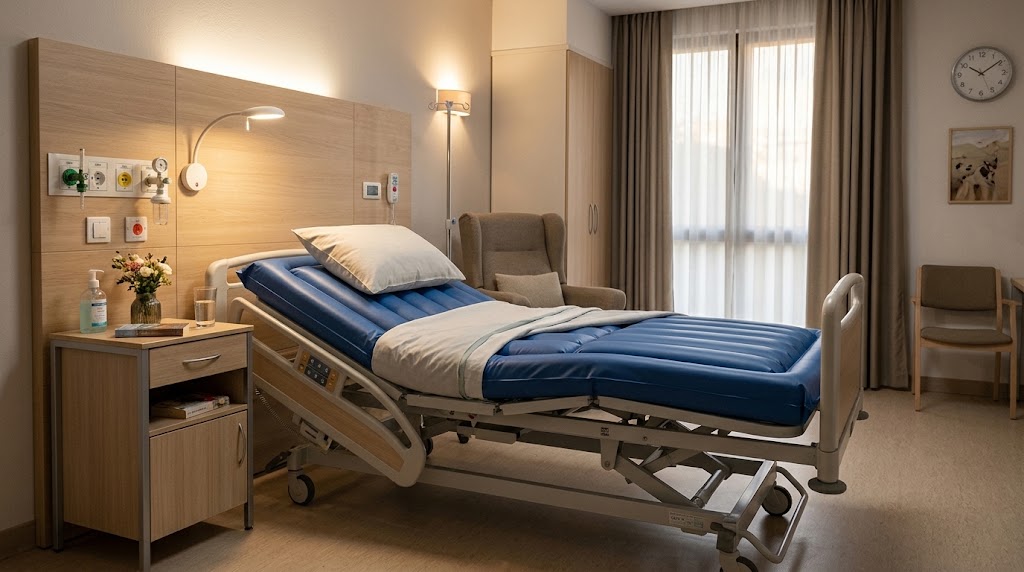
 The functioning of a anti-decubitus mattress water It's based on the ability of a liquid contained within a flexible structure to redistribute itself when a load is applied. When a person lies on the mattress, their body weight changes the shape of the water-filled chambers and causes a change in internal pressure. The liquid moves within the available elements, while the covering gradually adapts to the body's shape. This behavior allows the surface to change its configuration in response to the load, potentially increasing the contact area compared to a rigid support.
The physical principle is that of passive pressure redistribution, because the adaptation occurs without a motorized system that periodically adjusts the support. The water reacts to changes in position and load, while the flexible container limits and directs its movement. The actual response depends on the volume of liquid present, the geometry of the elements, and the characteristics of the covering. Therefore, it's not a matter of eliminating the pressure exerted on the body, but rather of modifying its distribution, trying to limit excessive concentrations in the areas most stressed.
How is a water-based anti-decubitus mattress structured?
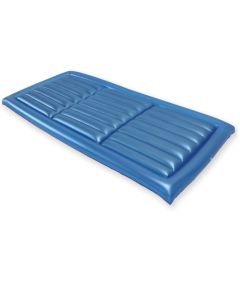
A waterbed intended for healthcare use generally consists of a waterproof structure that encloses one or more elements designed to contain the liquid. The covering material must maintain its watertightness during use and withstand the stresses caused by the person's body weight and movements. In models made of Sanitary PVC. The flexibility of the material allows the chambers to change shape under load. The presence of separate elements also allows for water distribution across the surface to be organized according to a configuration defined by the manufacturer.
Some devices adopt a combined structure with water elements and air edges, in which the two components perform different functions. The fluid-filled chambers are responsible for load redistribution, while the pneumatic perimeter helps define and contain the support surface. Sealed joints and seams are important construction elements, as they must maintain the integrity of the device during bed rest. Filling and preparation methods vary depending on the model and must follow the manufacturer's instructions.
How water contributes to the distribution of body weight
The pressure exerted by the body on the support surface is not naturally distributed uniformly. Some anatomical regions, particularly those corresponding to bony prominences, may be more stressed during prolonged immobility. A support capable of adapting to the body's profile can help expand the contact area and limit certain pressure concentrations. In anti-decubitus mattress water, this adaptation comes from the deformation of the chambers and the redistribution of the liquid inside them, in relation to the position and weight of the person.
However, the surface response is not identical under all conditions of use. A filling that does not comply with the manufacturer's instructions can alter the support's behavior, while an inadequate load distribution could reduce the expected benefit. The shape of the chambers and the presence of any containment zones also influence the mattress's adaptation. For these reasons, redistribution of body pressure It should be considered a functional property of the device and not a guarantee of absolute protection from skin lesions, which also depend on mobility, tissue condition and other clinical factors.
Differences between water, air, and foam anti-decubitus mattresses
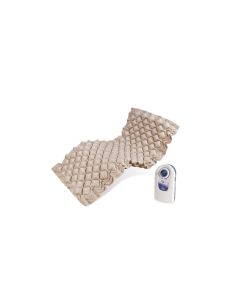
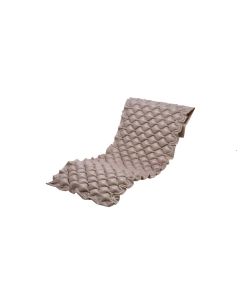
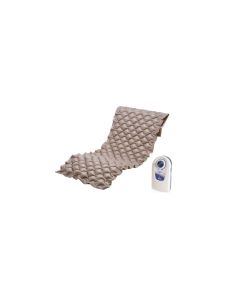
The main difference between a water-based mattress and a pneumatic system is the way body weight is supported. The water-based model uses the movement of the liquid contained in the chambers and achieves passive load redistribution. alternating pressure air anti-decubitus mattresses, on the other hand, use a compressor that regulates the inflation and deflation of pneumatic cells according to pre-set cycles. This alternation alters the areas receiving the most pressure over time and represents a different function from the static adjustment provided by water. There are also static air systems, which do not provide for automatic pressure adjustment.
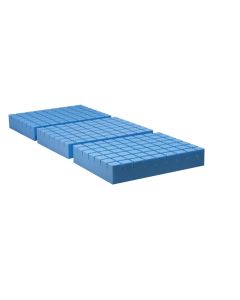
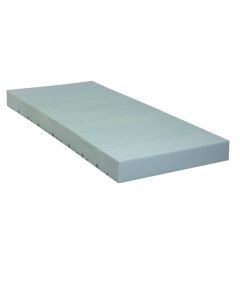
The polyurethane foam mattresses They use a still different principle, based on the deformation of the material under the effect of weight. Foams can have different densities, surface textures, and elastic characteristics, which affect body support and load distribution. Compared to these systems, the waterbed contains a liquid component that modifies both the mechanical response and the overall weight of the device. No one technology can be considered universally superior to the others, because the choice of support surface depends on individual risk, clinical conditions, product characteristics, and the healthcare context.
Use of waterbeds in healthcare settings
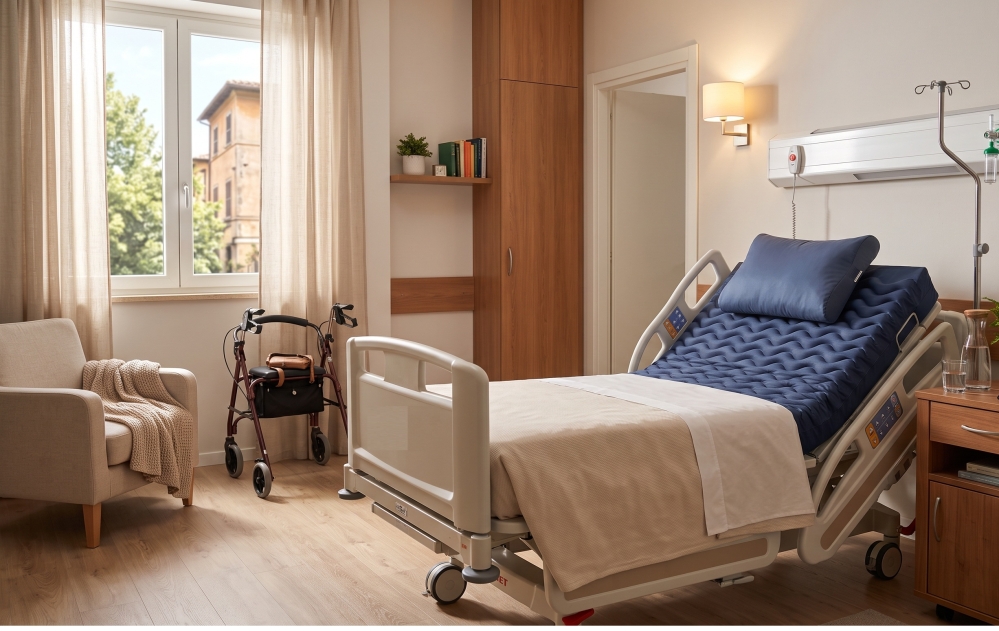
Water-filled pressure relief mattresses can be considered in settings where a support surface capable of adapting to body weight must be considered. These settings include home care, residential facilities, nursing homes, and some hospitalization settings. However, the presence of a person with limited mobility requires an assessment of the risk of pressure ulcers and positioning needs. anti-decubitus support It represents only one element of the care plan and must be compatible with the bed, with the movement needs and with the person's conditions.
In daily management, it is particularly important to properly fill the chambers, verify their integrity, and periodically inspect the surface. A water-filled mattress can weigh more than air-filled or foam-filled solutions, which should be considered during installation, handling, and maintenance. It is also important to check for leaks, the condition of joints, and the manufacturer's recommended cleaning procedures. Checking the skin, repositioning when indicated, and observing the patient's general condition remain essential, regardless of the technology used.
Features of Holity water-based anti-decubitus mattresses
In the catalog of Holity, a specialist in supplies and equipment for the healthcare sectorThere are anti-decubitus mattresses that use water as a support element. One example is the h13_273 model, made of PVC and featuring a structure with three water elements and a perimeter air edge. The device has external dimensions of 200 x 93 x 11.5 cm, while each water element measures 69 x 60 x 11.5 cm. The construction includes a double sealed seam and a manual pump with a hose for preparing the pneumatic component is included.
Among the products offered by Holity for healthcare Also featured is the Devimed h23908 water-based anti-decubitus mattress, made of fireproof PVC and featuring an inflatable external structure. The product sheet states a therapeutic load capacity of 180 kg, a figure that must be verified along with the other technical specifications before use. Both products demonstrate how the water-based support principle can be integrated into different construction configurations. In the category of Holity anti-decubitus mattresses It is also possible to compare water-based solutions with air and foam systems, evaluating their structure, characteristics and intended use.
The role of water surfaces in the prevention of pressure ulcers
A water-filled pressure relief mattress is a support surface whose function is based on the interaction between liquid, a flexible covering, and body weight. Its ability to change shape allows the device to adapt to weight distribution, but does not automatically ensure its suitability for every bedridden patient. Skin characteristics, residual mobility, risk level, and the presence of any lesions must be assessed by a qualified healthcare professional. prevention of pressure ulcers In fact, it requires a coordinated set of care interventions, in which the choice of mattress constitutes an important but not exclusive component.
Understanding the differences between water-based, pneumatic, and foam supports allows you to correctly interpret product characteristics and avoid comparisons based solely on the material used. For healthcare facilities and operators who need to explore these solutions, Holity represents a specialized reference in medical supplies, with a catalog that includes different anti-decubitus support technologies. Consulting the technical data sheets allows you to verify the dimensions, materials, configuration, and declared load capacity of each model. Identifying the most appropriate device must, however, be accompanied by a clinical assessment, so that the chosen surface meets the individual's actual needs.
 English
 Italian
 French
 German
 Spanish