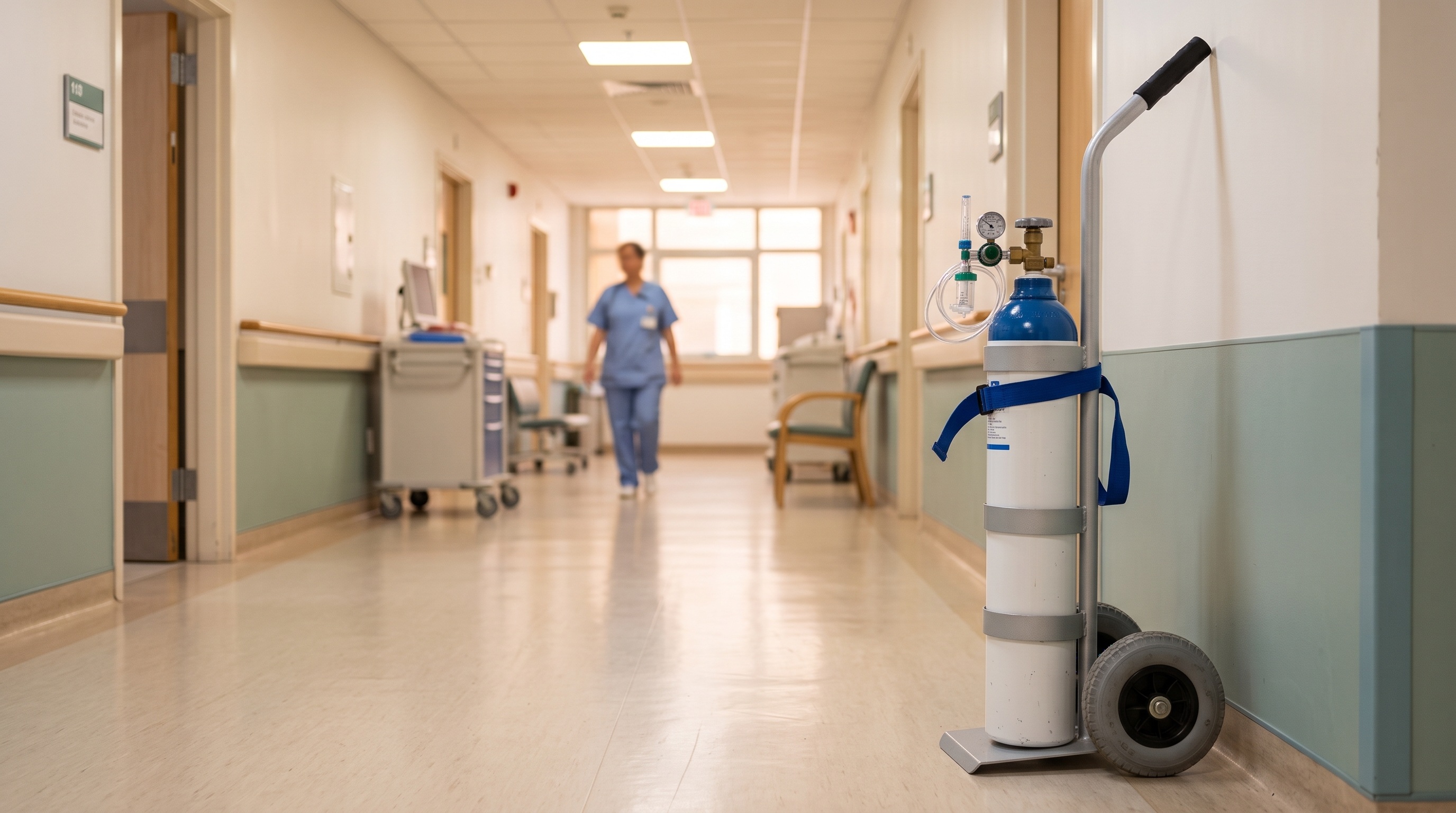
The transport of oxygen cylinders requires care even when moving them for just a few metres, within a hospital, a nursing home or another healthcare facility. The cylinders contain pressurised gas and must be handled in a manner compatible with the characteristics of the container and the supplier's instructions. An impact, a fall or an improper manoeuvre can damage the cylinder or its components, creating risky conditions for operators and for those present.
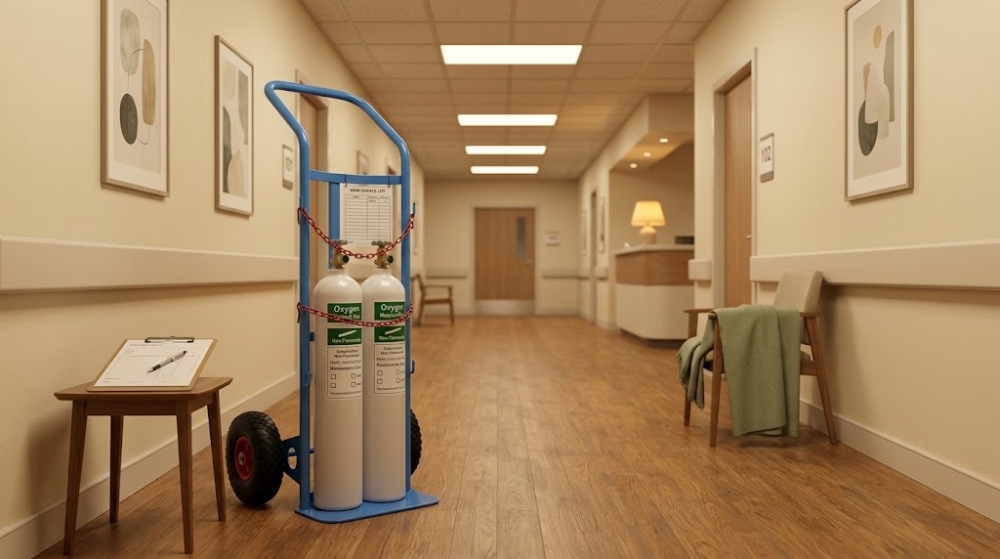
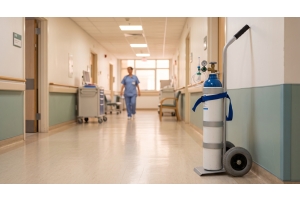
The The cylinder trolley represents support equipment for organising these transfers, but its presence does not automatically make every operation safe. It is necessary to choose a compatible model, position the container correctly, use the restraint systems and check the route before moving. Safety in handling comes from the correct use of the trolley and compliance with the operating procedures, not from the sole availability of a structure equipped with wheels.
Why Transporting Cylinders Requires Care
An oxygen cylinder is a vessel designed to contain gas under pressure. This characteristic requires specific precautions during handling, regardless of the distance to be traveled. The weight of the vessel, the presence of the valve, and the conditions of the route can affect the transport methods. The supplier's instructions and the facility's procedures must therefore be considered the operational reference for each movement.
Oxygen also has a safety-relevant characteristic: it is not combustible, but promotes combustion. For this reason, it is necessary to prevent leaks and keep the cylinders away from conditions incompatible with their management, according to the applicable indications. Handling must not be improvised or entrusted to methods designed for ordinary objects. The trolley is specifically designed to support a controlled transfer, reducing the need to directly handle the vessel during the journey.
The role of the cylinder trolley in the handling
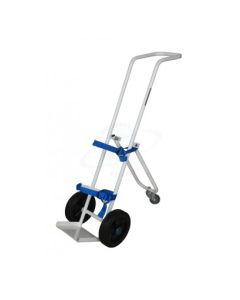
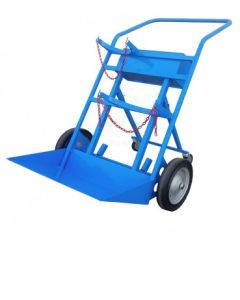
 The oxygen cylinder trolley is designed to facilitate the movement of containers compatible with its configuration. Depending on the model, it may be equipped with a support structure, wheels and devices designed to hold the cylinder during movement. Dimensions, capacity and fixing methods must be verified in the technical documentation, because not all trolleys are suitable for the same containers.
The main operational advantage consists in the possibility of transferring the cylinder using dedicated equipment, avoiding the need to drag or improper manual handling. This does not eliminate the need to check the stability and conditions of the route. Holity, a specialist in professional supplies for healthcare and assistance facilities, represents a reference for the selection of equipment intended for the movement and organisation of work environments. The choice of trolley must in any case start from the characteristics of the cylinders actually used.
Check the compatibility between the cylinder and the trolley
Before using a trolley it is necessary to ensure that it is compatible with the cylinder to be transported. The diameter, height, weight and configuration of the container can vary and affect the possibility of positioning it correctly in the support. A structure that appears sufficiently large may not guarantee the expected retention, while a housing that is too narrow could prevent the correct insertion of the cylinder.
Compatibility must be verified through the specifications of the trolley and the manufacturer's instructions. The number of cylinders for which the model is designed must also be considered, without adding containers beyond those foreseen. The nominal capacity is not the only criterion to be checked : the permitted dimensions and the functioning of the fastening systems also count. A trolley intended for a specific configuration should not be arbitrarily adapted to different containers.
Check the cylinder before moving
The preparation for transport begins with an inspection of the external condition of the container, according to the facility's procedures. The operator must pay attention to any visible damage, anomalies or conditions that require the intervention of competent personnel. The presence of a problem must not be addressed through improvised repairs. If there is any doubt about the integrity or safety of the cylinder, the operation must be stopped and the instructions of the manager and the supplier must be followed.
It is also necessary to check that the cylinder configuration is compatible with the planned movement. Valves, any protective devices and accessories must be managed according to the specific instructions of the container. The preliminary check is used to prevent an abnormal condition from being discovered during the transfer when the operator may be in a corridor, near other people or in a space with limited maneuverability.
Position and secure the cylinder correctly
The Positioning must follow the methods provided by the forklift manufacturer. In models designed for vertical transport, the cylinder must be placed in the designated slot and maintained in the indicated configuration. It is important to avoid precarious supports or positions in which the container can move independently of the structure. Before starting the move, the operator must check that the forklift is stable and that the cylinder is correctly positioned.
If the model has chains, straps or other restraint systems, these must be used according to the manufacturer's instructions. The simple presence of a fastening device does not guarantee that it has been applied correctly. An inadequately restrained cylinder may move during a curve or stop, affecting the overall stability of the trolley. The fastening must therefore be checked before each transfer, even when the route is short and usual.
Protect valves and components during transport
 The valve is one of the parts that require the most attention during handling. A direct impact can damage the container's components and cause a dangerous situation. For this reason, transport must take place in the configuration provided by the supplier of the cylinder, respecting the instructions relating to the closing of the valve and the possible presence of protections. The methods may vary depending on the type of container and its use.
The valve, regulator or other accessories must not be used as gripping points to lift or move the cylinder. It is also necessary to avoid the container coming into contact with obstacles along the route. The protection of the components must not be entrusted solely to the operator's caution, but to correct preparation and handling compatible with the instructions received. Any dispensing devices must be managed exclusively according to the applicable procedures.
How to move the trolley along internal routes
During movement it is necessary to maintain control of the trolley, respecting the driving methods provided by the manufacturer. The speed must be compatible with the weight transported, the conditions of the floor and the presence of other people. Sharp curves, changes of direction and sudden stops can affect the stability of the system. The operator must therefore approach the route with controlled movements, without forcing the structure or using the trolley in unforeseen positions.
The route should be checked before movement, especially when it passes through highly frequented areas. Corridors full of equipment, wet floors, or temporary obstacles may require a different organization of the movement. The safe transport of oxygen cylinders also depends on the conditions of the environment. A correctly sized cart cannot compensate for an unsuitable path or a maneuver performed without sufficient space.
Managing doorways, ramps, thresholds, and elevators
Building characteristics can make some transfers more complex. Narrow doorways, raised thresholds, ramps, and changes in flooring require a prior assessment of the compatibility of the cart with the route. It is not appropriate to assume that a model equipped with wheels can handle every difference in level. The manufacturer's instructions and the facility's procedures must establish the permissible conditions for movement.
When the transfer involves the use of a lift, the dimensions, capacity and internal rules relating to the transport of cylinders must be considered. The possible presence of people in the same space must also be managed according to the applicable procedures. Ramps and differences in level must not be tackled with improvised manoeuvres. If the route presents conditions that are not compatible with the equipment, it is necessary to identify an alternative method authorised by the structure.
Avoid impacts, overturning and improper manoeuvres
 The Prevention of impacts begins with the choice of an appropriate route and checking the stability of the cylinder. During movement, the trolley should not be subjected to sudden accelerations, collisions with furnishings or uncontrolled changes of direction. Use on uneven flooring must also respect the limits indicated by the manufacturer. The operator must be able to maintain a position that allows control of the movement without resorting to effort or improper postures.
It is particularly important not to drag, roll freely or intentionally drop cylinders to overcome obstacles or reduce working times. These methods are not a substitute for the use of appropriate equipment. Preventing overturning requires a stable system, correct fastening and controlled operation. If the trolley shows abnormal behaviour, such as instability or difficulty sliding, the movement must be suspended and the situation checked.
Organising transport in healthcare and assistance facilities
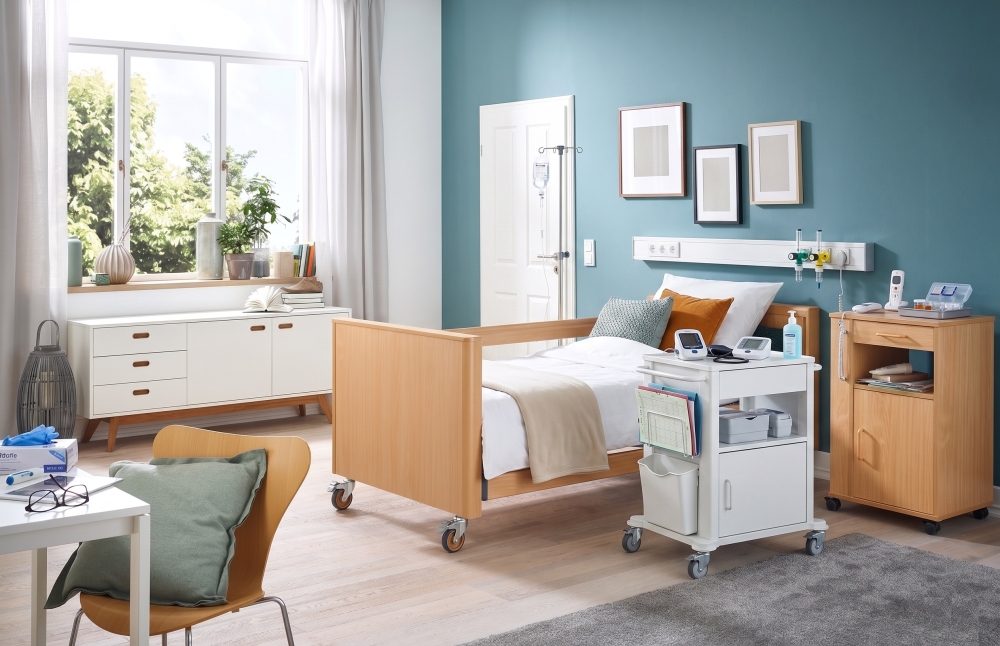
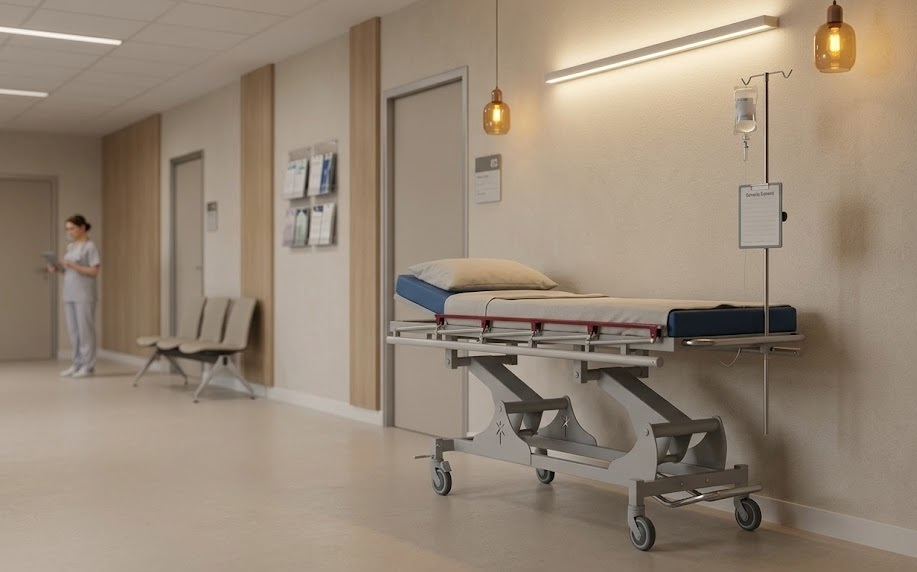
In hospitals, clinics, nursing homes and other assistance facilities, the movement of cylinders can take place in environments shared with healthcare personnel, patients, visitors and equipment. For this reason, the transfer must be integrated into the organization of internal routes. The choice of times and methods of movement can help limit interference with ongoing activities, especially in areas characterized by frequent passage.
The structure should define who is authorized to move the cylinders and which procedures must be followed. The indications may vary depending on the type of container, the intended use and the characteristics of the environments. Holity, a specialist in professional equipment for healthcare facilities, also addresses organizations that need to equip themselves with functional supports for internal movement. The equipment must be integrated into operating procedures already defined and known by the workers.
Position the cylinder at the end of the transfer
Transport does not simply end when the trolley reaches its destination. It is necessary to ensure that the cylinder is placed in the intended position and that it is not exposed to impacts, falls or interference with the passage of people. The methods Positioning depends on the container configuration and the facility's procedures. It is not correct to automatically consider the cart suitable for prolonged parking or storage.
If the cylinder must be transferred from the cart to another support, the operation must be carried out according to the applicable instructions and in a manner appropriate to the weight and characteristics of the container. The restraint system must remain effective until the cylinder has been placed in a safe condition. Furthermore, the cart should not be left in a position where it may obstruct exits, corridors or emergency routes.
Periodic cleaning and inspection of the cart
The The cylinder trolley is an equipment subject to repeated use and must be maintained in a condition compatible with the intended handling. Wheels, structure and restraint devices may require inspections according to the manufacturer's instructions and the facility's maintenance procedures. A damaged fastening system or a wheel that does not slide correctly may compromise the practicality of the cart. and stability during transport.
Cleaning must be carried out using methods and products compatible with the materials of the trolley and with the hygiene procedures of the work environment. In healthcare settings, specific provisions may be made for equipment shared between different departments or areas. Periodic inspections allow for the identification of conditions requiring maintenance before the next use. In the event of anomalies, the trolley must be managed according to internal procedures, avoiding improvised repairs.
Procedures and training for correct handling
 The availability of an appropriate trolley must be accompanied by clear operating instructions. The personnel in charge must know the characteristics of the equipment, how to secure the cylinders and the conditions in which the movement can be carried out. The training must also include the procedures to be followed in the event of damage, anomalies or suspected leaks. These situations require the application of the facility's safety provisions and the intervention of competent figures.
It is useful for procedures to be consistent across different departments or environments where cylinders are handled, taking into account the specific needs of each area. Uniform management reduces the risk of each operator developing untested personal habits. The trolley must be used only by adequately trained and authorised personnel, according to the organisation's rules. The apparent simplicity of movement does not eliminate the risks associated with pressurised containers.
How to make cylinder transport safer and more organised
Correct handling requires a combination of compatible equipment, preliminary checks and suitable routes. The trolley must support the cylinder in the intended configuration, allow for a controlled transfer and maintain effective restraint systems during movement. Before use, the conditions of the container and the support must be checked, while at the end of the journey the cylinder must be positioned according to the applicable procedures.
Holity , a specialist in professional supplies for the healthcare and assistance sector , represents a point of reference for structures that must evaluate trolleys and equipment intended for internal handling. The choice of model must be based on dimensions, capacity, compatibility and construction characteristics declared by the manufacturer. In transport of oxygen cylinders , the quality of the organisation depends above all on the ability to use the equipment correctly, prevent improper manoeuvres and apply safety procedures consistent with the working environment.
 English
 Italian
 French
 German
 Spanish