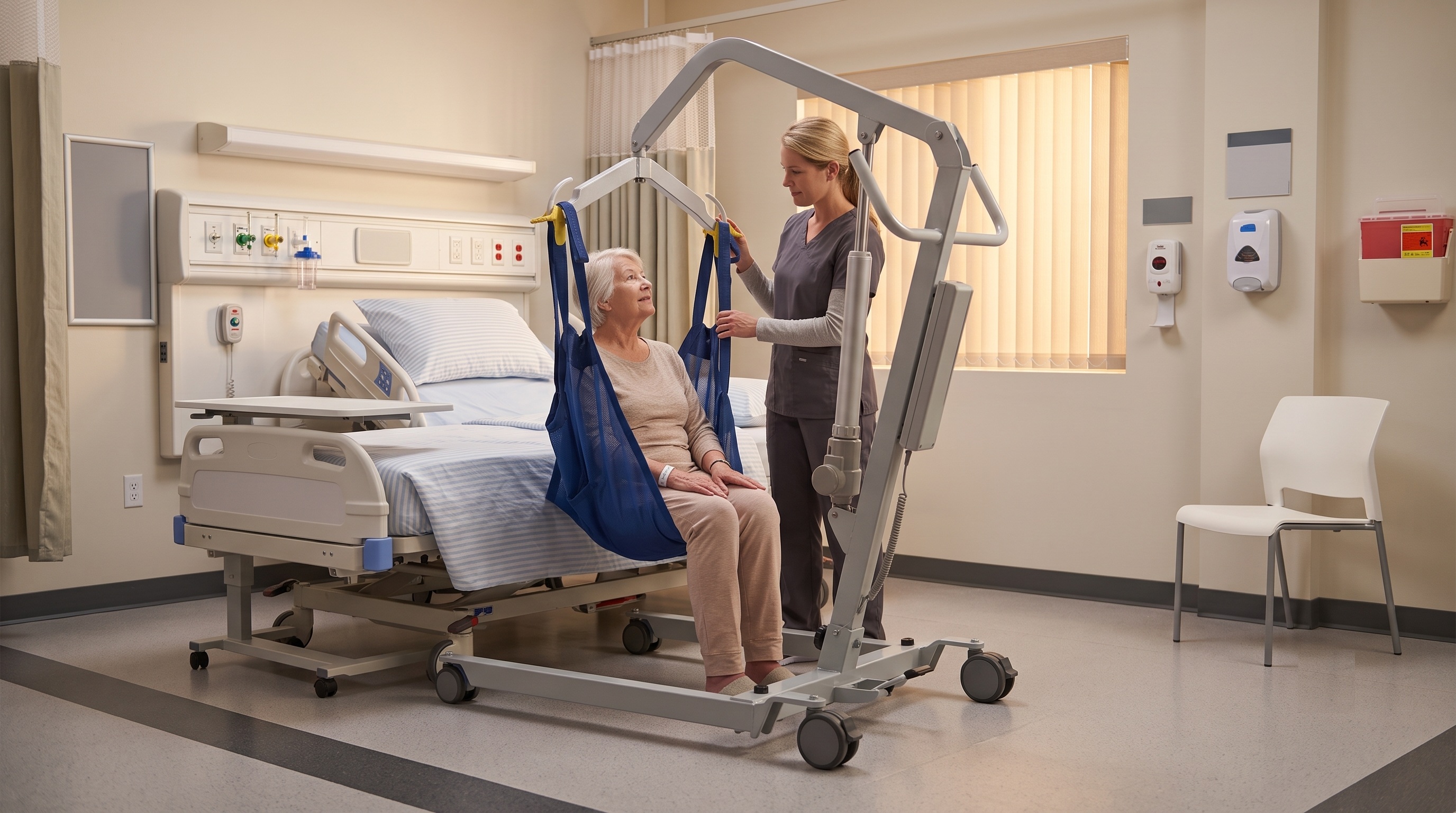
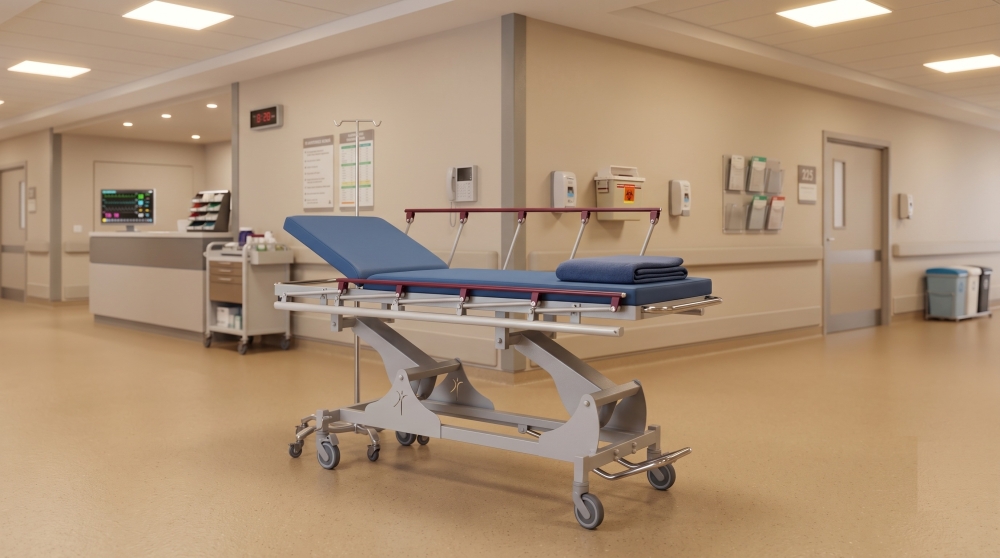
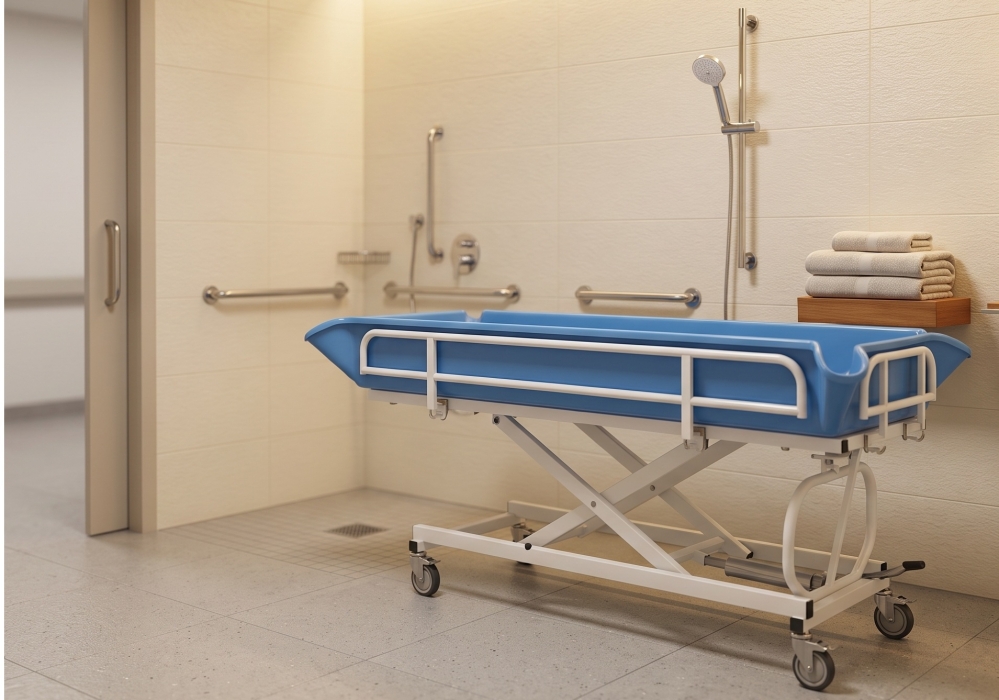
The lift for bedridden patients is a professional device used to assist the transfer of people with reduced or no mobility. It can facilitate the transition from bed to wheelchair, from wheelchair to armchair or to other supports provided for in the care plan. In hospitals, in clinics and in nursing homes, the choice of model affects the organization of the department, the comfort of the person and the ways in which operators carry out daily maneuvers.
There is no lift that is suitable for every patient and every environment. The person's motor conditions, ability to collaborate, body weight, type of transfer and available space modify the requirements of the device. Before purchasing it is It is also necessary to evaluate beds, wheelchairs, armchairs and toilets already present in the facility. A selection based solely on price or nominal capacity may lead to a product that is not very compatible with actual procedures.
When a lift is needed for bedridden patients
The The lift is used when the patient is unable to support his or her own weight or participate sufficiently in the transfer. In these conditions, attempting manual movement may be difficult for the person being assisted and for the staff. The device supports the body through a harness and allows the transfer to be performed following a more controlled procedure, defined on the basis of the healthcare assessment.
The use of the lift may concern temporarily immobilized patients, people with neurological pathologies, non-self-sufficient elderly people or users with complex motor disabilities. The need does not depend only on the diagnosis, but also on the patient's abilities. residual capacity and the type of transfer required. Healthcare personnel must identify the most suitable method, verifying that the device and the harness are compatible with the person's posture, muscle tone and general condition.
Passive lift and stander: operational differences
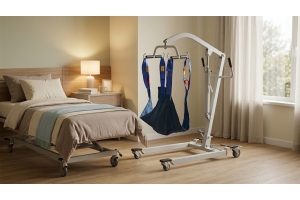
The Passive lift supports the patient through a harness and is used when the person is unable to maintain an upright position or actively participate in the maneuver. The mobile structure approaches the bed or wheelchair, while the arm gradually lifts the harness. This configuration is frequent in the care of bedridden patients and in situations of high dependency.
The Stander, also called active lift, requires residual capacity for support, trunk control and collaboration. It helps the person reach a more vertical position and can It can be used in some short transfers, according to professional evaluation. It does not represent an interchangeable variant of the passive lift. Choosing the wrong device with respect to the patient's capabilities can make the procedure ineffective or inappropriate.
Patient load capacity and characteristics
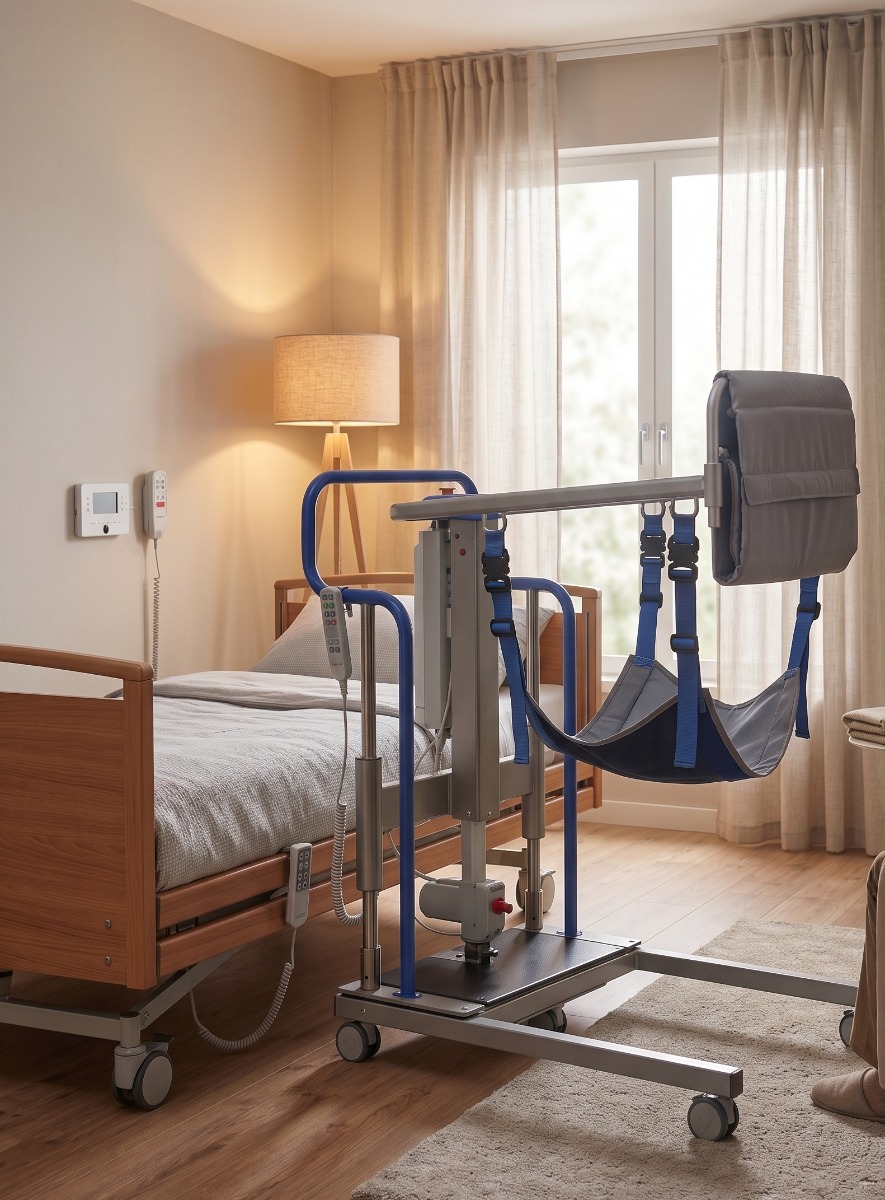 The maximum load capacity of the lift must be greater than the weight of the person being assisted and must also be respected for the harness and accessories used. In departments that accommodate patients with very different characteristics, it may be appropriate to provide models with a higher load capacity or dedicated bariatric devices. The reinforced structure of these products, however, affects weight, dimensions and maneuverability.
Weight is not the only factor to consider. Height, build, head control, presence of contractures and posture influence the choice of harness and the transfer configuration. A tall patient or one requiring full support may require a different sheet than a person with good trunk control. The device must therefore be evaluated together with the planned support system.
Compatibility with beds, wheelchairs and care environments
The base of the lift must be able to fit under the bed or get close enough to allow a controlled transfer. Leg height, base opening and position of wheels or mechanisms can make the product more or less compatible with existing beds. Wheelchairs, armchairs and stretchers must also offer sufficient space for the patient to approach and exit.
Before ordering, it is useful to measure doors, corridors, elevators, rooms and assisted bathrooms. The rotation radius is particularly important in nursing homes with compact rooms or furniture already installed. A lift for bedridden patients with excellent technical performance can be less functional if it cannot move around on daily routes. Environmental compatibility must be verified before the quote, not after delivery.
Electric lifts: autonomy, controls and emergency systems
The Electric lifts use a battery to operate the arm and raise or lower the patient. The control must be simple to use and reachable during the maneuver. Autonomy, charging time and the presence of a removable battery affect the continuity of service. In facilities with frequent use, it may be useful to have a scheduled charging procedure or additional compatible batteries.
The device should include systems to manage any anomalies, such as emergency stop and controlled descent. The equipment varies according to the model and must be verified in the technical data sheet. Operators must know how the controls work before using it with the patient. The mere presence of the motor does not automatically make the lift more efficient. suitable: reliability, ease of management and consistency with the care load are important.
Harnesses and patient support systems
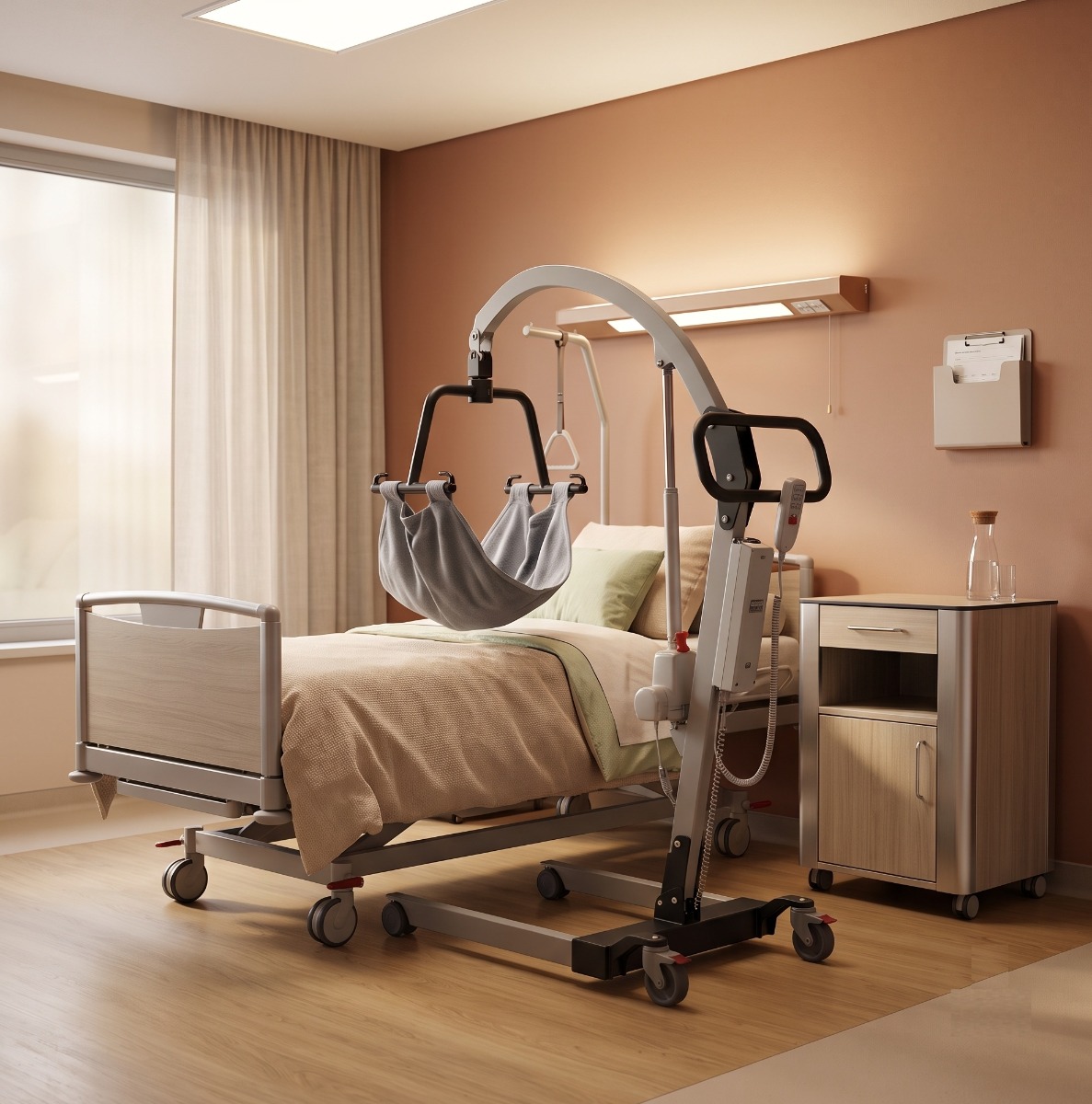 The harness is the component that directly supports the person during lifting. It can offer partial or complete support and have different configurations for the head, trunk and lower limbs. Size, material and attachment system must be compatible with the patient and the lift model. Using a generic harness without checking the indications and compatibility can compromise posture and stability during the transfer.
Facilities must also evaluate washing frequency, drying times and the availability of an adequate number of sheets. Some harnesses are designed for specific uses, such as hygienic transfers or complete support. It is important to periodically check seams, buttonholes, clips, and fabric, excluding any damaged components. The cost of the supply must therefore include not only the lift, but also the number and type of slings required.
Size, maneuverability, and frequency of use
The The weight of the device, the diameter of the wheels, and the geometry of the base influence maneuverability. A compact model can move more easily in a small room, but must still offer adequate stability and capacity. Larger or bariatric lifts require more rotation space and may be difficult to manage in environments not designed for this type of equipment.
The frequency of use changes the purchasing priorities. A device used multiple times per shift must have practical controls, an adequate battery, smooth-running wheels, and durable components. In a facility that uses it occasionally, compactness and ease of storage may become more important. The choice should start from a realistic estimate of the number of transfers, avoiding both undersizing and the purchase of unnecessary features.
Cleaning, sanitization and maintenance of the device
The The lift must be included in the facility's cleaning procedures. The frame, base, arm, handles and control are frequently touched and must be accessible for cleaning. Smooth surfaces and protected components facilitate daily management. The products and methods used must comply with the manufacturer's instructions, especially in the presence of electrical parts and batteries.
The Maintenance includes checking the wheels, brakes, hooks, actuator, battery and emergency systems. Checks must be scheduled according to internal instructions and procedures. Availability of spare parts and technical assistance affect the overall cost of the device. In hospitals and nursing homes, prolonged downtime can create organizational difficulties; for this reason, reliability and continuity of support must be evaluated together with the initial price.
How to prepare a complete quote request
The request should indicate the type of patients, expected maximum weight, number of transfers, environments of use and equipment with which the lift will interact. It is useful to indicate the measurements of the beds, free height under the frame, width of the doors and dimensions of the lifts. The number and type of harnesses, required autonomy and the need for accessories or additional batteries must also be specified.
A complete quote should distinguish the device, standard equipment, accessories, harnesses, transport, training and assistance. In this way it is possible to compare technically equivalent offers. The lowest price may refer to an incomplete configuration, while a higher cost may include elements already present. necessary for the structure. Initial clarity reduces subsequent integrations and makes the investment evaluation more reliable.
Professional supplies for hospitals, clinics and nursing homes
Holity, a specialist in professional medical-health supplies, offers lifts and aids intended for hospitals, clinics, nursing homes and care facilities. The availability of different configurations allows you to evaluate capacity, size and functions in relation to the characteristics of the department. This approach is useful for purchasing managers and coordinators who must select equipment compatible with already organised procedures and environments.
Holity represents a point of reference for equipment dedicated to the assisted movement of patients, with a catalogue aimed at structures that require reliability and operational continuity. The choice of lift must in any case involve the healthcare and technical figures responsible for the structure. Evaluating patient, load capacity, harness, autonomy, and environmental compatibility allows you to purchase a truly functional solution. A correctly selected device supports operators' work and makes daily transfers more orderly.
 English
  Italian
 French
 German
 Spanish