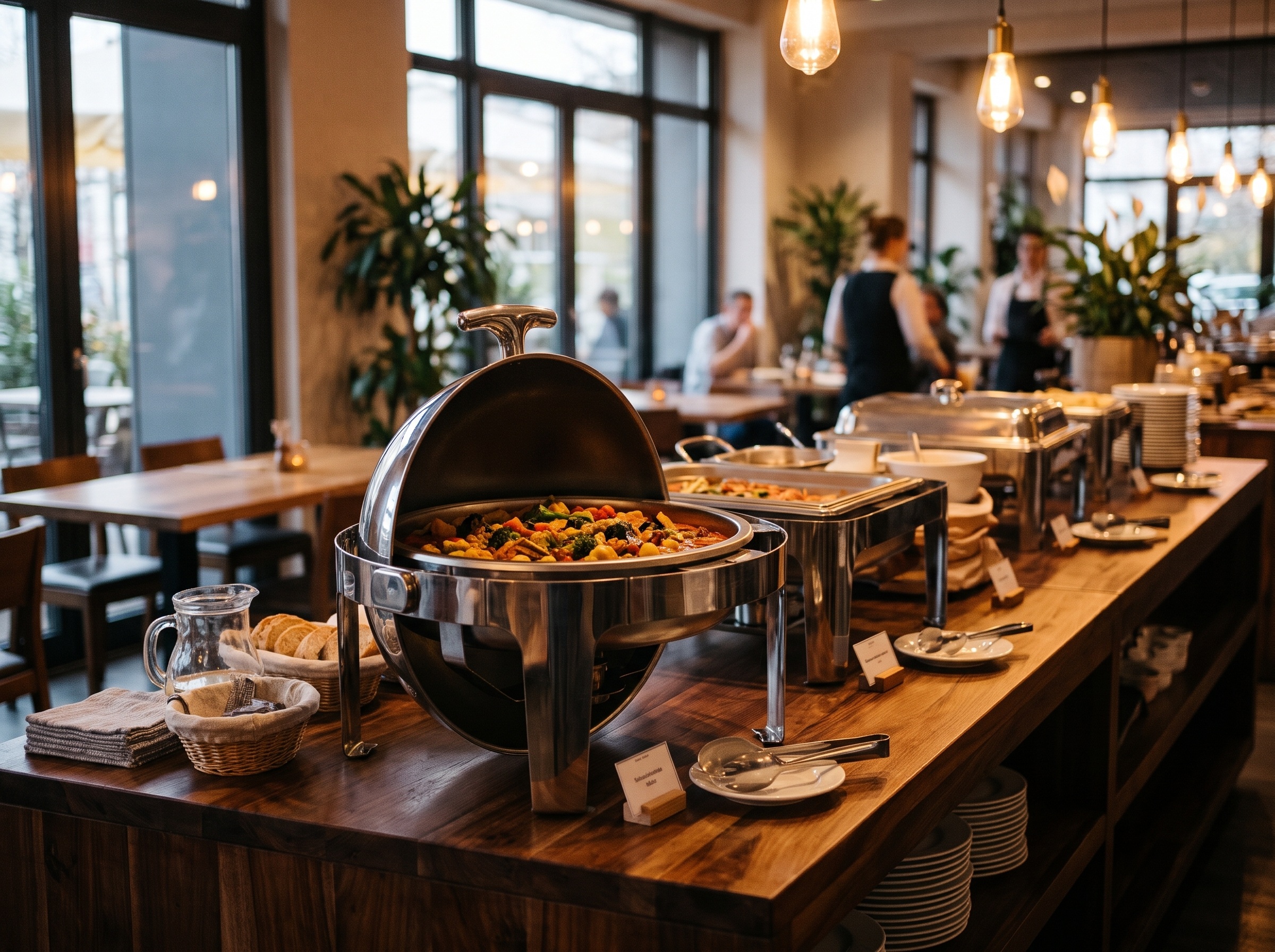
Organizing a professional buffet means ensuring a practical, orderly service that keeps the food warm during distribution. professional food warmersChafing dishes, also known as chafing dishes, are appliances used in restaurants, hotels, catering, and banquet facilities to preserve the heat of prepared foods and present them to guests in a practical manner. Choosing the right model depends on the heating system, capacity, size, and lid opening method.
They exist on the marketfuel-fired, electric and induction food warmers, available in round, square, and rectangular shapes. The type of opening, from removable lids to roll-top and tilt-top systems, also influences the practicality of service. Understanding the differences between these configurations allows you to choose a restaurant food warmer that's appropriate for the available space, the number of guests, and the buffet layout.
Why food warmers are important during service
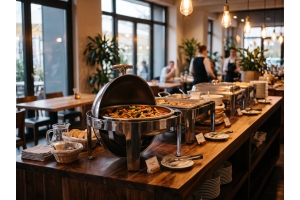
The food warmer for buffets They keep prepared dishes warm during distribution. They're particularly useful when many guests need to serve themselves within a given timeframe, such as during hotel breakfasts, restaurant buffets, and events organized by catering companies.
In addition to maintaining heat, these devices contribute to the presentation of dishes. The neat arrangement of the containers and the ability to open and close the lid make it easy to remove food. A well-chosen professional food warmer improves the functionality of the buffet, making service and refueling operations easier, in compliance with food safety procedures.
How a professional food warmer works
 The professional chafing dish It generally consists of a support structure, a container for the food, a heating system, and a lid. In traditional bain-marie models, heat is transferred through a basin containing water, which helps maintain the temperature of the food.
The power supply system varies depending on the configuration. Fuel-fired food warmers use dedicated burners, while electric ones use heating elements. Some models are designed to work with compatible induction hobs. The main function remains the keeping of already prepared foods warm: the appliance must not be used to cook or regenerate food, unless specifically indicated by the manufacturer.
The main types of food warmers for restaurants
The first distinction to consider concerns the heating system. fuel-fired food warmers They represent a versatile solution for buffets and catering, especially when there is no nearby electrical connection. Electric models, on the other hand, allow for the use of a continuous power source and, when applicable, temperature regulation via a thermostat.
The induction food warmer They represent an additional alternative for setups equipped with compatible heating surfaces. In addition to these differences, configurations with a roll-top, tilting, or removable lid are also available. The heating system and the type of opening are independent features: the same model can combine, for example, fuel-powered operation with a roll-top lid.
Fuel-fired food warmers: practical for buffets and catering
The fuel-fired food warmers They use special containers of gel or combustible paste placed under the tank, according to the manufacturer's instructions. This configuration allows you to organize a buffet without relying on an electrical outlet near each appliance. For this reason, it is often chosen for catering, receptions, and events with temporary setups.
Before purchasing, it's important to check the number of burners, the capacity of the tanks, and compatibility with the intended fuel. You should also consider the operating time and the possibility of replacing the tanks during use. The practicality of fuel-fired chafing dishes depends on proper power management and safe placement of the equipment., especially in areas directly frequented by guests.
Electric and induction food warmers: features and differences
The professional electric food warmers They use a mains-powered heating system. Some models have adjustable thermostats, allowing you to set the operation within the manufacturer's specified range. This solution is particularly useful for buffets set up at fixed locations, such as those in hotels and restaurants.
Induction-compatible models are designed for use with dedicated heating plates. This configuration may be suitable for modern setups where you want to integrate the heating system into the buffet counter. Before choosing one, induction food warmer, it is essential to check the compatibility between the container and the hob, in addition to the conditions of use indicated in the technical data sheet.
Food warmer with roll-top, hinged or removable lid
 The lid opening system is one of the elements that most influence the practicality of the service. roll top food warmer They feature a sliding lid that can be opened without removing it completely from the frame. This feature allows guests to access their food without having to place the lid on another surface.
The food warmer with hinged or swing lid Instead, they use a hinged opening mechanism, while models with removable lids require the cover to be removed when removing food. The choice depends on frequency of use, available space, and distribution methods. In self-service buffets, a simple and practical opening can help streamline service.
Round, square, and rectangular food warmers: which shape to choose?
Professional food warmers are available in different shapes, which affect both the capacity and the organization of the buffet. rectangular chafing dishes They are particularly popular because they can accommodate standard-sized containers and allow for the orderly distribution of multiple preparations. Square models are an alternative for certain configurations and display spaces.
The round food warmers They can be used to present specific dishes and create a more varied buffet. The choice of shape should also consider the size of the counter, the arrangement of other equipment, and the ease with which guests can reach the food. Combining different shapes can be useful, as long as the layout remains functional and accessible.
How to choose a food warmer based on the preparations
The type of food to be served is an important criterion in choosing the food warmer for restaurantsFirst courses, second courses, side dishes, and other pre-prepared dishes may require different containers in terms of capacity, depth, and serving method. The food's texture and sensitivity to moisture loss must also be considered.
For preparations served in large quantities, a model with a large bowl may be useful, while for a selection of different dishes, divided containers may be more practical. The food warmer must be adapted to the type of service and the characteristics of the food, always checking the maintenance conditions required by the facility's procedures.
Maintenance temperature and food safety
Keeping food warm requires careful monitoring of temperatures and exposure times. Professional food warmers must be used according to the manufacturer's instructions and the food safety self-monitoring procedures adopted by the business. The temperature set on the appliance does not necessarily correspond to the actual temperature reached at every point in the food.
It's important to remember that a chafing dish isn't necessarily designed to quickly reheat cold foods. The food warmer is mainly used to keep food warm once it has been brought to the required temperature.Container replenishment and display times must also be organized in compliance with the HACCP plan, avoiding excessive waits that could compromise the quality of the food.
Capacity and size: how to assess your needs
 The food warmer for buffets They are available in different capacities, from compact models designed for small quantities to larger configurations for large guests. To choose the right size, consider how many dishes need to be presented at once, the approximate number of people to be served, and the frequency of refills.
External dimensions should be evaluated along with the available counter space. It's also important to consider the space required for the lid to open and the space needed to access the containers. A properly sized food warmer allows you to better organize the buffet, without taking up excessive space or requiring constant refills.
Gastronorm containers and food organization
Many professional chafing dishes are compatible with containers Gastronorm (GN), a system of standardized sizes used in catering equipment. Available configurations include models designed for GN 1/1, GN 1/2, GN 2/3 containers, and other sizes, depending on the equipment's construction.
The option of using one or more containers makes it easier to organize dishes and can allow you to present different dishes in the same food warmer. Before purchasing, check the compatible dimensions and depths, as well as any accessories required. The correct choice of Gastronorm containers helps to make the service more practical and to make better use of the available space.
How to organize food warmers on the buffet counter
The positioning of food warmers affects the accessibility of dishes and the flow of service. In a self-service buffet, it's helpful to arrange the equipment so that guests can easily reach the containers, use the serving utensils, and move along the counter without creating clutter.
The type of power supply used must also be considered. Electric models require suitable connections, while fuel-fired models require operating conditions compatible with the presence of burners. The space required to open roll-top or flap lids must also be evaluated. A well-organized buffet combines ease of use, orderly presentation and safety.
Power, fuel and consumption during service
When comparing professional food warmers, you should also consider the power supply system and its associated operating costs. For electric models, it's helpful to check the rated power, adjustment options, and power connection features. Actual consumption depends on the appliance's operation and duration of use.
For fuel-fired food warmers, it's necessary to evaluate the type of fuel used, the number of containers used, and their stated battery life. For induction systems, the characteristics of the heating surface, if any, must also be considered. The choice of heating system must take into account the frequency of use and the organization of the buffet, as well as the initial cost of the equipment.
Materials, cleaning and daily maintenance
 Many professional stainless steel food warmers They are designed to withstand frequent use and allow for easy cleaning. Stainless steel, available in various finishes, is particularly popular for chafing dishes intended for restaurants, hotels, and catering. Some models may feature glass or other materials, which must be treated according to the manufacturer's instructions.
When cleaning, it's important to pay attention to food containers, lids, supports, and any opening mechanisms. In bain-marie models, the water tank must also be treated. The ease of disassembly and cleaning of the components contributes to the practicality of the food warmer, especially when the equipment is used on a daily basis.
Mistakes to avoid when choosing a food warmer
One of the most common mistakes is choosing a food warmer based solely on price or capacity. A fuel-powered model may be practical for a temporary setup, but it may not be the best solution for every permanent buffet. Likewise, an electric food warmer requires checking the availability and adequacy of the power supply.
Another often overlooked aspect is the lid. A roll-top or flip-top model can make it easier to remove food, but it must be compatible with the available space and serving methods. It's also important to check the actual capacity, container sizes, and ease of maintenance. The best choice comes from comparing technical characteristics and real operational needs, not just from the presence of additional accessories.
Which food warmer to choose for your restaurant
To locate the professional food warmer To determine the most suitable option, it's helpful to start with the type of buffet you're organizing. For catering and temporary setups, fuel-fired chafing dishes may be ideal, while for fixed, electrically powered stations, electric or induction-compatible models are a good option. For self-service settings, choosing a roll-top or flip-top lid can help make access to the food easier.
It is also essential to evaluate the shape, capacity, size and compatibility with Gastronorm containers. Holity, specialist in professional catering equipment, offers various configurations of food warmers for buffets, restaurants, hotels and catering, offering solutions for different service needs.
Choosing the right food warmer means creating a more functional, organized buffet that is consistent with the number of guests and the serving methods. A well-selected professional chafing dish combines heat retention, practicality and presentation of the food., contributing to the overall quality of the service experience.
 English
 Italian
 French
 German
 Spanish