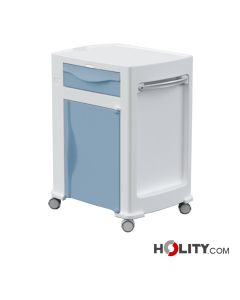
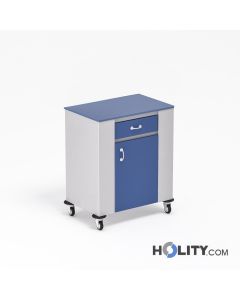
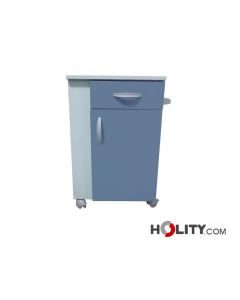
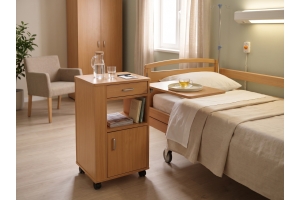
Designing a hospital room requires attention not only to the medical equipment, but also to the furnishings that accompany the patient during their stay. Among these, the hospital bedside table It plays an important role because it allows you to keep personal items, small accessories, and everyday materials readily available. Its location next to the bed requires consideration of accessibility, size, stability, and ease of cleaning. A seemingly simple piece of furniture can impact the room's organization, the patient's comfort, and the care staff's activities.
THEhospital bedside tables They are available in different configurations, from models with drawers and storage compartments to versions with wheels or an integrated overbed table. Not all solutions meet the same needs, and the choice must take into account the intended use. A hospital with frequent patient turnover may prioritize certain operational features, while a nursing home or long-term care facility may place greater emphasis on storage capacity and extended comfort. For purchasing managers, managers, and designers, comparing the technical characteristics of the models is therefore the first step in identifying furnishings that are compatible with the healthcare environment.
The role of the bedside table in the hospital room
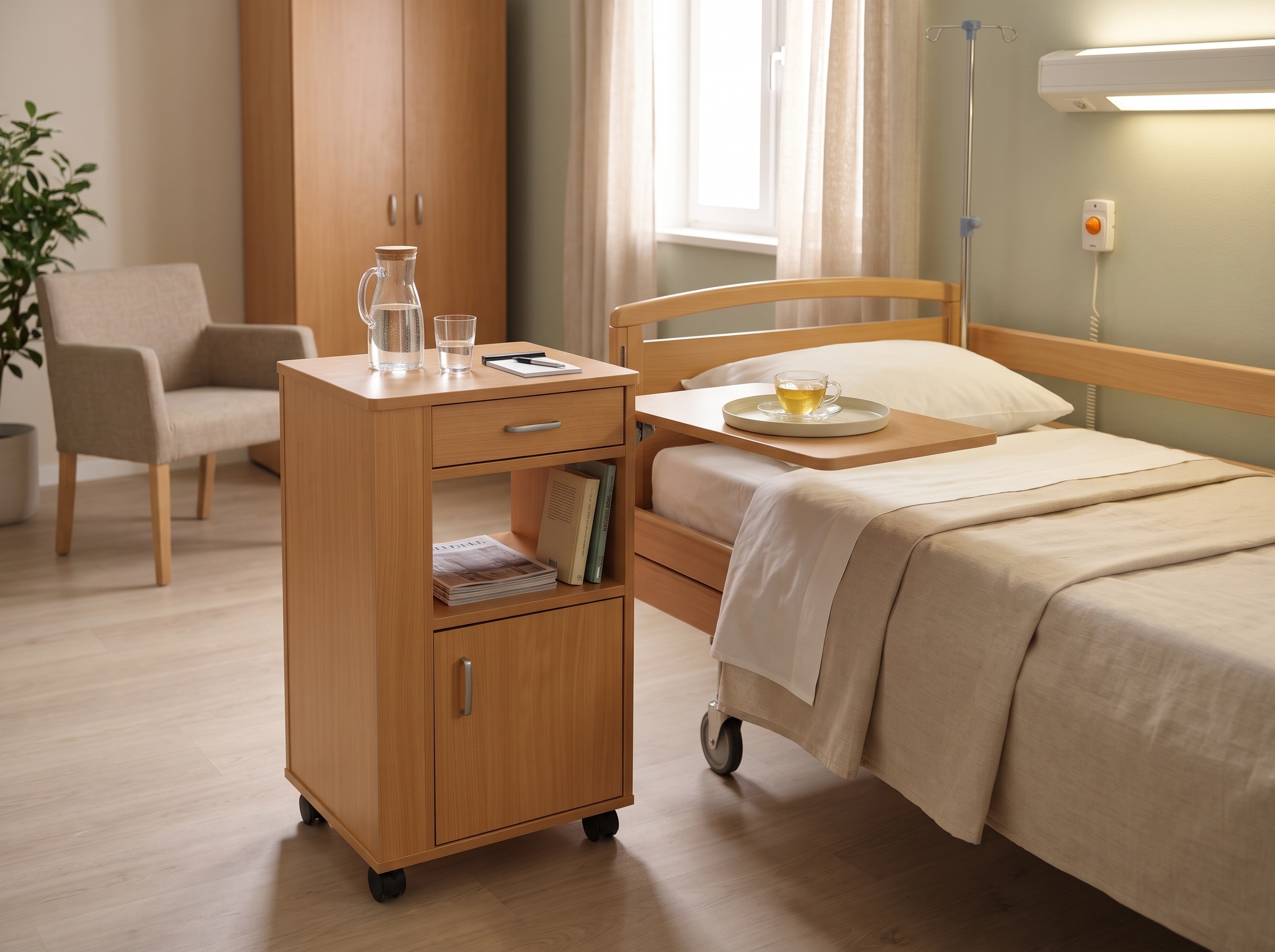
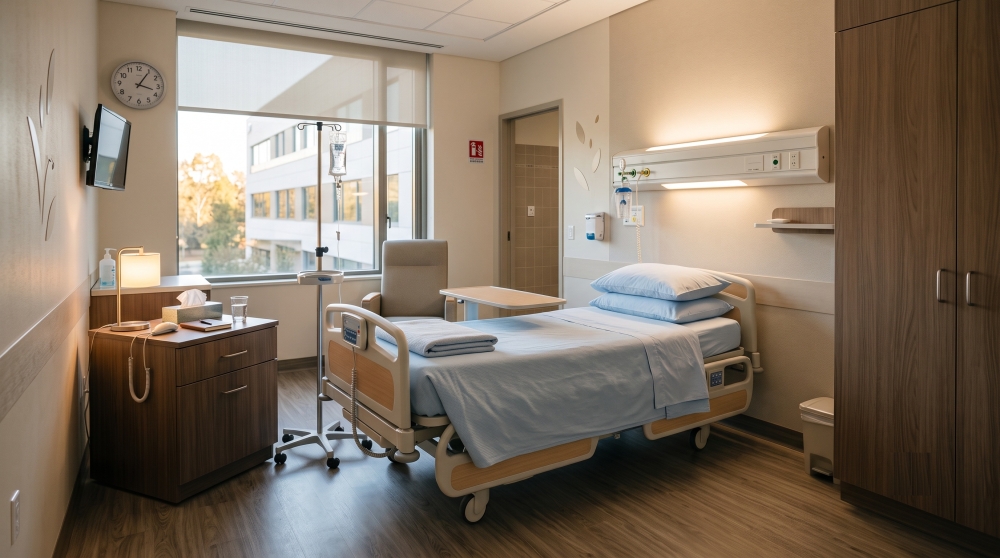
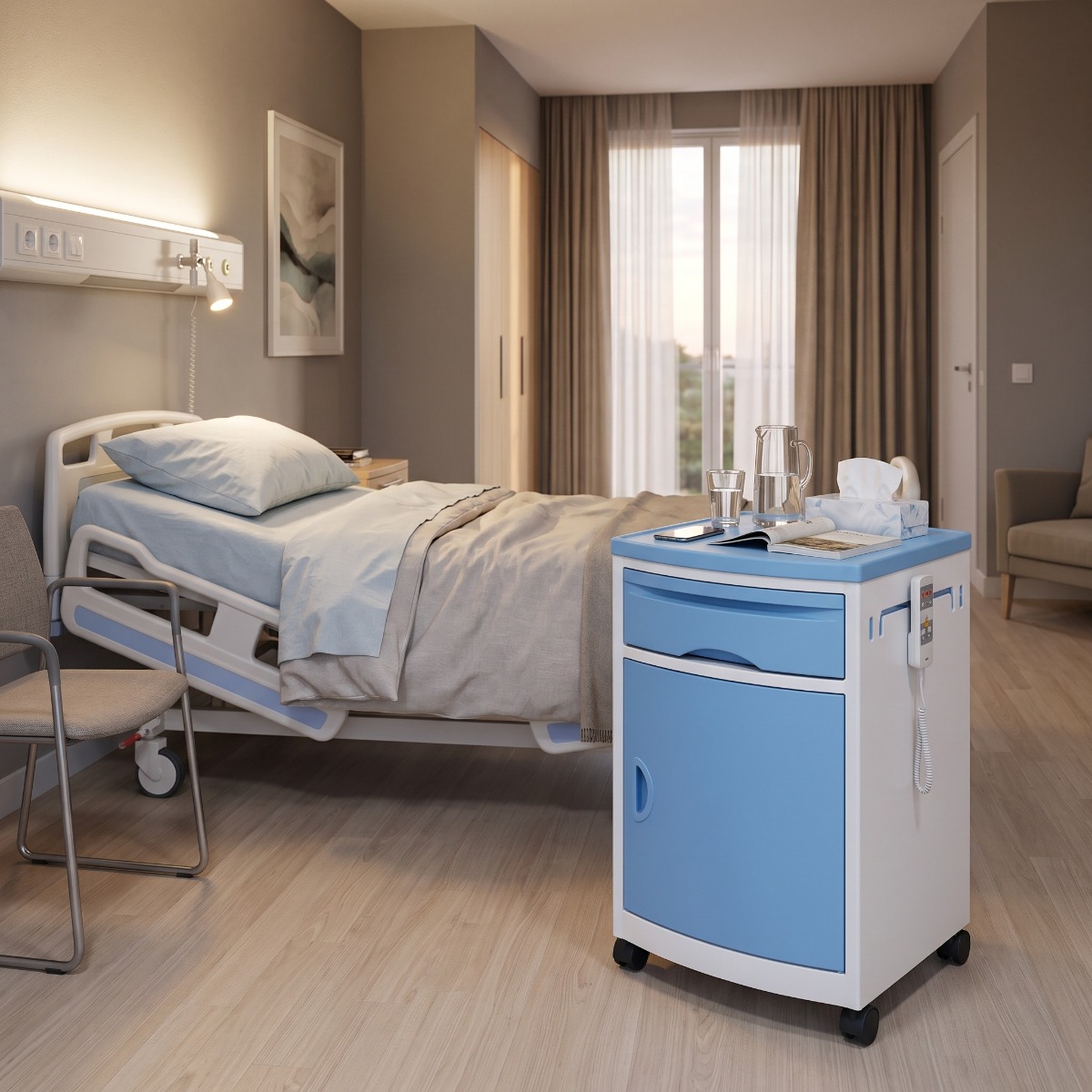 The bedside table is one of the furnishings closest to the patient and is used repeatedly throughout the day. It can hold personal items, glasses, books, communication devices, and other items the patient wishes to keep within easy reach. This function becomes particularly important when mobility is limited or when getting out of bed requires assistance. A bedside table for hospital room It must facilitate access to objects without hindering movement., maintaining an orderly arrangement compatible with care activities.
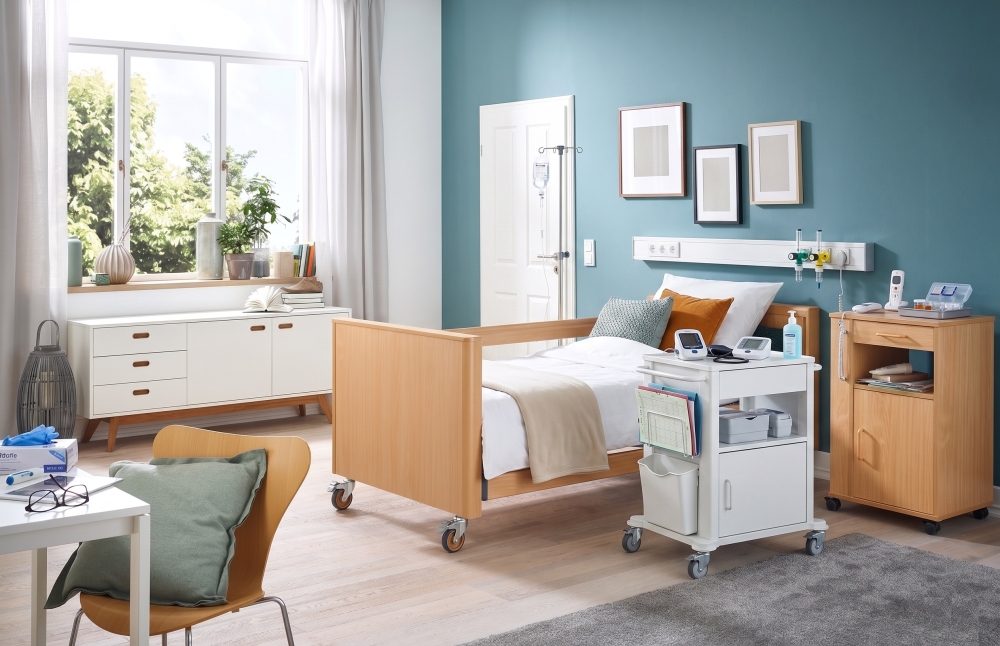
The presence of a bedside table also affects the organization of the space around the bed. Staff must be able to perform routine maintenance, cleaning, and equipment handling tasks without encountering unnecessary clutter. For this reason, the choice of furniture cannot be separated from the overall layout of the room. Patient functionality and operator convenience must be considered together, avoiding solutions that offer numerous accessories but are difficult to use or place correctly in the environment.
The main types of hospital bedside tables
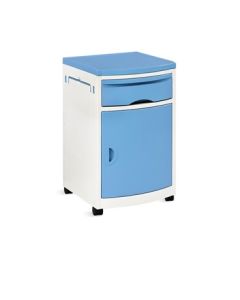
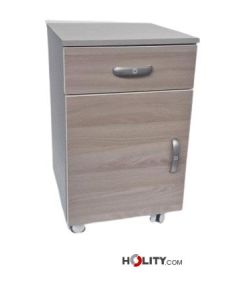
THE bedside tables for hospitals They can have different configurations depending on the facility's needs. Some models consist of a container with a drawer, open compartment, or door, while others include a serving shelf that can be used next to the bed. Versions with wheels are also available, allowing the unit to be moved according to the required construction features. Combinations can vary significantly, and it is incorrect to assume that all medical bedside tables include the same accessories or adjustment systems.
The type of bedside table you choose depends on how it will be used. A basic configuration may be sufficient when a small storage space is needed, while a multifunctional model can meet more complex needs. It's also important to consider the possibility of accessing the compartments from different positions and compatibility with the bed configuration. The most suitable bedside table is not necessarily the one with the most functions, but one that allows you to carry out the planned activities without complicating daily use.
Hospital bedside table with overbed table: features and benefits
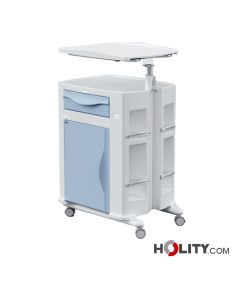
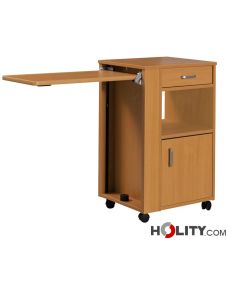
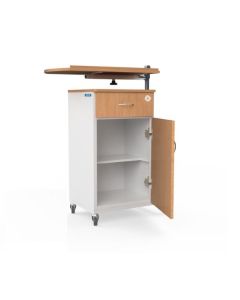
The hospital bedside table with serving table It integrates an additional support surface that can be used for some of the patient's daily activities. Depending on the model, the surface can be removable, swiveling, or adjustable using specific mechanisms. This solution can be useful when you want to bring a surface closer to the bed without installing a completely separate piece of furniture. However, actual use depends on the surface's size, its load-bearing capacity, and the manufacturer's stated handling methods.
An overbed table can help make activities like reading, writing, or eating easier, when the model is specifically designed for these uses. Before purchasing, it's important to check the available height, adjustment system, and the space required to open or move the table top. It's also important to check that the mechanism doesn't interfere with bed rails or other equipment. The integration of the table must improve the functionality of the workstation, without compromising the stability of the furniture or the accessibility of care staff.
Hospital bedside table with wheels: mobility and braking systems
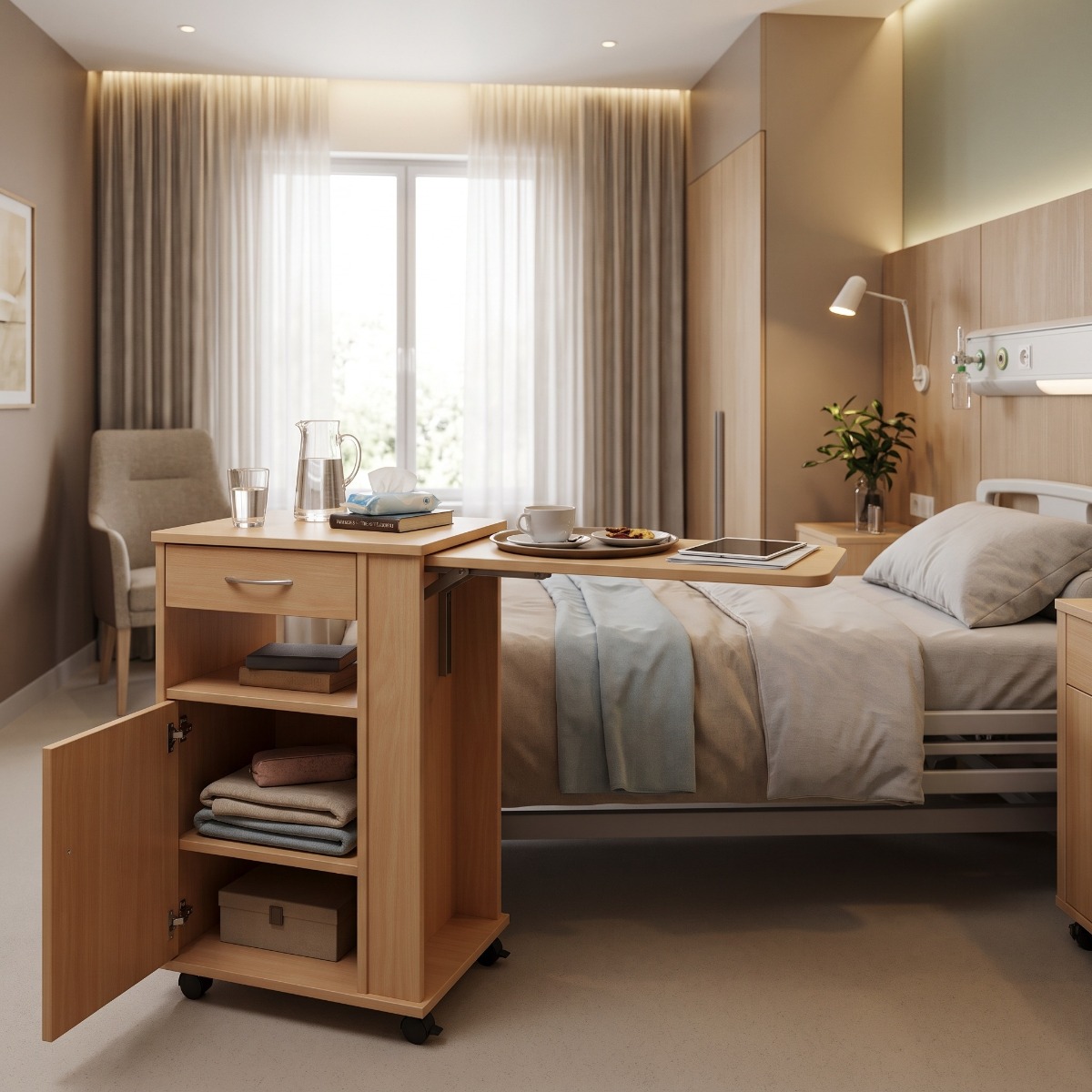 A hospital bedside table with wheels It can facilitate the necessary movement during cleaning, room reorganization, or certain care activities. Mobility is particularly useful when spaces need to be adapted to different needs throughout the day. However, the characteristics of the wheels must be carefully evaluated, considering diameter, materials, and compatibility with the flooring. Weight distribution and the furniture's configuration can also affect ease of movement.
The presence of wheels requires specific attention to stability during use. Some models include braking or locking systems, the configuration of which must be verified in the technical data sheets. It's important to know which wheels are braked and how the system should be operated, avoiding the assumption that different construction solutions are equivalent. A mobile bedside table must be able to be positioned safely, especially when the patient uses drawers, doors, or additional shelves. However, the casters do not transform the furniture into a support for the patient's weight, unless specifically indicated by the manufacturer.
Drawers, compartments, and shelves: how to organize your personal items
The arrangement of storage spaces directly affects the practicality of the hospital bedside tableA drawer can be useful for storing small personal items, while an open compartment allows for quick identification of contents. Doors can offer more compact storage, but require sufficient space to open. The choice between these configurations must consider the patients' needs and the ways in which staff can intervene during care.
It's also important to consider the position of the compartments relative to the bed. A drawer placed too low can be difficult to reach for someone with limited mobility, while a door facing a hard-to-reach area can complicate use. Some models may feature reversible configurations or openings on different sides, but these features must be verified for each product. The internal organization should facilitate simple and intuitive access, avoiding storage spaces that are theoretically available but impractical in the actual position of the bedside table.
Dimensions and bulk: the relationship with the bed and passage spaces
Size is one of the main criteria in choosing the bedside tables for hospital roomsWidth, depth, and height should be considered in relation to the available space next to the bed and the arrangement of other furniture. A bedside table that's too bulky can limit access or make it more difficult to access equipment, while an overly compact model may not offer adequate storage capacity. It's therefore necessary to evaluate the actual dimensions of the room before deciding on the configuration to purchase.
The presence of an overbed table or opening doors requires further verification. The dimensions of the closed cabinet do not necessarily reflect the overall footprint during use, especially when some components extend laterally or toward the bed. The bed's movements and the space required for assistance must also be considered. The correct sizing of the bedside table depends on the overall operating space, not just the measurements shown in the technical data sheet. This assessment is particularly important in shared rooms, where multiple workstations must coexist in the same space.
Patient accessibility and autonomy
The ability to independently access personal items can contribute to the comfort of the hospitalized person. A bedside table placed at the right distance from the bed and equipped with easily accessible compartments can reduce some difficulties in daily activities. However, the choice must take into account different mobility conditions and care needs. Accessibility does not only depend on the height of the furniture, but also by the position of the handles, the force needed to open the drawers and the possibility of reaching the upper shelf.
For patients with mobility limitations, it may be helpful to consider configurations that reduce the movement required to use accessories. A properly adjustable service surface, when provided, can provide a surface closer to a sitting or semi-reclining position. Its usefulness should be assessed based on the bed and the user's condition. Accessible furniture must promote independence without introducing additional risks, preventing the patient from having to lean out excessively or use the bedside table as a support to get up.
Materials and surfaces of bedside tables for hospitalization
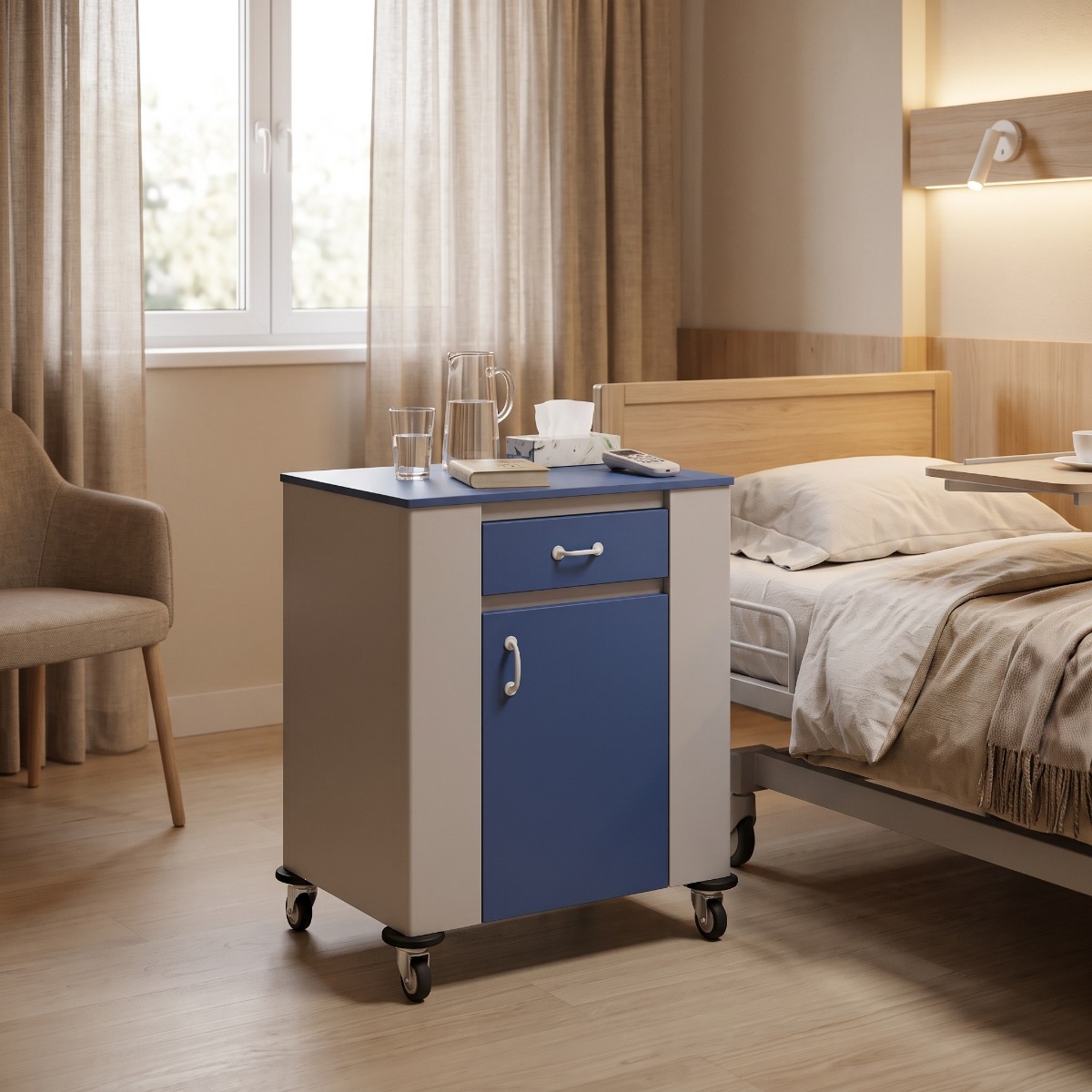 The materials used in the construction of the hospital bedside tables They must be evaluated in relation to the intended use and the facility's procedures. They may contain metal components, plastic materials, coated panels, or different combinations, depending on the product configuration. Each solution has specific characteristics regarding resistance, maintenance, and cleaning behavior. Therefore, identifying the primary material alone is not sufficient to determine the overall suitability of the furniture for a healthcare environment.
An important aspect concerns the design of surfaces and joints. Easily accessible surfaces, properly finished edges, and components that do not retain unnecessary residue can simplify daily operations. It is also necessary to check the compatibility of the coverings with the products used for cleaning and disinfection. The choice of materials must be linked to the hygiene protocols of the facility, avoiding the assumption that any smooth surface is automatically compatible with all treatment procedures.
Cleaning, disinfection and maintenance of furnishings
In hospital and care rooms, the furnishings are subjected to regular cleaning operations and, when required, disinfection procedures. bedside table for hospitalization It must therefore allow easy access to external surfaces and internal parts requiring cleaning. Drawers, handles, shelves, and wheels may have areas where residue can accumulate, making it important to evaluate their structure. Ease of cleaning helps simplify staff work and facilitate the implementation of established procedures.
The choice of detergents and disinfectants must comply with the manufacturer's instructions and the protocols adopted by the healthcare facility. Not all materials are resistant to the same substances or treatment methods, so compatibility must be verified before use. Drawer mechanisms, wheels, and any table adjustment systems also require periodic checks. A bedside table that is easy to inspect and maintain can help ensure continuity of service., reducing the difficulties associated with damaged or no longer fully functional components.
Stability, robustness and safety in daily use
There stability This is an essential feature for bedside furniture. A bedside table can be subjected to repeated stress when drawers are opened, the top is moved, and the top is used. In models with an overbed table, the position of the top and the load applied can affect the overall behavior of the piece. It is important to check the declared capacities and the conditions of use envisaged by the manufacturer, avoiding considering the bedside table as a support intended to support the patient's weight.
There robustness It must be evaluated together with the quality of the components subject to movement. Drawer runners, hinges, wheels, and locking systems must be adequate for the expected frequency of use. The presence of sharp edges, protruding parts, or accessible mechanisms also requires careful selection and placement. Safety depends on the interaction between construction features and actual use, therefore the staff must know the correct methods of handling and adjusting the available accessories.
Bedside tables for hospitals and clinics: the needs of patient rooms
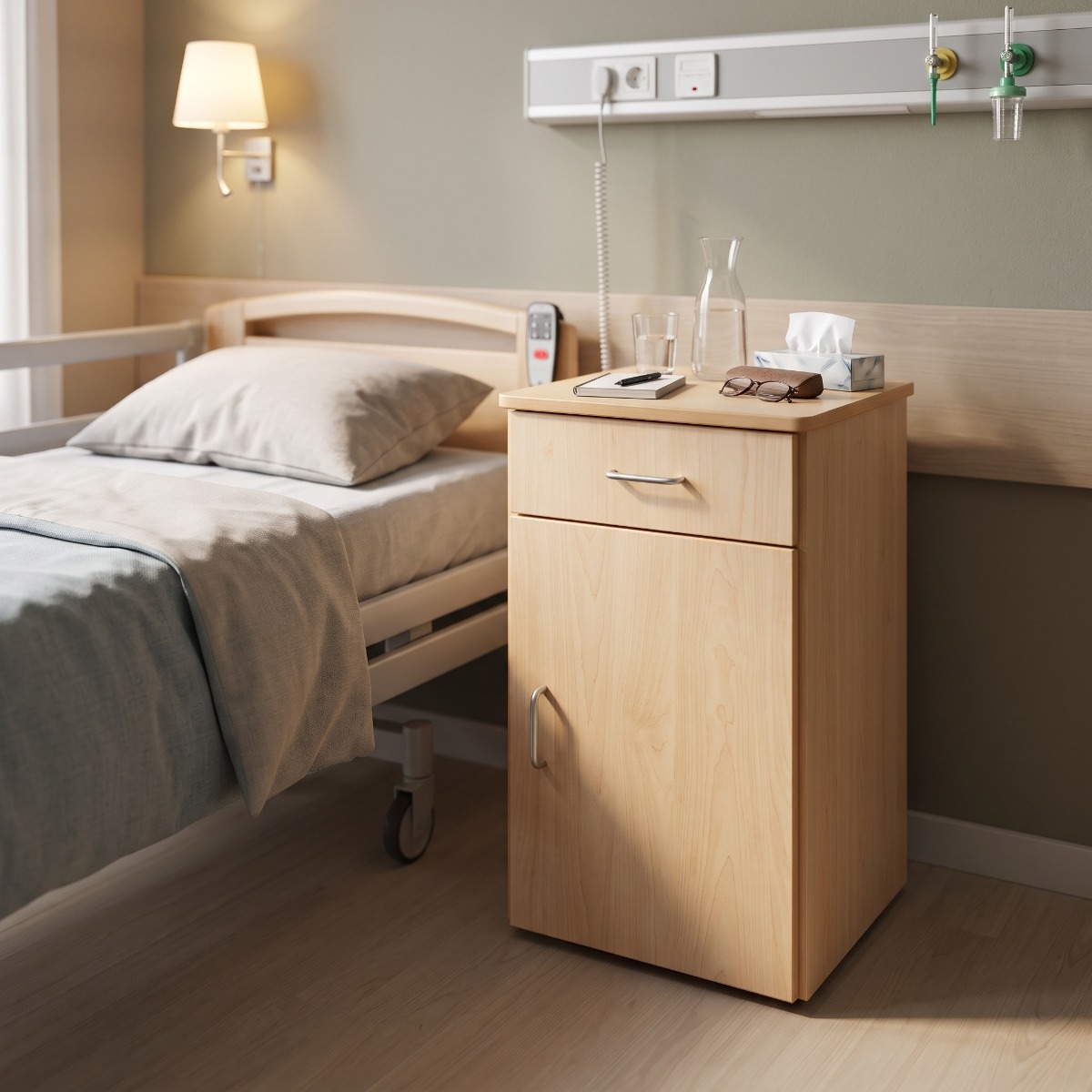 In hospitals and clinics, the organization of rooms must allow for frequent care activities and adapt to patients with different needs. bedside tables for hospitals They must therefore be chosen considering accessibility, ease of cleaning, and compatibility with existing equipment. The ability to move the cabinet can be useful during certain operations, while a simple storage configuration can facilitate surface inspection. Priority, however, depends on the department's intended use and the operating procedures adopted.
In a hospital room, it's important to prevent furniture from interfering with bed movement or staff access. The position of the bedside table should be considered along with the other elements of the workstation, including any assistive devices and connections in the room. The choice of overbed table should also meet specific needs, without introducing unnecessary clutter. A functional hospital bedside table must fit into the room's organization, maintaining a balance between patient comfort and practicality of healthcare activities.
Bedside tables for nursing homes and long-term care: comfort and organization over time
In nursing homes and long-term care facilities, the bedside table can play a particularly important role in a resident's daily life. Prolonged stays make it useful to have an organized space for personal effects and frequently used items. For this reason, the bedside tables for nursing homes They may require careful consideration of storage capacity and room accessibility. The choice must also consider the residents' level of independence and the ways in which staff provide assistance throughout the day.
In these environments, aesthetics can also contribute to the room's sense of familiarity, as long as it doesn't override functional and hygienic requirements. Furnishings that are consistent with the environment can make the space feel less impersonal, while a practical layout keeps the most important items within easy reach. The presence of wheels or a serving table should be considered based on the guests' actual needs. The bedside table for long-term care must accompany continuous use, with features suited to the daily management and care procedures of the facility.
How to choose the configuration based on the structure
To locate the hospital bedside table To determine the most suitable bed, it's helpful to start with the room's characteristics and the user profile. It's important to evaluate the available space, the type of bed, the frequency of care needs, and the need to move the bed. You can then compare configurations with drawers, open compartments, wheels, or an overbed table. The choice must be guided by the functions that are really necessary, avoiding favoring accessories that could increase the bulk without offering a concrete advantage.
For purchases intended for multiple rooms, it is also important to verify the possibility of maintaining uniform equipment and consistent maintenance procedures. Holity, specialist in professional supplies for healthcare and assistance facilities, represents a reference for purchasing managers and designers interested in comparing different furniture configurations. Before ordering, it's a good idea to examine the dimensions, materials, wheel features, and functionality of the table, if applicable. A comprehensive evaluation allows you to identify products that meet your operational needs, without limiting the comparison to the initial price alone.
Mistakes to Avoid When Buying Hospital Bedside Tables
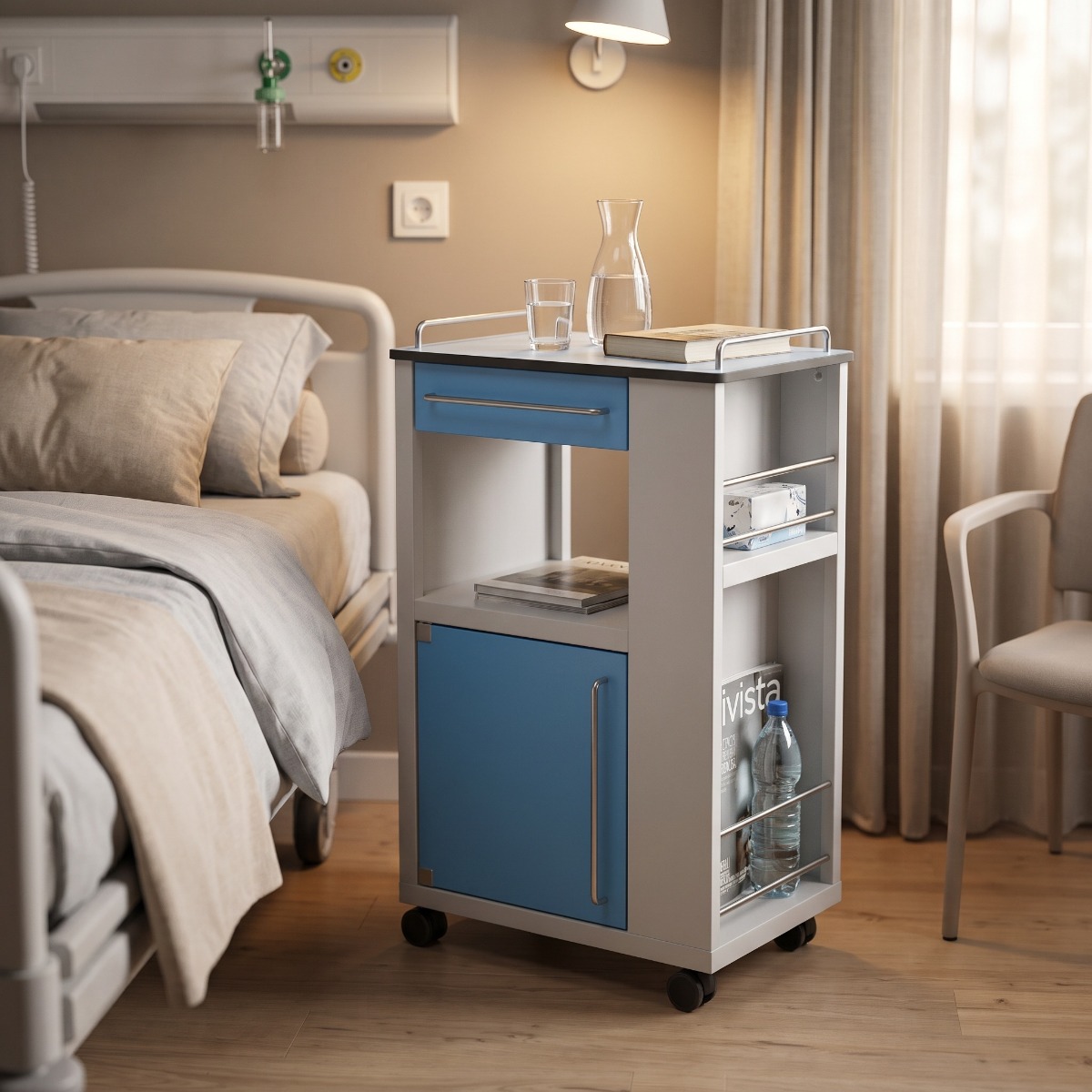 One of the most common mistakes is choosing the hospital bedside tables Considering only the dimensions of the closed unit. In models with an overbed table, the additional shelf may require more operating space than the overall dimensions allow. The opening of drawers and doors must also be checked in relation to the position of the bed. Another mistake is choosing models with casters without checking the braking system and stability during use.
It's also important not to overlook the compatibility of materials with the facility's cleaning procedures. Aesthetically pleasing furnishings may have components that are difficult to clean or coatings that aren't compatible with the products used. Storage capacity must also be tailored to the actual needs of patients, avoiding poorly accessible spaces or unnecessarily complex configurations. A correct purchase requires comparing technical features and real conditions of use, because the value of the bedside table emerges above all in the daily management of the bedroom.
A functional choice for patients, operators and healthcare facilities
The hospital bedside table It's an essential element in organizing hospital and nursing home rooms, combining storage with accessibility, safety, and hygiene requirements. The choice between models with drawers, casters, and an overbed table must take into account the intended use and the characteristics of the space. In hospitals, operational convenience and ease of cleaning may be particularly important, while in nursing homes and long-term care facilities, the organization of personal belongings over time must also be considered. There is no universally best configuration, but more or less appropriate solutions to the needs of each structure.
Holity, specialist in professional supplies and furnishings for the healthcare sector, is a reference point for those evaluating bedside tables for hospitals, clinics, and healthcare facilities. Comparisons between models should begin with the room dimensions, patient type, and staff procedures. It's also important to check the technical specifications and maintenance requirements before finalizing a purchase. A well-chosen bedside table helps make the bedroom tidier, more accessible and functional, supporting the comfort of the person being cared for and the daily work of the operators.
 English
 Italian
 French
 German
 Spanish