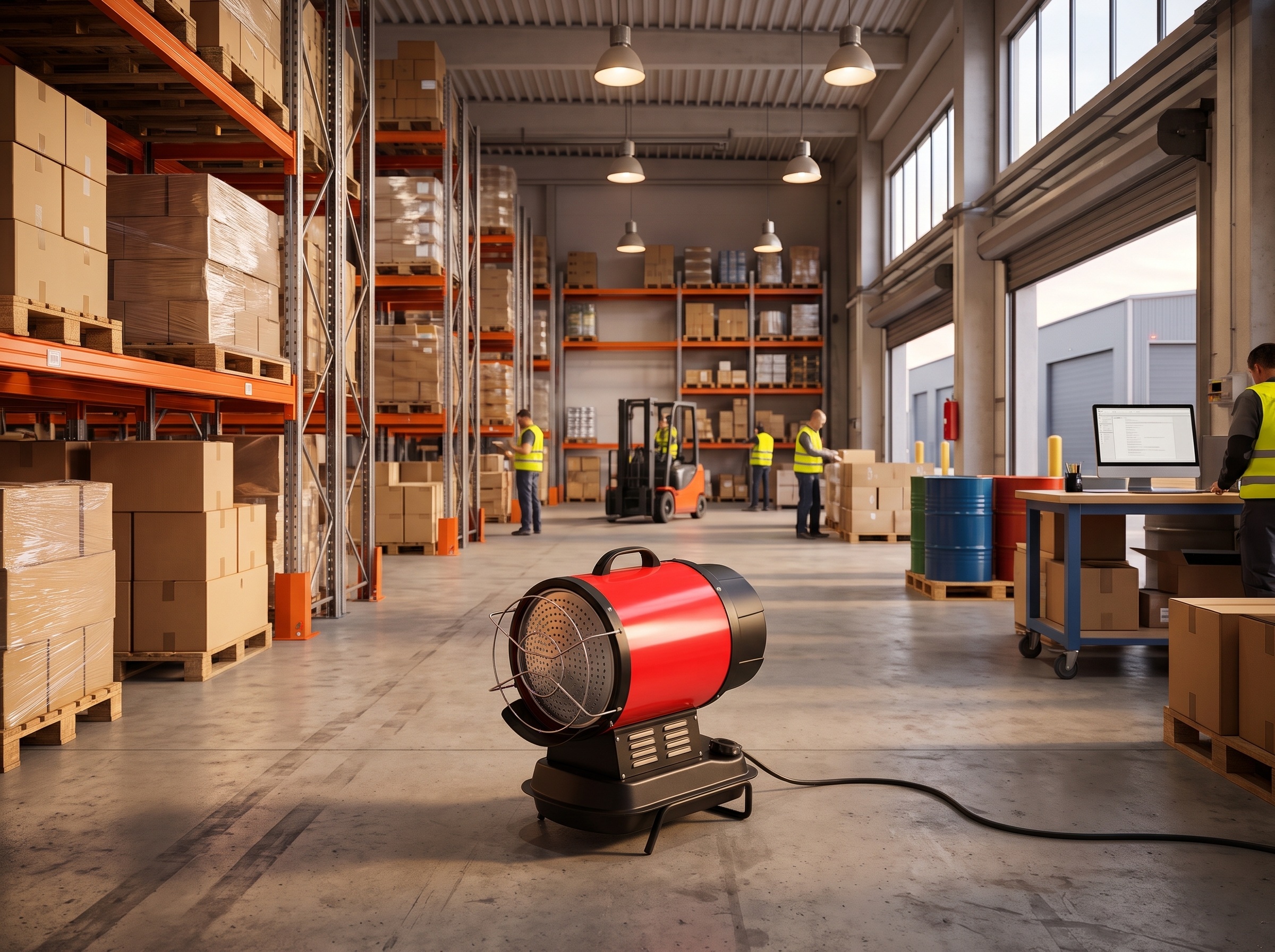
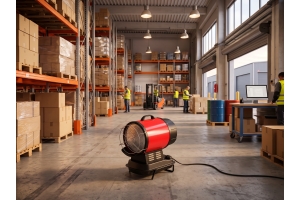
Heating an industrial warehouse requires different considerations than those needed for an office or small commercial space. Production and logistics environments often feature high ceilings, large air volumes, frequently opened doors, and highly variable insulation characteristics. In these conditions, choosing a hot air generator for warehouses Considering only the surface area in square meters can lead to inadequate sizing. A seemingly powerful appliance may not guarantee the desired thermal conditions, while an oversized solution could result in costs and space that aren't justified by actual operational needs.
The choice must start from the building's use and the desired result. A warehouse where staff occasionally pass through has different needs than a workshop with workstations manned for many hours or a production department that requires controlled temperature conditions. Available on the market are:electric, gas and diesel hot air generators, as well as portable models and infrared heaters designed for specific applications. Each technology has characteristics that must be compared, considering volume, heat loss, available power, ventilation, and usage. The goal is to identify an environmentally friendly system capable of supporting the task without introducing unnecessary complexity.
Why square meters are not enough to choose a generator
There surface This is a useful metric for describing the size of a warehouse, but it doesn't necessarily indicate the amount of heat required to heat it. Two buildings with the same surface area can have very different heights and, consequently, different air volumes. Construction features also affect heating requirements, as walls, roofing, windows, and flooring contribute to heat exchange with the outside. The sizing of a hot air generator must therefore take into account the building's heat losses., in addition to the climatic conditions and the internal temperature you want to maintain.
The difference is particularly evident in warehouses used for manufacturing or logistics activities. A well-insulated building with rarely opened entrances may require a different heating strategy than a warehouse with frequent movements of goods. The number of people present, ventilation systems, and the heat produced by machinery can also affect the thermal balance. For this reason, Generator power should not be established through a simple proportion between watts and square metersA preliminary estimate can help compare solutions, but the final choice requires an evaluation of the actual environmental conditions.
Warehouse volume and height: the first variables to evaluate
 The internal volume It is one of the first factors to consider when evaluating the heating of a warehouse. In a regularly shaped space, it can be calculated by multiplying the surface area by the height, while buildings with sloping roofs, mezzanines, or particular geometries require a more accurate calculation. This data allows you to understand the size of the space in which the heat will be distributed. However, the volume does not directly coincide with the thermal power requirement, because the latter also depends on the dispersion and conditions of use.
THE'height This is particularly important in systems that heat and move air. In a tall building, heat can be unevenly distributed and accumulate in the upper areas, resulting in uneven conditions near the floor. The location of the generator, the direction of airflow, and the presence of any destratification systems can affect the results. Effective heating must be assessed especially in the areas actually occupied, because reaching a high temperature under the cover does not necessarily mean guaranteeing the required comfort at the workstations.
Insulation, doors and heat loss
The characteristics of the building envelope directly affect the energy required to maintain a warehouse at the desired temperature. Poorly insulated walls, roofs with high heat loss, and inadequate windows and doors can increase heating needs. The presence of thermal bridges and air infiltrations also contribute to changes in internal conditions. Before choosing a hot air generator for warehouses it is important to know the level of insulation of the building, because a more powerful machine does not necessarily represent the most efficient solution to losses that could be reduced.
Frequent openings are another key variable, especially in warehouses and logistics centers. Opening doors during loading and unloading can cause significant air exchange with the outside, making it more difficult to maintain stable thermal conditions. The frequency, duration, and size of openings must therefore be considered in the assessment. In some contexts, it may also be useful to address the organization of access points or solutions to limit infiltration. Heating must be designed taking into account the actual operation of the shed, not only of its geometric characteristics.
Required temperature and use of industrial environments
The required temperature depends on the intended use of the space and the activities performed there. A warehouse for non-sensitive materials may have different requirements than a department with continuous staff. Some processes may require specific thermal conditions for production reasons, while in other cases, the primary objective is employee comfort. Defining the required temperature is essential to correctly evaluate the generator, also taking into account the provisions applicable to work environments and the needs of the production process.
It's also important to consider the daily heating duration. A warehouse used for a limited shift may require different management than a facility operating multiple shifts. Startup times, operational continuity, and the ability to heat only certain areas therefore become important criteria. The choice of system must be linked to the timetables and activity cycles, avoiding indiscriminately heating spaces that don't require the same thermal conditions. This analysis allows for a more precise evaluation of available technologies.
To choose the most suitable hot air generator, it's not enough to evaluate square footage or power: volume, height, insulation, and heat loss are crucial factors in ensuring effective, safe industrial heating that's tailored to the business's actual needs.
How a warehouse hot air generator works
A hot air generator They use an energy source to produce heat and transfer it to the air, which is then released or moved around the room depending on the appliance's configuration. Electric models heat through electrically powered components, while fuel-fired generators use heat from the combustion of gas or diesel fuel. Fans, in models that include them, help distribute the heated air evenly. Actual operation varies by technology and intended use., therefore it is necessary to check the technical specifications of the individual product.
However, not all systems intended for industrial heating work in the same way. infrared heatersFor example, they transfer a significant portion of their energy through radiation to exposed surfaces and people, rather than relying primarily on heating the entire air volume. This difference can make them attractive for certain localized applications. Comparing technologies must therefore begin with the operational objective: heating the entire space or targeting specific areas. Understanding this distinction helps avoid purchases that are inconsistent with the actual needs of the building.
Electric hot air generators: when are they convenient?
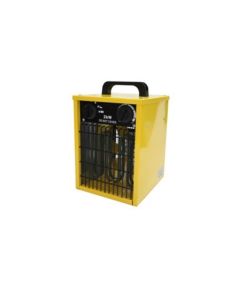
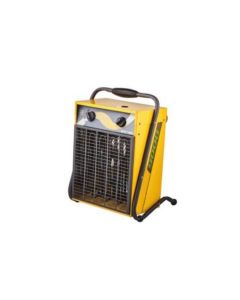
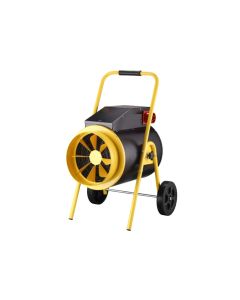
 THE electric hot air generators They can be considered when adequate power is available and a system that does not produce combustion fumes at the point of use is desired. Models come in different sizes and power ratings, including portable units designed for temporary heating of specific areas. Practicality of use depends on the product's configuration, the characteristics of the electrical system, and environmental conditions. Before purchasing, it is essential to check the voltage, power consumption, and connection requirements, especially for high-powered equipment.
The main aspect to consider is the compatibility between the required power and the site's electrical availability. A generator may be practical for localized needs or specific uses, but the cost of energy and the power required must be carefully considered. Therefore, it's not correct to automatically define it as the most cost-effective solution for every warehouse. The choice of an electric generator must be based on a comparison between thermal requirements, available infrastructure and duration of use.. Size, noise and installation conditions also contribute to determining its suitability.
Gas-fired hot air generators: features and applications
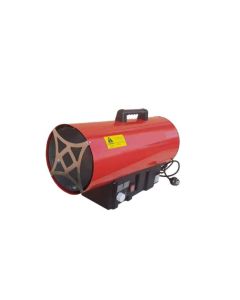
THE gas hot air generators They use a gaseous fuel to produce heat and are available in different configurations. Some models are intended for specific installations, while others may be designed for mobile or temporary use. It's essential to distinguish appliances based on their combustion method, combustion product management, and the environmental conditions permitted by the manufacturer. Gas-fired units alone do not determine whether a generator is suitable for a closed or occupied warehouse.
Before choosing this technology, it's important to consider fuel availability, power supply options, and safety requirements. Some appliances require specific connections and installations, while others may require different operating conditions. Ventilation, combustion product evacuation and installation compliance They must be verified by competent personnel according to applicable regulations. The economic comparison must also consider declared consumption, fuel cost, and frequency of use. A gas generator can be an appropriate solution only when its characteristics are compatible with the environment and the activity performed.
Diesel-fired hot air generators: direct and indirect heating
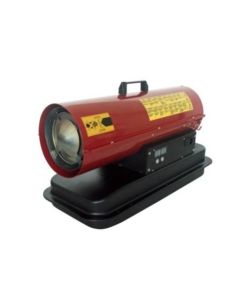
THE diesel hot air generators They are used in various professional contexts and can feature direct or indirect combustion configurations. In direct systems, combustion products can be released into the heated air flow, depending on the appliance's operating principle. This feature makes it essential to carefully assess the environments in which their use is permitted. A direct generator should not automatically be considered suitable for a closed or occupied warehouse. The manufacturer's instructions and applicable safety regulations are essential guidelines.
In the indirect combustion diesel generatorsHeat is transferred through an exchanger, and combustion products are managed by a dedicated exhaust system, according to the intended configuration. This distinction can be relevant when heated air needs to be supplied to a room without directly injecting flue gases. Correct installation, adequate exhaust of combustion products, and compliance with technical instructions are still required. The choice must also consider fuel supply, autonomy, maintenance, and operating conditions, avoiding relying solely on the declared thermal output.
Infrared heaters: heat concentrated on the operating areas
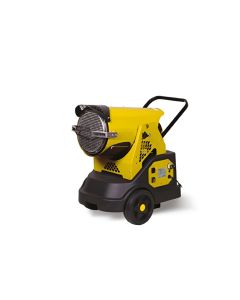
 THE industrial infrared heaters They represent a solution worth considering when the primary requirement is heating people or surfaces in specific areas. Unlike generators, which primarily transfer heat to the air, these devices use radiation to reach exposed areas. They may therefore be suitable for very tall warehouses, workshops with specific workstations, or environments where uniform heating of the entire space is not required. However, the outcome depends on the location, distance, geometry of the space, and the model's characteristics.
Radiation does not eliminate the need to evaluate safety and environmental conditions. The presence of heat-sensitive materials, obstacles, reflective surfaces, or special workmanship can affect the equipment's suitability. Power supply must also be considered, as infrared heaters can use different technologies. Localized heating can be an alternative to generalized heating only when it meets the actual operational needsIf you need to maintain a uniform air temperature throughout the house, a radiant-only solution may not meet the required objective.
Portable generators or fixed systems: which solution to choose?
THE portable hot air generators They can offer flexibility when heating is required in different areas or for limited periods. The ability to move the appliance can be useful for certain maintenance activities, workshops, or production spaces with varying needs. However, portability does not mean the absence of technical constraints: power supply, ventilation, safety distances, and operating conditions must be respected in every position. It is also important to check whether the model is actually designed to be moved, and how.
A fixed system may be more suitable for warehouses that require regular and continuous heating. In these cases, heat distribution, building integration, and system management over time are more important. The choice between a mobile and fixed solution should therefore not be interpreted as a simple preference for a more practical or more powerful product. The frequency of use and the stability of thermal requirements help identify the most suitable approach, along with installation requirements and overall operating costs.
Thermal power and air flow: how to interpret the technical data
There thermal power This is one of the main parameters reported in generator specifications and is generally expressed in kilowatts. It's important to distinguish, when applicable, between absorbed power and thermal output, as the two values do not necessarily describe the same quantity. Fuel-fired generators may contain additional data relating to consumption and efficiency. The declared power must be compared with the building's estimated heating needs, without resorting to simplified formulas that apply to any building.
There air flow, often expressed in cubic meters per hour, describes the volume of air moved by the appliance under certain conditions. This data helps understand the heat distribution characteristics, but it is not the same as the thermal power. Two generators with similar power ratings may have different flow rates and behave differently in the environment. The direction of the jet and the adjustment options must also be considered. A correct choice requires reading the technical data together, evaluating them in relation to the size of the shed and the planned position for the generator.
Heat stratification in tall sheds
In high-rise warehouses, vertical temperature distribution can become a significant problem. Hot air tends to rise and, under certain conditions, can accumulate in the upper areas of the building. This phenomenon can cause temperature differences between the floor and the roof, especially when air circulation is inadequate. Thermal stratification must be considered when choosing a generator for tall sheds, because some of the heat produced may not contribute effectively to the conditions of the occupied areas.
The solution depends on the building's configuration and the heating system used. The position of the vents, the direction of the flow, and the possible presence of destratification fans can contribute to air distribution, when technically appropriate. In other contexts, it may be useful to evaluate systems that directly heat the work areas through radiation. There is no one-size-fits-all solution for sheds, because thermal behavior depends on geometry, insulation, openings, and spatial organization. The assessment must therefore focus on the actual conditions of the areas to be heated.
Safety, ventilation and installation requirements
 There safety represents a priority criterion when choosing any equipment intended for industrial heating. In gas and diesel generators, particular attention must be paid to combustion, possible fume extraction, and ventilation requirements. Using direct combustion appliances in unsuitable environments can pose serious risks, including exposure to hazardous combustion products. A generator must not be installed or used in a closed shed without having expressly verified its compatibility with that environment, according to the manufacturer's instructions and applicable standards.
Electric generators and infrared heaters also require specific precautions. The suitability of the system, distances from combustible materials, stability of the positioning, and permissible environmental conditions must be verified. The presence of dust, flammable vapors, or potentially explosive atmospheres may require specialized equipment and assessments. Installation must be entrusted to qualified personnel when required, with the involvement of company safety managers. The conformity of an individual product does not replace verification of its suitability for the intended use.
Consumption and management costs of the different technologies
The purchase cost is only one of the elements to consider when choosing a hot air generator for warehousesOperating costs depend on the energy source, the equipment's efficiency, the hours of operation, and the building's heating needs. An electric generator requires an assessment of consumption based on the applicable tariff and available power, while gas or diesel systems involve costs related to the fuel and its procurement methods. It is not possible to determine which technology is always more economical without knowing the operating conditions.
The comparison must also include maintenance, any installation work, and heating management. A system operating for long hours in a building with high levels of heat loss can generate significant costs regardless of the initial price of the appliance. In some cases, improving insulation or reducing air exchange through doors can significantly alter requirements. Economic convenience must be assessed over the entire period of use, also considering the possibility of heating only the areas actually needed.
How to choose the best generator for your shed
The choice should begin with an evaluation of the warehouse's characteristics, considering volume, height, insulation, openings, and required temperature. It's then necessary to define whether the goal is to heat the entire space or specific workstations. This distinction helps guide the comparison between Electric, gas, diesel generators, portable models and infrared heaters. Power and other technical characteristics should be examined only after clarifying the operating conditions, always verifying the expected safety and installation requirements.
Holity, specialist in professional supplies and equipment for industrial and work environments, represents a reference point for companies wishing to compare different heating solutions. The availability of different technologies allows you to tailor your search based on the characteristics of the spaces and usage needs. Before purchasing, it is essential to check the specifications of each model and, when necessary, entrust the sizing to a competent technician. The most suitable generator is not necessarily the one with the highest power, but one that responds appropriately to the needs and conditions of the building.
For purchasing and maintenance managers, a careful assessment allows them to connect the investment to the specific needs of the business. Choosing a portable generator may be appropriate for temporary use, while a solution intended for continuous operation requires different considerations. Holity, specialist in professional equipment for heating work environments, is part of this process as a reference point for identifying products with different characteristics. Considering volume, dispersion, technology, and safety together allows for a more informed choice, preventing heating costs from becoming disproportionate to the results achieved.
 English
 Italian
 French
 German
 Spanish