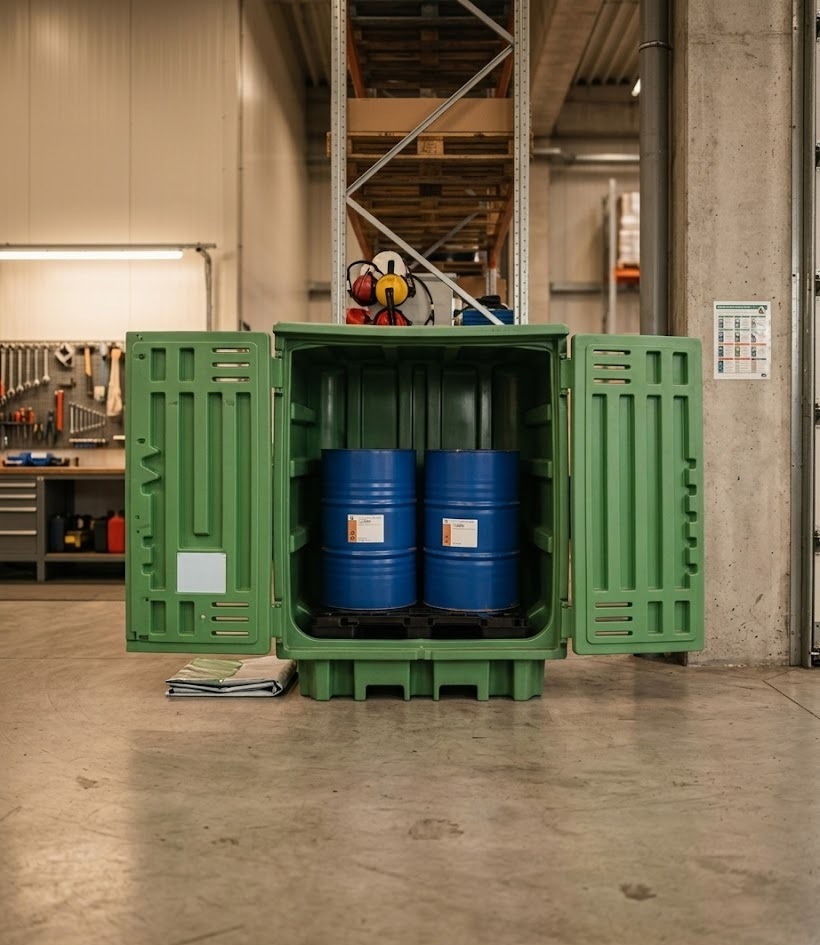
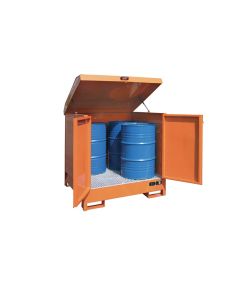
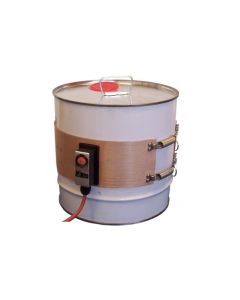
The drum storage Drum storage is a key aspect in managing industrial warehouses, logistics depots, and production facilities where liquids, chemicals, oils, or hazardous materials are handled. Properly organizing drums not only optimizes available space, but also ensures operational safety, regulatory compliance, and reduced environmental risks.
An improperly designed warehouse can cause problems related to accidental leaks, difficult handling, and increased risk for operators and facilities. For this reason, companies must adopt professional solutions that allow drums to be managed in a stable, accessible, and safe manner, complying with current regulations regarding workplace safety and the containment of hazardous substances.
Why proper drum storage is essential
 Industrial drums are used in numerous production sectors to contain chemical liquids, solvents, fuels, lubricating oils, and potentially polluting substances. Improper management can pose significant risks to both worker safety and the environment.
Proper storage reduces the risk of tipping, accidental impacts, and leaks of hazardous materials. Furthermore, efficient warehouse organization facilitates handling, inspection, and maintenance operations, improving overall warehouse productivity.
Regulations and safety in the storage of drums
The legislation relating to the industrial drum storage imposes specific requirements to ensure the safety, containment, and proper management of stored substances. Companies must ensure that storage facilities are designed to prevent spills and facilitate the containment of any accidental losses.
Among the most important aspects are the presence of collection systems, the use of appropriate media, the correct labeling of substances, and the separation of incompatible materials. Compliance with regulations is not only a legal obligation, but also an essential measure for reducing operational and environmental risks.
How to organize a drum storage facility efficiently
Space optimization
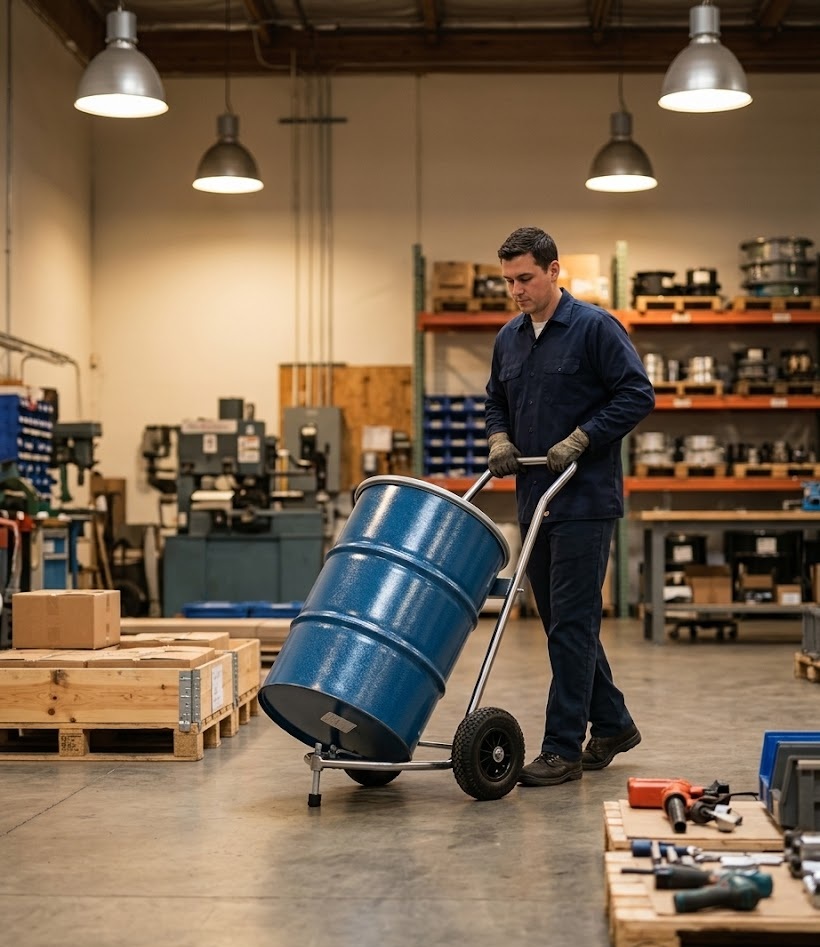
Proper warehouse organization allows you to maximize available space without compromising safety and accessibility. Drums must be positioned to facilitate loading, unloading, and periodic inspections.
The use of dedicated shelving, metal supports, and modular systems helps maintain order and stability within the warehouse. A rational layout also improves the clarity of the spaces and reduces the risk of accidents during operations.
Separation of hazardous substances
One of the most delicate aspects concerns the management of incompatible substances. Flammable, corrosive, or chemically reactive products must be stored according to precise separation criteria.
Dividing storage areas helps limit risks in the event of a loss or accident. For this reason, many industrial facilities use differentiated collection containers and storage systems based on the type of material stored.
Drum supports and containment systems
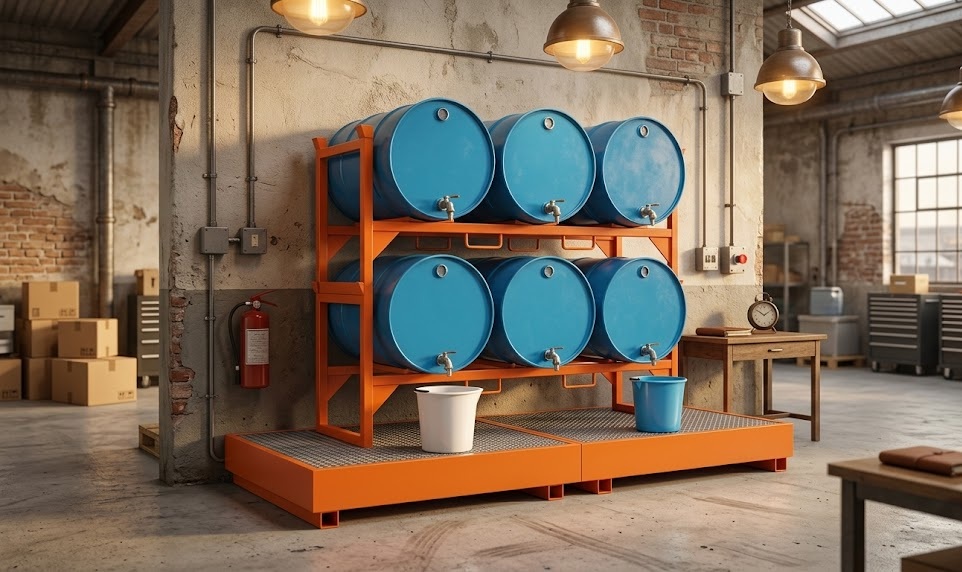
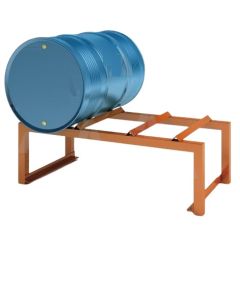
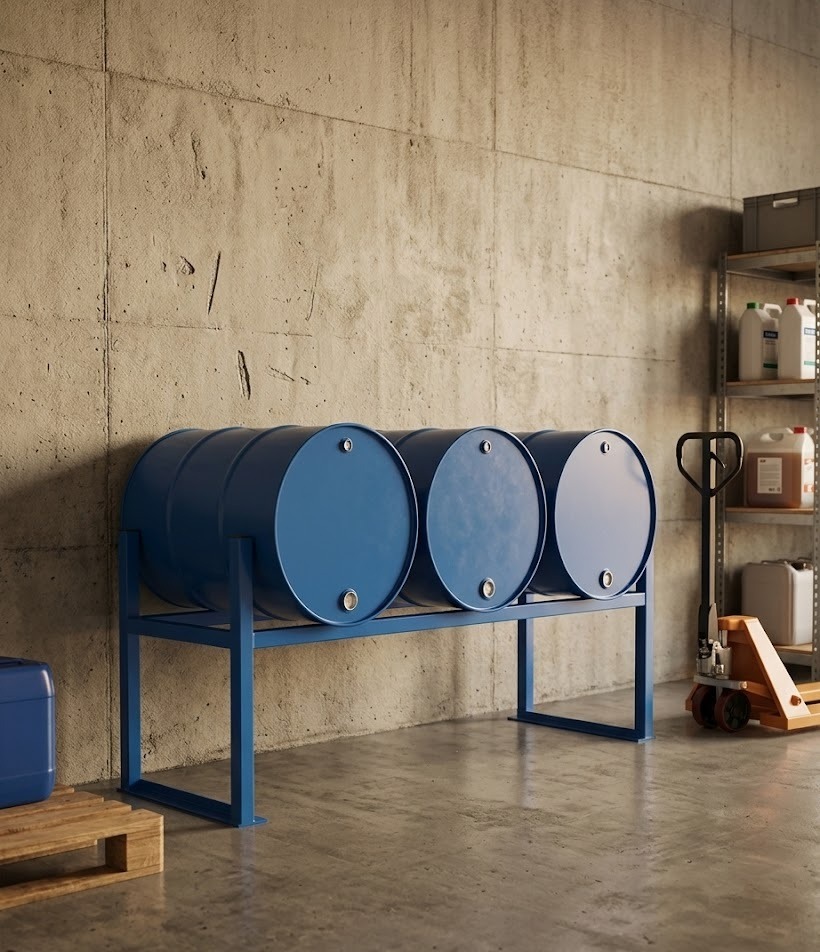
THE drum supports They play a key role in warehouse safety. These structures keep containers stable and facilitate handling, tapping, and inspection operations.
Modern companies frequently use collection pallets, containment bases, and inclined supports to improve ergonomics and safety. Professional solutions are available from specialized companies such as Holity They allow for the organization of storage areas that are more orderly and compliant with the operational needs of contemporary industry.
 English
  Italian
 French
 German
 Spanish