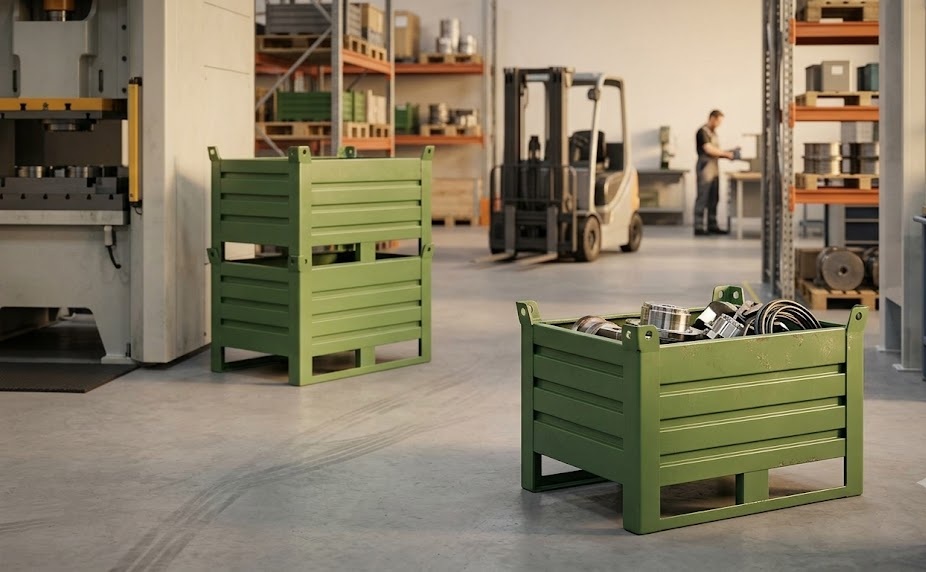
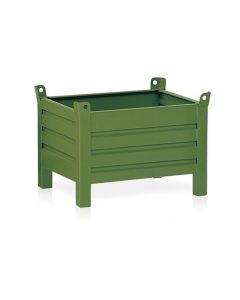
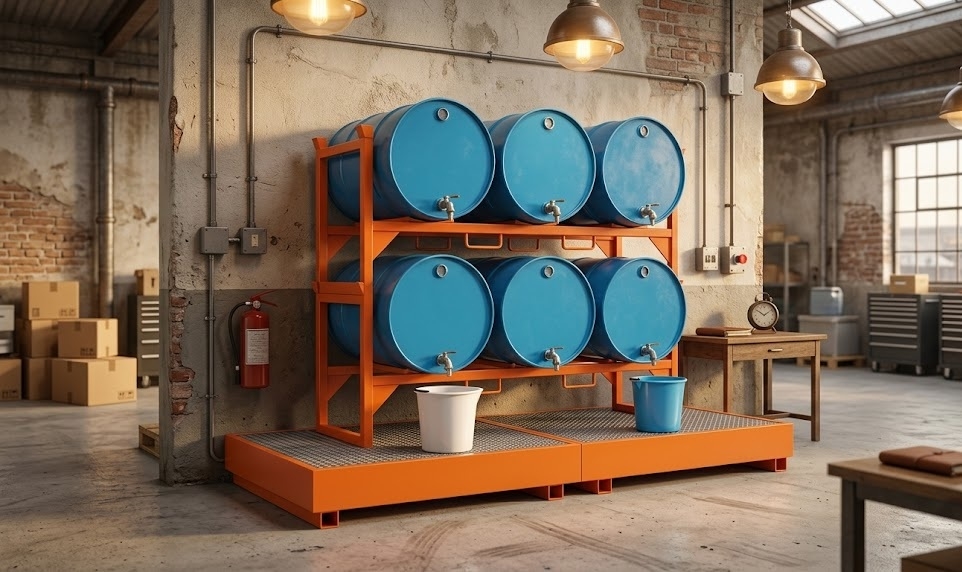
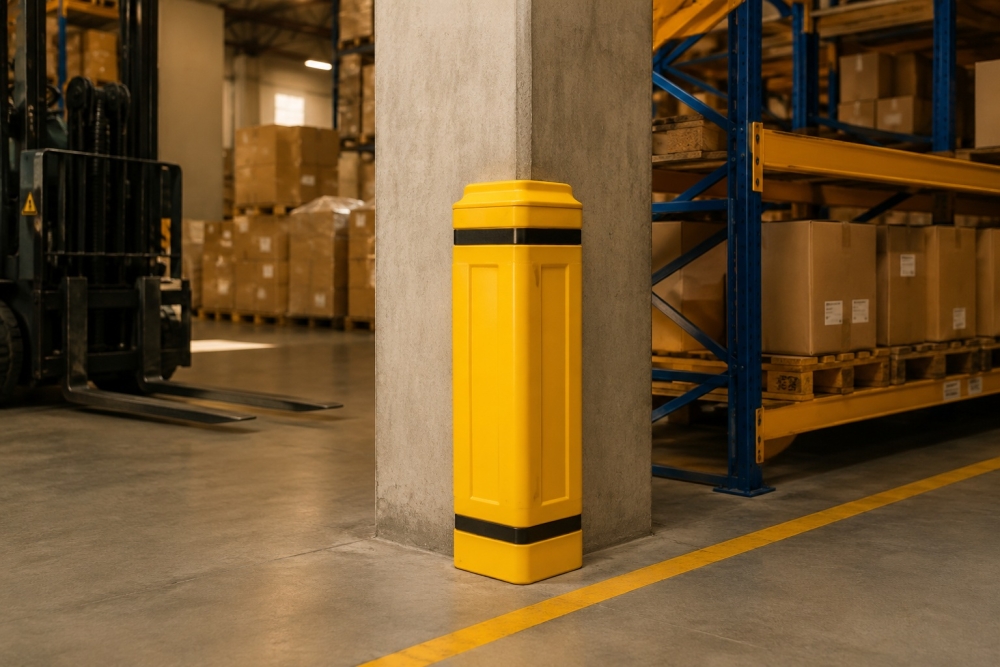
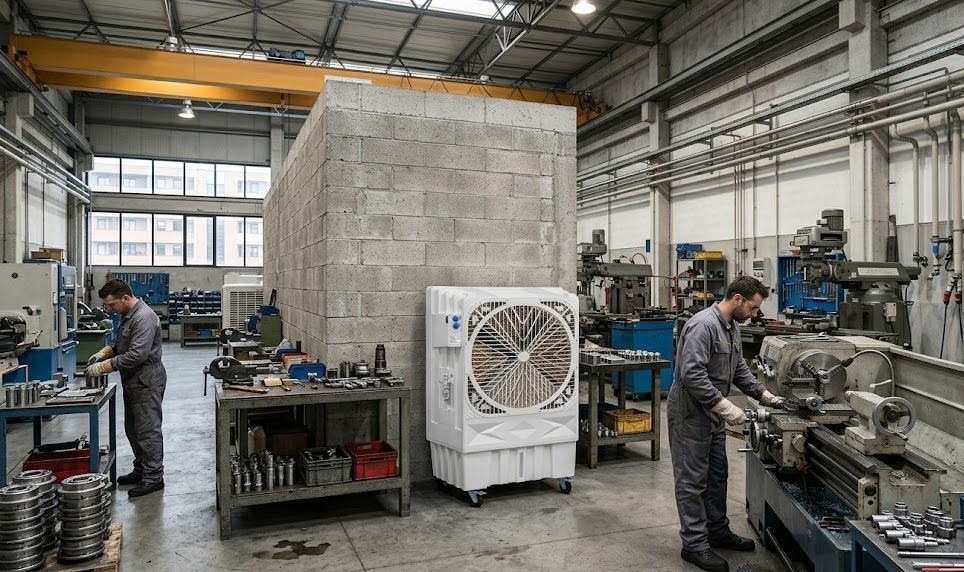
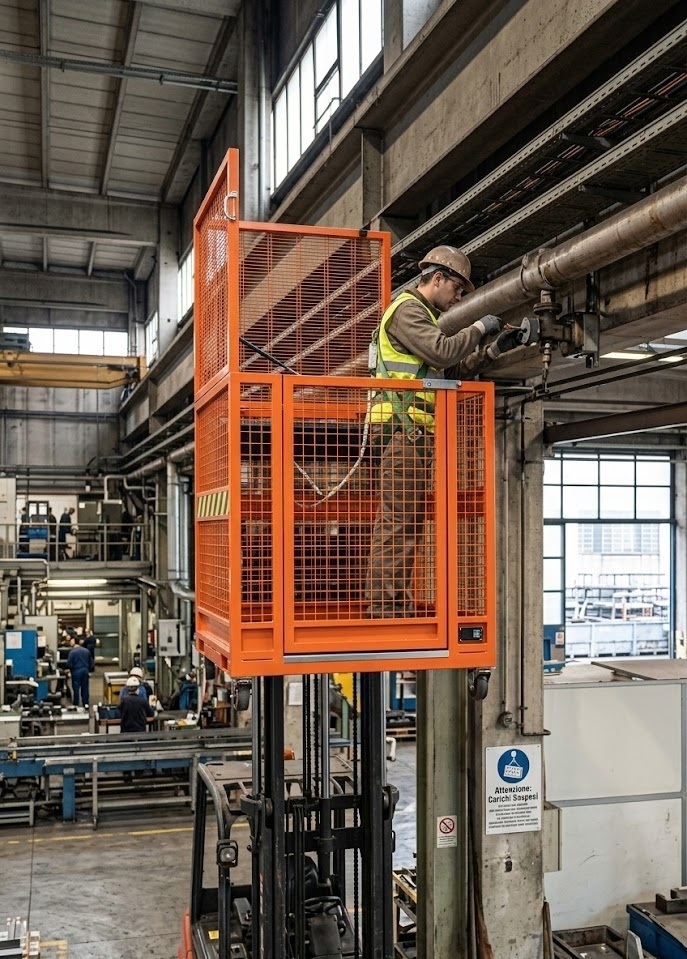
Industrial metal containers are equipment designed to collect, protect, move, and organize materials used in production activities. They are located in warehouses, workshops, assembly departments, and areas dedicated to internal logistics. They can contain mechanical components, semi-finished products, spare parts, tools, or products intended for subsequent processing stages. Their role is not only to create order, because they also influence operating times and space management.
The choice of a container must take into account the material stored and how it is used. A heavy component requires a different structure than small parts, processing waste, or bulky products. The frequency of movements, handling system, and stacking possibilities also affect the result. A coherent equipment allows you to connect storage, production, and shipping through a more legible and controllable flow.
An essential piece of equipment for organizing production environments
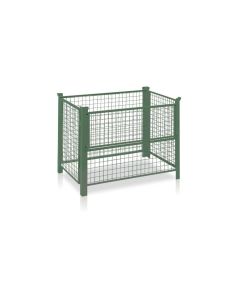
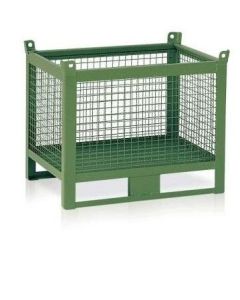
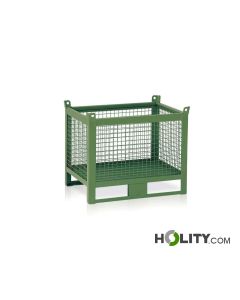
The term industrial metal container refers to a structure intended for continuous professional use. Compared to lightweight containers for general use, these models are designed to withstand repeated loads, impacts and frequent handling. The shape can be open, closed, grilled or equipped with doors, depending on the need to see, protect or reach the contents. The dimensions must fit correctly into the warehouse workstations and routes.
In a factory, the container becomes part of the industrial furniture and not a simple accessory. Its presence defines where materials and components must be placed, reducing random accumulations near the machines. An orderly arrangement makes the work of operators easier and makes the transition between the different phases clearer. The benefit emerges above all when each container is associated with a function, a department or a specific family of materials.
Storage and handling meet different needs
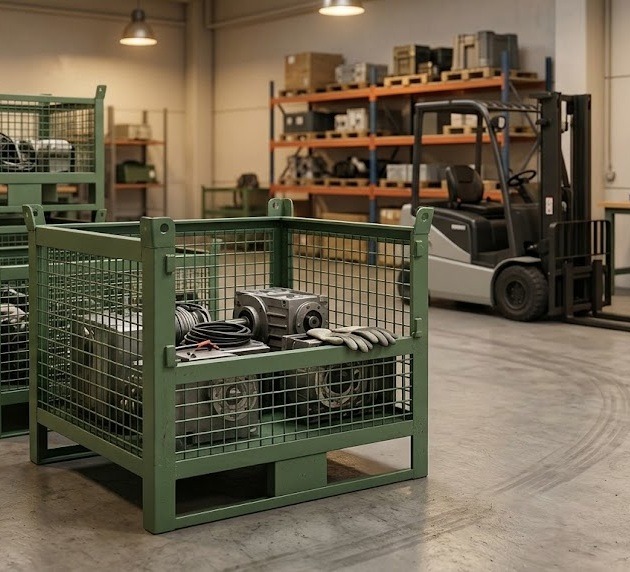 Storage concerns the preservation of materials for a more or less long period of time. In this case, capacity, protection of the contents, stability and accessibility are important. The container must support the expected load without deformation and must allow operators to reach the components easily. When the materials are sensitive to dust, shocks or contamination, a closed or lidded configuration may be preferable.
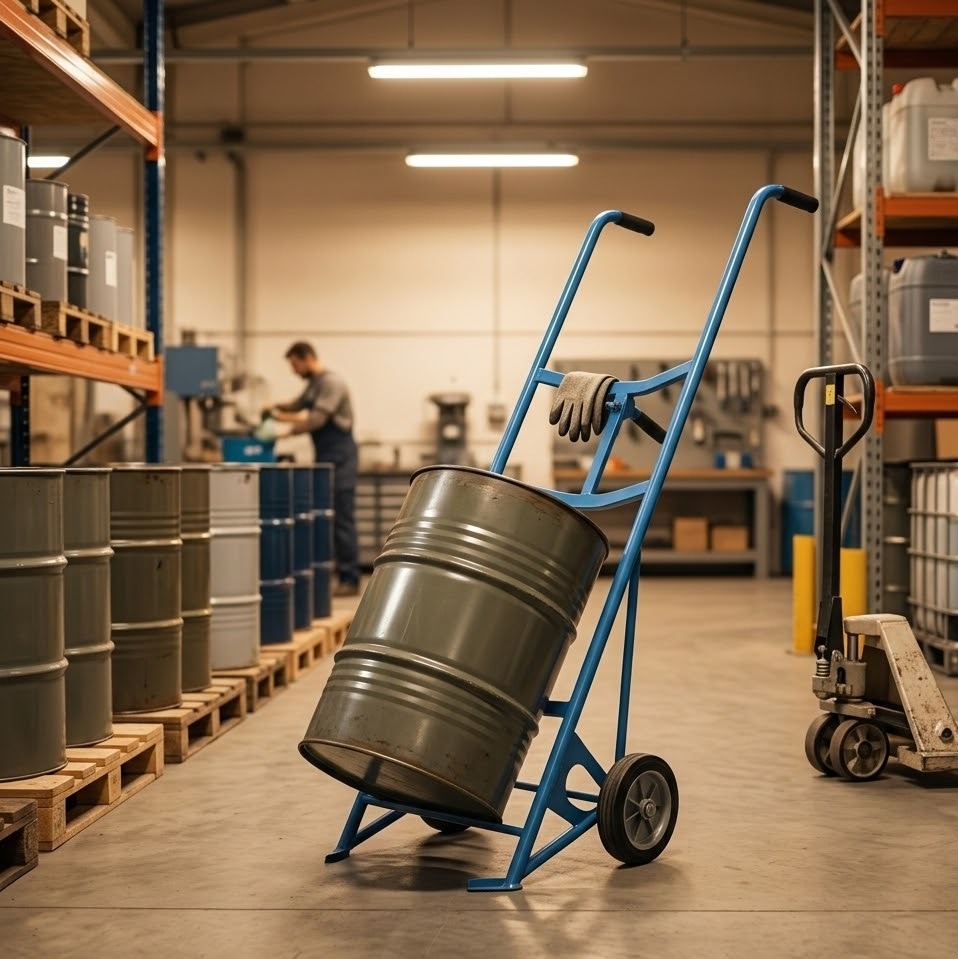
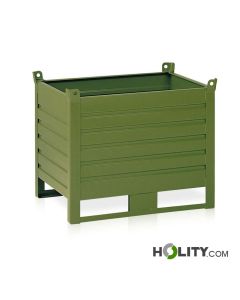
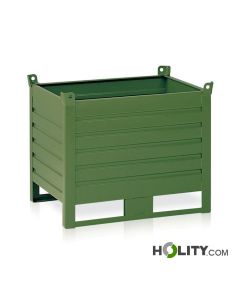
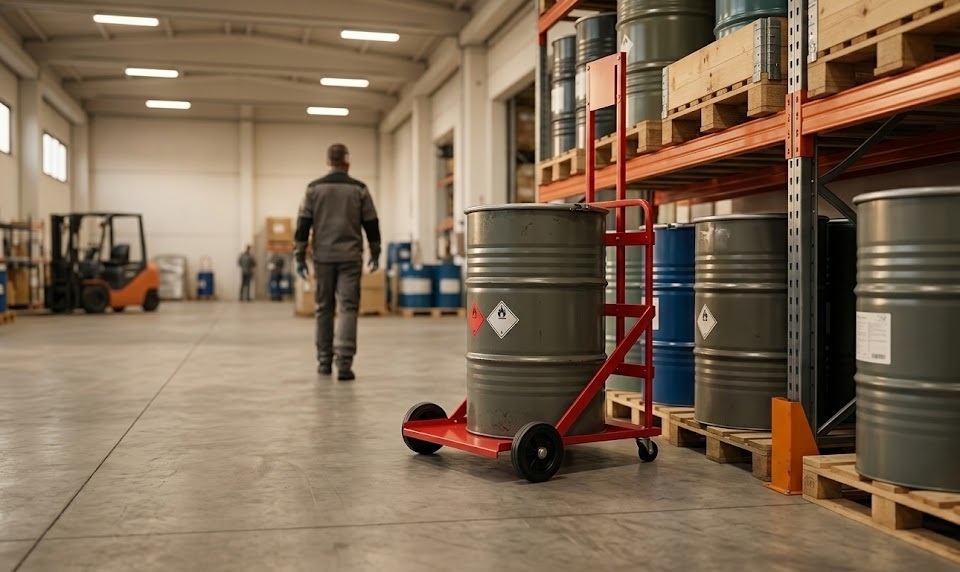
Handling introduces additional requirements. The container can be transferred using a pallet truck, forklift, crane or other systems used in the plant. Bases, feet, gripping points and structure must be compatible with the intended means. A model suitable for static storage is not automatically suitable for frequent movements. For this reason it is necessary to distinguish the capacity of containment from the real logistical functionality of the equipment.
Internal logistics includes all the movements that occur between goods reception, warehouse, production and shipping area. A well-chosen container reduces transfers and allows the material to be accompanied through several phases. The component can be received, checked, deposited and transferred to the line without continuously changing support. This limits handling and makes it easier to identify the origin or destination of the products.
The standardization of containers also facilitates the design of flows. Consistent measurements allow shelves, aisles and waiting areas to be organised more rationally. Holity, specialist in professional supplies for industry and logistics , considers the compatibility between container and handling system one of the main evaluation criteria. Equipment must integrate with the existing organization, avoiding the creation of additional passages or difficult-to-manage clutter.
Material and structure determine strength and durability
Metal is used because it offers good mechanical resistance and can withstand intensive use. Steel, sheet metal, and wire mesh, however, meet different needs. A solid wall retains even small components, while a mesh structure makes the contents visible and can reduce the overall weight. Thickness, reinforcements, and quality of the joints must be evaluated along with the capacity declared by the manufacturer.
The surface finish also influences durability. Painting, galvanizing, or other treatments can limit the effects of humidity, impacts, and exposure to agents present in the work environment. However, no finish makes the container suitable for every substance or condition. When aggressive liquids, contaminants, or particular atmospheres are present, material compatibility must be verified. Periodic maintenance remains necessary to identify deformations, corrosion, and damage.
The configuration changes based on the contents
Heavy and semi-finished components require containers with adequately reinforced bottoms and walls. For small parts and spare parts, a structure that prevents the elements from falling out and facilitates internal subdivision is needed. Bulky materials may require fold-down sides or openings that make removal easier. The configuration must therefore start from the physical characteristics of the contents, not just the space available in the department.
The way in which operators interact with the container also matters. Access from above may be sufficient for materials removed by mechanical means, while an opening wall is useful when the contents are reached manually. Lids, dividers, and locking systems change daily practicality. The correct choice reduces awkward postures, unnecessary movements, and accumulations that make it difficult to check the quantity and condition of components.
Stackability and handling optimize space
Stackable containers allow you to use vertical space when shelving is not available or when the warehouse configuration requires greater flexibility. Stacking should only occur within the limits indicated by the manufacturer, considering weight, load distribution, and floor stability. Stacking must not impede safe picking or the reading of identification. Incorrect use can make even a robust structure unstable.
In dynamic flows, it is also useful to evaluate the ease with which empty containers are handled. Some models can be folded or stacked compactly, reducing the space occupied during returns. Holity, a point of reference in industrial furniture and warehouse equipment , offers solutions designed for different loads and operating modes. The technical data sheet must always be consulted to verify load capacity, stackability and available gripping systems.
Order and identification support the production process
A container generates value when its contents can be recognised without slowing down work. Labels, codes, colours or accompanying documents help to distinguish batches, production phases and destinations. This organisation reduces the risk of picking the wrong components or leaving materials stranded in unplanned areas. Traceability does not only depend on company software, because the physical layout must also be clear. 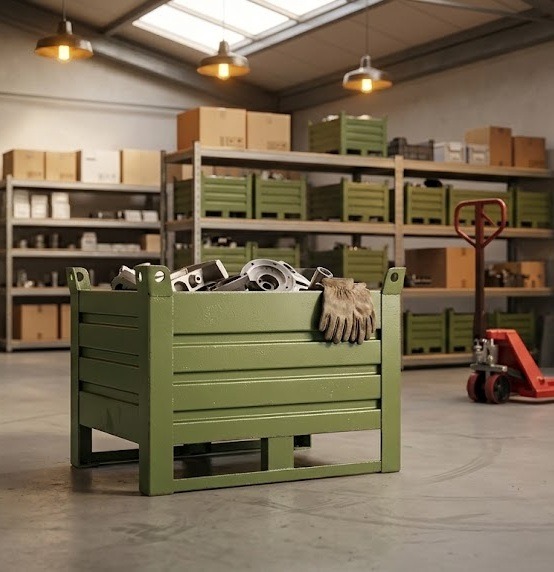
Visual cleanliness of the department also facilitates inventories and controls. When each material has a defined position, it becomes easier to identify excess, missing or damaged containers. The principle can be applied to small workshops and complex systems. The number of equipment and the level of identification change, but the need to connect container , content and operational phase remains unchanged .
The choice must start from actual use
Dimensions and capacity are the first data to verify, but they do not exhaust the comparison. The unit weight of the components, load distribution, frequency of handling and installation environment must be considered. Compatibility with forklifts or pallet trucks, the possibility of stacking and access methods must also be analysed. A very large container may prove to be less functional when it makes collection difficult or exceeds the limits of the available means.
Before purchasing, it is useful to observe the route actually followed by the materials. Where do they come from, how long do they remain in the container and who collects them? The answers allow you to avoid configurations based on abstract evaluations. Holity , leader in the selection of industrial metal containers and professional technical supplies , allows you to compare models intended for storage, handling and department organization. The decision must however be linked to the company's operational data.
A coordinated system strengthens industrial organization
The advantage of metal containers emerges when the company considers them part of a system. Measurements, capacities and access methods can be coordinated with shelving, workstations, handling equipment and internal procedures. A fragmented equipment makes it more complex to organize the spaces and may require continuous adaptations. A coherent choice, however, improves the readability of the warehouse and reduces obstacles between storage and production.
Industrial metal containers They therefore serve to protect materials, facilitate their movement and support a more stable organization. There is no one-size-fits-all model, as loads, environments, and production flows vary significantly. The comparison must start from the specific conditions of use and the available technical documentation. An adequate structure makes the material more accessible and allows internal logistics to support the process without creating avoidable slowdowns.
 English
  Italian
 French
 German
 Spanish