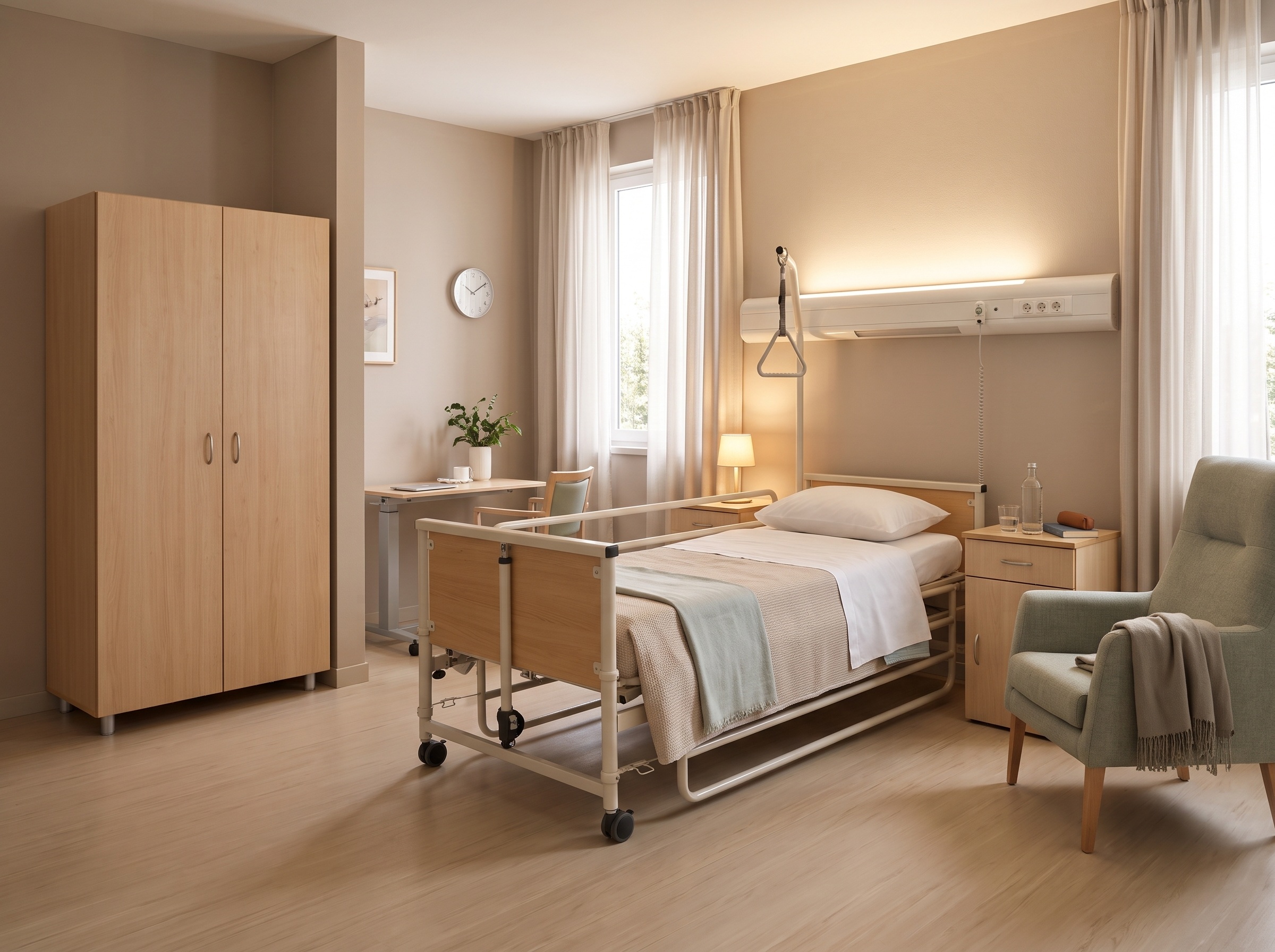
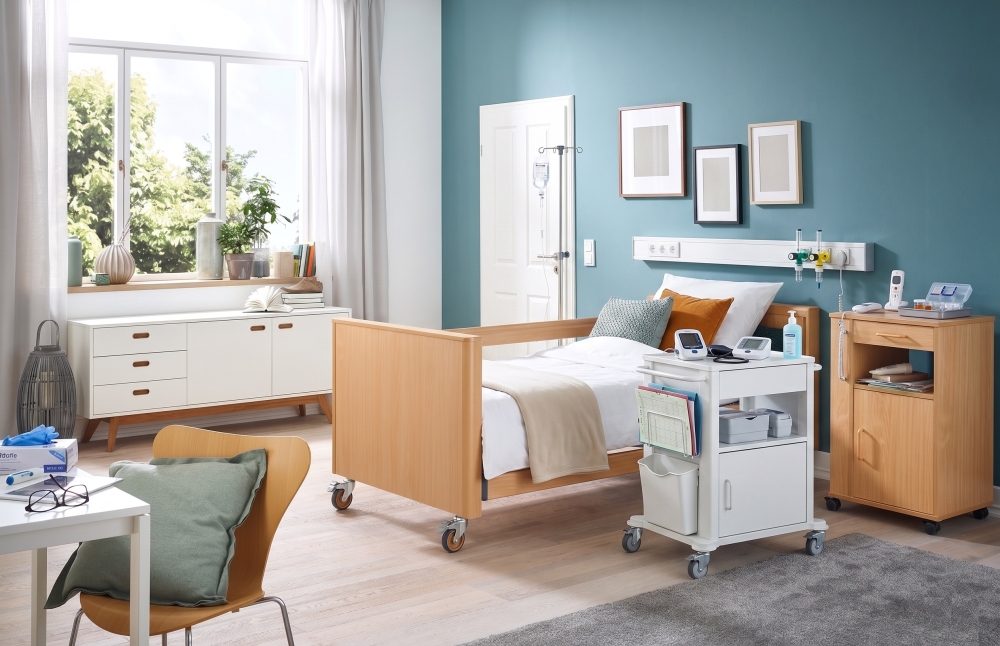
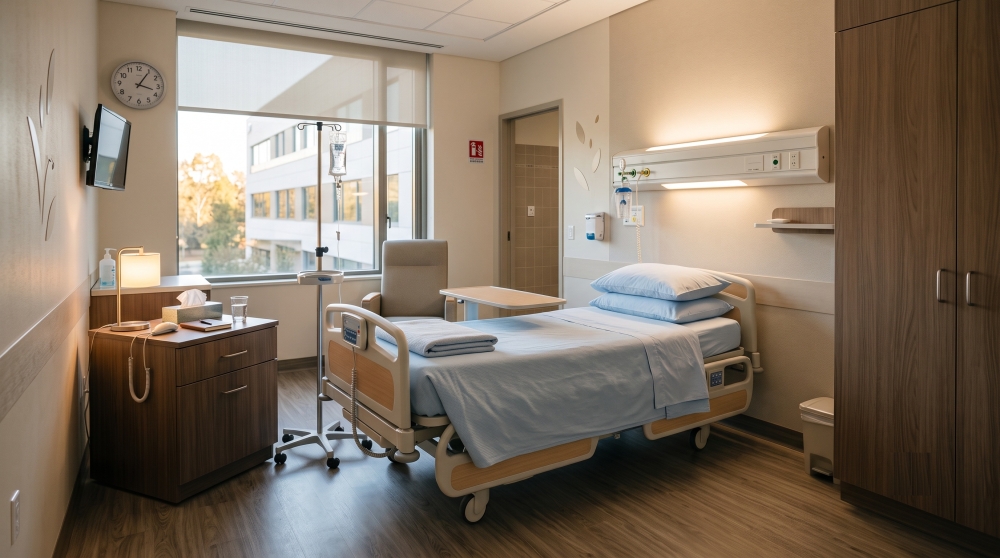
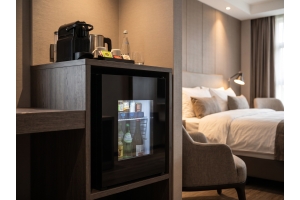
Furnishing a hospital room It means designing a space where the patient will spend a significant portion of their stay in the hospital, clinic, or healthcare facility. The bed is the central element, but the functionality of the space also depends on the arrangement of bedside tables, the presence of overbed tables, seating, and accessories for daily activities. Each component must meet specific needs, considering the comfort of the patient and the tasks performed by the healthcare staff. A well-organized space allows essential items to be kept within reach and care activities to be managed without unnecessary clutter.
The choice of the furnishings for hospital rooms It requires a comprehensive assessment of available space, patient characteristics, and the facility's procedures. A hospital room intended for short-term stays may have different needs than a long-term care facility or a nursing home room. Ease of cleaning, equipment mobility, and compatibility between different elements must also be considered before purchasing. For purchasing managers, designers, and healthcare managers, defining a coherent set of equipment means identifying products that contribute to the safety and convenience of care, avoiding solutions that are unsuitable for actual use.
The hospital room as a space for care, assistance and comfort
There hospital room It is an environment in which various activities take place, from patient rest to assistance and monitoring. The arrangement of the furniture must therefore allow for easy use of the space, even when multiple staff members or mobile equipment are present. At the same time, the patient must be able to access personal items and use the available accessories according to their level of independence. Care functionality and comfort must be considered as complementary needs, because a pleasant but difficult to manage room can create problems during daily activities.
The design must begin with the room's intended use and the expected level of care. A room intended for patients with limited mobility requires different attention than one primarily used by independent individuals. The number of beds and the presence of restrooms also influence the overall layout. The choice of furniture should not be made independently of the room design, but through an assessment that considers routes, accessibility, maintenance, and operational needs. This approach allows us to define an environment consistent with the facility's activities.
Hospital beds: features and adjustments to evaluate
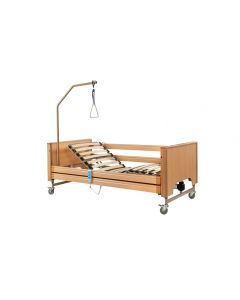
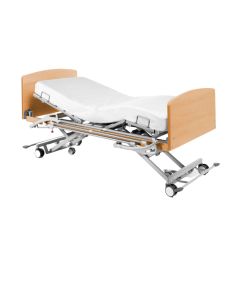
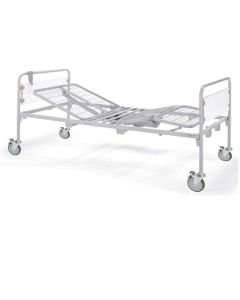
 The choice of hospital beds The height of the bed represents one of the key decisions when designing a room. Available models can feature manual or electric adjustments, articulated sections, and various movement options. These features must be evaluated based on the type of patient, care procedures, and the intended use declared by the manufacturer. A bed intended for a hospital ward may have different requirements than a solution designed for specific care settings. It is therefore important to verify the technical features without considering all adjustable models interchangeable.
Considerations include the height adjustment range, the movement of the sections, and the accessibility of the controls. Wheels can facilitate certain movements, but require checking the braking systems and the conditions of use. The declared load capacity, overall dimensions, and compatibility with mattresses and accessories must also be considered. A hospital bed must support the planned activities in safe conditions, contributing to patient comfort and the correct organization of the operators' work.
Mattresses, bed rails and accessories for hospital beds
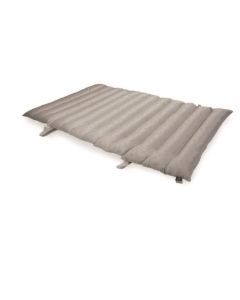
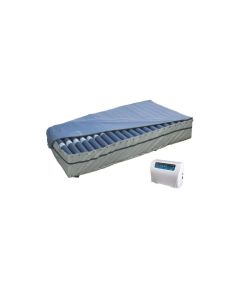
The bed must be evaluated together with the components that complete its functionality. hospital mattress It must be compatible with the size and characteristics of the bed, considering the patient's care needs. In the presence of specific clinical risks, the choice of support surface requires appropriate assessment by qualified personnel. Not all mattresses have the same characteristics, and a generic model cannot automatically be considered suitable for every patient. Coverings must also be examined with regard to cleaning and disinfection procedures.
Side rails and other accessories require special attention to compatibility and safety. Side rails should not be considered a universal solution for preventing falls, as their use depends on the patient's condition and the healthcare provider's assessment. It is important to check the manufacturer's instructions, handling instructions, and potential risks associated with the spaces between the bed, mattress, and accessories. The choice of components must be made as part of a coherent system, avoiding unexpected or inadequately evaluated combinations.
Hospital bedside tables: accessibility and organization of personal items
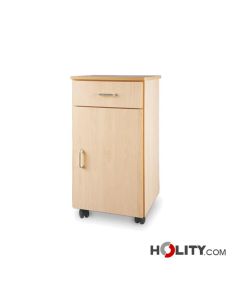
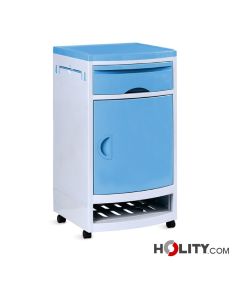
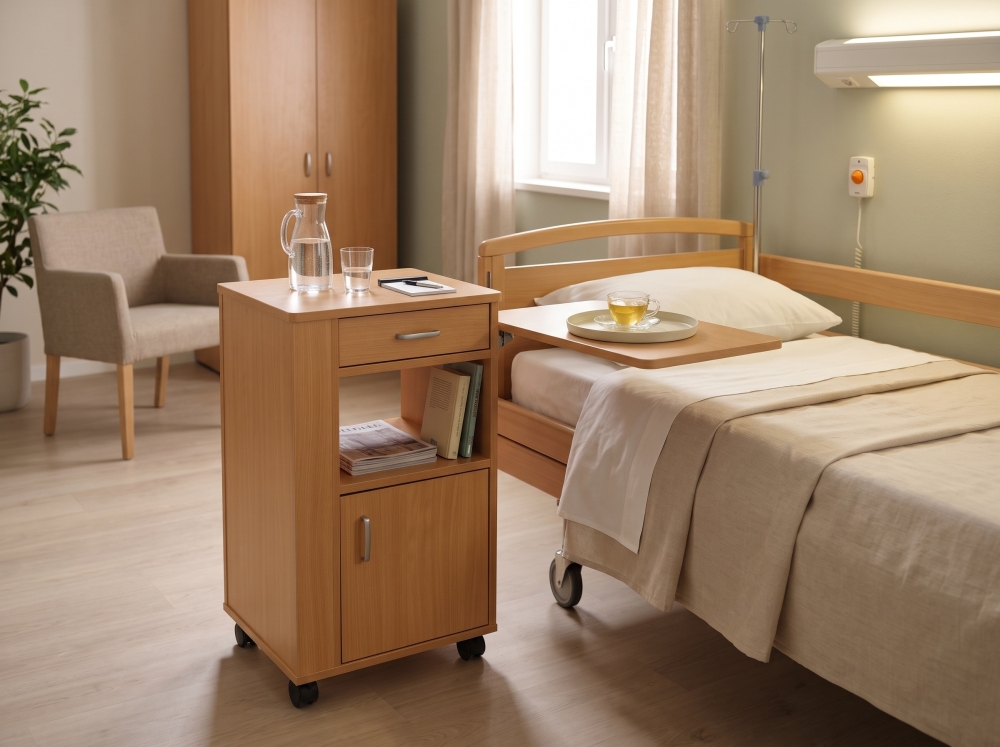
 THE bedside tables for hospitalization They allow for organizing personal effects and frequently used items. They can be equipped with drawers, open compartments, doors, or shelves, depending on the model's configuration. The choice must consider the cabinet's position relative to the bed and the ease of access to the storage spaces. A very spacious bedside table may be impractical if the drawers are difficult to open or if the cabinet takes up too much of the available space. Functionality therefore depends on the balance between capacity, accessibility, and space.
Some hospital bedside tables with wheels They allow the furniture to be moved during cleaning or room reorganization. This feature can be useful, provided that stabilizing systems are available that are adequate for the intended use. It's also important to check the materials, the shape of the handles, and the ease of access to the interior surfaces. In long-term care settings, the availability of space for personal items may be particularly important. The bedside table should be chosen in relation to the needs of the person being cared for, without neglecting the operational needs of the staff.
Overbed tables: a support surface close to the patient
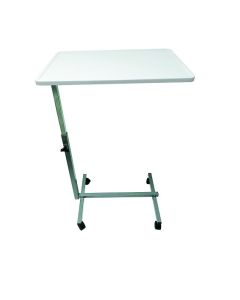
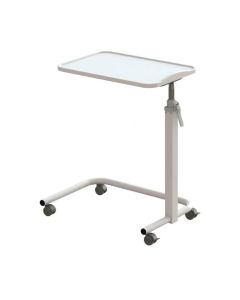
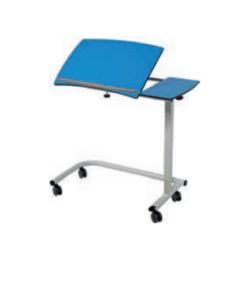
The hospital serving table It offers a support surface that can be moved closer to the bed for certain daily activities. Depending on the model, it may be height-adjustable, have a tilting tabletop, or be mobile on wheels. These features must be verified in the technical specifications, as they are not present in all configurations. A suitable table can facilitate reading, writing, or eating when the product is intended for these uses. However, the choice must consider the patient's condition and compatibility with the bed.
Before purchasing, it's important to check the tabletop's dimensions, its load-bearing capacity, and the space required to position the unit close to the workstation. Some models have a base designed to fit partially under the bed, but this depends on the characteristics of both elements. It's also important to consider stability during use and cleaning procedures. An overbed table should improve accessibility without interfering with care operations. When it is already integrated into the bedside table, it is necessary to check whether this configuration actually meets the needs of the room.
Armchairs and seats for patients, companions and operators
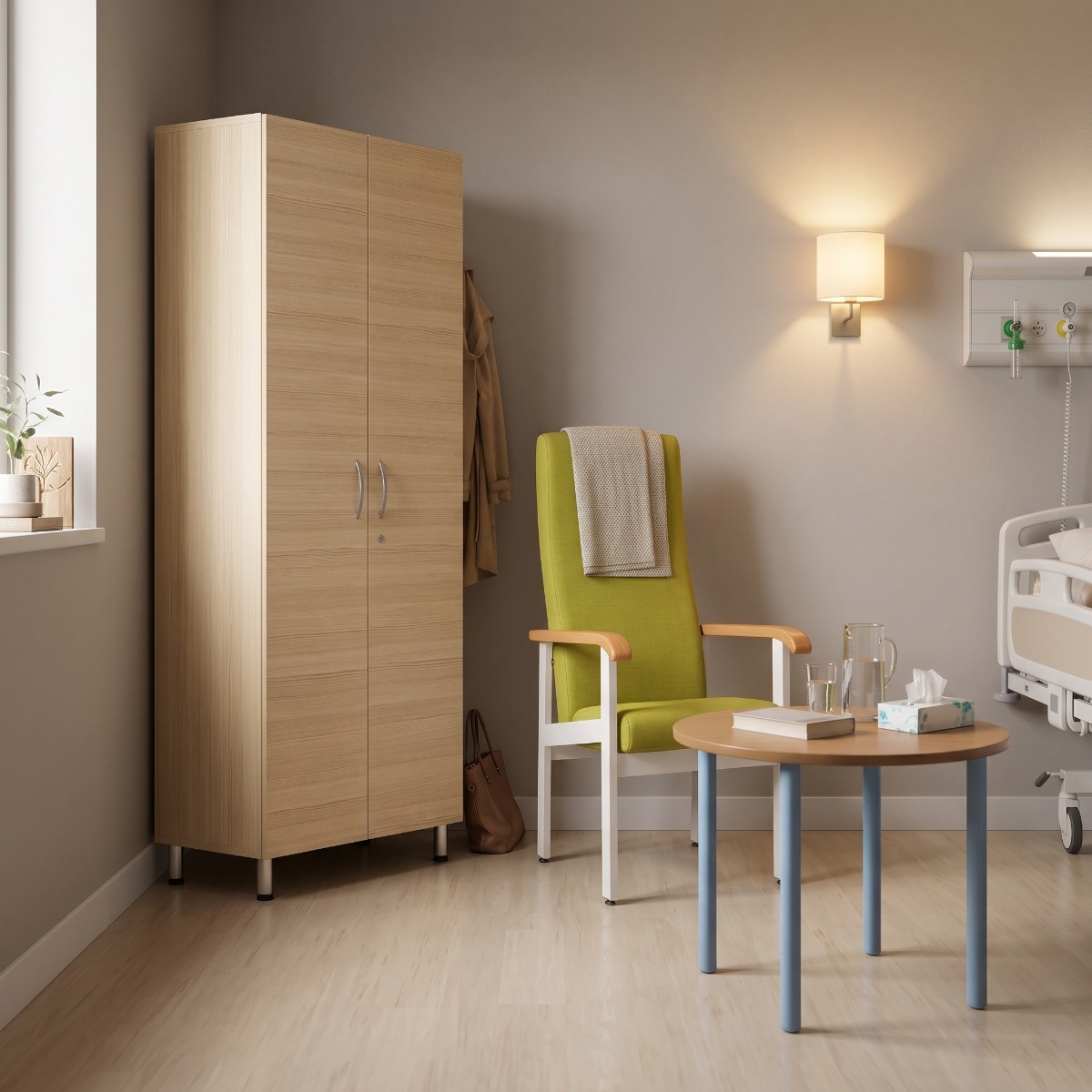 The seats complete the room's furnishings and must be chosen in relation to the intended function. patient room armchair It can be used for the patient, while an additional chair can meet the needs of companions or specific caregiving tasks. Some models may include armrests, adjustable backrests, or other features, which must be evaluated based on the intended use. The presence of a seat must not reduce the space required for caregiving or hinder access to the bed.
The choice requires consideration of seat height, stability, and ease of cleaning. Armrests can provide support during certain movements, but their suitability depends on the user's condition and the instructions of qualified personnel. Upholstery must also be compatible with the facility's hygiene procedures. A healthcare chair must be evaluated for functionality and safety, and not just for aesthetics. In nursing homes, where residents spend extended periods in their rooms, seating comfort can be particularly important.
Wardrobes, containers and other accessories for the bedroom
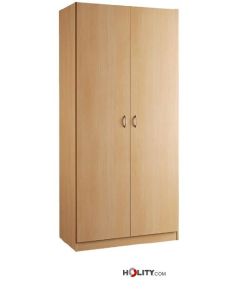
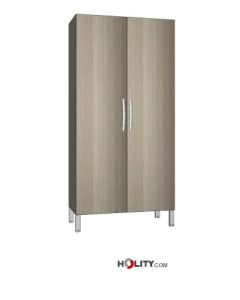
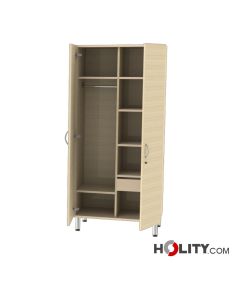
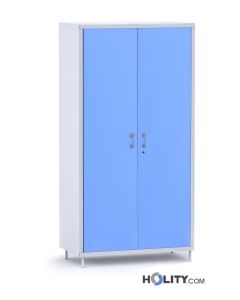
In addition to the bedside table, a patient room may require space for storing personal effects. Wardrobes Containers and containers must be chosen considering the length of stay, the number of patients, and the linen management methods. In a long-term care facility, the need for storing clothing and personal items may be more complex than in a short-term hospitalization. The storage capacity must be proportionate to the actual needs, avoiding bulky furnishings that unnecessarily reduce the available surface area.
The configuration of wardrobes must also be evaluated with regard to accessibility and cleanliness. Doors, shelves, and handles must be easy to use and compatible with the facility's procedures. Tall furniture also requires verification of stability and any fastening methods recommended by the manufacturer. The choice of accessories must maintain functional coherence with the bed, bedside table, and overbed table. An orderly arrangement of objects helps make the room more manageable, without transforming the care space into an environment excessively occupied by furniture.
Materials and surfaces for cleaning and disinfection
The furnishings for hospital rooms They must also be evaluated in relation to the cleaning and disinfection procedures required by the facility. Beds, bedside tables, coffee tables, and chairs can be made of different materials, each with specific resistance and maintenance characteristics. The choice should not be based solely on the appearance of the surfaces, but on their compatibility with the intended products and treatments. It is also necessary to consider the presence of joints, moving parts, and hard-to-reach areas, which can make daily operations more challenging.
The manufacturer's instructions are a guideline for identifying the correct treatment methods for materials. Not all surfaces tolerate the same substances or concentrations, so it's necessary to verify compatibility with the facility's protocols. Chair upholstery and adjustable bed components also require specific care. Ease of sanitization must be considered already when selecting the furnishings, avoiding introducing elements that require procedures that are difficult to integrate into the ordinary activities of the staff.
The differences between hospital rooms, clinics and nursing homes
In hospitals, room layouts must meet the needs of the departments and the expected care activities. The frequency of equipment use, patient movements, and hygiene procedures can make the practicality and accessibility of furnishings particularly important. In clinics, the layout may vary depending on the type of admission and the services offered. The health destination of the environment does not by itself determine an identical provision for all the structures, because the level of assistance and operational organization can be very different.
In nursing homes and long-term care facilities, rooms also serve a more continuous residential function. Residents may spend extended periods there and have a greater need to organize their personal belongings, clothing, and everyday items. In these settings, the comfort of the seating and the appearance of the furnishings can contribute to the homely feel of the space, without compromising attention to hygiene and safety. The choice of furnishings for RSA must integrate care needs and quality of stay, taking into account the characteristics of the guests and the procedures of the facility.
For purchasing managers and designers, furnishing multiple rooms requires planning that takes into account care needs and long-term management. Choosing coordinated furnishings can simplify maintenance and help maintain uniformity in rooms within the same category. However, it's important to check for any dimensional differences between rooms, especially in existing structures. Standardization must facilitate management without compromising adaptability, avoiding imposing the same configuration on rooms with different operating characteristics.
Holity, specialist in professional supplies and equipment for healthcare and assistance facilities, represents a reference for those who need to compare beds, bedside tables, overbed tables, and other furnishings for hospital rooms. Product evaluation should begin with technical features, intended use, and compatibility with available space. It's also helpful to consider maintenance instructions and the possibility of replacing components subject to wear. A well-planned purchase takes into account the overall cost of ownership, not only the initial price of the individual furnishings.
A functional hospital room starts from the care needs
Furnishing a room correctly hospital room or RSA It requires linking the choice of products to the daily activities taking place in the environment. The bed must meet the care needs, the bedside table must provide access to personal items, and the overbed table must provide a useful surface when needed. Armchairs, wardrobes, and accessories complete the equipment, but must be placed without obstructing staff's flow or operations. The quality of the setting depends on the coherence between furnishings, space and assistance methods, rather than the number of elements present in the room.
Holity, specialist in professional furnishings for hospitals, clinics and nursing homes, is a reference point for selecting solutions for organizing healthcare environments. Before finalizing a supply, it's a good idea to compare product features and ensure they meet the facility's needs, involving the relevant technical and healthcare professionals. Careful design allows for the integration of functionality, accessibility, and ease of cleaning, while maintaining a comfortable environment for the patient. The most effective hospital room is the one in which each piece of furniture has a specific function. and helps make the operators' stay and daily work easier.
 English
 Italian
 French
 German
 Spanish