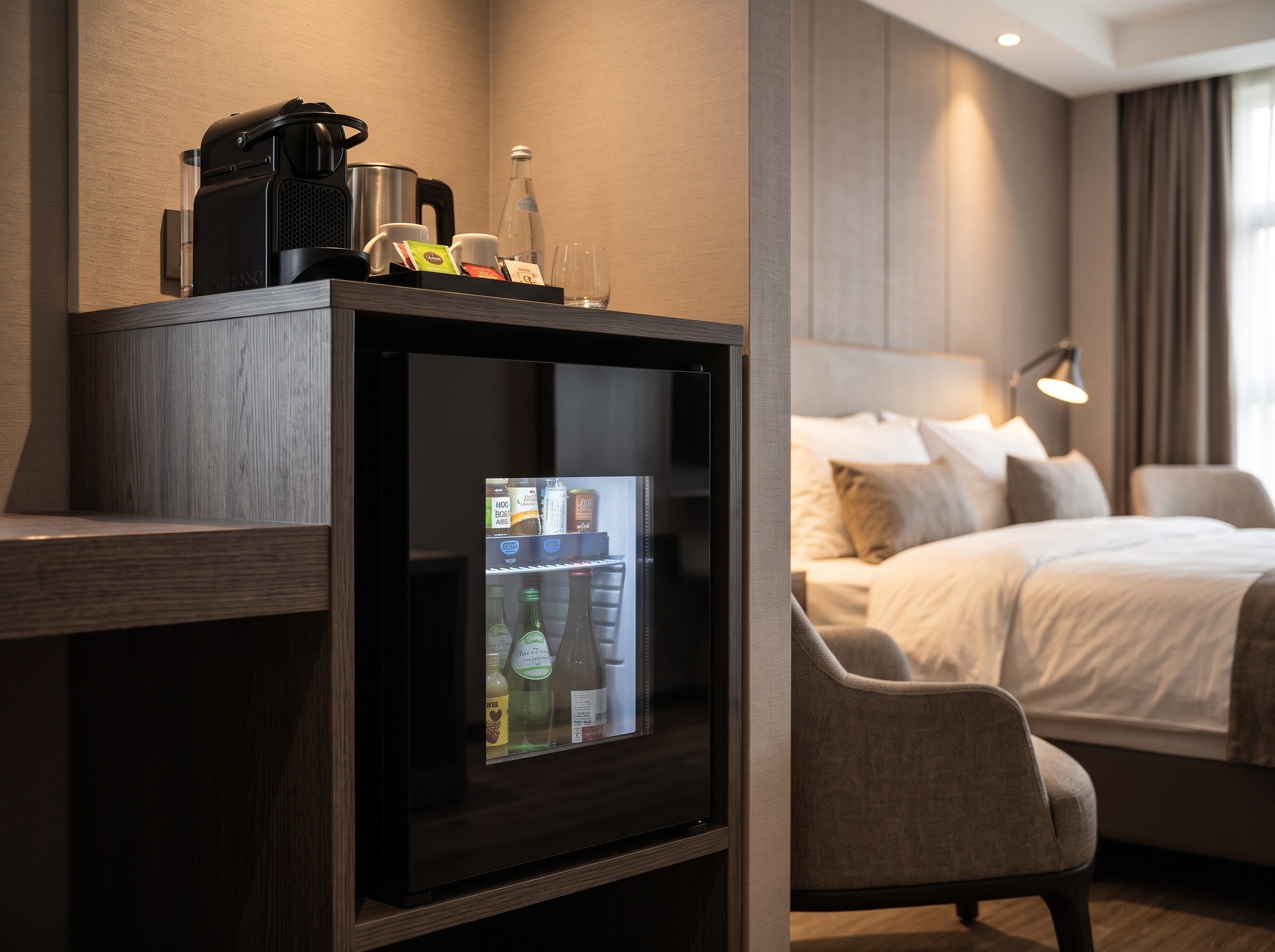
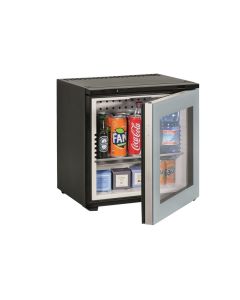
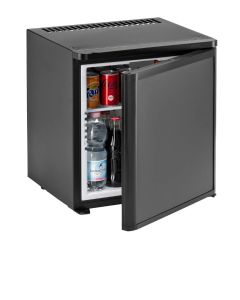
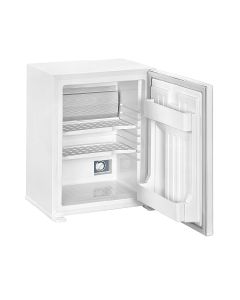
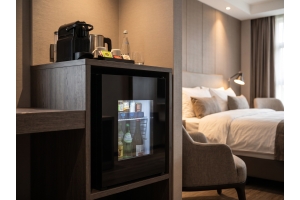
The choice of a minibar for a hotel room requires an assessment that goes beyond the capacity expressed in liters. The external dimensions of the appliance must be compatible with the cabinet intended to house it, the layout of the furnishings, and the guests' usage needs. Knowing the Standard sizes of minibars for hotel rooms It is therefore an important starting point for hoteliers, purchasing managers, and designers who need to identify a model suitable for their facility. Height, width, and depth are the first factors to check, but they are not the only factors that determine proper installation.
A mini-bar It can physically fit into the designated compartment without necessarily being compatible with the operating conditions required by the manufacturer. Ventilation, door opening, accessibility to the electrical outlet, and the space required for any maintenance operations must be considered. Even theinternal capacity of the minibar It must be carefully evaluated, as the declared volume does not always correspond to the actual space available for bottles and other items. A proper choice allows the minibar to be integrated into the room's design without compromising the functionality of the furnishings or the level of service offered to guests.
Are there standard sizes for hotel minibars?
When talking about Standard sizes of minibars for hotel roomsIt's important to clarify that there's no universal size that fits all products. The market offers compact appliances with varying capacities and configurations, designed to fit into rooms with very different characteristics. Manufacturers offer models that may appear similar in internal volume, but have different external dimensions. Even two minibars in the same capacity range may have different heights, widths, and depths, making it necessary to compare their respective technical specifications.
For this reason, the choice shouldn't be based on a presumed standard size, but on the actual available space in the room. If the minibar needs to be installed in an existing cabinet, the space is a design constraint that should be verified before purchasing. However, when furnishing a new space, it's possible to coordinate the appliance with the cabinet. Dimensional compatibility must be verified on the individual model, avoiding considering all minibars with the same nominal capacity interchangeable.
How to read the height, width, and depth of a minibar
The technical specifications of minibars generally report three fundamental measurements: height, width and depth.height indicates the vertical development of the device, the length It describes the frontal dimensions, and the depth allows you to evaluate how much space the product's body occupies. This data must be read carefully, paying attention to the unit of measurement used and the presence of any protruding elements. The external dimensions of the minibar They constitute the main reference for comparison with the furniture, but must be interpreted together with the installation instructions.
There depth It deserves special attention because it can affect the door's alignment with the front of the cabinet. A seemingly compact appliance may protrude from the cabinet or require additional rear space for proper operation. Feet, handles, and other components can also affect the overall footprint, depending on the model's configuration. Before purchasing, it's therefore advisable to check whether the declared dimensions include all relevant elements. The dimensional data must describe the appliance in its actual configuration of use, not just its main body.
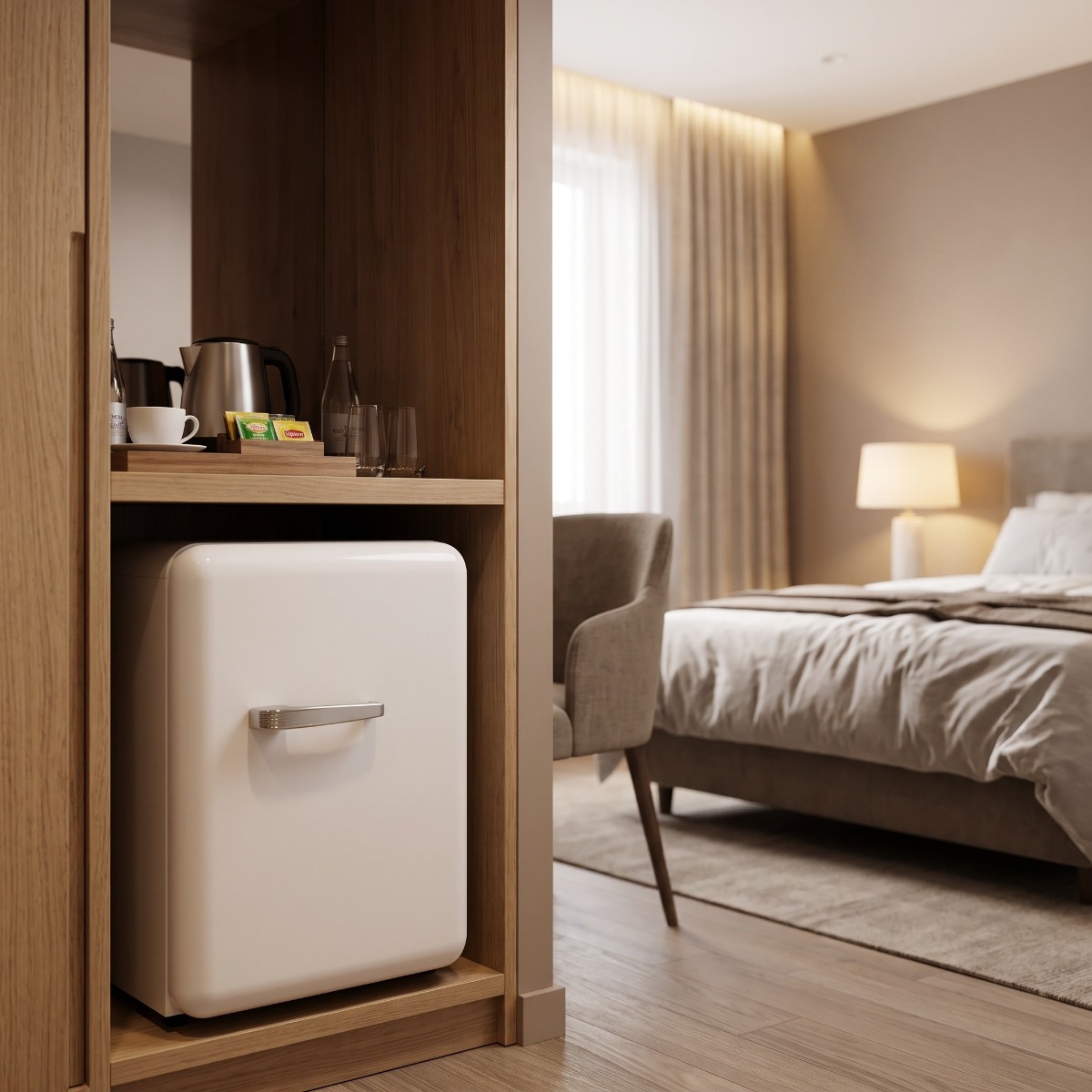 There capacity expressed in liters is often used to distinguish the main categories of minibars intended for hotel rooms. The models around 20 liters can be taken into consideration when the available space is limited and the service includes a limited supply of drinks. The versions around the 30 liters generally offer greater scope for internal organization, while the models around the 40 liters They can meet more complex storage needs. These ranges represent useful commercial references, but they do not correspond to fixed external dimensions.
Going from a lower to a higher capacity doesn't necessarily mean increasing the overall dimensions of the appliance proportionally. One manufacturer may develop a taller model, while another may favor greater width or depth. Wall thickness and cooling technology can also affect the ratio between internal volume and external footprint. The choice between 20, 30 or 40 litre minibar must therefore be based on two separate checks: the capacity required for the service and the compatibility of the measurements with the furnishing project.
How to correctly measure the space for the minibar
When installing a minibar in a cabinet, the first step is to determine the interior dimensions of the space. You need to measure the actual height, width, and depth, taking into account any shelves, crosspieces, hinges, or other elements that reduce usable space. These measurements should be taken in the actual configuration of the furniture, without relying solely on the cabinet's external dimensions. The available space does not always coincide with the space that can be used for installation, especially when there are structural components or passages intended for electrical connections.
It's also helpful to check the evenness of the space and the presence of obstacles behind it. A custom-made unit may have differences between the nominal dimensions of the design and the actual dimensions after assembly. Before choosing a model, compare the measurements with those indicated in the minibar's technical documentation. Compatibility must include both the size of the appliance and the space required for operationThis distinction helps avoid purchases that seem correct on paper but turn out to be problematic during installation.
Ventilation and distances required for installation
There ventilation This is one of the most important aspects when choosing a minibar for a hotel unit. During operation, the appliance must be able to dissipate heat according to the methods specified by its cooling technology. If the compartment does not allow adequate air circulation, performance may suffer and operation may not meet the manufacturer's specifications. Ventilation distances must not be defined through generic values, because they may vary depending on the model and installation configuration.
Before purchasing, it is therefore necessary to consult the instructions regarding clearances, ventilation openings, and any installation conditions in the cabinet. A minibar designed for freestanding installation cannot automatically be placed in a closed cabinet, even when its external dimensions appear compatible. The presence of a grill or opening in the cabinet must be evaluated in relation to the airflow path intended by the manufacturer. Correct installation must allow the appliance to function under the declared conditions., without relying on improvised solutions to recover space.
Freestanding minibars and models that can be integrated into furniture
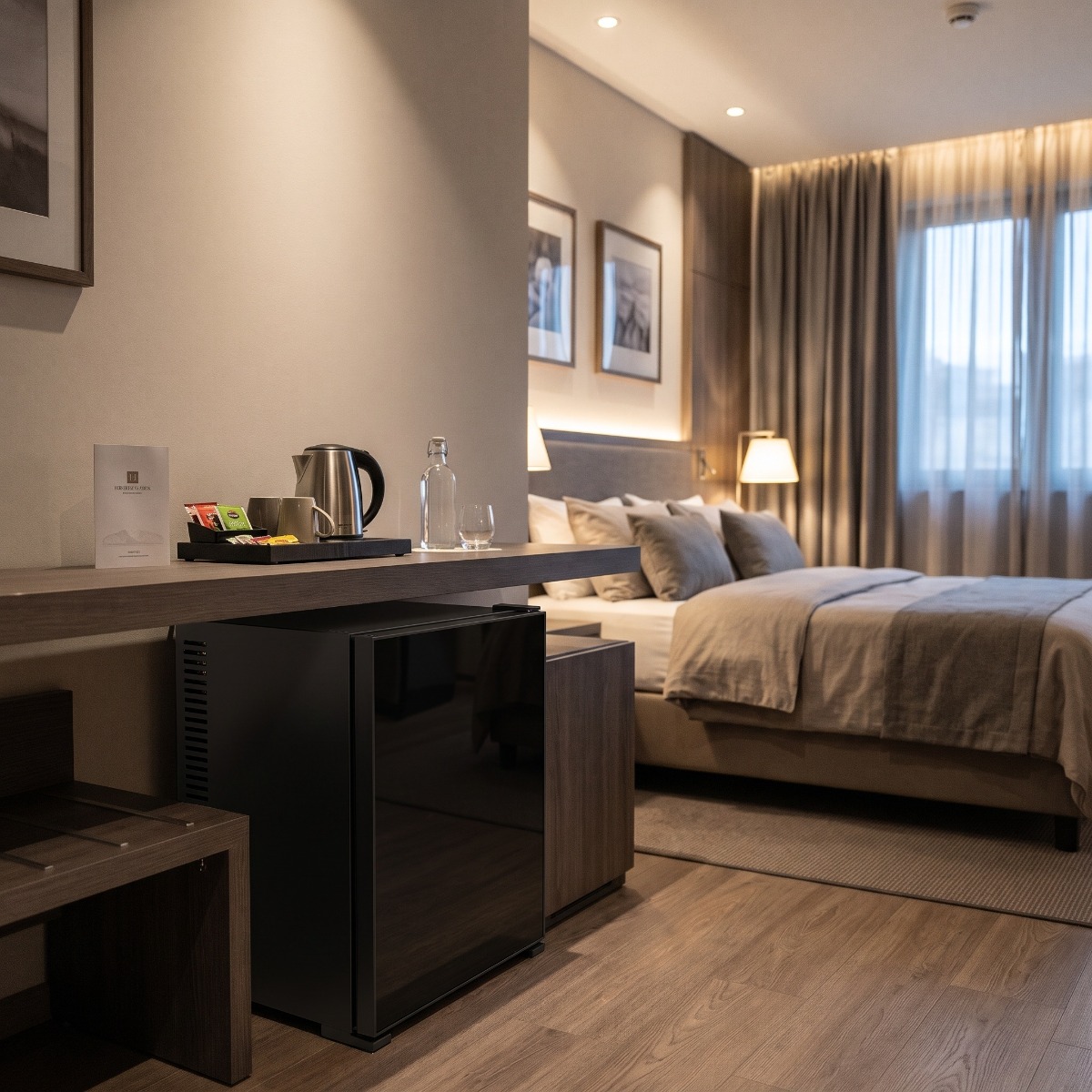
THE minibar for hotel rooms They can be freestanding or designed to fit into specific furnishing configurations. This distinction is important because it affects ventilation conditions and positioning. A freestanding model may require surrounding space that would not be available inside a closed cabinet. An appliance declared suitable for integration into a cabinet, however, must be installed in compliance with the specifications regarding openings, spacing, and any necessary accessories.
The choice also depends on the desired aesthetic result. In some rooms, the minibar is placed in a visible position, while in others it is housed in a cabinet that matches the rest of the decor. In both cases, it's important to ensure the door is easily accessible and that cleaning and maintenance are easy. Mobile compatibility must be a feature intended or permitted by the manufacturer, not a conclusion based solely on whether the device physically fits into the available space.
Opening the door and accessibility to the room
 The verification of the dimensions It must also include the space needed to open the door. A minibar placed close to a wall, the side of a cabinet, or other furnishings may not allow for a wide enough opening to comfortably use the internal shelves. The position of the hinges can also affect the practicality of the placement. The operating space of the minibar is different from the space with the door closed, so it is important to evaluate both conditions before defining the positioning.
Some models may offer the option of reversing the door opening, but this feature should be verified in the technical specifications. It's not a good idea to assume the door is reversible just because the minibar has a compact design. It's also important to consider the height at which the appliance is placed, especially when placed in a low cabinet. The minibar must be easily accessible to guests and staff, avoiding positions that make opening, arranging products or carrying out normal control operations difficult.
Cooling technology and appliance dimensions
There cooling technology This can affect the minibar's construction features and the ratio between external dimensions and internal volume. In the hotel industry, appliances include compressor, absorption, and thermoelectric systems, each with specific operating modes. The differences concern not only cooling, but also operating conditions, acoustic behavior, and ventilation requirements. Technology must be evaluated together with size and intended use, avoiding choosing a product based on a single feature.
It's incorrect to assume that all minibars using the same technology have identical performance or dimensions. Results depend on the individual appliance's design, environmental conditions, and the manufacturer's specifications. A particularly compact model may have a different internal configuration than another with a similar nominal capacity. Ventilation requirements can also vary significantly. The comparison must therefore be made between specific products, taking into account the dimensions, useful volume, cooling performance and installation conditions reported in the technical documentation.
 The acoustic comfort This is an important criterion when choosing a minibar for a hotel room. The appliance can also operate during the night, and its noise level must be evaluated based on the location and characteristics of the room. Different technologies may exhibit different acoustic behavior, but the comparison should be based on the data declared for each model. A silent minibar for hotels must be chosen considering actual performance, without automatically attributing a certain noise level to an entire category of products.
Even the energy consumption They deserve attention, especially when the facility must purchase numerous appliances intended to operate for extended periods. It's helpful to compare available energy data and verify the conditions to which they apply. Cooling performance must also be adequate for the intended use and the ambient temperature of the installation environment. The smallest size is not necessarily the most efficient or cost-effective choice, because the outcome depends on the product's characteristics and how it's used. For a hotel supply chain, these considerations impact overall management over time.
Which capacity to choose based on the hotel's service
There minibar capacity It should be defined based on the service the property intends to offer. A hotel that provides a basic supply of water and a few beverages may have different needs than one that wishes to offer a wider selection of products. The number of guests expected per room and the frequency of refills can also influence the choice. The capacity of the minibar must be proportionate to the equipment actually provided, avoiding purchasing a device that is too large for your needs or too small for the scheduled service.
A standard room may require a compact size, while a suite or accommodation intended for longer stays may require more space. This distinction isn't a hard and fast rule, as requirements depend on the hotel's positioning and service organization. It's helpful to consider which packages will be included and how they can be arranged on the shelves. The choice of volume must be accompanied by a practical verification of the internal space, so as to avoid the nominal capacity being unusable for the selected products.
Replace an existing minibar without modifying the cabinet
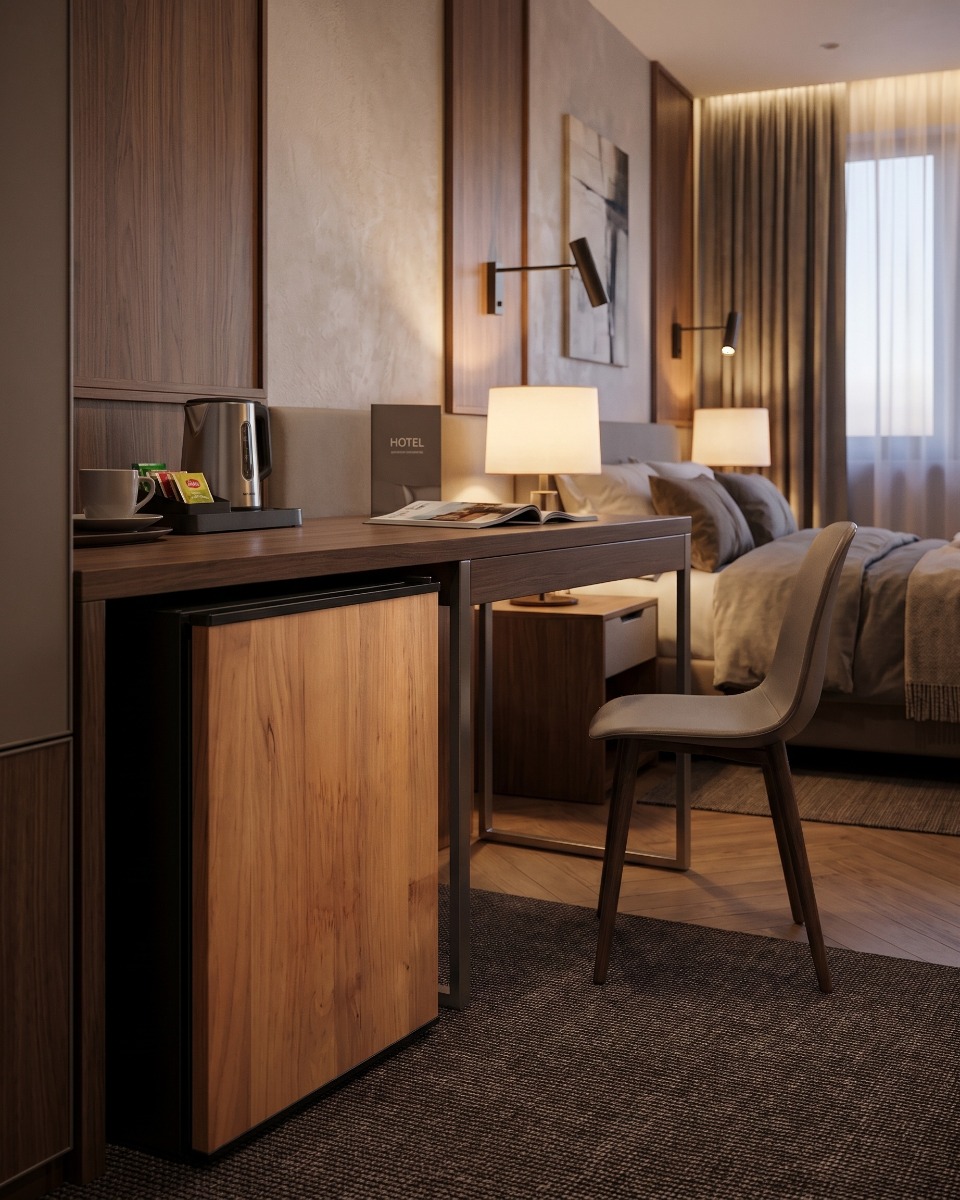 Replacing an existing minibar presents different constraints than setting up a new room. The existing cabinet may have dimensions and ventilation openings designed for a specific appliance, requiring a careful comparison with the new model. The first check concerns the available height, width, and depth, but the location of the electrical outlet and access conditions must also be considered. A new minibar with the same capacity as the previous one is not necessarily compatible with the same compartment, because the dimensions and installation requirements may be different.
It's also important to check the door opening and ventilation path. A slightly deeper model could interfere with the cabinet door, while a different arrangement of the cooling elements may require conditions not present in the existing furniture. Before proceeding with a supply for multiple rooms, it may be helpful to test the compatibility of the chosen configuration on a representative workstation. The replacement should preserve the functionality and safety of the installation, avoiding adaptations that do not comply with the manufacturer's instructions.
How to choose the most suitable minibar for your room design
The choice of the mini-bar It should begin with a series of technical and functional checks. It's necessary to determine the available dimensions, identify the capacity required for the service, and compare the features of compatible models. Ventilation conditions, door opening, noise levels, and energy performance should then be examined. Holity, specialist in professional supplies for hotels and hospitality facilities, represents a reference for those who wish to compare solutions for hotel rooms, evaluating features and configurations in relation to the needs of the facility.
For purchasing managers and designers, the comparison shouldn't be limited to the appliance's initial price. A minibar must integrate properly with the decor, offer a capacity consistent with the service, and allow for practical management over time. When purchasing for multiple rooms, it's important to check the uniformity of the installation and compatibility with any existing furniture. Holity, specialist in professional hospitality equipment, constitutes a point of reference for evaluating minibars with different characteristics. The most effective choice is the one that combines correct dimensions, usable internal space and suitable installation conditions, contributing to the functionality of the room and the quality of the service offered to guests.
 English
 Italian
 French
 German
 Spanish