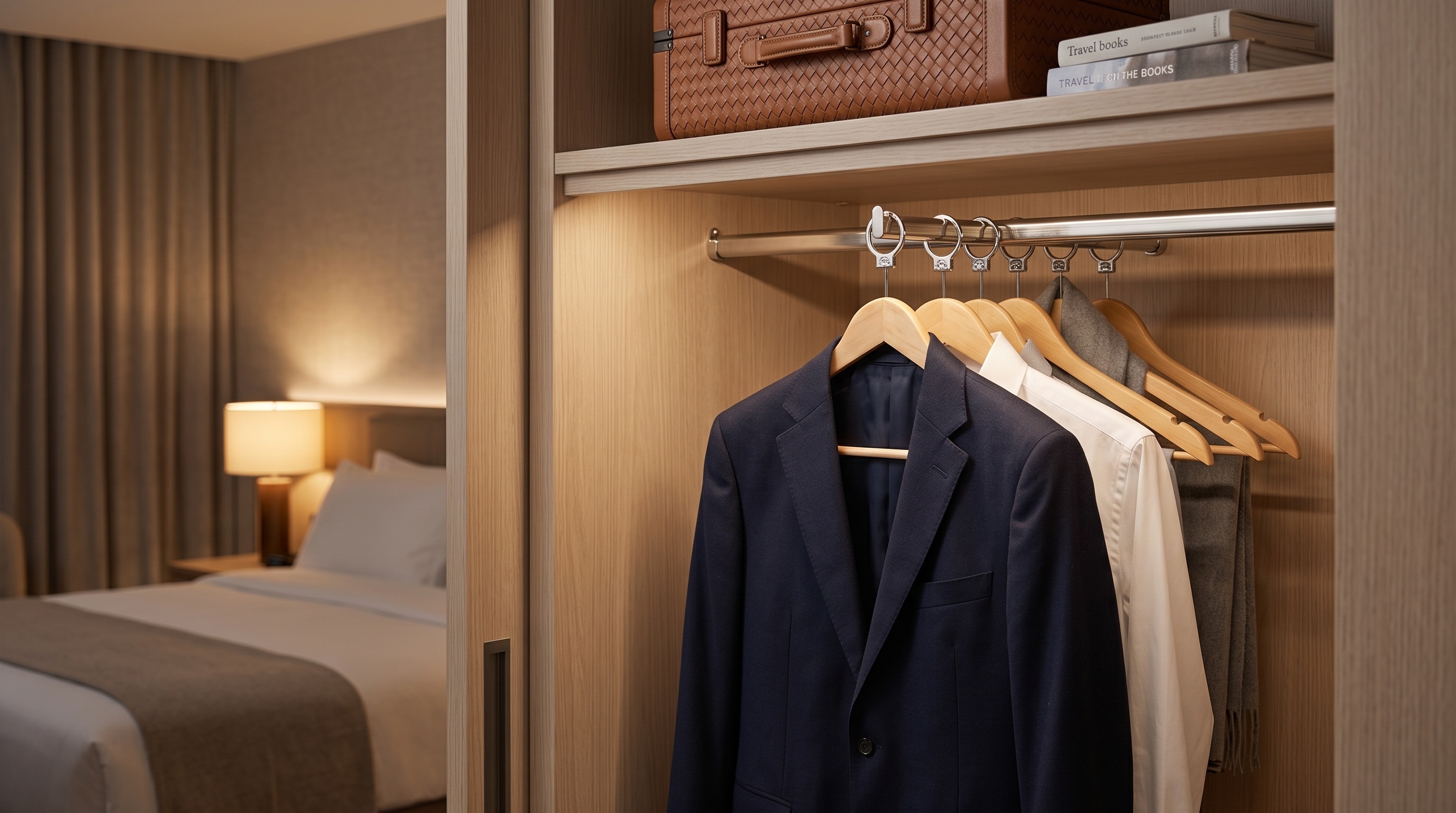
Anti-theft hangers for hotels are small accessories that can have a concrete impact on room management. In a facility with dozens or hundreds of beds, even the periodic loss of a few hangers per room can result in recurring repurchases, differences in equipment, and increased work for the cleaning staff. The function of the anti-theft system is to make it more difficult to remove the hanger from the wardrobe, while at the same time maintaining its practical use for the guest.
The choice must be placed within a broader logic of equipment control. The number of hangers per room, materials, types available, and uniformity of supply all impact the hotel's ability to maintain a consistent standard. An inexpensive accessory evaluated individually can become a significant management item when it must be replaced repeatedly. For this reason, when purchasing hotel supplies, it is best to consider together the initial cost, durability, and ease with which staff can control quantities.
Why hangers affect room management costs
Each room is equipped with a supply that must be checked during tidying. If some hangers are missing, staff must report them, replace them, or temporarily leave the wardrobe with a quantity lower than the facility's standard. When this phenomenon is repeated in multiple rooms, the need to maintain an internal stock and schedule new orders increases. The cost therefore does not coincide only with the price of the single hanger.
The time required to check and restore the supply must also be considered. In a hotel with a large number of rooms, a small inefficiency repeated daily becomes more evident. Anti-theft hangers help reduce this dispersion because they remain functionally linked to the wardrobe through a dedicated system. The room more easily maintains a uniform supply and the housekeeping department can manage any replacements more predictably.
How anti-theft hangers for hotels work
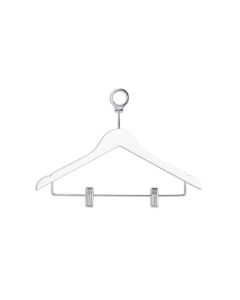
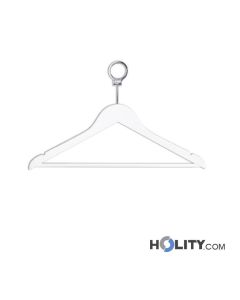
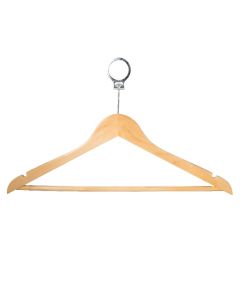
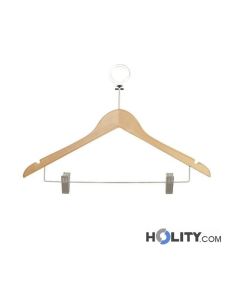
 The most recognizable configuration uses a small ring permanently fixed to the wardrobe rod. The hanger does not have the traditional open hook, but an element that fits into the dedicated ring. The guest can therefore normally remove the hanger to hang an item of clothing, but its use outside the wardrobe is less immediate than that of a traditional hanger.
The system must be chosen by verifying the compatibility between the ring, rod and hanger. If the facility is setting up new wardrobes, this aspect can be defined during the design phase. In an existing room, however, it is advisable to check the diameter and configuration of the rods before ordering. The advantage of the mechanism is its simplicity: it does not introduce procedures for the guest and does not require additional electronic devices or control systems.
Reduce losses and repurchases with a more controllable supply
The goal of the anti-theft system is not to eliminate any possibility of loss, but to make the supply more tied to the room. This can reduce the frequency with which hangers need to be replenished and allows for more orderly stock planning. The advantage becomes more noticeable as the number of rooms is increased, because even small differences in replacement frequency can affect the quantity purchased during the year.
A more controllable supply also facilitates internal inventories. If each room is equipped with the same number and types of hangers, staff can quickly identify what is missing. Standardization also prevents the progressive accumulation of different models purchased at different times to cover emergencies. The result is a more uniform wardrobe and less fragmented purchasing management.
How many hangers should be provided for each room?
There is no single quantity valid for every hotel. The number should be defined considering the category of the property, average length of stay, wardrobe size and guest profile. A room intended primarily for short business stays may have different needs than a week-long holiday accommodation. Double and family rooms also naturally require greater capacity than single rooms.
It is useful to establish a standard for each room type and maintain it over time. This way, the housekeeping department knows how many hangers are required, and the purchasing manager can calculate the supply quantities more precisely. A small centralized stock allows damaged units to be replaced without changing the configuration. Excess quantities, on the other hand, take up space and immobilize material without offering an operational advantage.
Wood, finishes, and sturdiness in hotel use
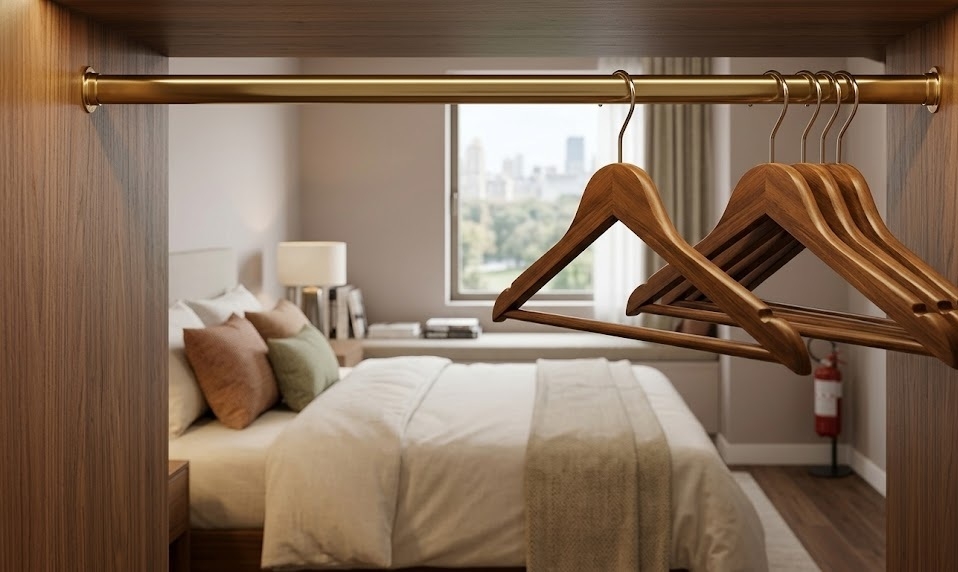
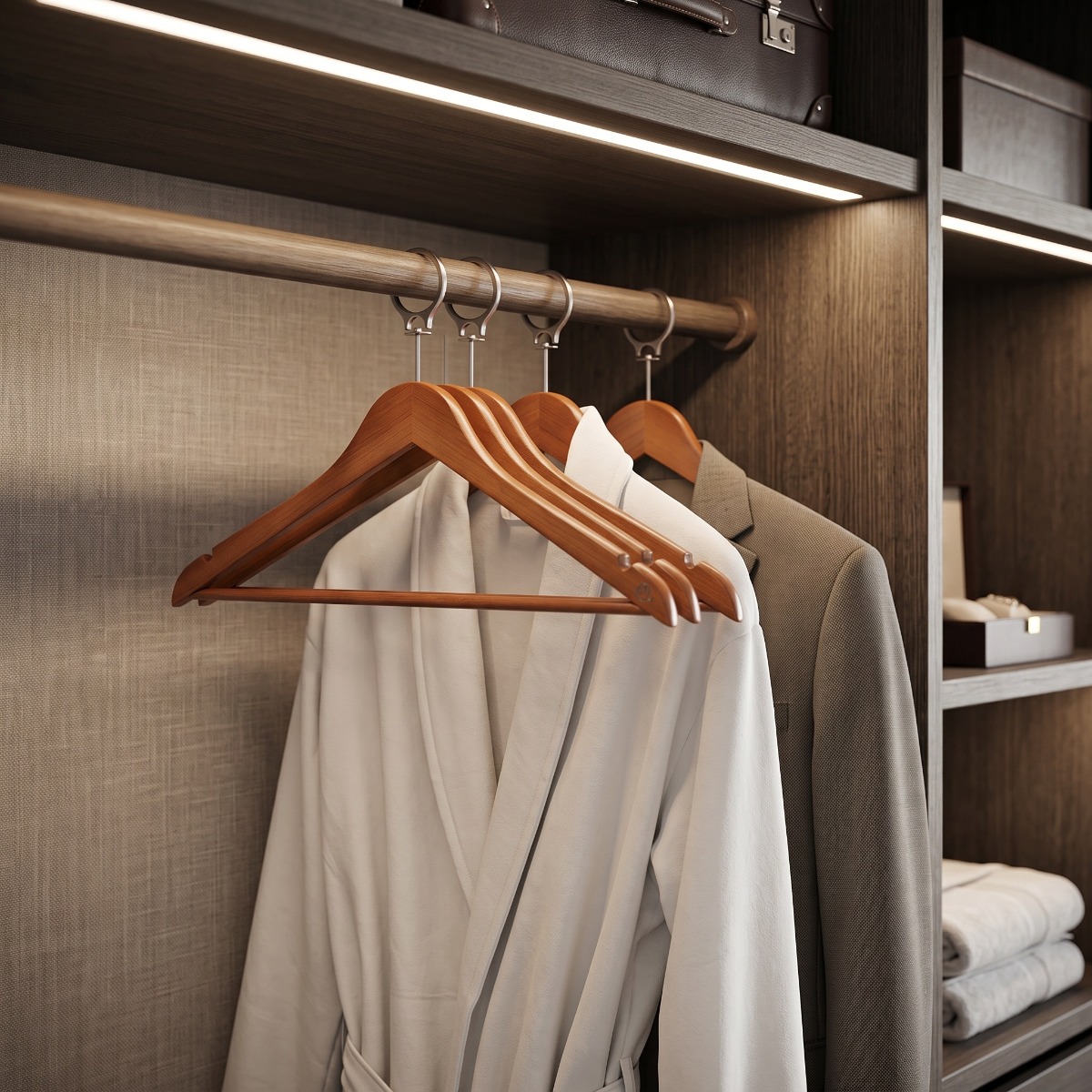 Wooden hangers are very common in hotel rooms because they offer a rigid structure and an image suitable for different levels of hospitality. The finish can be natural, dark, light, or coordinated with the wardrobe and furnishings. Beyond aesthetics, it is important to observe the quality of the assembly and the regularity of the surface. A product intended for professional use must withstand continuous movement without rapidly losing stability.
Robustness has a direct impact on the replacement cycle. A hanger that deforms, breaks, or has weak components must be disposed of even if it is not thrown away. The initial price must therefore be compared with the expected lifespan. Holity , a specialist in professional supplies for hotels and hospitality facilities , offers bedroom accessories designed for continuous use needs, where uniformity and quality of the equipment have a concrete management weight.
Trouser bars, clips, and different shapes for different garments
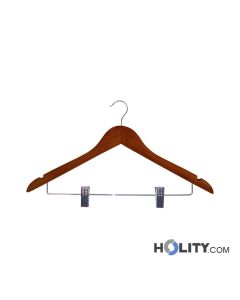
Not all hangers necessarily have to have the same configuration. Models with a lower bar allow you to hang trousers, while those with clips may be more practical for skirts or other garments. A wider shoulder A wide one, on the other hand, better supports jackets and coats. The combination depends on the type of clientele and the level of service the hotel intends to offer in the room.
A balanced choice can include a base of standard hangers and some units with specific functions. In this way, the wardrobe remains tidy without unnecessarily multiplying the variants. Even for different configurations, it is useful to maintain coordinated finishes and the same anti-theft system. Consistency simplifies reordering and allows you to replace individual units without creating a visually inhomogeneous whole.
Compatibility between anti-theft system and wardrobe rod
Before purchasing the supply, it is necessary to check how the wardrobes in the rooms are configured. Anti-theft systems, in fact, require a connecting element compatible with the rod. A preliminary check avoids receiving hangers that cannot be used with the existing supports or having to subsequently modify all the wardrobes. This check is particularly important in hotels that are replacing traditional equipment.
The number of rings must also correspond to the number of hangers provided for each room. During a new opening, it is possible to coordinate wardrobes and accessories from the beginning. In partial renovations, however, it may be necessary to check multiple room types, especially when the furnishings were installed at different times. A small technical check before the estimate can avoid costs and adaptation times later.
Standardize hangers to simplify cleaning and tidying
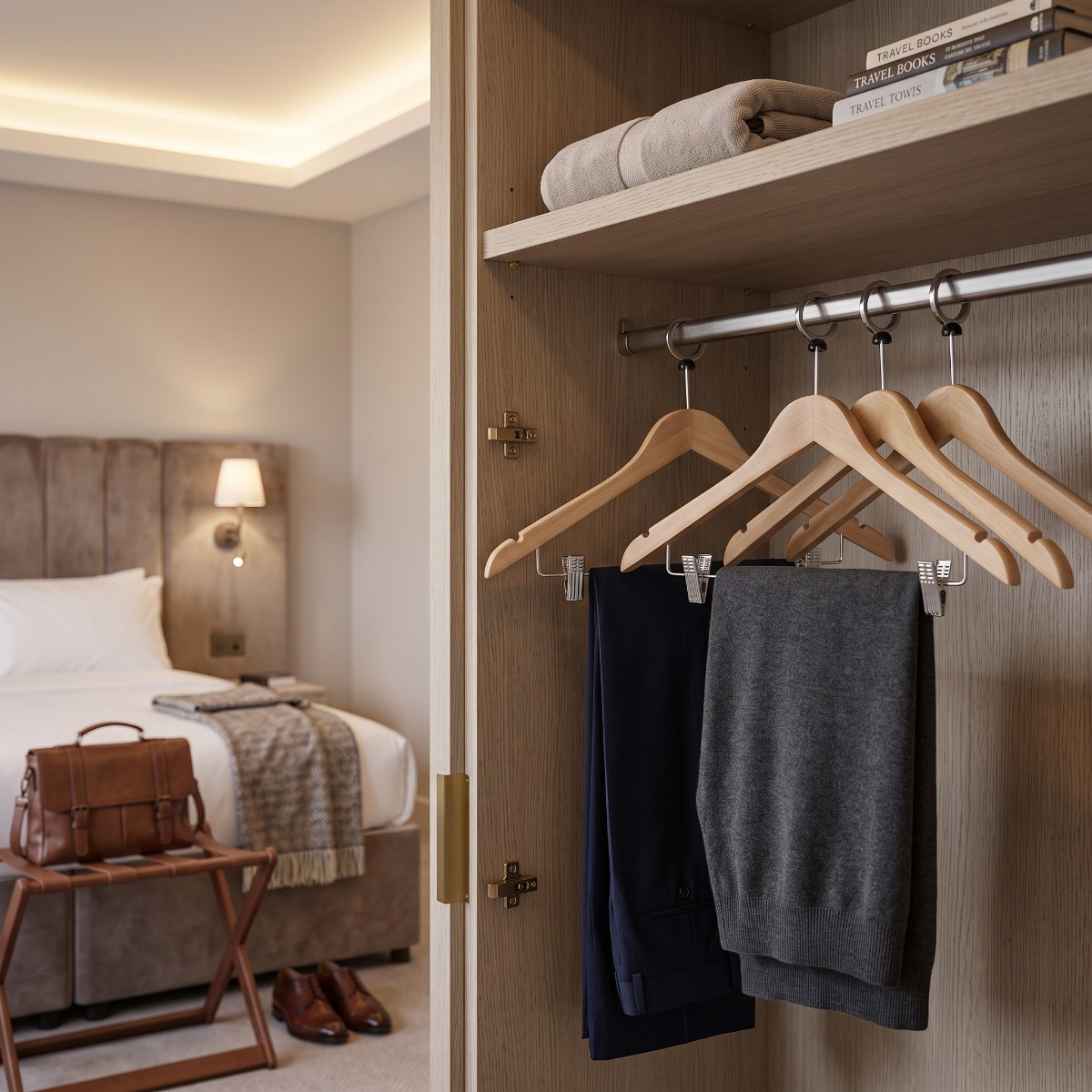 A shared standard makes the work of the floor staff easier. If each room type has a defined number and a recognizable configuration, the check can be carried out quickly during the tidying. It is not necessary to compare different models every time or understand whether a hanger belongs to a specific room. Replacement also becomes easier, because stocks can be managed with a few clear references.
Uniformity It also contributes to the room's image. A wardrobe made up of hangers of different colors, shapes, and materials can convey a sense of disorganized supplies, even when each element is perfectly usable. Standardization allows the same level of furnishing to be maintained over time. In this sense, cost control and perceived quality are not separate objectives, but can depend on the same organizational choice.
How to evaluate the real cost of a supply
The estimate should be read considering the overall quantity, number of rooms, expected equipment for each wardrobe, and initial stock. The unit price remains important, but must be compared with the material, anti-theft system, configuration, and construction quality. A small difference per single hanger can become significant on large quantities, just as a less durable product can generate more frequent replacements.
It is It is useful to consider the cost over multiple usage cycles, not just the initial order. A anti-theft hanger for hotels contributes to economic control when it limits waste without complicating the service and maintains a lifespan consistent with the intensity of use. For new openings or complete renovations, defining a standard also allows for better estimation of any future reorders and to maintain uniformity of the equipment.
Choosing professional hangers for hotels and hospitality facilities
The choice should start from the type of rooms, the number of wardrobes and the actual needs of the guests. Material, trouser bar, clips, shoulder shape and anti-theft system can be combined to create a coherent equipment without multiplying the references. Holity , leader in professional equipment for hotels, bars and restaurants , allows you to evaluate room accessories within a catalogue dedicated to the operational needs of hospitality.
Holity represents a point of reference for professional hotel supplies , even for structures that need to coordinate accessories and equipment across numerous rooms. The anti-theft hangers clearly demonstrate how a simple element can contribute to more orderly management when chosen with professional criteria. Reducing waste, maintaining a uniform standard and better planning repurchases allows this accessory to be seen not as a marginal detail, but as part of the hotel's daily organisation.
 English
  Italian
 French
 German
 Spanish