Choosing nursery school cots requires evaluating the size, method of use, and daily organization of the sleeping area. Stackable camp beds, wooden cots, and complete mattress solutions meet different needs. The space available when the cots are not in use also affects the choice. For a school or nursery, the most suitable product is therefore one that is consistent with the number of children, the configuration of the rooms, and the internal procedures of the facility.
The choice starts with the organization of the sleeping area
The first element to analyze is the way in which the space intended for rest is used. Some facilities have a permanent dormitory, while others transform a classroom or multipurpose room into a sleeping area on a daily basis. In the latter case, lightness, stackability, and ease of movement become particularly important. If the space remains dedicated to rest, more flexible configurations can also be considered. structured and less oriented towards continuous removal.
It is then necessary to estimate how many beds need to be prepared at the same time. The number of children affects the overall size, the distance between the stations and the space needed to put the cots away after use. The routes used by the staff must also remain functional during set-up and tidying up. The cot must therefore be evaluated as part of the organisation of the environment, not as an element independent from the rest of the furnishings.
The dimensions must be evaluated on the basis of the space actually available
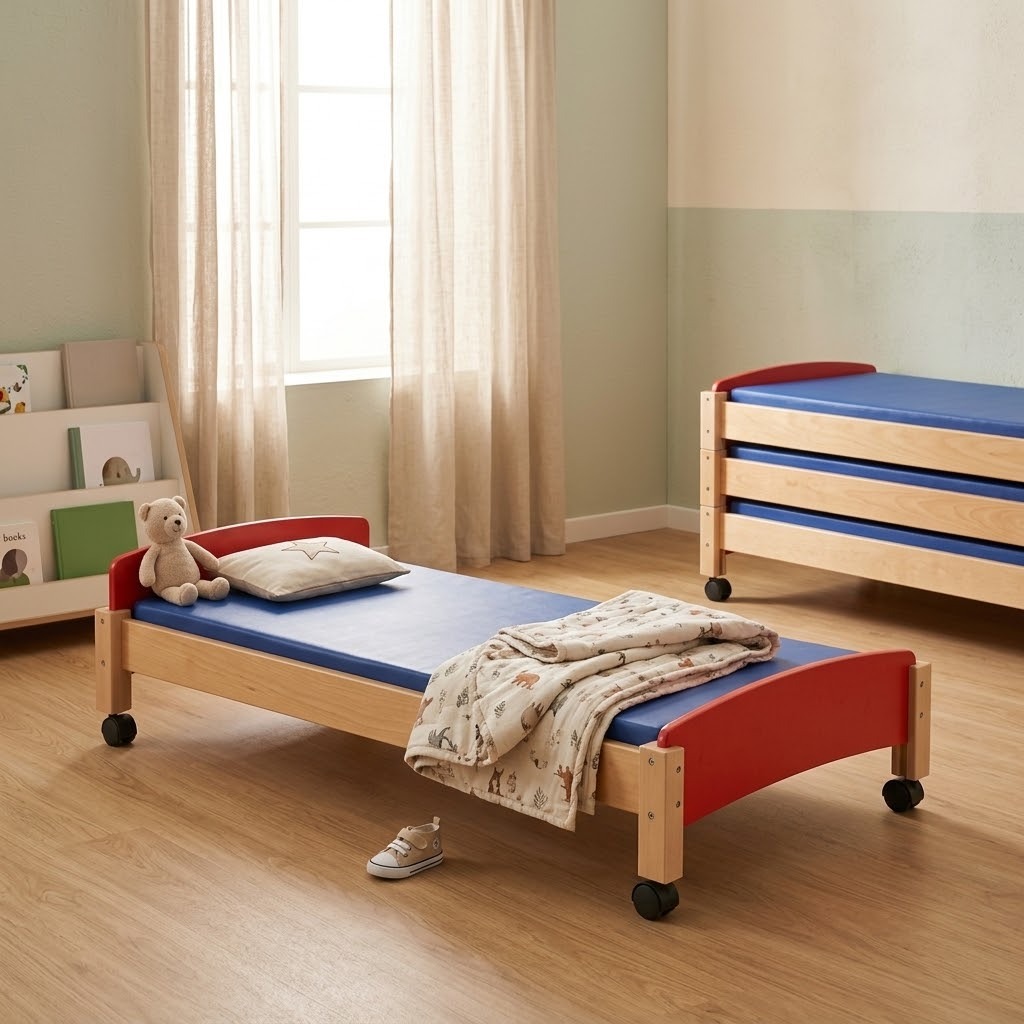 There is no single measurement that can be considered valid for all cots intended for nursery schools. In the Holity catalogue, for example, there are stackable camp beds measuring 100 x 55 cm and 130 x 55 cm, as well as wooden cots with different dimensions. The measurement must therefore be read on the technical data sheet of the product you are actually considering. This avoids organising the dormitory based on indicative dimensions that may not correspond to the final supply.
The length and width of the individual cot also represent only part of the calculation. Space is needed to set up the stations, access them and manage the tidying up without creating an excessively dense arrangement. If the cots are stacked, the point where the stack will be placed when the room returns to its ordinary function must also be considered. Product measurements and room organisation must therefore be designed together.
Stackable cots simplify the management of multifunctional spaces
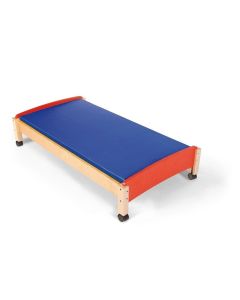
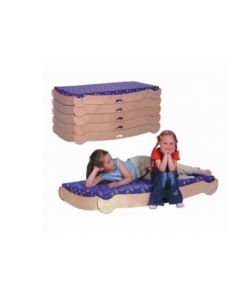
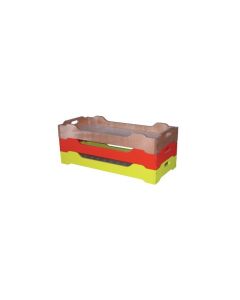
The main advantage of a stackable camp bed is the possibility to free up space when nap time is over. The feet and structure are designed to allow multiple units to be stacked, reducing the horizontal space taken up during storage. This feature is particularly useful in schools that use the same space for different activities throughout the day. The time needed to prepare and tidy up the sleeping area also becomes a concrete evaluation criterion.
The Holity catalogue includes both stackable cots with breathable fabric surfaces and wooden models. Some cots arrive already assembled, while other configurations also include the mattress and can include accessories dedicated to movement. Holity, a specialist in professional supplies for schools and children's communities, therefore allows you to compare space-saving solutions with different constructions and features. Stackability, however, remains useful only when weight, dimensions and methods are considered. storage options are compatible with the specific organization of the structure.
A fabric camp bed or a wooden cot meet different needs
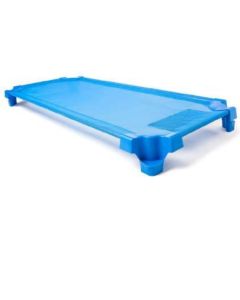
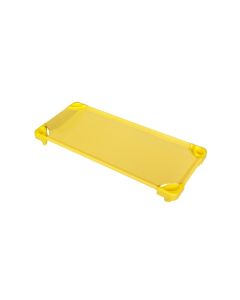
A camp bed with a taut canvas represents a basic and generally lightweight configuration, suitable for structures in which the cot is moved frequently. The fabric can promote a ventilated surface and allows the weight and thickness of the equipment to be contained. The construction must however be evaluated as a whole, observing the frame, canvas tension, corners and cleaning methods. It is therefore not sufficient to choose the product based solely on the material of the sleeping surface.
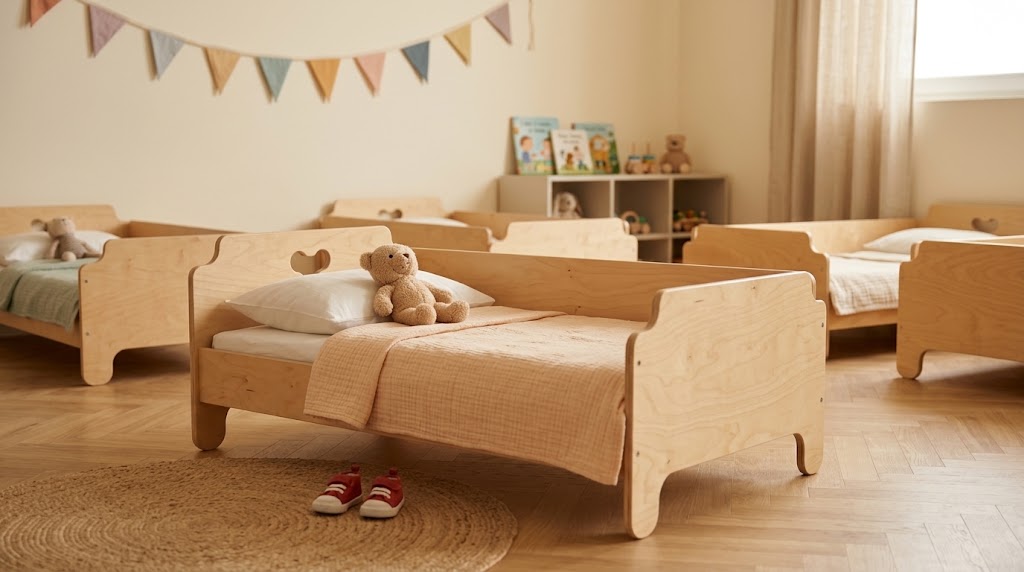
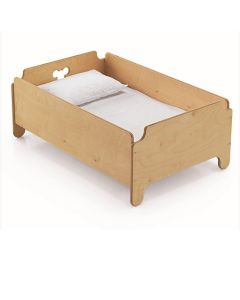
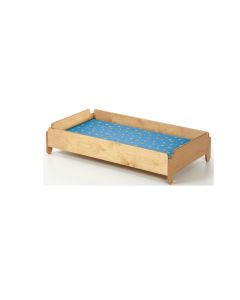
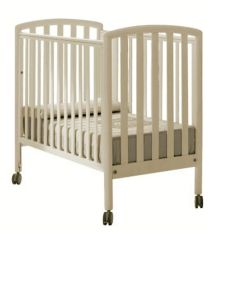
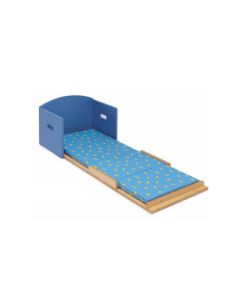
Wooden cots, on the other hand, introduce a structure more similar to a small bed and can integrate a perforated base, slats or a mattress. Holity offers, for example, stackable models in solid wood and plywood, with different sizes and configurations. A 128 x 67 x 21 cm solid wood model comes with a mattress, while another solution uses birch plywood and a perforated base. The choice between fabric and wood must therefore start from the desired daily use, not from an abstract hierarchy between the materials.
Height and configuration change based on the intended use
The reduced height is a recurring feature in camp beds intended for preschool children. Low models facilitate the management of a space in which children must reach a position close to the floor. Even in this case, however, there is no single value that can be applied indiscriminately to each product. In the Holity catalogue, the heights vary significantly between simple camp beds, wooden cots and configurations with sides.
It is therefore necessary to distinguish the classic camp bed from solutions designed for older children. small. Cribs and cots with sides have different structures, heights and methods of use compared to low stackable models. Using the same expression for both configurations can create confusion during the purchase. The intended age range and the intended use declared by the manufacturer must be verified before comparing models belonging to different families.
Mattress and accessories must be compatible with the cot
Not all cots use a separate mattress and not all cots include one in the supply. Before ordering, it is therefore necessary to check what is actually included and which accessories are compatible with the dimensions of the model. This is especially true when mattresses, sheets and covers are purchased separately. A difference of a few centimetres can make an accessory impractical even when the commercial purpose appears identical.
Some Holity solutions are already supplied with a mattress, while the same category includes mattresses and linen sets that can be purchased as dedicated products. A stackable wooden cot, for example, may have a 136 x 62 cm frame with a 130 x 60 cm mattress. This shows why the dimensions of the frame and those of the mattress should not be automatically considered the same. The technical data sheet also allows you to correctly set subsequent purchases of spare parts and accessories.
Cleaning and daily management influence the choice
In a collective context, the cot is used frequently and must be included in the normal cleaning procedures of the structure. The sleeping surface, corners, structure and mattress must be able to be managed according to the instructions provided by the manufacturer. Removable covers and washable sheets can simplify some operations, but the methods and products that can be used must always be verified for the specific model. It is not correct to automatically apply the same procedure to different materials.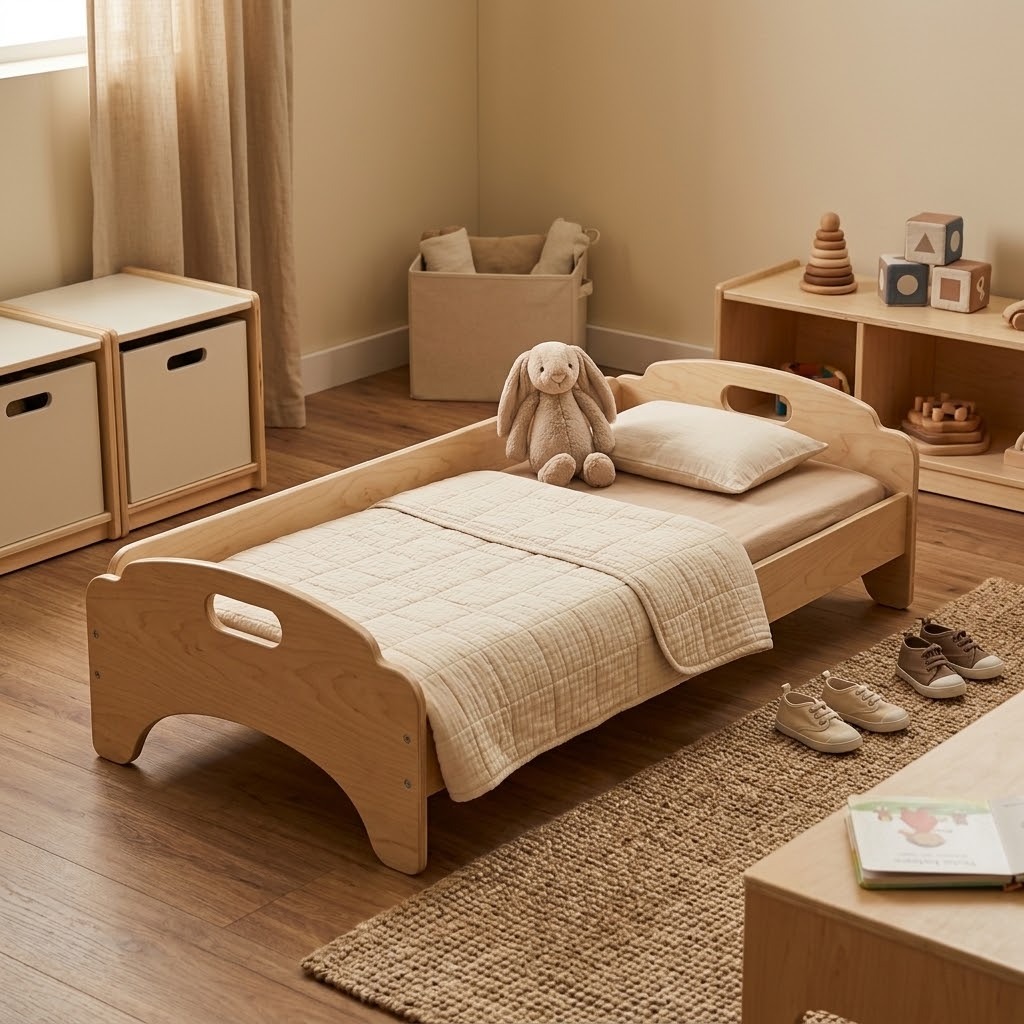
The ability to quickly remove the cots also makes cleaning the room easier. A stackable system allows the floor to be cleared after rest and can therefore impact the staff's work organization. In models with separate mattresses, it is also necessary to consider where the equipment will be stored. Cleaning the product and cleaning the room are two connected aspects, especially when numerous workstations are set up every day.
A multiple supply requires a different evaluation than a single purchase
When the school has to purchase ten, twenty or more cots, even apparently secondary details take on greater importance. A few centimeters of difference in size multiply across the entire room and the weight of each unit affects the staff's daily work. Even the way in which the cots are stacked must be verified before defining the quantities. A test on the floor plan allows you to compare different configurations without relying solely on the theoretical capacity of the room.
The estimate should also consider any mattresses, linens, and accessories, along with the number of cots. In a complete supply, it may be useful to standardize sizes and models to simplify management of the equipment, replacements, and storage organization. If different configurations are purchased, it is advisable to clearly identify which accessories belong to each type. Standardizing where possible reduces management complexity, especially in facilities that house multiple sections.
The final comparison must start from the needs of the facility
An effective comparison can begin by defining the number of children, the size of the room, and how it is used during the day. It is then possible to decide whether to favor stackability, a wooden structure, a breathable fabric, or an integrated mattress. Only at this point do price and delivery times become truly comparable parameters. Putting products with different functions and configurations on the same level risks producing an economically insignificant evaluation.
Holity, a specialist in professional furniture supplies for nurseries and kindergartens, offers stackable camp beds, wooden cots, foldaway models and accessories for organising the rest area. Choosing nursery school cots therefore means finding a balance between size, ease of management, materials and necessary equipment. The technical data sheet allows you to narrow the comparison to solutions compatible with the space and the intended use. In this way, the sleeping area can be organised starting from the daily needs of the structure, rather than subsequently adapting the environments to the purchased product.
 English
  Italian
 French
 German
 Spanish