
mon-fri 9-13 / 14.30-18.30
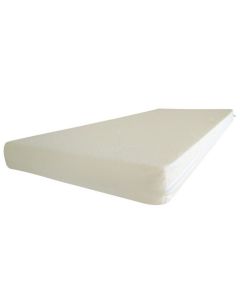
Mattress for kindergartens and playrooms, polyurethane padding with density 25 Kg/mc. Dimensions: 120 x 60 x h.8 cm.
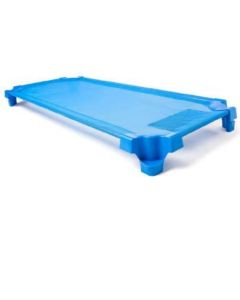
Stackable cot for preschools in breathable and fire-retardant fabric, 100x55x12 cm. Secure structure with rounded corners and reinforced cover.
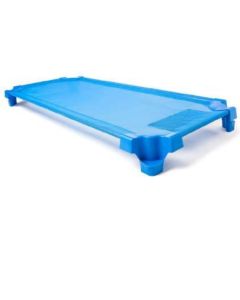
Fire-retardant and breathable nursery cot, 130x55 cm. Stackable structure with rounded corners, supplied already assembled for professional use.
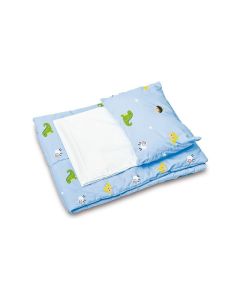
Bedding set complete with pillow suitable for preschool cots. Available in pink or light blue.
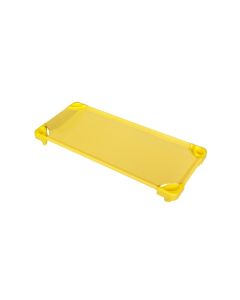
Cot for kindergartens and playrooms with non-toxic material fabric and rounded corners. Available in different colors. Adjustable fabric tension.
Soft bed for children in 25kg/m³ polyurethane, 118x70x18 cm. Class 1 fire-retardant cover, removable and washable, ideal for schools and nurseries.
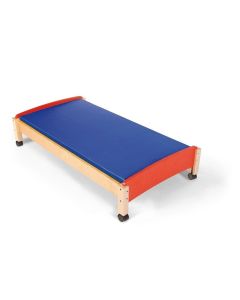
Stackable cot for nursery schools with solid wood structure in a natural finish. Complete with mattress with polyurethane padding.
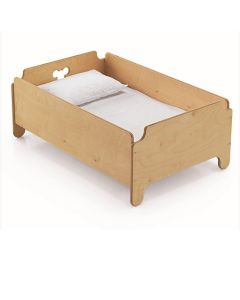
Professional wooden crib for nurseries, 90x60x35 cm. Structure with perforated bottom for optimal ventilation and maximum infant safety.
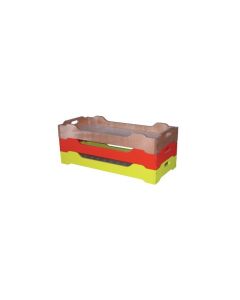
Plywood preschool cot. Stackable structure. Dimensions: 135x62xH21 cm.
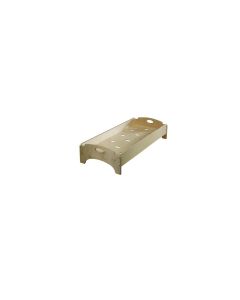
Stackable kindergarten cot in birch plywood (126x66x30 cm). Non-toxic structure with rounded edges and breathable perforated bottom.
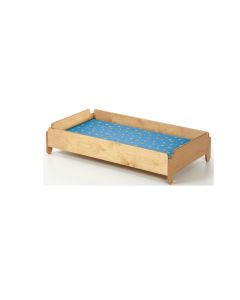
Stackable nursery bed h681_66 in 15 mm birch plywood with a matte transparent finish at 20 gloss. Perforated anti-stagnation bottom for mattress ventilation, shaped short sides with hand slots and rounded edges. Dimensions: 120x65x25H cm.
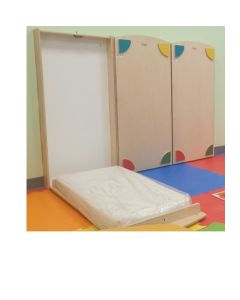
Folding cot for nursery school children. Open dimensions: W.142 x D.65 x h.17 cm. Material: plywood.
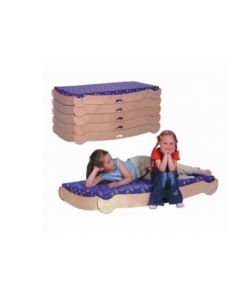
Stackable nursery bed in plywood (136x62 cm) with slatted base and removable cover mattress included. Professional space-saving solution.
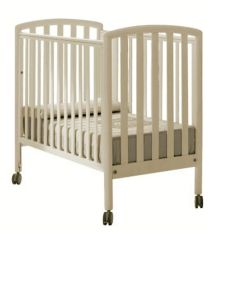
Professional wooden crib for nurseries, 109x67 cm. Sturdy structure with drop-side rail and swivel wheels for maximum mobility.
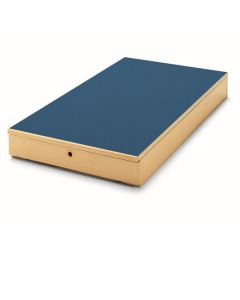
Resting cot for nursery schools in wood and PVC, 130x70x15 cm. Rounded anti-trauma edges and integrated storage compartment with drop-down opening.
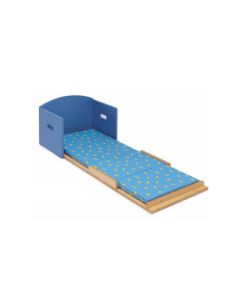
Box bed for nursery h681_65 with folding and opening base. Closed dimensions: 60x37x43H cm – open 60x132x43H cm.
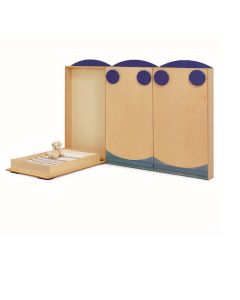
Foldaway wooden cot for children with ABS edges, 70x17x140 cm. Professional space-saving solution for nurseries and kindergartens.
The afternoon rest period represents a crucial biological phase for memory consolidation and the recovery of psychophysical energy in preschool-aged children. Setting up a functional nap area requires the use of preschool cots that combine maximum orthopedic comfort with the logistical needs of facilities that often must transform classrooms into temporary dormitories. Choosing specific supports designed to ensure correct posture during sleep is a fundamental requirement to ensure that relaxation is truly regenerating and free of risks to the musculoskeletal development of young pupils.
Modern educational facilities need flexible solutions that optimize available square footage without sacrificing sleep quality. The use of stackable cots and space-saving beds allows the nap area to be configured in minutes, while ensuring high hygienic standards thanks to breathable and easily sanitizable materials. Professional furniture intended for rest must not only be welcoming but must also meet rigorous safety certifications, from the fire-retardancy of fabrics to the stability of supporting structures, offering educators a reliable operational tool and children a protected and serene environment for their dreams.
The integration of professional cots within daycare centers and nursery schools responds to the dual need for the child's well-being and the optimization of the auxiliary staff's work. These supports are designed to be extremely lightweight yet structurally robust, facilitating daily setup and takedown operations of the rest area without impacting the health of the operators. Unlike domestic solutions, community cots are built to withstand continuous cycles of use and cleaning, maintaining the tension of the fabrics and the solidity of the joints, thus ensuring multi-year durability even in high-frequency use contexts.
A determining factor in choosing professional equipment is the prevention of bacterial and mite proliferation. The materials used, such as high-density polyethylene for the feet and technical perforated fabrics for the support surfaces, promote constant air circulation, avoiding the stagnation of humidity and body heat. Furthermore, passive safety is guaranteed by the absence of sharp edges and the use of non-toxic plastics, making every cot a safe place where the child can relax in total freedom. Investing in certified sleep systems means raising the quality standard of the school's offering, demonstrating attention to the primary physiological needs of the pupils.
The range of rest solutions is divided into various technical variants designed to adapt to every spatial configuration. Stackable cots represent the most common solution due to their incredible space-saving capacity: equipped with shaped feet that fit perfectly onto one another, they allow for the storage of dozens of beds in very few square meters at the end of the rest period. These are usually made with steel frames
Stackable cots are the ideal solution for schools that need to optimize space. They allow for quickly transforming a classroom into a rest area and, once nap time is over, they can be stacked on top of each other, taking up minimal space. This also facilitates daily cleaning and sanitization operations of the facility's floors.
A professional daycare mattress must be made of breathable polyurethane foam, equipped with a Class 1 IM certified fire-retardant cover, and preferably waterproof. It is essential that it be anti-mite and anti-bacterial, with an adequate height to support the child's weight without deforming, ensuring correct orthopedic support during afternoon rest.
Professional cot fabrics are usually made of high-resistance plastic mesh. They can be cleaned daily with a damp cloth and neutral sanitizing detergents. Many models also allow the fabric to be removed for deeper cleaning or replacement in case of wear, always ensuring the highest level of hygiene for every child.
Yes, professional-use cots are designed with wide-based feet and a center-of-gravity structure studied to prevent tipping. Stability is tested to withstand the abrupt movements of children while climbing on, off, or turning during sleep, eliminating the typical risks of less stable domestic folding solutions.
Cots are generally indicated for children aged 2 to 6 years. For infants or very young children in daycare, beds with rails or floor mats (soft area) are usually preferred, as they offer greater physical containment. The choice depends on the structure's pedagogical guidelines and the motor development of the individual pupil.
Although not mandatory, the use of sheets with elastic corners designed specifically for school cot measurements (usually 130x55 cm) is strongly recommended. These sheets stay tight, preventing them from shifting during sleep and ensuring the child does not come into direct contact with the synthetic surface of the cot, improving thermal comfort.
 English
  Italian
 French
 German
 Spanish