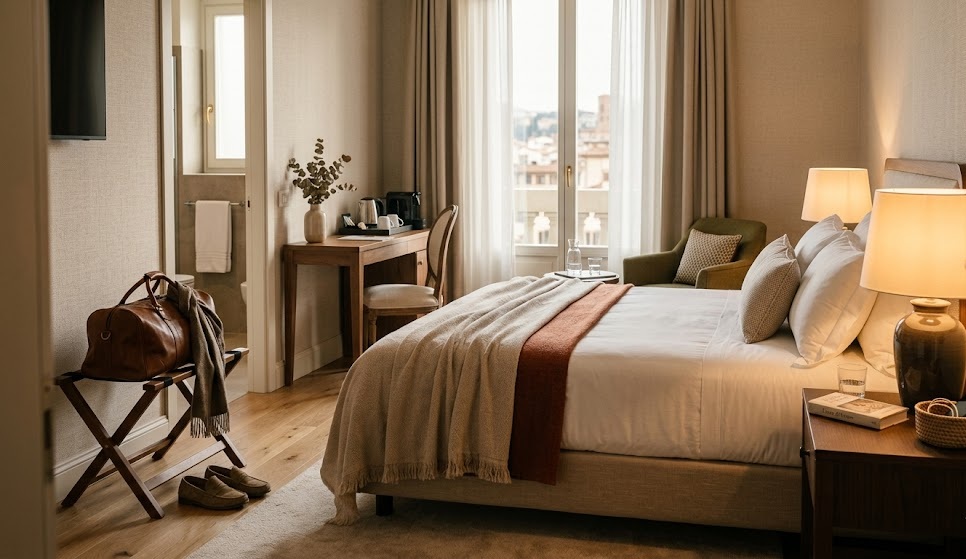
A coherent project makes the room recognizable.
The first impression arises from the relationship between colors, volumes, and materials. Walls, floors, fabrics, and furnishings should interact with each other without creating illogical contrasts. A controlled palette helps create order, while a few distinctive elements can characterize the room without weighing it down. The perceived value increases when the guest recognizes a clear design direction, because the room appears to have been conceived as a whole and not assembled through separate purchases.
Consistency must continue even in less obvious details. Handles, switches, lamps, supports, and accessories should maintain compatible finishes and proportions suited to the space. Luxury loses credibility when a technical element appears neglected or visually extraneous to the rest of the environment. For this reason, the selection of supplies for luxury hotel rooms requires a comprehensive vision, capable of coordinating aesthetics, frequency of use and maintenance.
The bed defines a large part of the perceived quality
The bed occupies a central position both in the space and in the guest's experience. Structure, mattress, topper, pillows and linens must create a sensation of immediate care, but also guarantee a rest suitable for people with different habits. An orderly layout, with correct proportions and well-coordinated textiles, communicates attention even before use. Perceived quality does not depend on the excess of cushions, but on the sensation of comfort and precision.
Operational management must also be considered. Removable covers, adequate protections and resistant materials help maintain the standard of the room over time. A solution that is difficult to clean or restore can quickly lose its initial effect, especially with high turnover. The comfort of the hotel bed must therefore arise from the balance between hospitality, durability and ease of rearrangement, avoiding scenographic choices that complicate daily work.
Materials and finishes communicate quality through touch
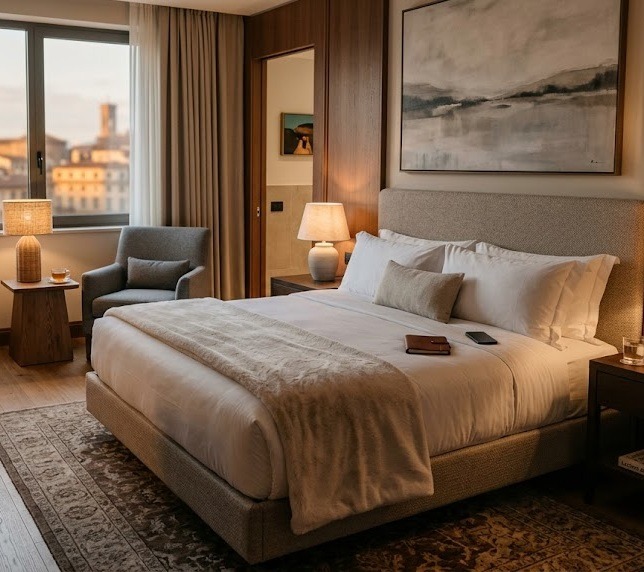 Wood, metal, glass, fabric and technical surfaces influence the way in which the room is interpreted and experienced. There is no need to use many different materials: it is more effective to choose a few, well-matched and consistent with the positioning of the structure. Quality is perceived in the solidity of a top, in the precision of an opening and in the pleasantness of a surface. Contact with objects also contributes to defining the premium experience.
Finishes must also resist frequent cleaning, impacts and repeated use. A delicate material may be suitable for a decorative detail, but less effective on furniture subjected to continuous stress. The design must distinguish the representative surfaces from the operational ones, maintaining a uniform visual result. Holity, a specialist in professional supplies for hotels and hospitality facilities, offers solutions designed to combine presentation, practicality and continuity of use.
Lighting creates atmosphere without reducing functionality
A high-end room requires multiple levels of light. General lighting must make the space legible, while light points near the bed, the mirror and the work area respond to specific needs. A single central source tends to make the environment flat and inflexible. Guests should be able to easily change the atmosphere, switching from functional lighting to a more intimate configuration.
The quality of the design also depends on the positioning of the controls. Accessible switches, sockets close to the bed, and intuitive systems reduce small inconveniences that impact the overall perception. Technology must not require complex explanations or force guests to search for the controls. In a premium room, light accompanies the various activities and enhances materials and volumes without becoming an invasive element.
Functional furnishings improve the guest experience
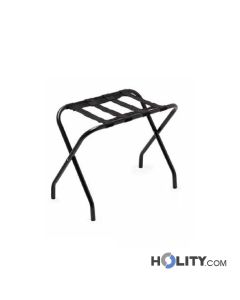
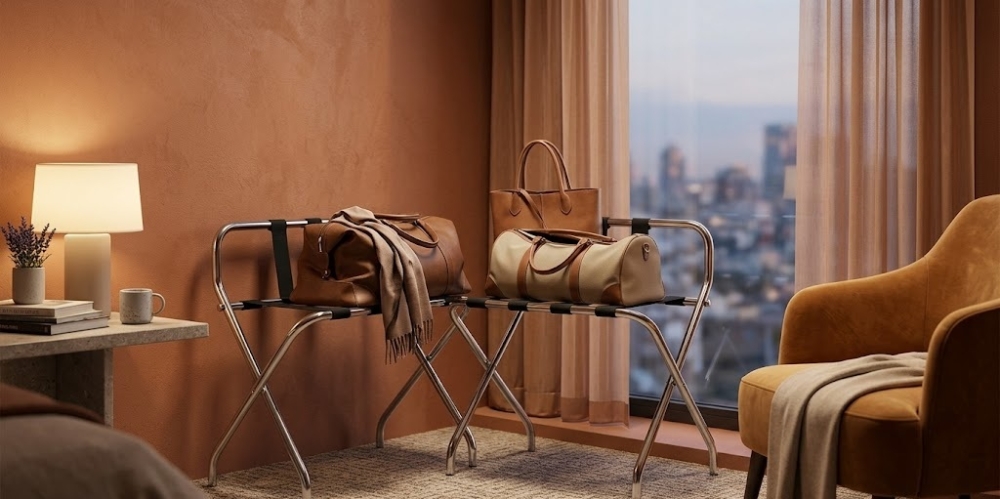
Quality furnishings must be beautiful to look at, but above all easy to use. Wardrobes, luggage racks, bedside tables, desks, and chairs must respect the guest's actual movements. Insufficient storage space, narrow passages, or interfering doors reduce the feeling of comfort. Design should start from everyday actions: opening a suitcase, putting away an outfit, charging a device, or working for a few hours.
Personalization can emerge through custom-made furniture, a distinctive seat, or a headboard designed as an architectural element. It is not necessary to make each component the protagonist. On the contrary, a clear visual hierarchy helps the room appear refined and legible. The selection of luxury hotel furnishings must therefore combine identity and practicality, also considering ease of replacement and continuity of supplies over time.
The bathroom completes the premium perception of the room
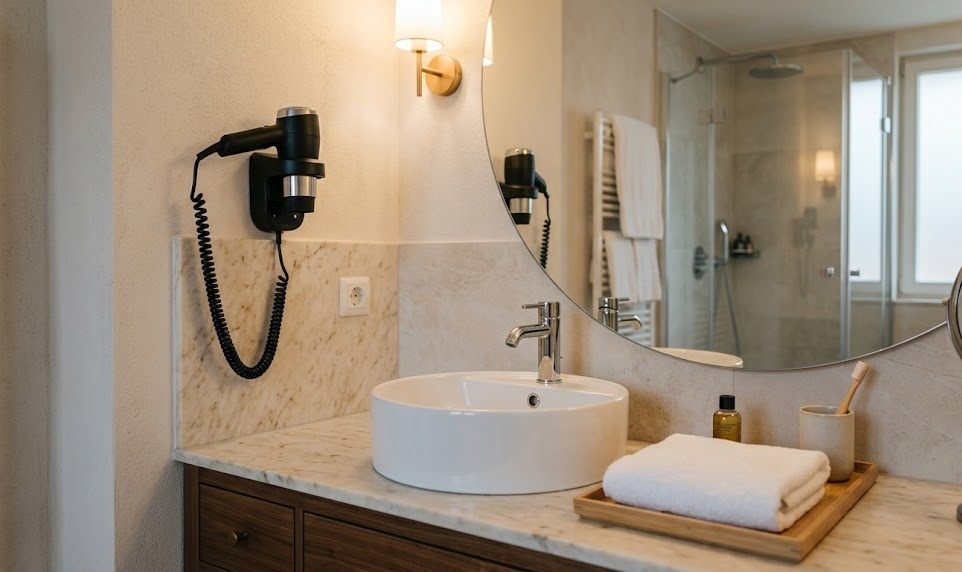
The bathroom is evaluated with particular attention because it makes order, maintenance, and quality of materials immediately visible. Mirrors, lighting, taps, accessories, and surfaces must create an environment consistent with the room. Storage space also plays an important role: guests must be able to organize their products without difficulty. A simple yet well-designed layout communicates more value than an excessive amount of decorative elements.
Towels, bathrobes, dispensers, and courtesy kits must be precisely presented and replenished uniformly. The perception of luxury depends on the continuity of the standard, not just the initial installation. Easy-to-clean products and moisture-resistant materials help staff maintain the environment in consistent conditions. The choice of hotel bathroom equipment should therefore integrate guest comfort, aesthetics, and operational management.
Technology and services must remain intuitive
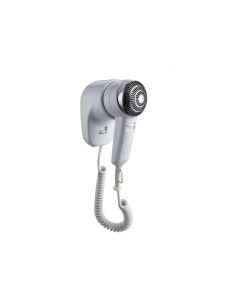
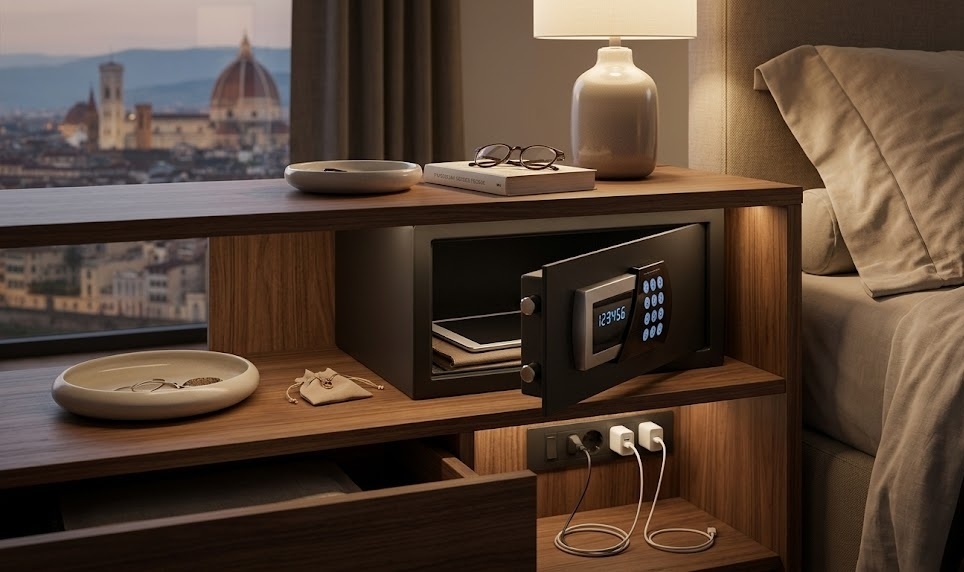
Television, air conditioning, connectivity, sockets and controls can improve a stay when they are easy to locate and use. Complex technology, however, creates distance and can generate avoidable requests for assistance. In luxury rooms, the digital component should integrate into the furnishings, without producing visual clutter. Even the presence of multiple charging points, placed in the right areas, responds to a concrete need that has now become part of the perceived comfort.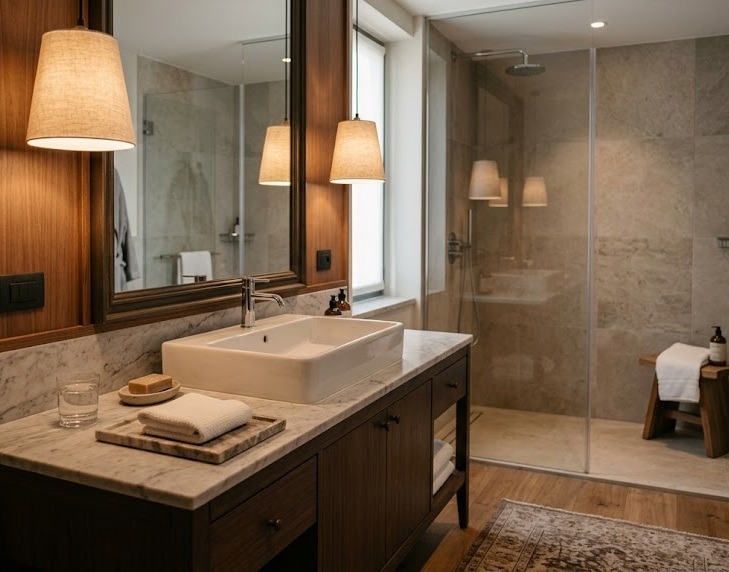
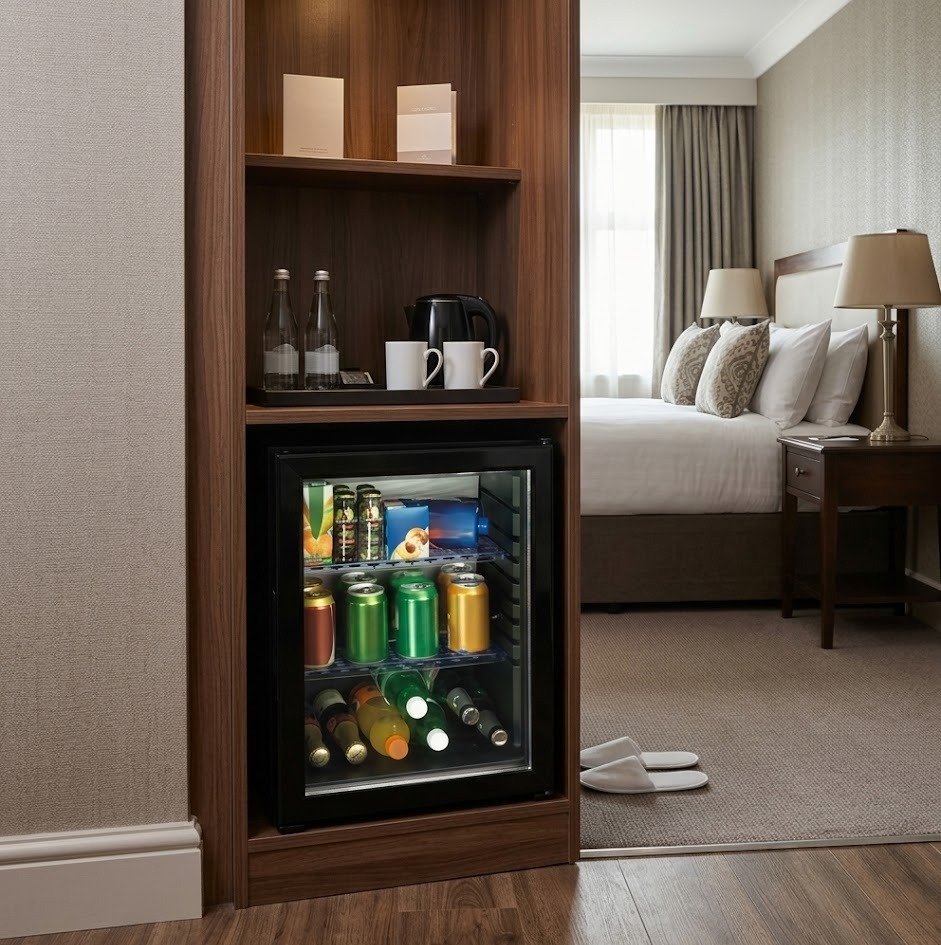
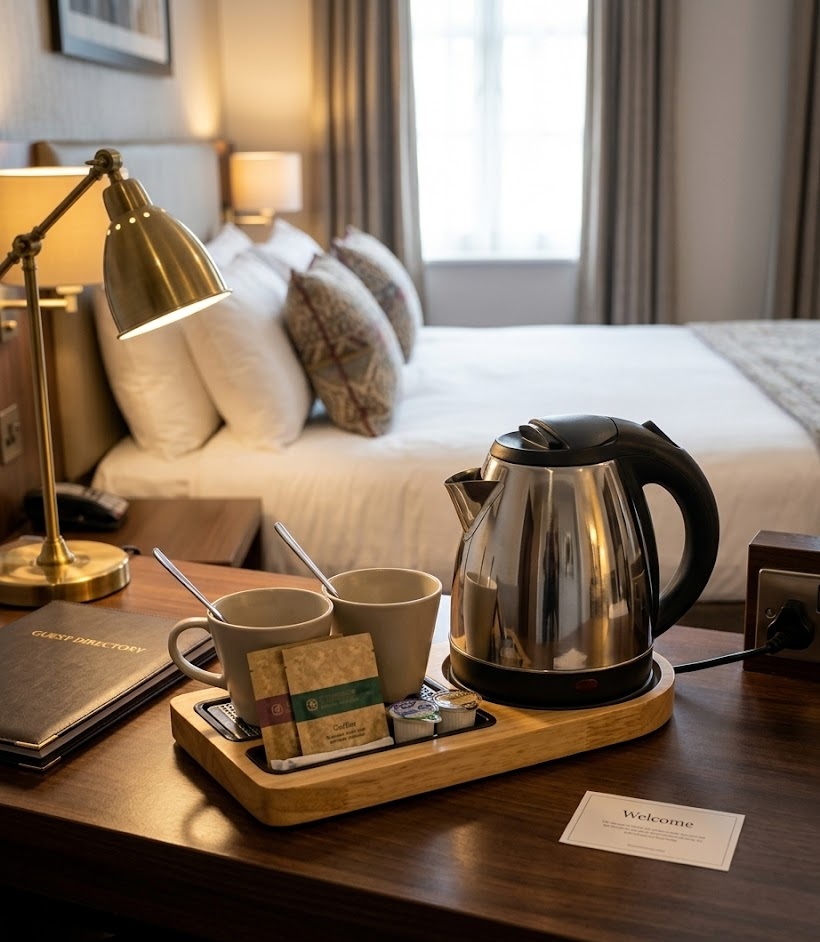
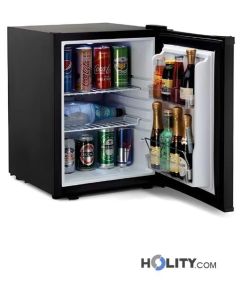
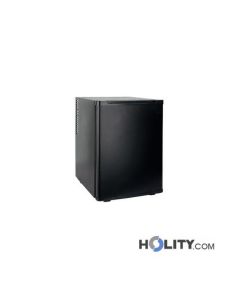
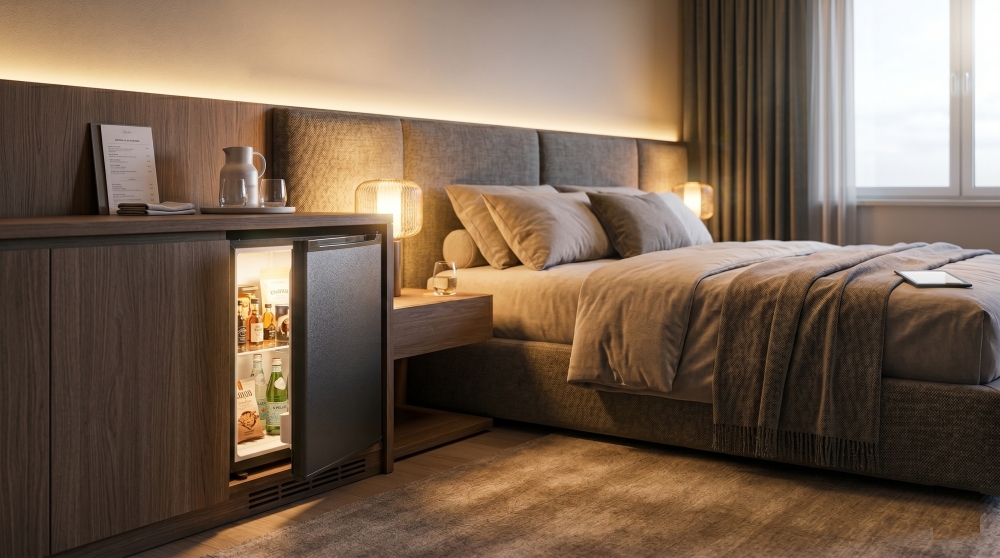
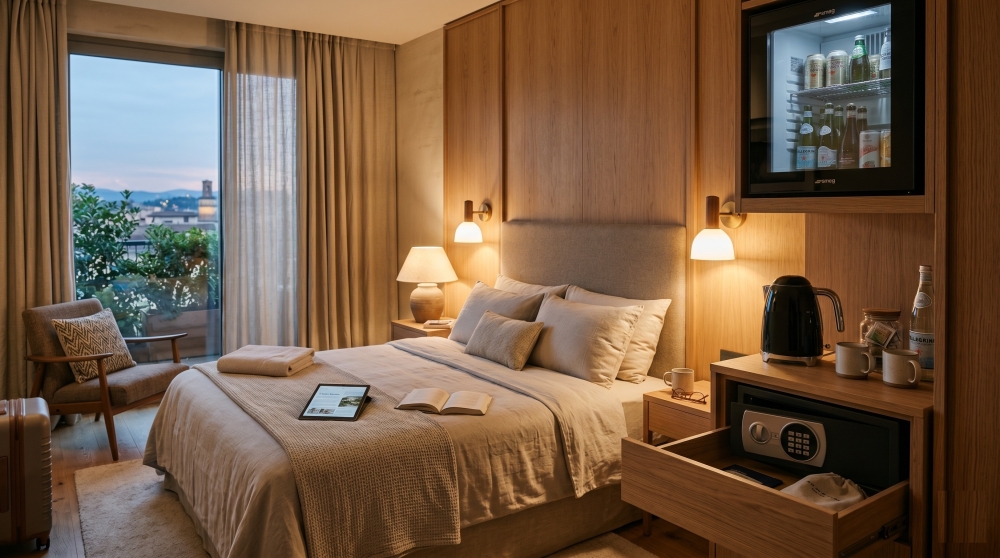
In-room amenities may include a minibar, safe, kettle, coffee machine or personalized welcome systems. The selection must be consistent with the target and the property's service model. An unused accessory takes up space and increases maintenance, while well-chosen equipment reinforces the feeling of attention. Holity supports hotels and boutique hotels in the selection of professional equipment for rooms coordinated with different operational needs.
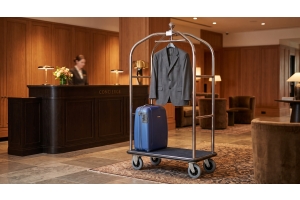
The premium perception is consolidated through small but coherent elements. A solid coat hanger, a stable luggage rack, a well-proportioned tray, or a discreet wastebasket may seem like secondary components, yet they accompany repeated actions during the stay. Their value emerges when they function without attracting negative attention. In a well-designed room, every detail supports comfort and maintains visual order.
Fragrance, information materials, and the presentation of amenities must also respect the identity of the property. The goal is not to fill the room with luxury cues, but to create a coherent sequence of sensations and services. Personalization and sobriety can coexist, especially in boutique hotels that focus on a recognizable character. The premium detail is that which appears natural in the context and concretely enhances the guest experience.
A valuable room maintains its standard over time
The true quality of a room emerges after months of use, when furnishings, coverings and accessories must maintain their functionality and appearance. For this reason, the project should consider cleaning, spare parts, maintenance and the possibility of replacing individual components. An environment that is difficult to restore risks rapidly losing coherence. The premium perception therefore also arises from technical decisions that are less visible, but crucial for the continuity of the service.
Holity, a point of reference in professional supplies for hospitality, provides furnishings, accessories and equipment useful for composing coherent rooms with different positionings. Consulting the dedicated categories allows you to compare products for the sleeping area, bathroom and in-room services. A coordinated selection helps transform the project into a concrete provision, avoiding fragmented purchases. The result is a room capable of communicating value through comfort, order and constant attention to detail.
 English
  Italian
 French
 German
 Spanish