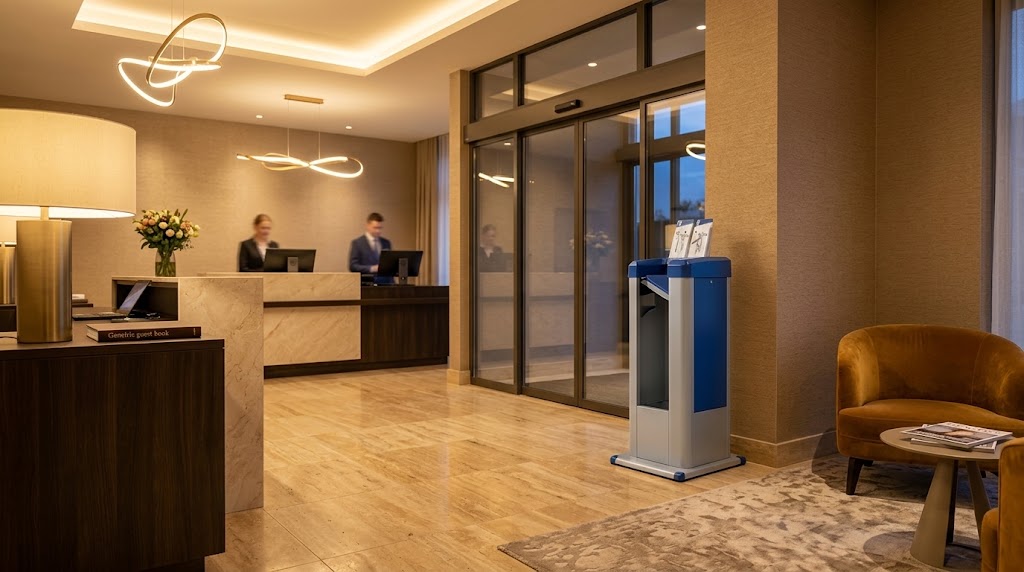
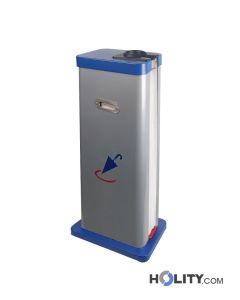
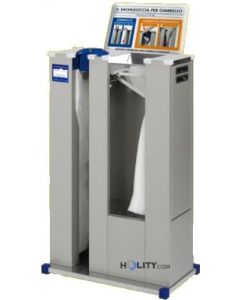
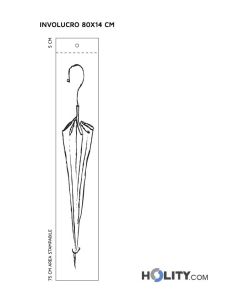
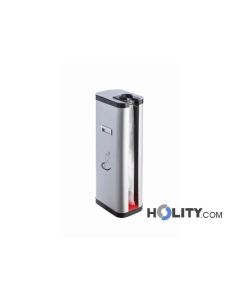
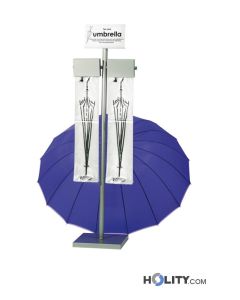
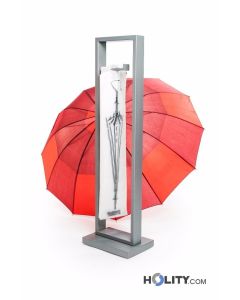
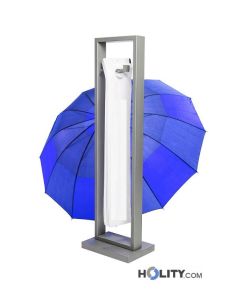
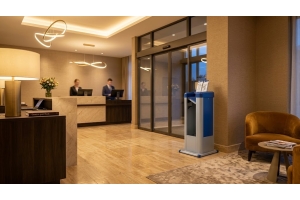
A umbrella bagger allows you to place the wet umbrella in a protective casing before entering internal spaces, thus limiting the dispersion of water during movements. The choice must consider the number of people, type of umbrella, capacity of the refills and available space near the entrance. In fact, there are configurations dedicated to long models and solutions capable of managing even the foldable ones. The device therefore becomes part of the reception organization on rainy days.
How an umbrella bagger works
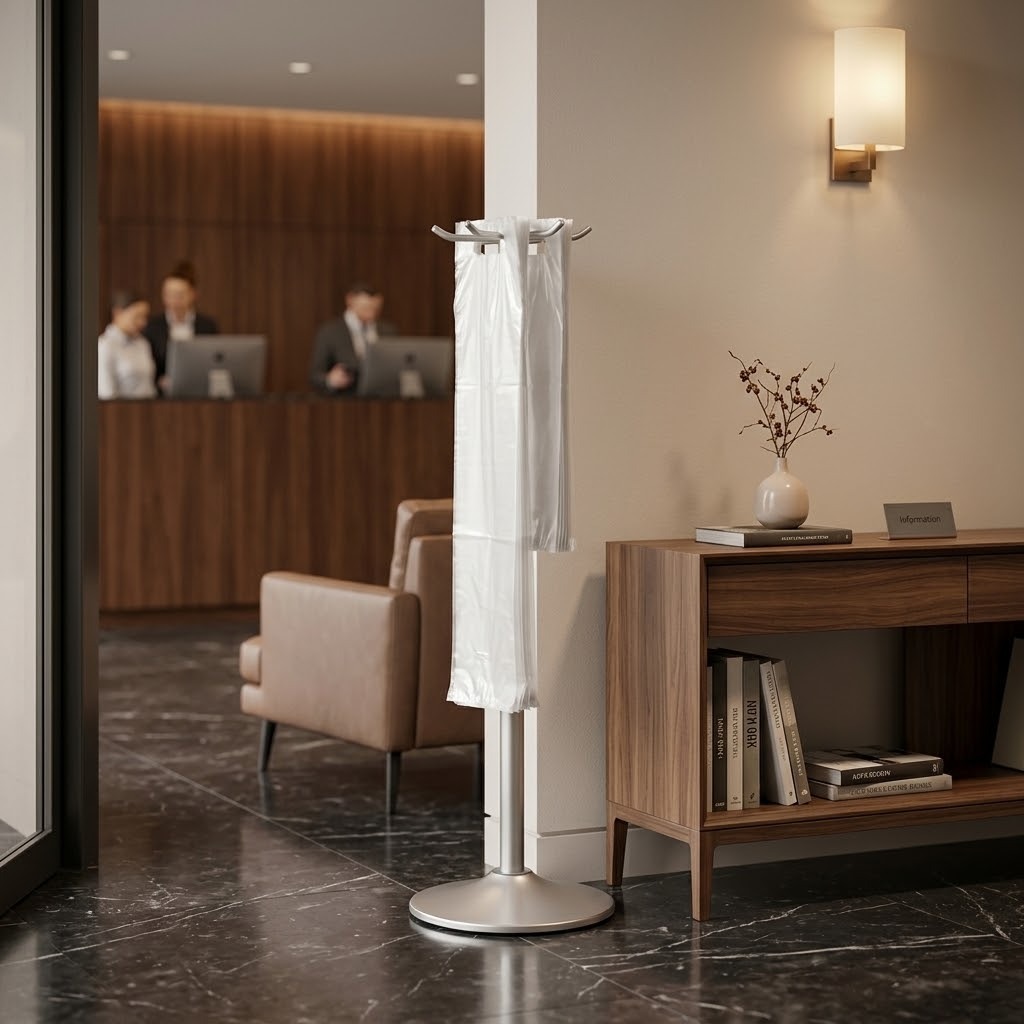 The principle of use is immediate: the person inserts the wet umbrella into the appropriate opening and the movement allows the protective casing to be applied. In mechanical models it is not necessary to connect the machine to the mains, because the operation is generated by the user's own gesture. Once extracted, the umbrella remains inside the casing and can be taken with you during your stay in the facility. The operational advantage therefore consists in managing the umbrella directly at the entry point without entrusting it to staff or leaving it in a shared storage area.
The Holity range includes, for example, mechanical machines that operate without batteries or electrical power. The h13901 model is designed for traditional umbrellas and has a declared capacity of 2,000 long bags, while other configurations are designed for multiple formats. The simplicity of the mechanism allows the device to be placed near the entry route without necessarily having to locate an electrical outlet. The characteristics must however be verified on the data sheet of the chosen model, because capacity and configuration vary significantly within the category.
Long and folding umbrellas require different configurations
One of the first aspects to clarify is what type of umbrella will need to be managed. A machine designed exclusively for traditional models does not necessarily offer the same system for folding umbrellas, which require different sized casings. In contexts in which the public uses both types, a configuration with two dedicated entrances may therefore be useful. The versatility of the device must be evaluated with respect to the people who actually frequent the facility.
Holity offers dual-function models, such as the h13902 and h13903, designed to manage both long and folding umbrellas. The first declares a total capacity of 1,200 bags, divided between 600 long and 600 short ones, while the h13903 reaches 2,000 units. overall, with 1,000 refills for each format. This difference makes it clear why two aesthetically similar machines can respond to different volumes of use. Holity, a specialist in professional supplies for facilities open to the public, therefore allows you to compare different configurations starting from the type of umbrella and the expected turnout.
When the umbrella bag becomes useful at the entrance
The device becomes particularly interesting in buildings where many people enter and continue to carry their umbrellas with them. Hotels, shopping centres, offices, healthcare facilities, museums, libraries and large shops can record very concentrated peaks on rainy days. In these situations the problem is not only finding a place to deposit the umbrellas, but managing their passage through reception areas, corridors and areas open to the public. The bagging allows the water to be contained directly around the umbrella while the visitor continues to carry it with them..
However, convenience must be related to the actual frequency of the problem. A small business with few access points may be able to manage the umbrellas through simpler solutions, while a building characterised by continuous entrances may benefit more from a dedicated station. The type of flooring and the length of the internal routes also contribute to the organisational assessment. The device should therefore be considered as a complement to the normal cleaning and entrance management procedures, not as a substitute for the activities necessary to properly maintain the spaces.
The number of bags that can be loaded determines how long the device can be used. remain operational before requesting a refill. In places with high traffic, a reduced capacity may force staff to frequently check refills during the busiest hours. In smaller facilities, on the other hand, a very high capacity machine may not offer benefits proportionate to the space or investment. The ideal capacity must therefore be read in relation to peak entry and not just the average number of daily visitors.
Holity configurations show significant differences: in addition to the 1,200 or 2,000 bag machines, the catalog also includes a dispenser for commercial activities with a declared capacity of 500 70 x 13 cm bags. The latter measures 35 cm in width, 25 cm in depth and 10 cm in height. and 74 cm in height, therefore it responds to different dimensional needs compared to the larger models. The comparison between these data allows you to choose a configuration more consistent with the expected turnout and the space actually available.
Size and positioning affect use
The machine should be easily identifiable as soon as you enter, but without obstructing doors, passages or main routes. Placing it too far from the entrance reduces the possibility of it being used before the umbrella starts dripping inside, while an excessively central position can interfere with the flows. It is therefore useful to observe how people move on the busiest days and identify an easily accessible lateral space. Visibility and absence of hindrance must be evaluated simultaneously.
Even a few centimetres can become important in compact reception areas, boutiques or entrances with double doors. The h13901 model measures approximately 34 x 34 cm at the base and is 84 cm high, while the dual-function h13902 and h13903 machines are over 50 cm wide. A model capable of handling multiple types of umbrellas therefore inevitably requires a different surface area than a single machine. Measuring the available area before ordering avoids choosing the device solely based on capacity.
Mechanical operation simplifies installation
A system that does not require electricity offers greater freedom in choosing the installation point. There is no need to run cables near the door or to tie the machine to the presence of a socket, a particularly useful aspect in already furnished entrances. Even temporary relocation can be easier when the device is used mainly in the rainy months. The possibility to function mechanically therefore makes the positioning less dependent on the building's electrical system.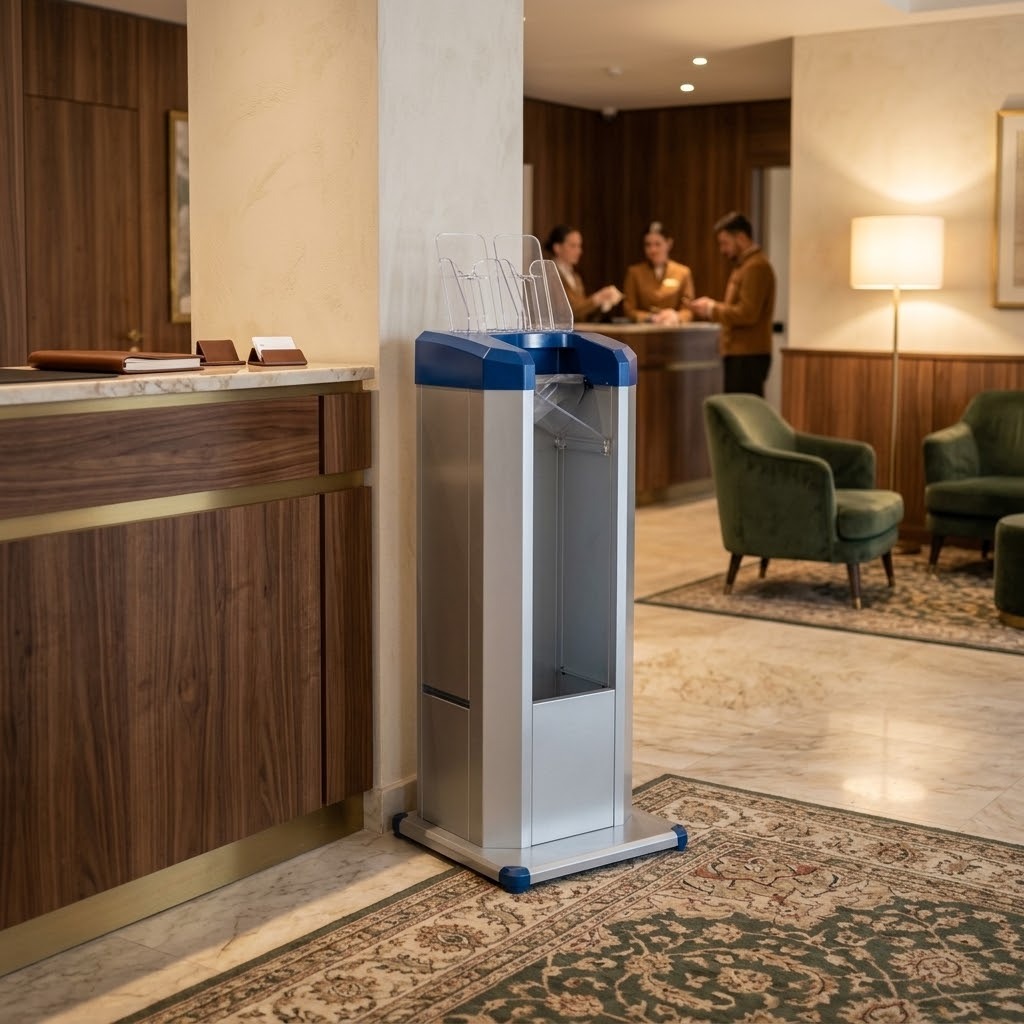
The main bagging machines of the Holity range adopt precisely this solution. The h13901, h13902 and h13903 models are described as mechanical and do not require batteries or a mains connection. This feature does not, of course, eliminate the normal checks relating to stability, correct positioning and use according to the product instructions. However, it allows the choice of the installation point to be concentrated above all on visitor flows and the availability of space.
Bags and refills are part of the choice
The purchase of the machine represents only part of the management, because the device requires the correct consumables to continue functioning. Before ordering it is necessary to check the correct consumables. It is therefore important to know the code of compatible refills, the format used and the number of pieces contained in each pack. This check becomes even more important in models equipped with two inputs, which use different bags for long and folding umbrellas. Machine and consumables must be considered as a single operating system.
Holity offers, for example, long bags in high-density polyethylene packaged in boxes of 2,000 pieces and declared compatible with the h13901, h13902 and h13903 baggers. For folding umbrellas, however, specific consumables exist, also in packs of 2,000 pieces, compatible with h13902 and h13903. The manufacturer also specifies that compatibility with traditional refills with machines other than those indicated is not guaranteed. Plan availability :The use of supplies therefore allows you to avoid having a machine present at the entrance but unusable on a day of heavy rain.
Umbrella bags and umbrella stands respond to different needs
A traditional umbrella stand requires that the person leaves the umbrella in a specific area and retrieves it before leaving. The umbrella bag follows a different logic, because it allows the visitor to keep their umbrella while moving around the building. The choice between the two systems therefore depends on how entry, stay and exit are organised. These are not two completely interchangeable products, but two different ways of managing the same problem.
In a small office it may be sufficient to concentrate the umbrellas in a single point, while in a shopping centre or a large hotel this solution may be less practical due to the number of people involved. The length of stay also has an impact: leaving an umbrella at the entrance requires the user to return to the same point to retrieve it. Bagging avoids this step and allows the object to be retained. The evaluation should therefore start from the visitor's concrete experience and the organization of internal routes.
The right model arises from the actual organization of the entrance
Before purchasing, it is a good idea to collect some operational information: number of accesses during peak hours, presence of long and foldable umbrellas, space near the door and frequency with which staff can check refills. Subsequently, capacity, dimensions, operating system and type of consumables can be compared. This method allows you to avoid both undersized machines and configurations that are larger than necessary. The decisive criterion is therefore not choosing the model with the maximum capacity. greater, but consistent with the flow and layout of the entrance.
Holity, a point of reference in professional equipment for hotels, offices, commercial activities and structures open to the public, offers baggers, dispensers and consumables with different configurations. The choice of a umbrella bagger should consider together the machine, bags, available space and the way in which people pass through the entrance. An evaluation based on actual use allows the device to be transformed into a functional component of the reception rather than an element used only occasionally. Comparing the technical data sheets in advance finally allows you to identify the capacity and configuration best suited to the structure.
 English
  Italian
 French
 German
 Spanish