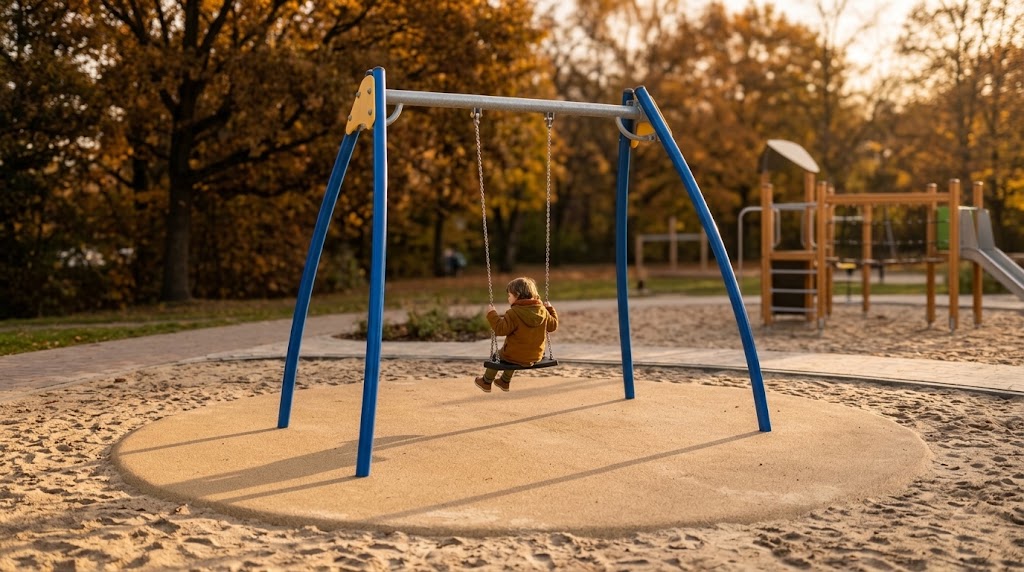
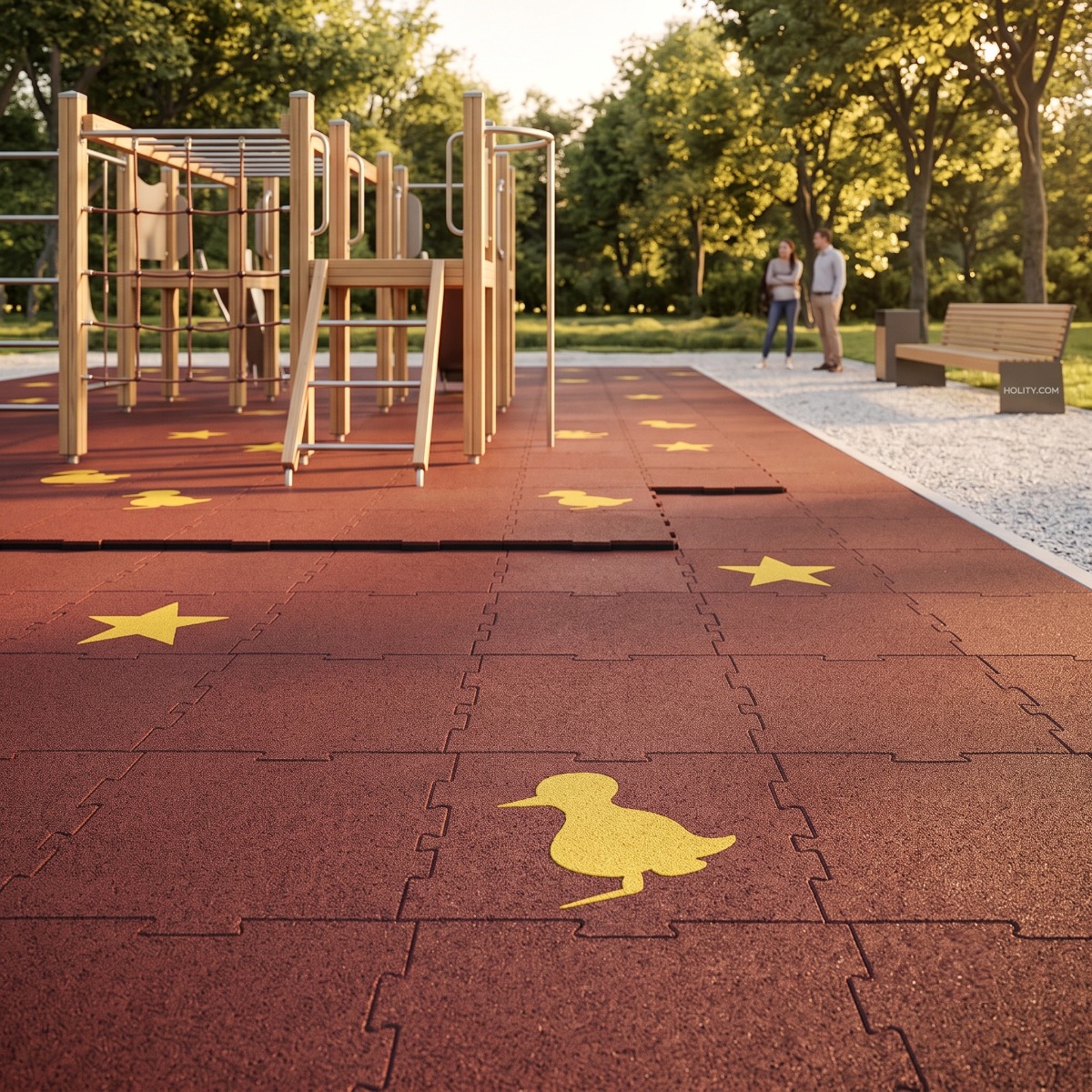
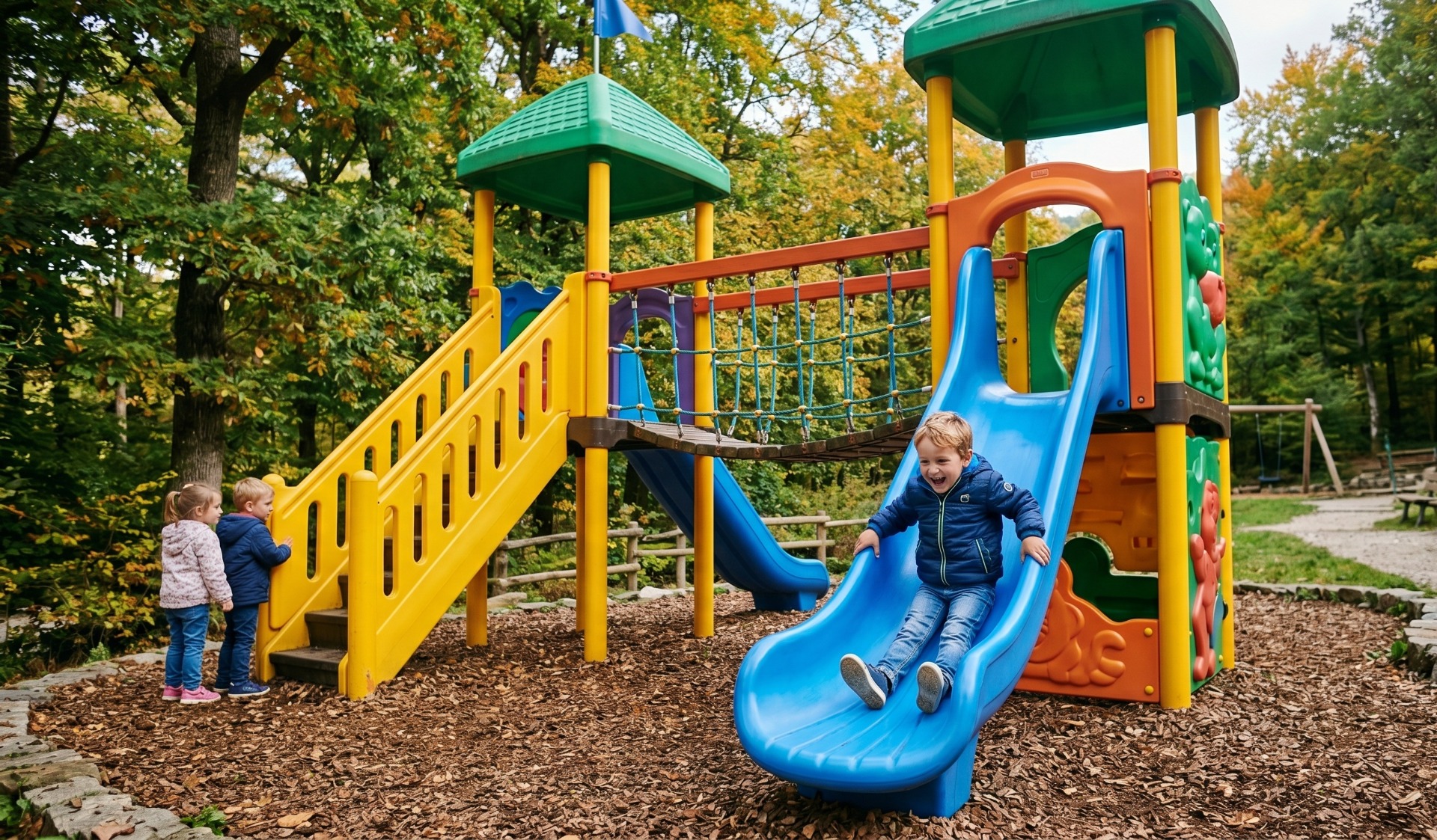
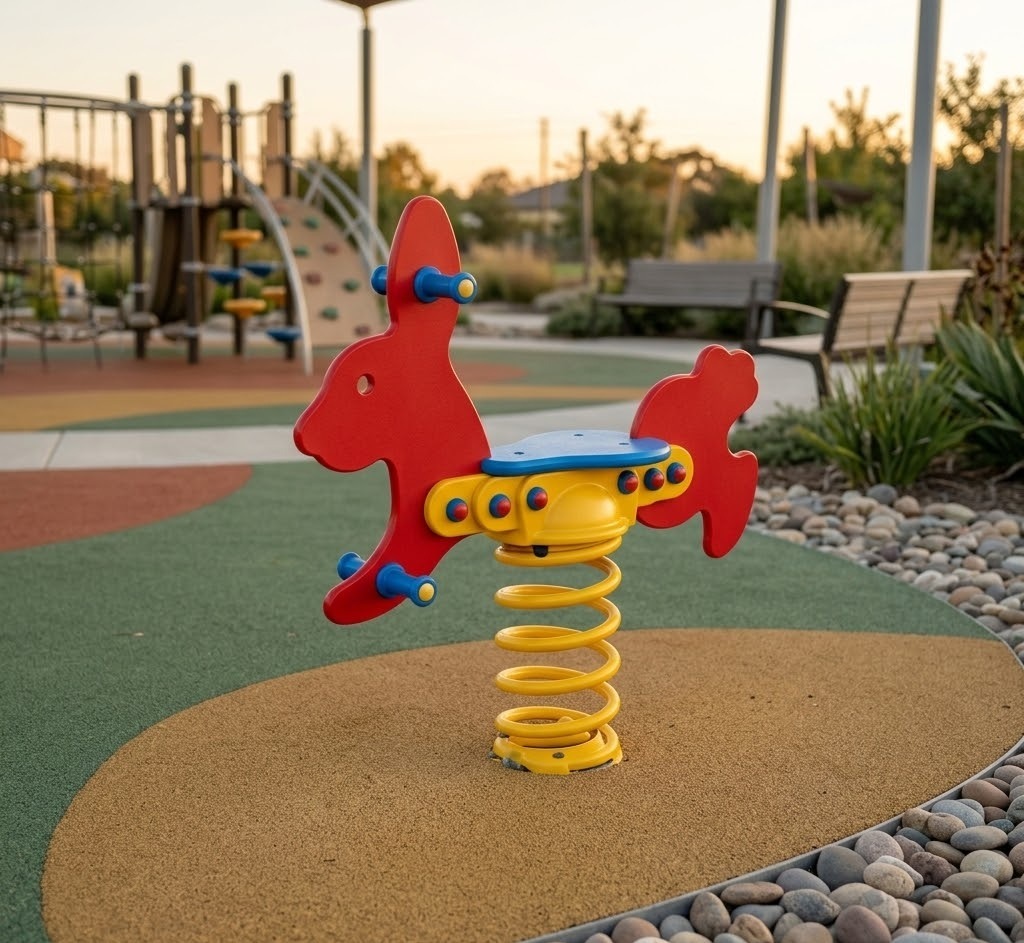
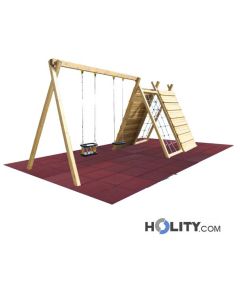
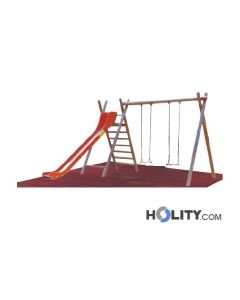
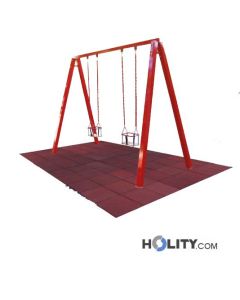
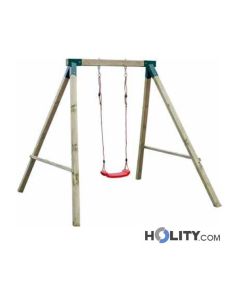
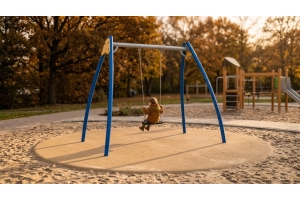
Choosing a swing for a children's playground requires considering the age range, motor autonomy, type of seat and the intended use declared by the manufacturer. A cage seat responds to different needs than a flat seat or a cradle, while the structure and surrounding space also vary between models. Age therefore represents a first selection criterion, but must always be checked on the technical data sheet of the equipment.
Age is the first filter, but it should not be used alone
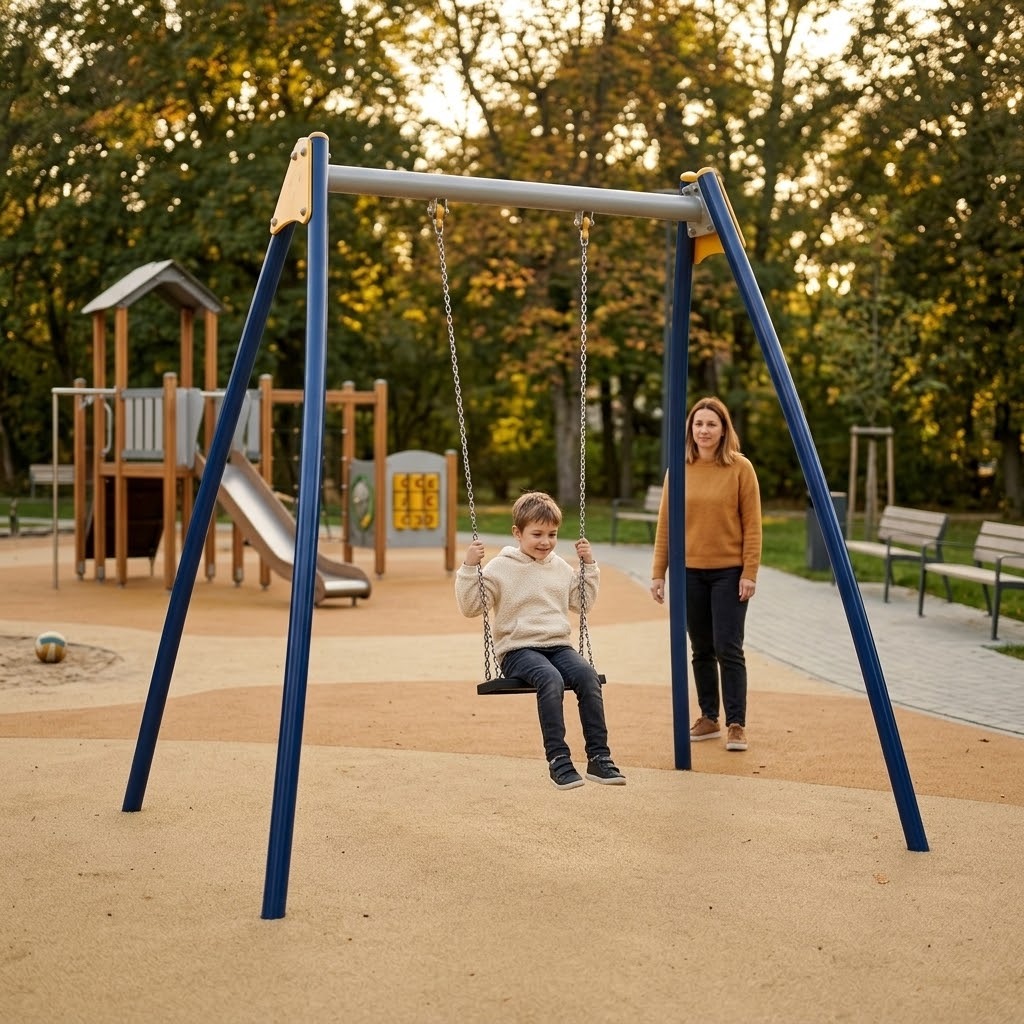 When designing a play area, it is natural to start from the age of the children who will use it. This data allows you to quickly narrow down the selection, but should not be transformed into a universal rule valid for any swing. Apparently similar products may in fact have different declared age ranges depending on the seat, geometry and overall configuration. The age range indicated by the manufacturer must therefore prevail over generic classifications.
The Holity catalogue offers a concrete example of this variability. There are professional swings with cage seats declared for children from 0 to 4 years, models with flat seats for the 3-12 age groups and other configurations intended, for example, for children from 3 to 8 years. The data must not be transferred automatically from one product to another, even when the structure and dimensions appear comparable. Before purchasing, it is therefore necessary to always check the intended use indicated in the product sheet for the specific model.
For smaller children, a seat with greater containment is required
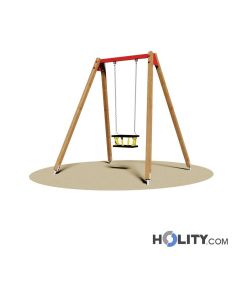
In configurations aimed at smaller children, the seat tends to offer greater containment than the classic flat seat. The backrest, side elements and front part help create a more comfortable position during swinging. This does not mean that every cage seat automatically has the same age range, but it explains why this configuration is frequently used in models intended for early childhood. Seat shape and expected autonomy must be considered together.
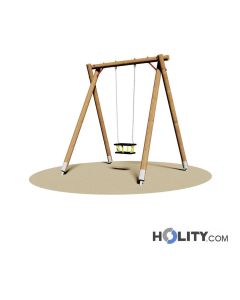
In the Holity category, for example, there is a professional swing with a shock-absorbing cage seat suitable for children from 0 to 4 years. There are also double models that can be configured with a seat tray for 3-12 year olds or with a cage for the 0-4 year age group. These differences show why it is not enough to generically purchase a “swing for small children”. It is necessary to check exactly which seat is installed and what range of use is declared for that configuration.
The flat seat requires a different level of autonomy of use
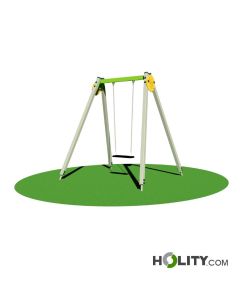
The traditional seat offers greater freedom of movement and significantly less containment than the cage. In professional products, it is therefore normally associated with children with a greater ability to independently maintain their position during swinging. The decisive element, once again, is not to establish an absolute age a priori, but to verify for which audience the product was designed and declared. The type of seat helps to understand the configuration, but does not replace the manufacturer's instructions.
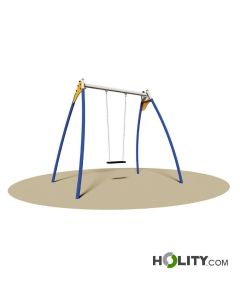
In the Holity catalogue, numerous swings with a flat seat are intended for the 3-12 age group, while another model in steel and aluminium with a flat seat is suitable for children from 3 to 8 years. The difference confirms that the shape of the seat alone does not determine the age range of use. Holity, a specialist in professional equipment for parks and play areas, offers configurations with specific indications to allow schools, institutions and managers to compare products intended for different audiences.
Between 3 and 12 years old, configurations can change a lot
A wide age range does not necessarily correspond to just one type of swing. Within the same range, there may be single or double structures, flat seats, cradles and systems designed for different play modes. For this reason, after having verified the age, it is also useful to consider the context: a nursery school, a primary school and a public park with heterogeneous users do not necessarily have the same priorities. The composition of the users is as important as the declared age limit.
An area used by children of different ages may require more equipment or a configuration capable of expanding the possibilities of use without confusing the intended purposes of the individual elements. A Holity model in galvanized steel for schools and parks, for example, is declared for 3-12 year olds with a rubber seat, while other swings in the same category serve a narrower range. Comparing the data sheets allows you to design the area starting from the real users rather than choosing the product only by size or price.
Double swings allow you to combine different seats
A two-seater structure can increase the capacity of the area and, in certain configurations, allow you to differentiate the seats. This aspect becomes interesting when the space must serve children with different levels of autonomy. The decision should not, however, start simply from the number of seats, because a double structure also requires a size and layout consistent with the overall project. The number of seats and user profile must be defined simultaneously.
Among the models available on Holity, there are double swings available with flat seats, cage seats or in different configurations. This flexibility allows you to think about an area frequented by multiple age groups, while still maintaining the declared destination for each seat as a reference. A mixed configuration can therefore be useful, but should not be interpreted as automatically suitable for any child. The choice must be included in the organization of the entire play area and verified on the technical characteristics of the product.
Nest seats expand the possibilities of the play area
Nest or cradle swings introduce a new way of playing. of different use compared to traditional individual seating. The larger surface area can allow for shared play configurations and, in some products, contribute to projects aimed at greater inclusiveness. However, the simple presence of a basket does not automatically deduce age, number of users, or suitability for specific needs. Even nursery seating must be evaluated based on the declared characteristics of the model.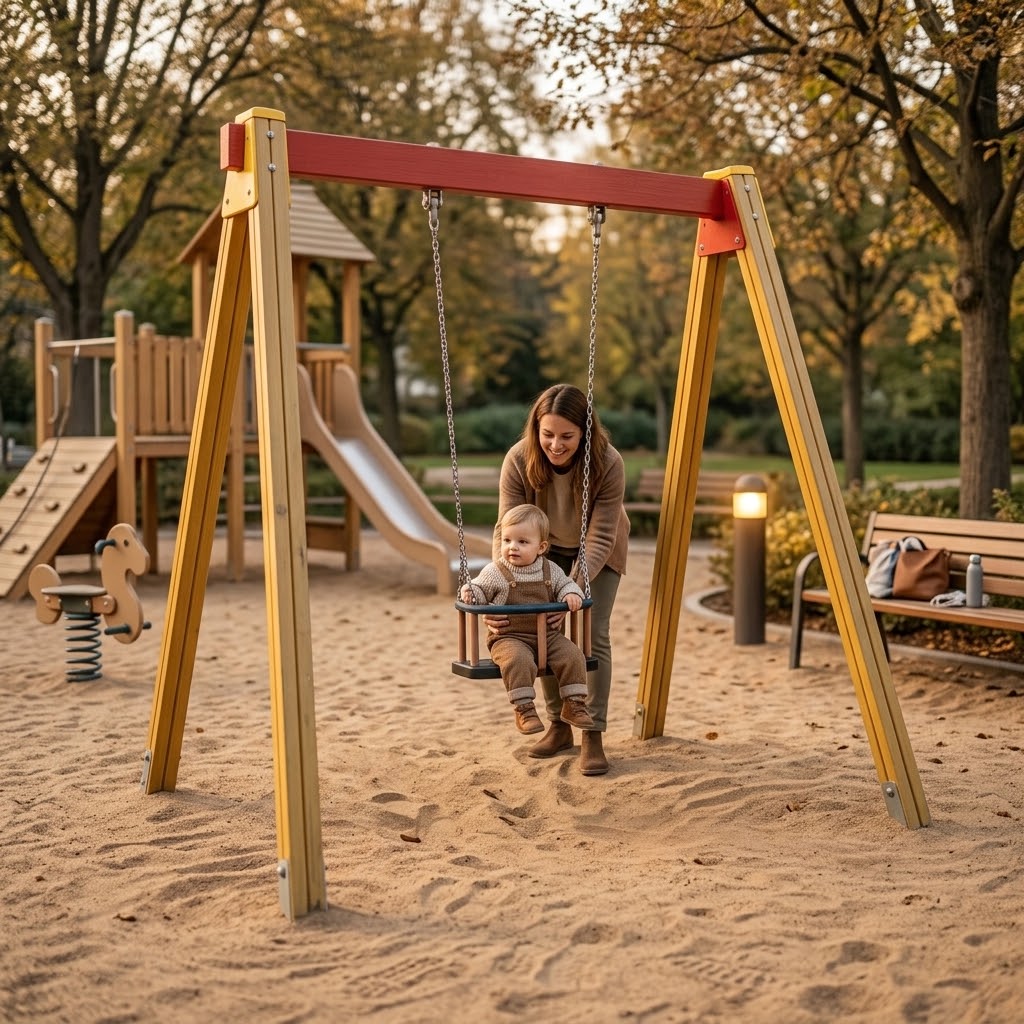
Holity offers, for example, an inclusive swing intended for schools with a declared age range of 3-12 years, equipped with a cradle seat with synthetic ropes and a galvanized steel structure. The product is presented as a solution also designed for children with disabilities and for shared use. It is an example of how the seating configuration can expand the design of the area, but any assessment of accessibility is based on the specific needs of the child. must however consider the complete product and the space in which it is installed.
The intended use must be verified on the technical data sheet
One of the most important distinctions is that between professional equipment for public play areas and products intended for the domestic environment. A swing can have a similar appearance in both cases, but be designed for completely different conditions of use. Frequency of use, structure, anchoring systems and technical documentation change significantly. For schools and public parks it is therefore necessary to verify that the product is actually intended for that context.
The Holity category itself includes both some solutions for private use and numerous professional swings dedicated to parks, schools and public gardens. A domestic model should therefore not be selected simply because it has dimensions or age ranges apparently compatible with the project. The declared intended use is a criterion separate from the age of the users. For professional buyers and institutions, it is useful to first exclude products that are not consistent with the context and then compare the remaining configurations.
Standards and safety concern the entire swing configuration.
For equipment permanently installed in public play areas, UNI EN 1176-1:2024 defines the general safety requirements for equipment and surfaces and is currently indicated by UNI as the current standard. The document concerns equipment intended for children and expressly recognizes the need for supervision for the youngest and less competent users. Age must therefore be included in an assessment that also includes equipment, surface and methods of use. of use.
For swings there is also UNI EN 1176-2:2019, also indicated by UNI as in force, which establishes specific additional safety requirements and test methods for swings intended for permanent installation and use by children. The specific part must be read together with the applicable general requirements. Conformity should therefore not be deduced solely from the presence of a particular seat or a commercial age range, but verified on the technical documentation of the individual equipment.
Space and context complete the choice by age range
After having defined users and type of seat, it is necessary to verify where the swing will be installed. The size of the structure represents only part of the space to be considered, because The oscillatory movement requires a free surrounding area consistent with the product configuration. The assessment must also include surface area, proximity to other equipment and methods of access to the workstation. A seat that is correct for age does not automatically make the entire installation correct.
Holity professional models have different dimensions and installation systems, with configurations to be buried or prepared for other installation methods. Even a single structure can therefore require a very different space design compared to another apparently similar one. This verification is particularly important when replacing existing equipment or working in a park with limited surface area. The manufacturer's instructions and the area design must accompany the selection of the model.
The correct model arises from the real profile of the users
Before comparing prices, it is a good idea to define the age range prevalent, number of expected children, level of autonomy required and installation context. Only subsequently is it useful to evaluate the flat seat, cage, cradle, single or double configuration, materials and space. This order avoids comparing equipment intended for different audiences. The most effective choice therefore starts from the users and arrives at the product, not vice versa.
Holity, leader in professional supplies for playgrounds, schools and collective spaces, offers swings with different age groups and configurations, from cage seats for the little ones to flat versions and cradle solutions. Choosing a swing for a children's playground means simultaneously checking the declared age, seat, professional purpose and space required. The technical data sheet of the individual model remains the decisive reference for narrowing the selection to the equipment truly consistent with the area's design.
 English
  Italian
 French
 German
 Spanish