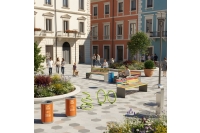
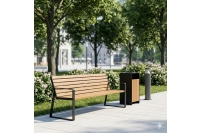
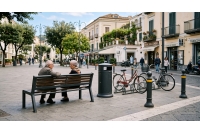
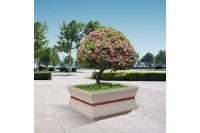
’ street furniture represents the set of elements and solutions designed to organize, make functional and improve public spaces. These are not just aesthetic components, but operational tools that contribute to the daily management of squares, streets, parks and collective areas. Street furniture products respond to concrete needs related to the usability of spaces, the safety and comfort of users.
In the current context, street furniture takes on an increasingly strategic role for public bodies, municipalities and managers of collective spaces. The choice of street furniture products directly affects the organization of areas, the perceived quality of environments and the ability to guarantee efficient services. Understanding which elements fall into this category is fundamental to designing coherent and functional interventions.
What is meant by street furniture and what products does it include?
The term street furniture refers to the set of structures and equipment installed in public spaces to facilitate their use. This includes elements intended for parking, waste collection, mobility and the management of urban areas. Each component has a specific function, but contributes to a common goal: to make spaces accessible, tidy and usable efficiently.
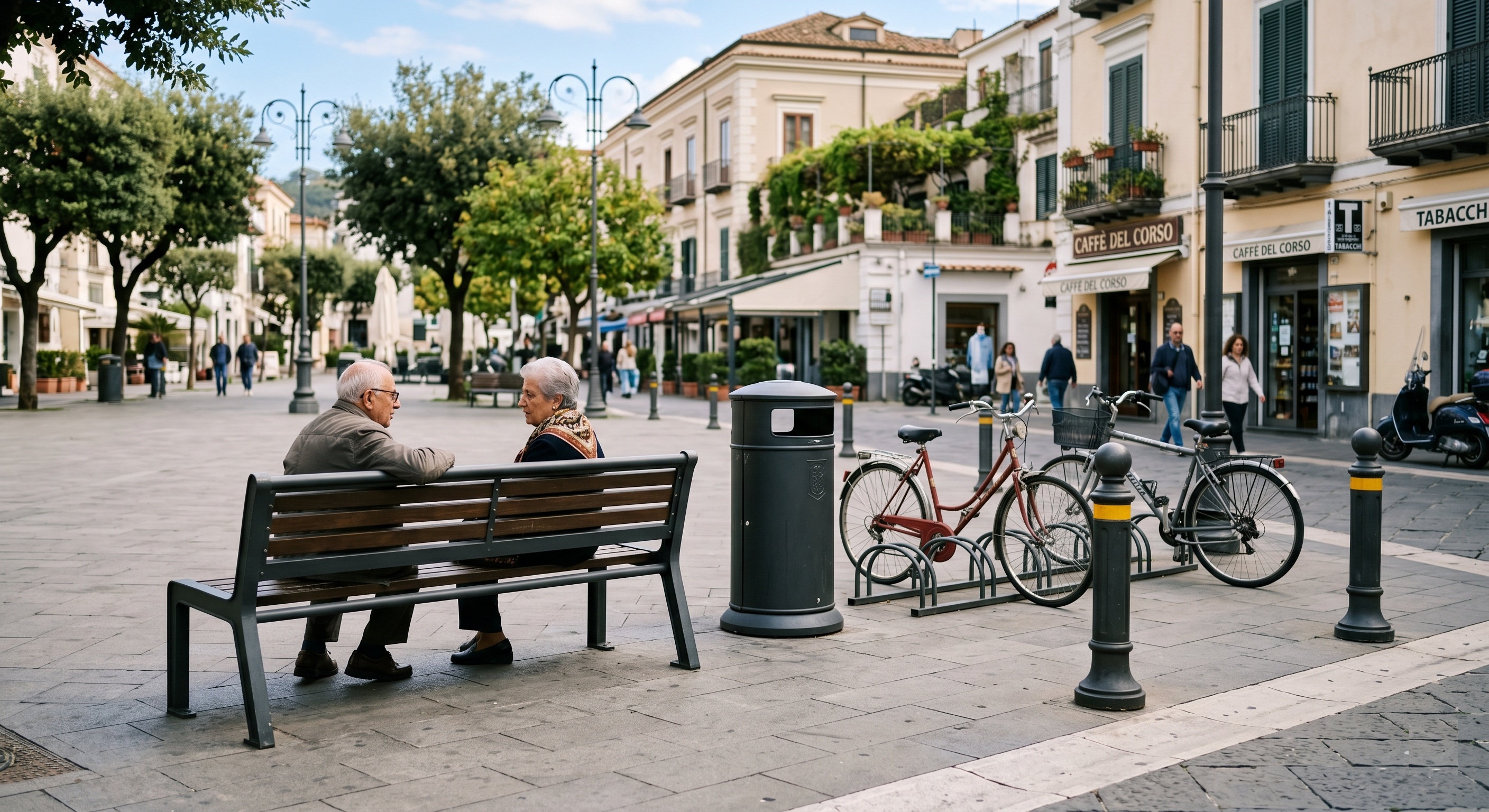
The street furniture products include a wide range of solutions, from benches to bins , from bike racks to barriers. This variety allows it to respond to different needs, adapting to different urban contexts. Their presence is essential to ensure order and continuity in the management of public spaces.
The main categories of street furniture products
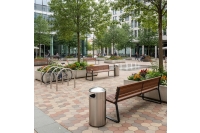
The categories of street furniture can be divided according to function and use. Among the most common elements are the benches , used for parking, the bins for waste management and the bicycle racks . To these are added flower boxes, tables and other solutions that improve the usability of spaces.
The variety of street furniture products allows for the creation of functional and organised environments. Each category responds to specific needs and contributes to the overall management of urban space, improving the user experience and facilitating maintenance operations.
Elements for safety, mobility and management of public spaces
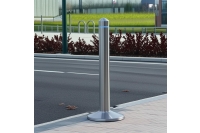
A significant part of street furniture is dedicated to safety and the regulation of flows. Bollards, barriers and barriers are designed to control traffic, protect pedestrian areas and ensure an orderly use of spaces. These elements play a fundamental technical function in urban management.
The integration of solutions for urban safety allows for the reduction of risks and the improvement of coexistence between different users of public spaces. Their presence helps to create safer and more controlled environments, also facilitating monitoring and maintenance activities.
Street furniture for aesthetics and the enhancement of urban areas
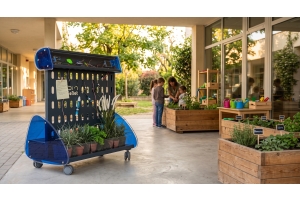
In addition to its practical function, street furniture plays an important role in the enhancement of spaces. Elements such as flower boxes , designer benches and decorative structures help to improve the visual appearance of urban areas. This aspect is particularly relevant in tourist contexts and in central areas of cities.
The choice of modern street furniture allows you to create more welcoming environments that are consistent with the identity of the territory. A well-structured project takes into account both functional needs and aesthetic impact, ensuring a balance between utility and design.
How to choose street furniture products based on needs
The selection of street furniture products must be guided by an analysis of the specific needs of the context. It is important to consider the type of space, the volume of use and the functions they want to support. Only a careful evaluation allows you to identify truly effective solutions.
Opting for suitable street furniture supplies means improving the management of spaces and ensuring greater durability over time. The choice must also take into account maintenance, resistance and the ability of the products to adapt to different operational contexts.
The role of street furniture in the quality of public spaces
Street furniture contributes directly to the quality of public spaces. Effective management of existing elements improves the usability, safety, and organization of urban areas. This translates into a more positive experience for citizens and visitors.
The street furniture products They therefore become essential tools for the management of cities and collective spaces. An informed choice allows for concrete results in terms of efficiency, order, and territorial enhancement.
 English
  Italian
 French
 German
 Spanish