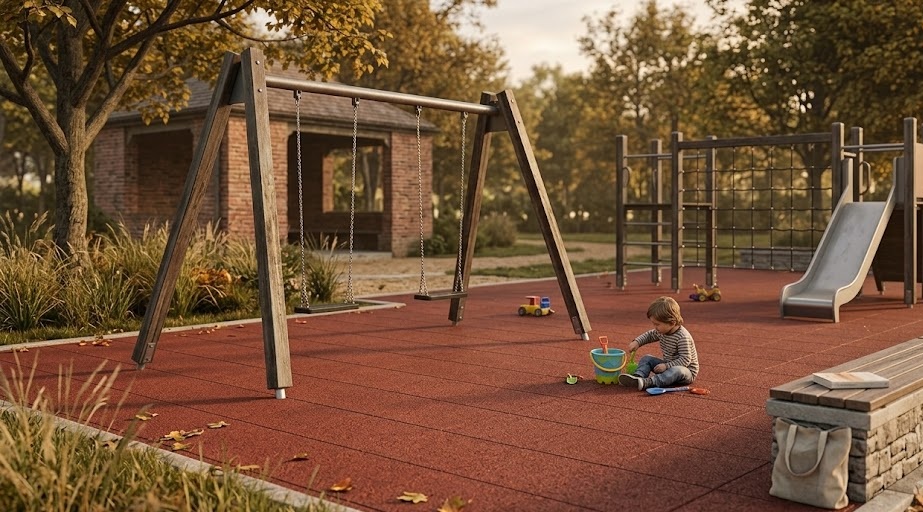
Outdoor shock-absorbing flooring is a solution designed to improve safety in play areas and outdoor spaces frequented by children. In public parks, school playgrounds, campsites, holiday villages and accommodation facilities, suitable flooring helps absorb shock in the event of a fall and makes the area more comfortable and usable. The choice of flooring must consider not only aesthetics, but also material, thickness, shock-absorbing capacity, drainage, resistance to atmospheric agents and maintenance. These elements directly impact the safety and durability of the play area.
Why install shock-absorbing flooring in a playground
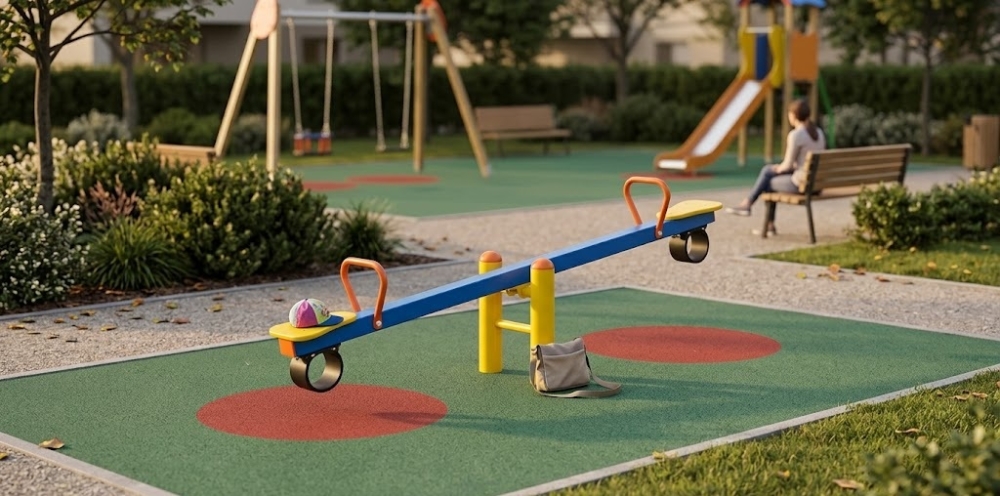
Playgrounds are subject to continuous use and include equipment such as swings, slides, springers and multifunctional structures. For this reason, it is important to provide a surface capable of reducing the effects of accidental falls in the most sensitive areas. exposed.
A Outdoor shock-absorbing flooring contributes to the safety of the area, improves comfort during running and playing and allows for better organisation of spaces intended for children.
 Characteristics of an anti-trauma flooring for outdoors
A good anti-trauma flooring for outdoors must combine the ability to absorb shocks, stability and resistance over time. It must also maintain its characteristics even when exposed to sun, rain, frost and temperature variations.
Among the main aspects to evaluate are the non-slip surface, water drainage, resistance to wear, ease of cleaning and compatibility with the installed equipment.
Anti-trauma tiles for outdoors: characteristics and advantages
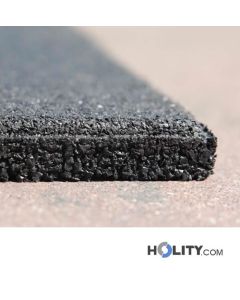
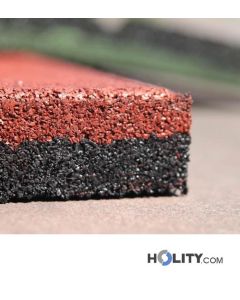
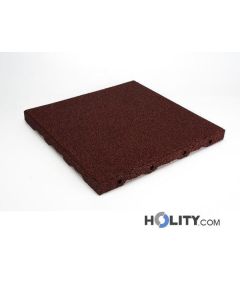
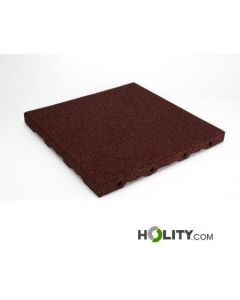
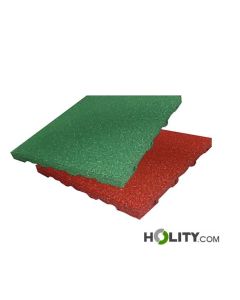
The anti-trauma tiles for outdoors represent one of the most popular solutions. Popular for playgrounds and play areas. They are modular, can be replaced individually in case of damage, and allow for relatively simple installation on adequately prepared surfaces.
Tiles are available in different sizes, colors, and thicknesses. This variety allows the flooring to be adapted to the characteristics of the area and the type of play equipment present.
The most commonly used materials
Most shock-absorbing outdoor flooring is made of rubber or elastomeric materials designed to offer elasticity and the ability to absorb impacts.
The most popular solutions include rubber tiles and cast-in-place flooring. The former are easy to install and replace, while cast rubber allows for the creation of continuous, customizable surfaces.
Shock-absorbing tiles or cast rubber?
Shock-absorbing tiles are recommended when you're looking for a modular, easily manageable solution. In the event of wear or damage, only the affected area can be repaired.
Cast rubber, on the other hand, allows you to create continuous, joint-free surfaces, adapting to irregular shapes and projects with colored designs or paths.
The choice therefore depends on the characteristics of the area, the type of installation planned, maintenance, and the desired aesthetic result.
What is the best shock-absorbing flooring?
There is no single solution that is suitable for every play area. The best shock-absorbing flooring is the one chosen based on the height of the fall of the equipment, the type of use, the subfloor, and the climatic conditions.
In some projects, tile flooring may be more practical, while in others, a continuous surface may be preferable. The main criterion must be the consistency between the characteristics of the flooring and the requirements of the area.
Thickness of the safety floor
The thickness is one of the most important elements in the choice of flooring. It must be evaluated in relation to the existing equipment and the potential height of a fall.
It is therefore not correct to choose the thickness solely on the basis of price or aesthetics. A flooring intended for an area with higher play equipment may require different performances than an area with low equipment.
Safety flooring for playgrounds
The safety flooring for playgrounds must be designed together with the layout of the equipment. The areas under and around play equipment such as slides, swings and climbing structures are particularly important because they present a greater probability of falls.
Correct distribution of the anti-trauma surface allows you to create a safer and more organized area, avoiding using the same solution indiscriminately in every area of the park.
Resistance to atmospheric agents
A pavement installed outdoors is continuously exposed to rain, sun, humidity, frost and temperature changes. It is therefore important to choose materials specifically intended for outdoor use.
Good resistance to atmospheric agents helps limit deformation, deterioration and loss of functional characteristics over time.
Drainage and water management
In outdoor areas it is important that the pavement allows for correct management of rainwater. Drainage reduces stagnation and allows the area to be made usable again more quickly after rainfall.
The result depends on both the characteristics of the flooring and the correct preparation of the subfloor and the slopes of the area.
Ease of maintenance and cleaning
Another advantage of Outdoor shock-absorbing flooring concerns the simplicity of ordinary maintenance operations.
Leaves, dust and dirt must be removed periodically, while any damage or lifting of the surface must be checked to prevent them from becoming a risk for users.
Where to use an outdoor anti-trauma floor 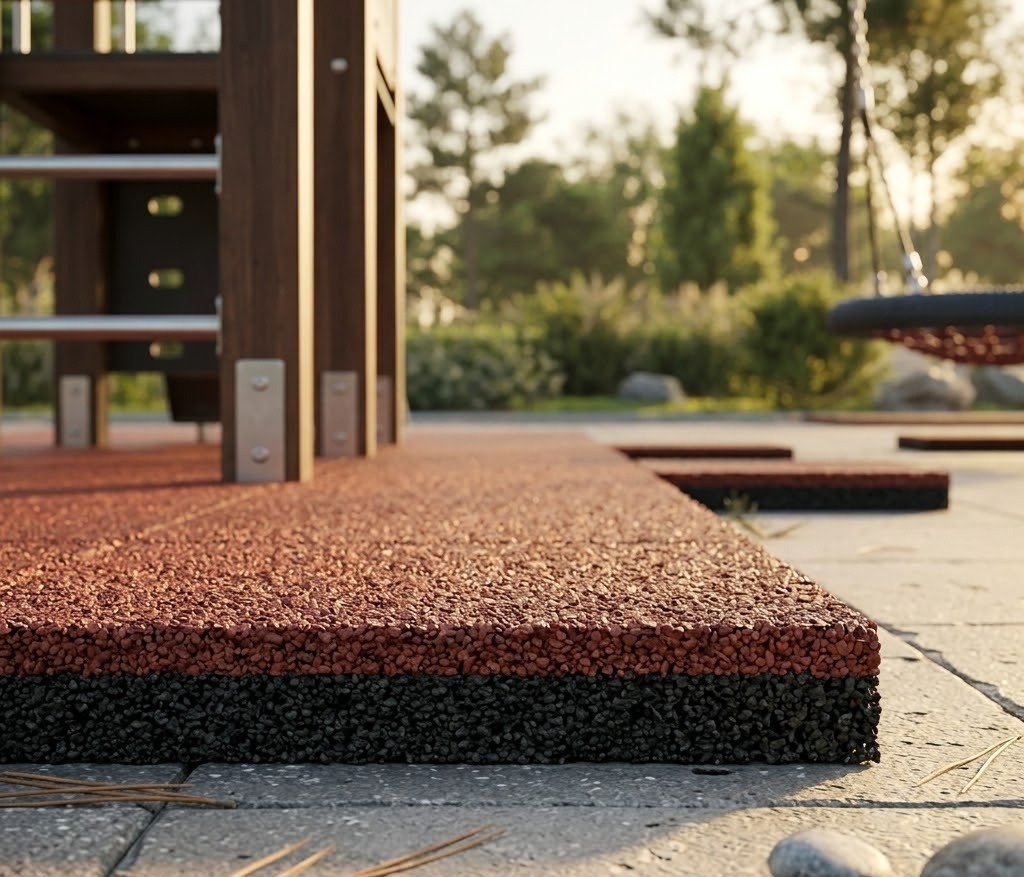
In addition to municipal playgrounds, this type of flooring can be used in schoolyards, nurseries, campsites, tourist villages, hotels, sports centres and other outdoor areas dedicated to children.
Different colours, thicknesses and configurations allow the surface to be adapted to both public spaces and accommodation or school facilities.
How to choose the most suitable anti-trauma floor suitable
Before purchasing it is useful to evaluate:
- size of the area;
- type and height of the equipment;
- required thickness;
- flooring material;
- characteristics of the subfloor;
- water drainage;
- climatic conditions;
- frequency of use;
- ease of maintenance.
Holity , a specialist in professional supplies for playgrounds, street furniture and spaces dedicated to children, offers anti-trauma flooring for outdoors intended for various contexts of use.
Frequently asked questions about outdoor anti-trauma flooring
What is anti-trauma flooring used for?
It is used to reduce the effects of impacts resulting from falls in areas where there are games and equipment intended for children.
What is the difference between anti-trauma tiles and cast rubber?
The tiles are modular and can be replaced individually, while the cast rubber allows for a continuous and customizable surface.
How to choose the thickness of the anti-trauma floor?
The thickness must be chosen based on the characteristics of the equipment and the expected fall height.
Can the anti-trauma floor be used outdoors?
Yes, as long as the product is designed for outdoor use and has adequate characteristics of resistance to atmospheric agents, drainage and durability.
 English
 Italian
 French
 German
 Spanish