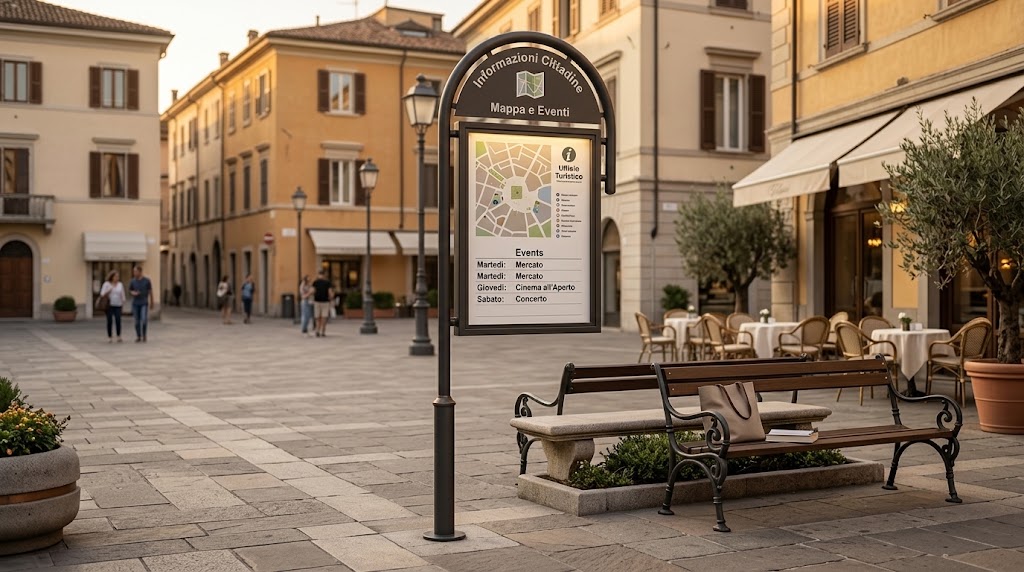
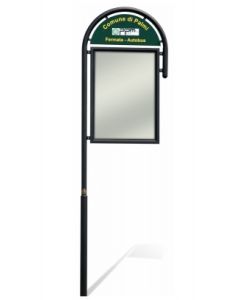
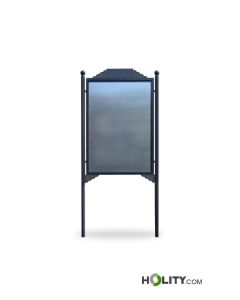
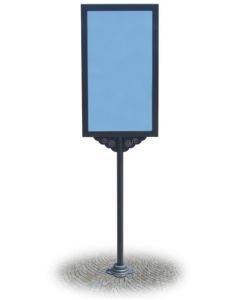
Street furniture noticeboards are practical tools for displaying notices, communications, maps, regulations, and information in public and collective spaces. They can be installed in parks, squares, schools, public offices, accommodation facilities, and commercial areas, offering a visible and easily accessible information point.
The choice of the most suitable noticeboard depends on the installation location, the amount of information to be displayed, the type of fixing, and the materials. In outdoor contexts, resistance to atmospheric agents, document protection, and ease of maintenance become particularly important.
How to choose a street furniture noticeboard
 Before purchasing, it is useful to evaluate the size, number of display surfaces, structure material, and installation method. A noticeboard intended for a small entrance will have different needs compared to a model installed in a square, in a park or in a highly frequented public structure. It is also important to consider the readability of the contents: documents, timetables, maps and communications must be easy to consult without creating visual confusion.
Single-sided and double-sided noticeboards
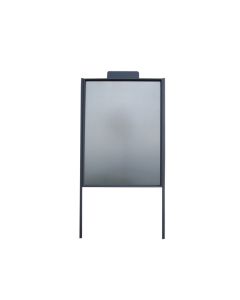
Single-sided noticeboards are suitable when the communication must be read from only one side, for example along a wall, at an entrance or near a pedestrian path. Double-sided noticeboards , on the other hand, allow the use of both surfaces and are useful in central spaces, squares, parks or in any context where people can approach from different directions.
Outdoor noticeboard materials
Outdoor noticeboards can be made of steel, galvanized steel, metal or wood. The choice of material must take into account exposure to rain, sun, temperature changes and intensity of use. Metal structures are particularly suitable for urban environments thanks to their sturdiness, while wooden models can integrate better into parks, green areas and more traditional contexts.
Noticeboards with protection for documents and notices
When installed outdoors, it is important that papers and communications are protected. Models with transparent doors allow documents to be kept visible while limiting direct exposure to rain, wind and dirt. Depending on the model, they may have opening, closing or locking systems that allow contents to be updated and reduce the risk of tampering.
Where to use noticeboards for street furniture
Noticeboards can be used in numerous contexts. In municipalities and public offices, they can host notices, ordinances and communications; in schools, they can be used for information aimed at students and families; In parks and green areas, they can display regulations, maps, and directions. Hotels, campsites, and accommodation facilities can also use noticeboards to display timetables, information on services, maps of the facility, and communications aimed at guests. This way, paper communications remain immediately accessible even without smartphones or digital devices.
In public parks, noticeboards represent a point of reference for communicating rules of use, routes, environmental information, or initiatives organized in the area. It is therefore important to position them in visible locations, such as entrances, passageways, or rest areas. The structure must be stable and proportionate to the space, without obstructing pedestrian paths or reducing the accessibility of the area. 
Size and display capacity
The dimensions must be chosen based on the quantity of content to be published. A compact noticeboard can may be sufficient for a few notices, while larger structures allow you to simultaneously organize maps, regulations, communications and events. When there is a lot of information, it is preferable to choose a surface large enough to maintain good readability, avoiding overlapping or excessively compressing documents.
Wall or pole mounting
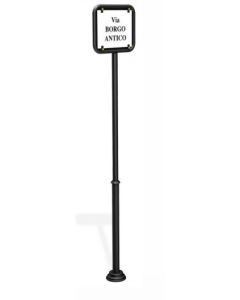
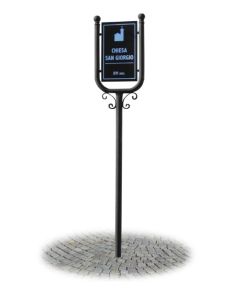
Noticeboards can be fixed directly to a wall or installed on poles. Wall mounting is suitable for entrances, public buildings and covered spaces, while pole models allow greater freedom of positioning in squares, parks and open areas. Before installation, it is always advisable to check the fixing methods provided by the manufacturer and the characteristics of the installation surface.
How to choose the right noticeboard
To identify the most suitable noticeboard for street furniture it is It is therefore useful to compare materials, dimensions, number of display sides, document protection and installation methods. A correct choice allows you to create an information point that is tidy, resistant and consistent with the surrounding environment, improving communication in public spaces, schools, accommodation facilities and collective areas.
 English
  Italian
 French
 German
 Spanish