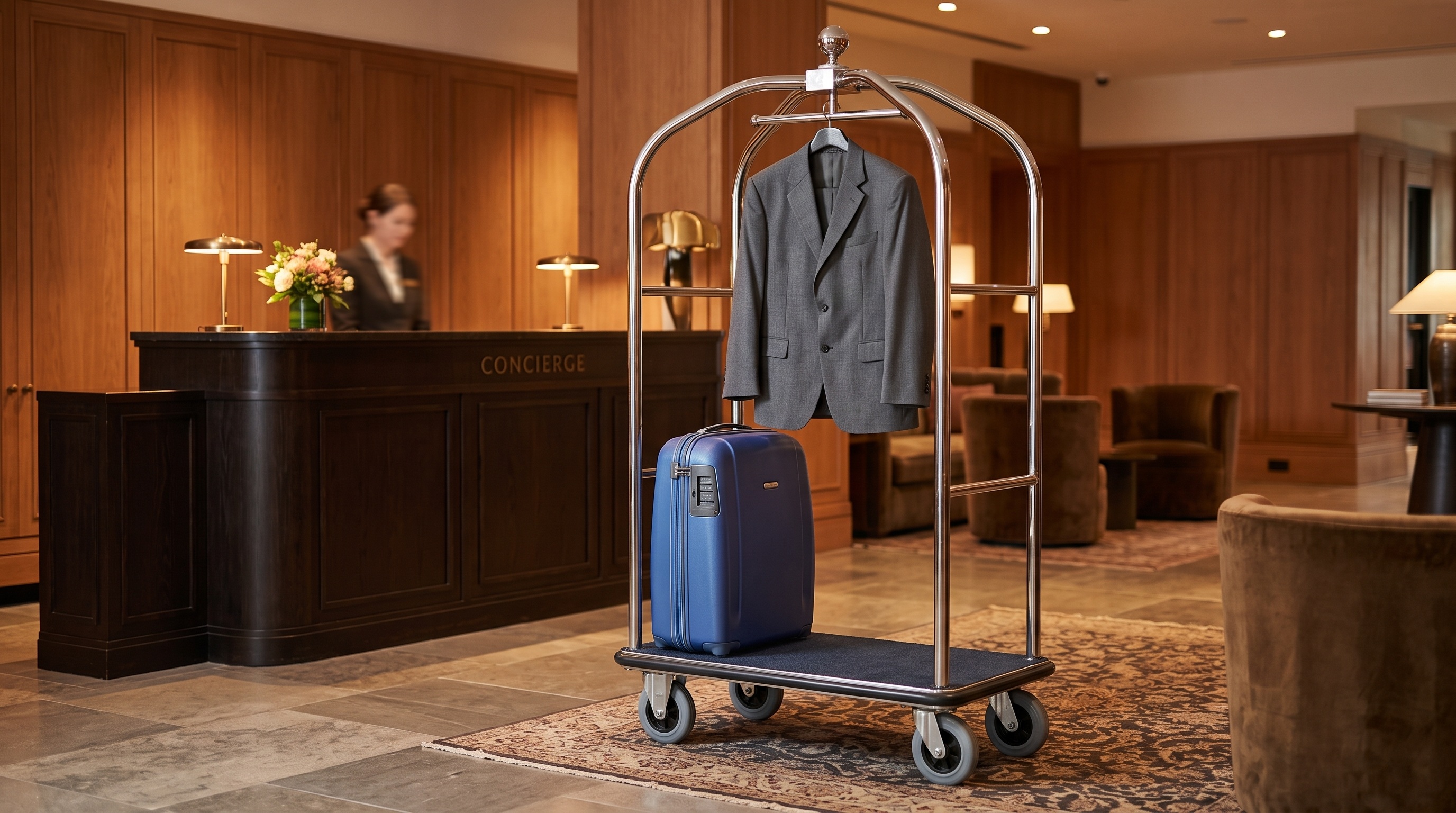
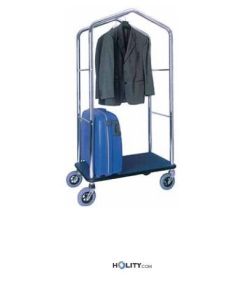
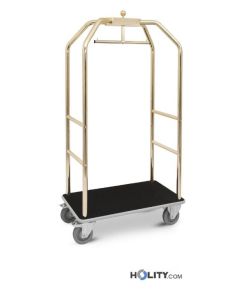
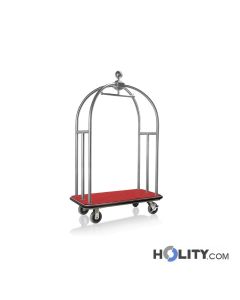
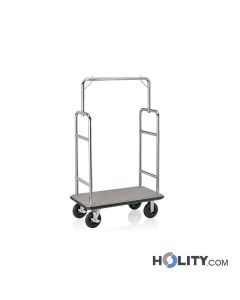
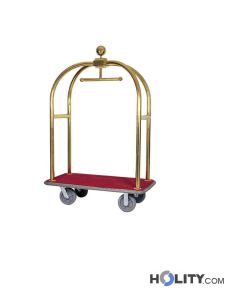
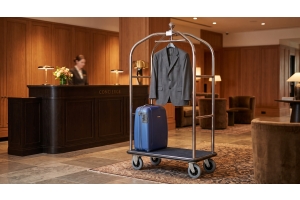
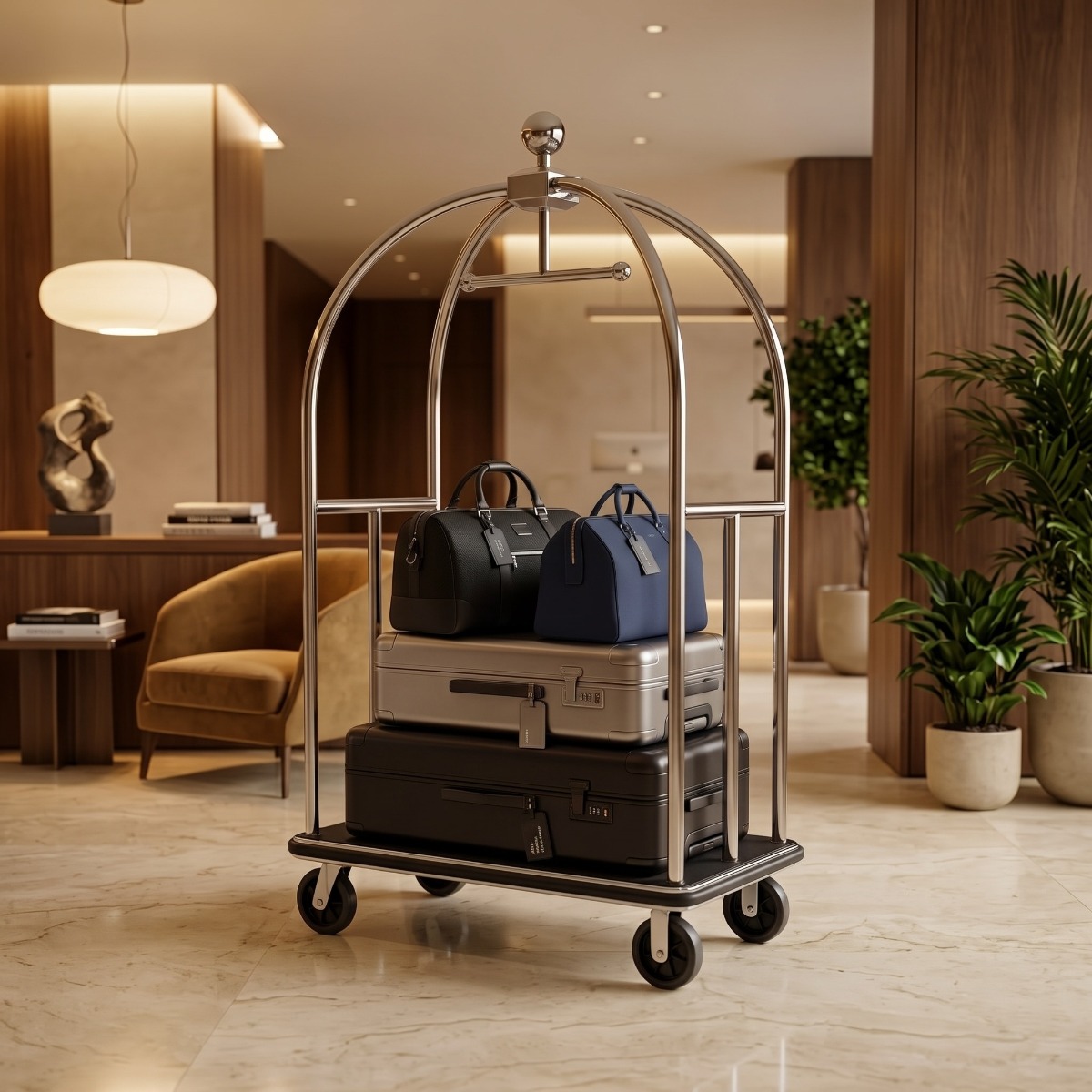
The hotel luggage cart is one of the pieces of equipment that makes the organization of a hospitality facility concretely visible. It comes into play at a particularly delicate moment of the stay, when the guest arrives with suitcases, bags and other personal effects and must reach the reception or the room. Having an adequate system for moving luggage allows this phase to be managed in a more orderly manner. At the same time, it avoids improvising transport with solutions that are not consistent with a professional hotel service.
Its function, however, is not limited to moving suitcases. Since it is often placed in the hall or in the immediate vicinity of the reception, the cart becomes one of the elements that the guest encounters from the moment of his arrival. Structure, finishes, and state of maintenance therefore contribute to the overall perception of the environment. Operational functionality and quality of hospitality come together in the same product, making the choice more complex than simply evaluating load capacity.
Baggage service begins in the lobby
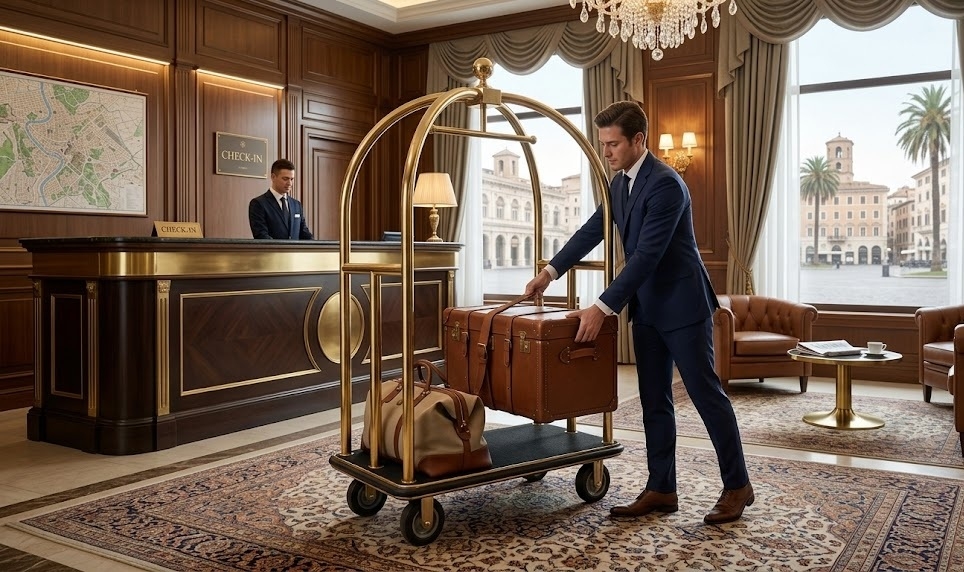
 Arriving at the hotel is made up of a sequence of small steps that must be simple for the guest. Entering the building, reaching the reception desk, completing check-in, and transferring personal belongings to the room requires organization that becomes even more important when the luggage is numerous or bulky. A luggage trolley allows you to concentrate multiple packages in a single transfer and avoids management being entrusted to repeated and inefficient movements.
This aspect takes on greater importance in facilities that offer assistance with luggage transport or frequently welcome families, groups, and guests with medium-long stays. In these cases, the trolley becomes an operational tool available to staff, but also a recognizable element of the service. Its presence communicates that the facility has planned baggage management as part of the welcome process, rather than considering it a need to be resolved only when it arises.
Why the luggage trolley improves reception organization
The reception must simultaneously manage people, information, keys or access systems, and different requests. During peak times, leaving suitcases and bags without a defined position can make the hall less tidy and interfere with normal passageways. The trolley allows luggage to be collected in a more compact configuration and transferred when necessary. This helps staff keep the entrance area more visible.
The advantage increases when a parking point and an internal procedure for its use are also defined. The trolley should not, in fact, become a permanent obstacle in front of the counter or the elevators. It is preferable to establish where it should be positioned when it is available and where it should be returned after each service. Holity, specialist in professional supplies for hotels and hospitality facilities, offers equipment dedicated to hospitality that allows the various operational needs of the structure to be organised in a coordinated way.
Load capacity: starting from the type of structure and the stays
The capacity must be related to the characteristics of the hotel and the quantity of luggage normally handled. A business facility with short stays may have different needs than a resort, a tourist hotel or a hotel frequented by organized groups. It is therefore not useful to automatically choose the largest model available. The size must be sufficient for the expected service without making the trolley unnecessarily bulky.
In addition to the capacity declared by the manufacturer, it is important to observe the surface area actually available for suitcases and the shape of the structure. Hard-sided luggage, trolleys, duffel bags and packages of different sizes must be able to be stored in a stable and rational manner. The technical documentation of the model allows you to check the capacity and dimensions before purchasing. Capacity and configuration of the loading platform must therefore be evaluated together.
Dimensions and overall dimensions must adapt to the hotel's routes
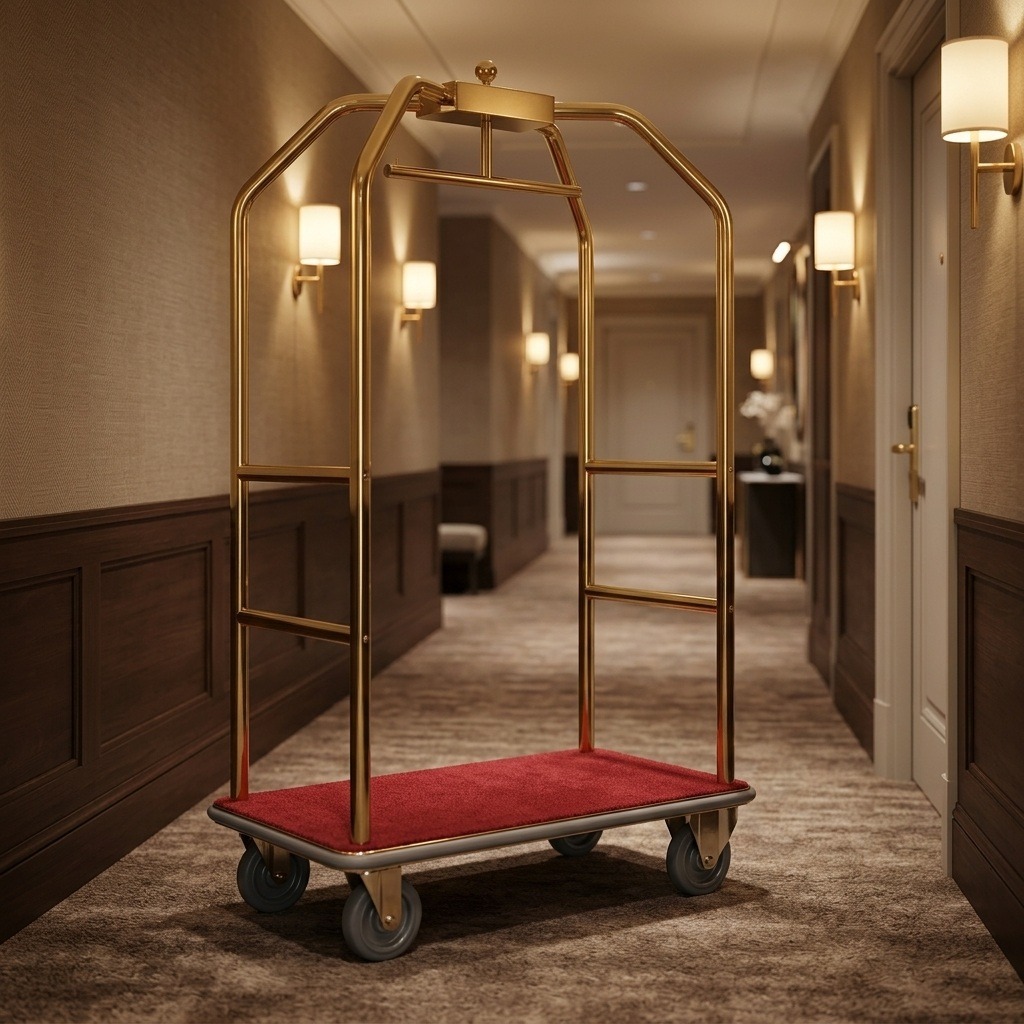 A luggage trolley is not only used in the lobby. It must pass through corridors, doors, any ramps and, above all, reach the elevators used for transfers to the floors. Before purchasing, it is therefore advisable to check the overall width, length and height of the model in relation to the routes actually available. A very capacious product may lose much of its usefulness if it is difficult to manoeuvre within the spaces of the structure.
It is useful to reconstruct the most frequent route, from the entrance to the rooms, identifying the narrowest points and changes in direction. The size of the elevator must also be considered together with the space required by the operator. In historic buildings or structures with narrow corridors, this check takes on particular importance. The choice should therefore start from the maximum size actually compatible with the hotel, and then identify the most suitable capacity within that limit.
Wheels and maneuverability in daily management
The wheels are a crucial component because the trolley is mainly used in motion. Diameter, configuration and characteristics declared by the manufacturer affect the behavior of the product during movement. It is also advisable to consider the type of flooring present in the hall and corridors, because carpeting, hard surfaces and differences in level may require different performance. Maneuverability must be evaluated above all by thinking of the loaded trolley and not just the empty structure.
A product that is easy to drive allows staff to tackle curves and passages with greater ease, while a configuration that is not suited to the spaces may make every transfer more laborious. The handle and the points from which the trolley is guided must also be consistent with the model. The comparison between the different solutions should therefore include wheels, radius of maneuver and internal path, three aspects closely linked in daily use.
Structure and loading surface for professional use
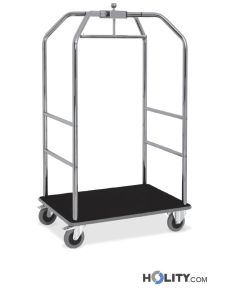
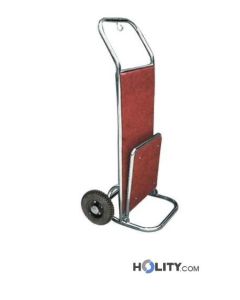
A hotel trolley is used repeatedly and can transport luggage with different shapes, weights and dimensions. The structure must therefore be evaluated considering materials, configuration and declared load capacity. The lower surface should offer a surface consistent with the suitcases that the structure moves most frequently. Any protections or finishes on the surface can also help make transport more orderly and characterize the overall appearance of the product.
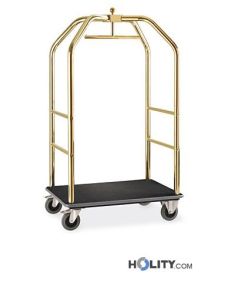
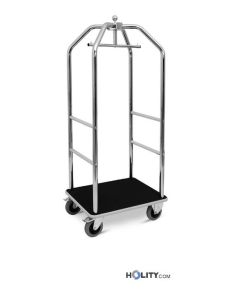
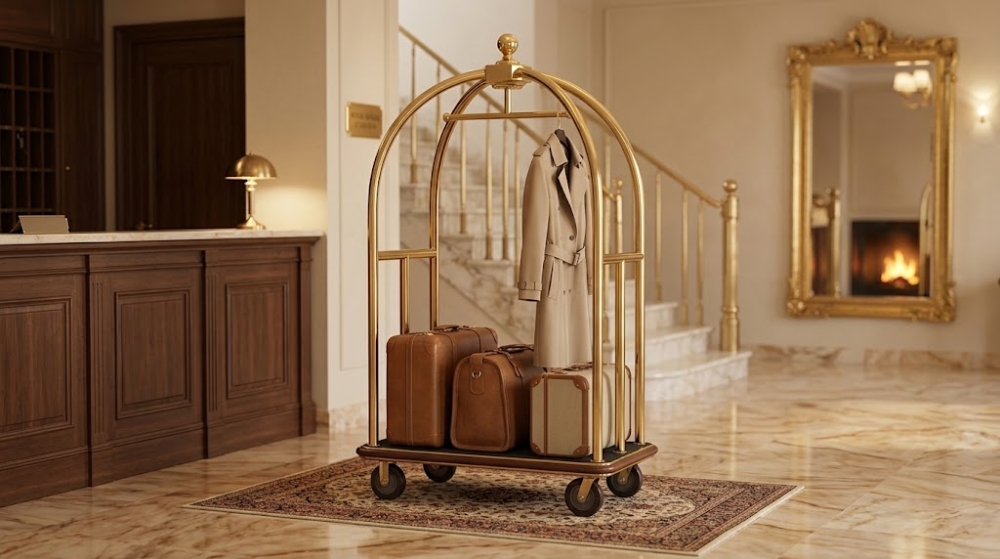
In classic models with an arched structure, the upper part also contributes to the recognizability of the product. Aesthetics of the trolley within the lobby. However, visual impact should not be confused with operational characteristics. The choice must always start from compatibility with the service and the technical specifications. Only subsequently is it appropriate to compare the available finishes to identify the one most consistent with the interior design and the hotel's image.
Materials and finishes: when the trolley becomes part of the welcome
In the lobby, every visible element contributes to the composition of the space. A luggage trolley can have different structures and finishes, to be evaluated in relation to the flooring, reception desk, lighting, and other accessories. In contemporary environments, certain metallic finishes may be preferred, while more classic structures may be oriented towards different solutions. The goal is to prevent equipment necessary for the service from appearing alien to the rest of the environment.
The aesthetic component must however be accompanied by ease of management. Surfaces and coverings must be maintained according to the manufacturer's instructions so that the trolley maintains a tidy appearance over time. A highly visible element marked by neglect can produce an impression opposite to the desired one. Holity offers professional trolleys and supplies for the hotel sector, allowing facilities to compare different configurations also from an aesthetic and functional point of view.
Where to place the trolley when it is not in use
The parking position should be defined even before purchasing. The trolley must be easily accessible when a guest arrives, but should not restrict passageways or permanently occupy the area in front of the reception. In larger halls, it can be used as a storage space. A dedicated area should be provided, while in hotels with limited space it may be necessary to identify a lateral position or an easily accessible room. The size of the product directly affects this decision.
The number of trolleys must also be proportionate to the needs of the facility and the space available to store them. Purchasing multiple units without planning their placement can create clutter in the very area where they should improve service. It is preferable to analyze the busiest times and estimate how many movements can occur simultaneously. The equipment can then be sized based on the actual check-in and check-out flows.
From check-in to check-out: better organize the flow of baggage
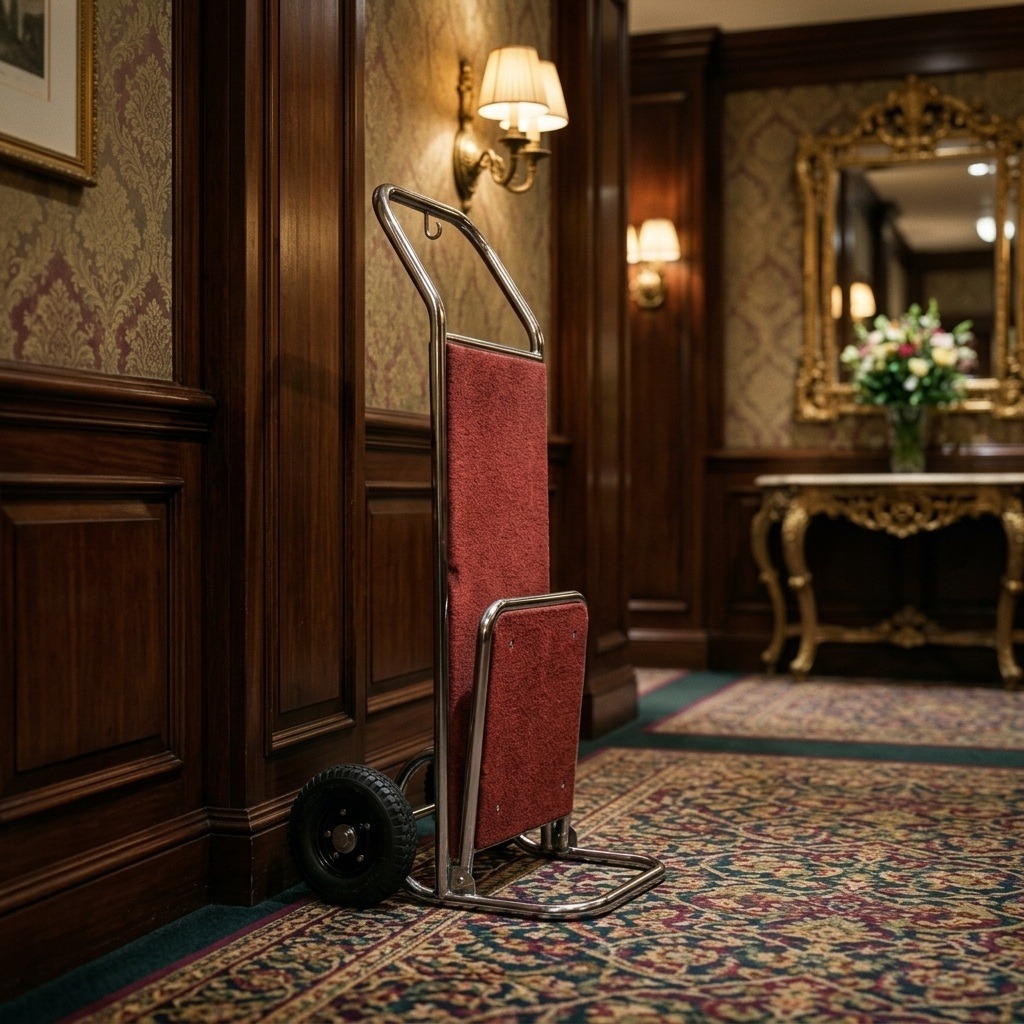 The trolley can be used both on arrival and departure and should therefore be included in both procedures. During check-in, it allows you to transfer luggage from the entrance or reception to the room. At check-out, it can be used for the reverse route, especially when the guest has multiple suitcases or requires assistance. Having a clear procedure prevents staff from having to search for equipment every time or decide where to temporarily leave luggage.
The organization can also include any storage areas, always according to the procedures defined by the facility. The trolley must be able to reach these spaces without interfering with the normal functioning of the reception. Baggage management is therefore a flow and not a single movement. Considering the entire route allows you to better understand what size, capacity, and handling characteristics are really necessary.
Mistakes to avoid when choosing a luggage trolley
One of the most common mistakes is choosing a trolley. A common mistake is to choose a cart primarily for its appearance. An elegant finish may be consistent with the lobby, but the product must first pass through doors and elevators and offer adequate capacity. Even purchasing the largest model without checking the routes can generate operational difficulties. Before comparing the finishes, it is therefore necessary to measure the spaces and analyze the flows of the structure.
Another mistake is to overlook wheels and handling. The cart spends much of its use in motion, and its practicality depends on its behavior along the actual routes of the hotel. It is also important to check the capacity and mode of use on the technical documentation, avoiding evaluations based solely on visual dimensions. Capacity, footprint, maneuverability, and image must be compared simultaneously to obtain a balanced solution.
How to choose the most suitable hotel luggage cart for your facility
To choose a hotel luggage cart it is useful to start from the route it will have to take and the volume of luggage normally handled. Width of doors and corridors, dimensions of elevators, type of flooring and area intended for parking allow you to define the compatible dimensions. Subsequently, the load capacity, loading surface, wheels, structure and finishes can be compared. This method allows you to choose a product based on the actual functioning of the hotel and not just the aesthetic impact.
Holity, a specialist in professional supplies for hotels and hospitality facilities, represents a point of reference for those who need to organize reception, rooms and services with equipment designed for the hospitality sector. The luggage cart is a concrete example of how a seemingly simple piece of equipment can connect operation and perception of service. If sized correctly and integrated into the structure's routes, it helps make the hotel more comfortable. Organized luggage management and more fluid one of the first and last moments of the guest's stay.
 English
  Italian
 French
 German
 Spanish