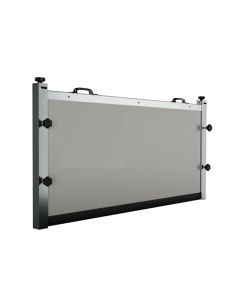
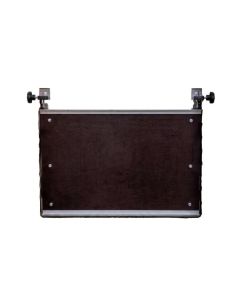
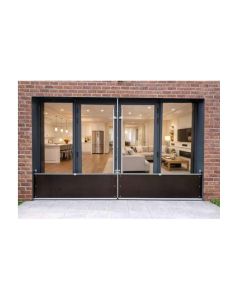
For a shop, bar, or restaurant located at street level, heavy rain can quickly become an operational problem. When water accumulates on the sidewalk or along the roadway, even a small difference in height from the threshold can facilitate water ingress. Floors, furnishings, equipment, and merchandise stored near the entrance can be exposed to damage, with consequences that go beyond cleaning operations. flood barriers for shops They represent a solution to be evaluated to reduce the risk of water ingress through doors and other openings, provided they are suitable for the site conditions and correctly installed.
Securing a commercial business presents unique requirements compared to an environment used only occasionally. The entrance must remain accessible during normal opening hours, allowing the passage of customers, staff, and suppliers. At the same time, the security system must be designed to be compatible with the organization of the store.The choice of a flood barrier It therefore requires considering dimensions, sealing, installation and ease of use, without neglecting the characteristics of the building and the possible ways in which water can enter.
Why flooding poses a risk to ground-floor spaces
 Commercial properties with direct street access can be exposed to surface water accumulation during particularly heavy rainfall. The shape of the sidewalk, the slope of the roadway, and the location of the threshold can affect the path of water toward the building. In some situations, the problem can arise even when external accumulation appears limited, especially if the entrance is located at a lower level than the surrounding surfaces. The vulnerability of a premises depends on the specific characteristics of the access and cannot be determined simply by observing the frequency of rainfall in the area.
For a shop, the consequences can affect displayed products, packaging, shelving, and materials stored near the entrance. In bars and restaurants, water can affect furnishings, service areas, and equipment, requiring inspections before resuming operations. Even short-term flooding can lead to operational disruptions and restoration efforts. Therefore, prevention should be addressed before weather events occur, identifying vulnerable points and evaluating measures that can effectively reduce the establishment's exposure.
How flood barriers for shops work
The flood barriers These systems are designed to prevent water from entering an opening, within specific operating conditions. Depending on the model, they may consist of panels inserted into lateral guides, elements fixed to the structure, or configurations with different anchoring systems. Their function is to create a barrier at the opening, limiting water ingress to the height and sealing conditions specified by the manufacturer. Actual performance depends on the system configuration and the quality of the installation.
This function should not be confused with absolute protection against all types of flooding. The pressure exerted by the water increases with the level reached and can exceed the conditions for which a barrier was designed. Furthermore, water can find alternative routes through walls, floors, drains, or other vulnerable points. A properly chosen bulkhead helps mitigate the risk at a specific point, but the overall protection of the shop requires an evaluation of the possible entry routes and the characteristics of the building.
When a flood barrier is suitable for a commercial business
A flood barrier It can be considered when the main point of vulnerability is a door, an opening window, or another access point directly exposed to accumulating water. The choice must begin by observing the path that water could take during heavy rainfall. If the risk is concentrated at the threshold, a dedicated system can be a useful measure within a broader protection strategy. However, suitability depends on the expected water level, the geometry of the gap and the resistance of the surrounding structures..
Particular attention should be paid to rooms located in low-lying areas, near ramps, or where slopes direct water toward the entrance. In these situations, a technical assessment may be necessary to determine whether the bulkhead is appropriate and what features it should have. It is unwise to choose a barrier based solely on previous flooding events, as subsequent events may vary in intensity and pattern. The solution must be compatible with the considered risk scenario and the manufacturer's instructions.
Removable bulkheads and permanent systems: what differences to evaluate?
The removable flood barriers They can be installed when protection is required and removed during normal use. This configuration may be beneficial for shops and commercial premises that wish to maintain free access throughout the day. Mounting methods vary between products and may include guides, brackets, or other components that remain installed at the entrance. Before purchasing, it is important to check both the overall dimensions of the installed barrier and the dimensions of the components present when it is removed.
Permanent or integrated systems can adopt different solutions, with components designed to remain permanently in the position specified in the design. Their selection requires consideration of compatibility with the entrance, activation methods, and potential interference with the passageway. There is no one-size-fits-all setup for all businesses., because practicality depends on the frequency with which the protection must be used and the characteristics of the building. The time required to install the barrier is also an important criterion when the risk of flooding can manifest itself rapidly.
Protection of doors, windows and secondary accesses
In a store, the main entrance isn't necessarily the only point through which water can penetrate. Service doors, access to storage areas, and openings to courtyards may have thresholds exposed to different conditions. Display windows must also be assessed based on their configuration, distinguishing between fixed surfaces and openings used for passage. Protection must be designed considering all vulnerable points, because intervening only on the most visible entrance could leave other points of the business exposed.
The geometry of the openings influences the choice of system. An entrance with regular jambs may require a different configuration than a wide opening or a door inserted into a façade with unusual architectural elements. It is also necessary to verify that the mounting surfaces are compatible with the manufacturer's requirements. For rooms with multiple entrances, the assessment should also consider the activation methods of the various protections, ensuring that the installation of a barrier does not obstruct routes necessary for personal safety.
Dimensions of the passage and required protection height
 Taking measurements represents one of the most important steps in choosing the flood barriers for shopsThe opening width must be checked at the designated installation locations, taking into account any surface irregularities. Using the nominal door size is not sufficient, as the system may require specific clearances for guides, supports, and seals. The sill shape must also be examined to identify any irregularities that could compromise installation.
The barrier height must be chosen based on the flooding scenario considered and the product's technical limitations. A higher barrier is not automatically more suitable, because the rising water level places greater stress on the barrier and its anchors. The protection quota must be compatible with the declared performances and with the resistance of the structureWhen the risk is significant or the building conditions are complex, the definition of measures and configuration should be entrusted to technically competent personnel.
Watertightness, gaskets and bearing surfaces
The ability to limit infiltration depends on the system's components. Gaskets, when included, contribute to the contact between the barrier and surrounding surfaces, but must operate under the conditions specified by the manufacturer. Irregularities in the threshold, the presence of debris, and improper fastenings can affect the result. The seal does not depend only on the bulkhead panel, but also by the continuity of the contact points and the correct implementation of the installation.
It's important to check whether the manufacturer claims specific sealing performance and under what conditions they were determined. Not all systems perform the same in the presence of water, and it's incorrect to automatically consider them absolutely waterproof. Even a properly installed barrier may allow residual infiltration within the limits allowed by its configuration. For a commercial business, this information is essential to understand what level of protection is realistically achievable and what additional measures may be necessary.
Materials and construction characteristics of bulkheads
The flood barriers They can be made of different materials, selected by the manufacturer based on their structure and expected performance. Some configurations use metal elements, while others may adopt composite materials or specific construction solutions. The choice should not be based solely on the barrier's weight or appearance, as overall resistance also depends on profiles, joints, and anchoring systems. The construction features must be evaluated through documented technical data, avoiding comparisons based on visual impressions.
For a store using a removable partition, weight can impact the ease of assembly and storage. A lightweight system may be easier to handle, but it must still deliver the performance required for the intended use. The components' resistance to environmental conditions and maintenance requirements also deserve attention. The choice of materials must therefore be based on the frequency of use, handling methods, and conditions to which the system will be exposed.
Accessibility and daily use of the entrance
For commercial businesses, maintaining a functional entrance during normal operations is a fundamental requirement. Customers, employees, and suppliers must be able to access the premises via routes compatible with the business's organization and applicable requirements. A removable partition can help maintain a clear passage when protection is not required, but it is important to check whether there are any permanent guides, thresholds, or supports. Compatibility with everyday accessibility must be assessed before installation, not only after choosing the model.
During a weather event, the activation of the barrier may alter the entry and exit procedures from the premises. Therefore, it is necessary to consider safety procedures, escape routes, and any applicable regulations for the business. A barrier must not be installed in such a way as to compromise the ability to evacuate people. In shops open to the public, protection management should therefore be coordinated with emergency procedures and the instructions of those responsible for safety.
How to protect goods, furnishings and shop equipment
There entrance protection This is just one of the measures a business can take to reduce flood damage. Goods stored directly on the floor, moisture-sensitive packaging, and equipment located in low areas can be particularly vulnerable. It's helpful to identify areas where water could accumulate and evaluate the most appropriate storage methods for exposed materials. Prevention must consider both the ingress of water and the arrangement of goods within the premises..
In bars and restaurants, the presence of systems and equipment requires additional attention. Any contact with flood water may require technical and hygiene checks before reuse. In shops, even non-directly submerged stock may be affected by humidity or contamination, depending on the conditions of the event. The provision of a bulkhead must therefore be accompanied by procedures that protect, where possible, the most vulnerable materials and properly manage any damage.
Installation and preparation before heavy rains
THE'installation The installation of a flood barrier must comply with the manufacturer's instructions and the required fixing conditions. Guides, supports, and anchor points must be compatible with the building's surfaces and the expected stresses. For removable systems, it is important to know the correct assembly sequence and verify that all components are available. A barrier designed to be effective in certain conditions may lose some of its functionality if installed improperly..
Operational preparation is just as important as the technical choice. Personnel in charge should know where the bulkhead is stored, how to prepare it, and what checks to perform before use. It's best to organize these activities in advance, without waiting until the water has already reached the entrance. When weather conditions or safety conditions prevent safe intervention, the protection of people must take priority over the installation of the barrier or the safeguarding of goods.
Bulkhead limits and leak management
The flood barriers They should be considered risk mitigation devices, not systems capable of eliminating all possibility of damage. Water can exceed the height of the barrier, exert pressures greater than expected, or reach the room through alternative routes. At high levels, surrounding structures may also be subjected to significant stresses. The choice of a bulkhead must therefore be accompanied by an understanding of its operational limits. and, when necessary, an overall technical assessment of the building.
Another aspect concerns infiltrations that can occur through drains, joints, or other discontinuities not protected by the barrier. The presence of a bulkhead at the entrance does not automatically prevent water from flowing back through the drainage system or from passing through adjacent rooms. Therefore, protection should be part of a broader plan, consistent with the actual risks of the structure. Even after installation, it is important to maintain adequate emergency procedures, avoiding assuming the store is completely protected from every event.
Cleaning, maintenance and periodic checks
 A flood barrier must be stored and maintained according to the manufacturer's instructions, even when rarely used. Seals, guides, locking systems, and contact surfaces may require specific inspections to ensure there are no signs of damage or alteration. For removable models, it is important to ensure that all components are available and that the system can be installed correctly. Preventive maintenance helps keep your barrier ready for use, reducing the risk of discovering anomalies only during an emergency.
After a flood event, the barrier may require additional cleaning and inspection before being stored or reused. Any deformation, damage to the anchors, or deterioration of the seals must be assessed according to applicable procedures. It is not advisable to make improvised modifications to the sealing components. For shops and businesses with multiple entrances, orderly management of inspections also ensures that each system is stored in its intended location and that staff can quickly locate it.
How to compare flood barriers before purchasing
The comparison between flood barriers for shops It should begin with a risk assessment and measurement of the openings to be protected. Width, required height, threshold characteristics, and available mounting surfaces are essential information for identifying compatible configurations. It is then advisable to verify the declared performance, materials, installation methods, and maintenance requirements. Price is an important consideration in the assessment, but should not be considered separately from the system's technical suitability.
For shop, bar, and restaurant owners, it's also important to consider the convenience of the operations required before and after use. Holity specialist in professional supplies and equipment for commercial activities, represents a reference for those wishing to navigate access protection solutions. The choice must be based on the product's technical specifications and its compatibility with the building's conditions. When the entrance configuration or risk level requires it, a commercial comparison must be supported by a competent technical assessment.
Protection consistent with the spaces and operations of the premises
Protecting a commercial business from heavy rain means addressing the risk of flooding before it results in service disruptions. Floodgates can help limit water ingress through doors and other openings, but they must be chosen based on the required height, sealing conditions, and installation characteristics. For a business open to the public, it is equally important to maintain accessibility during normal business operations and meet safety requirements. The most appropriate solution is the one that is compatible with both the risk to be mitigated and the daily organisation of the shop..
An accurate assessment also includes the protection of goods, the training of personnel and the maintenance of the system over time. Holity, specialist in professional supplies for shops, bars and restaurants, provides a reference for businesses that need to compare equipment and solutions consistent with their operational needs. Before purchasing, it's helpful to check the dimensions of the entrances, gather the necessary technical information, and identify any vulnerable points not covered by the bulkhead. Choose one correctly flood barrier means integrating entry protection into a broader prevention strategy, with the aim of reducing the exposure of premises, goods and equipment to the effects of heavy rainfall.
 English
 Italian
 French
 German
 Spanish