
mon-fri 9-13 / 14.30-18.30
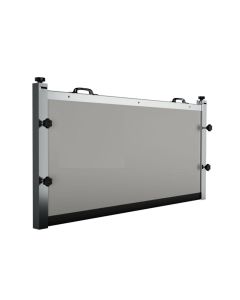
Aluminum flood barrier (W 60-120 cm x H 40 cm). DIY kit complete with "U" guides and sealing gaskets for quick assembly.
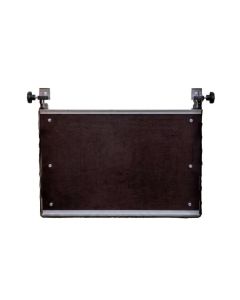
Removable flood protection barrier h729_63 (125x60 cm) in 15mm plywood and aluminum. Closed-cell gasket, installation in 5 minutes.
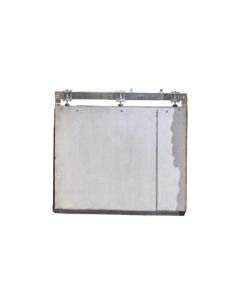
Modular flood barrier made of tubular elements (2mm thickness). Useful height 60 cm, adjustable width 75-120 cm. Installation in only 5 minutes.
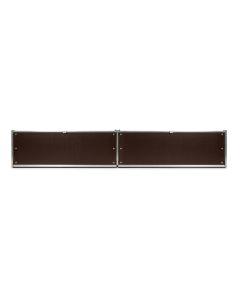
Adjustable flood barrier h729_64 (125-250x60 cm) in 15mm plywood and aluminum. Closed-cell gasket, 5-minute assembly.
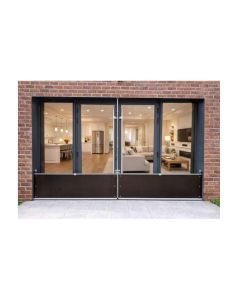
Adjustable flood barrier h729_65 (252-504x60 cm) in 15mm plywood and aluminum. Closed-cell gasket, assembly in 5 minutes.
Flood barriers represent a fundamental passive protection solution for the safeguarding of residential, commercial, and industrial structures exposed to the risk of floods, flash floods, and urban flooding. The installation of an effective flood barrier allows for the timely sealing of vulnerable access points such as doors, warehouse gates, shop windows, restaurant entrances, and offices, preventing water from penetrating the premises and causing significant structural damage or the loss of goods and machinery.
Designed with high-strength extruded aluminum profiles and equipped with special EPDM or industrial silicone seals, flood barriers offer a high hydraulic seal combined with marked ease of handling. The modularity of the components allows the system to be adapted to any opening width, ensuring extremely short installation times that are decisive in climate emergency situations.
The choice to install certified flood protections responds to the growing need for resilience in urban and extra-urban infrastructure, where the frequency of extreme weather events requires the adoption of highly reliable safety barriers compliant with technical directives for hydrostatic pressure resistance.
The adoption of flood barriers constitutes the most efficient and economical preventive strategy for securing commercial properties, offices, restaurants, and industrial complexes from floods and sudden storms. Unlike traditional and unhygienic sandbags, a modern flood barrier guarantees a constant airtight barrier over time, is infinitely reusable, and can be stored in extremely small spaces when not in use. The containment capacity for hydrostatic pressure is guaranteed by the coupling between the side guides physically anchored to the masonry and the horizontal aluminum slats, which compress the seals along the entire perimeter of the exposed wall.
This mechanical mechanism allows for the effective protection of high-value capital goods, paper archives, ground-floor electrical systems, and warehouse stocks, reducing business downtime to zero and eliminating economic losses resulting from the cleanup of premises invaded by mud and debris.
In addition to the purely physical protection of the premises, flood barriers offer significant added value in terms of risk management for businesses open to the public, such as shops, bars, and restaurants located at street level or below street level. In commercial environments, the use of quick-assembly barriers allows staff to secure the main access or loading/unloading bays in a few minutes, without requiring the intervention of specialized technicians during a weather alert.
The modular structure allows for the height of the protection to be adjusted based on the estimated flood level, ensuring high operational flexibility. The anodized aluminum used for the construction of the slats ensures excellent resistance to corrosion caused by atmospheric agents and wastewater or brackish water, guaranteeing the structural integrity of the device even after years of being stored in a warehouse.
The range of flood barriers includes different design configurations conceived to adapt to the geometric and structural characteristics of the opening to be protected. The most common solutions are modular quick-insert slat barriers, consisting of stackable horizontal modules that allow the desired protection height to be reached by sequentially inserting the elements into the side guides. For large openings, such as industrial warehouse gates, underground garages, or vehicle access points, flood barriers with removable intermediate support posts are used, capable of uniformly distributing the hydraulic load generated by large volumes of water, avoiding critical bending at the center of the system.
There are also models with manual compression or with a quick-clamping lever that do not require the use of specific tools for installation, making the operation suitable for any operator under high-stress management conditions.
In terms of fixing systems, barriers are mainly divided into reveal-mount solutions, positioned inside the jamb of the door or window opening, and face-mount solutions, anchored directly onto the external wall of the building. Reveal-mount variants are particularly appreciated in historic centers or architectural contexts subject to restrictions where shops and offices require minimal visual impact from the fixed guides when the barrier is removed.
Face-mount options are instead ideal for protecting openings with irregular framing, damaged plaster, or the presence of special window frames that would prevent the positioning of internal profiles. For commercial premises with large windows, integrated systems are used, equipped with shape-memory perimeter gaskets capable of compensating for small irregularities in the contact surfaces, maintaining the hydraulic seal capacity unchanged even under high water pressure.
Selecting the suitable flood barrier requires a careful preliminary assessment of various technical parameters related to the building and the history of hydrogeological events in the area. The first fundamental factor concerns measuring the maximum height reachable by water during local floods or sewage backups: the height of the barrier must exceed the maximum expected level by at least twenty centimeters to prevent overtopping caused by waves generated by passing vehicles on the road.
Secondly, it is necessary to verify the structural solidity of the wall support on which the fixed side guides will be bolted. Solid brick, concrete, or stone masonry offer optimal mechanical hold to counter the bending moment generated by the water, while for plasterboard walls or external thermal insulation systems, it is essential to provide reinforcement subframes or dedicated backing plates before installing the flood barriers.
Another decisive criterion is the ease of installation in sudden emergency situations. In high-frequency working environments such as restaurants, offices, or warehouses, it is advisable to prefer lightweight aluminum alloy barriers with integrated lever or eccentric locking mechanisms, which eliminate the risk of losing screws or tightening components during assembly phases.
A common mistake to avoid is neglecting the flatness of the bottom threshold: porphyry flooring, uneven stones, or irregularly grouted tiles can allow water leakage under the base gasket. To resolve this issue, it is appropriate to level the contact surface using a stainless steel profile embedded in the screed or the application of specific leveling resins, thus ensuring a perfectly flat and smooth contact surface for the optimal seal of the bottom profile of the barrier.
Passive flood protection devices must comply with precise technical requirements and be sized in accordance with current directives regarding construction safety and material resistance. Professional-grade flood barriers are designed and developed by performing mechanical resistance calculations for hydrostatic and hydrodynamic loads, ensuring that the elastic deformation of the modules under stress does not compromise the seal of the perimeter gaskets.
The constituent materials, particularly anodized or powder-coated aluminum alloys and AISI 304 or AISI 316 stainless steels used for hardware and anchor bolts, must guarantee full compliance with regulations on corrosion resistance in humid and aggressive environments.
Regarding commercial and industrial environments and workplaces in general, the presence of flood barriers is integrated into the company’s risk assessment and business continuity plans. The installation of fixed guides must never negatively interfere with the clear width of escape routes or emergency exits required by fire safety and occupational safety regulations.
Hydraulic sealing systems intended for public establishments must also use gaskets made of elastomeric compounds free of toxic substances or harmful releases, resistant to prolonged contact with hydrocarbons, oils, and urban wastewater. Periodical maintenance of the elastic components represents an essential requirement for preserving certified performance over time, including constant cleaning of the fixed tracks and the application of neutral silicone lubricants before seasonal storage.
Explore all the products in the category and compare available solutions to find the one best suited to your operational context.
A reveal-mount barrier is installed within the thickness of the door or window opening, keeping the guides between the two jambs. The face-mount version is instead fixed to the external wall of the building, covering the entire opening from the front and being ideal when the internal jambs are irregular or occupied by window frames.
The ideal height is determined by analyzing the history of water levels reached in the area during previous floods, adding a safety margin of about twenty centimeters. This extra height prevents overtopping caused by waves generated by passing vehicles or wind on the flooded surfaces near the entrance.
Modern quick-connect barriers require very few minutes for complete installation. Once the side guides are permanently fixed to the building, inserting the aluminum slats and tightening the upper pressure mechanisms usually takes between two and five minutes per operator, without the need for complex tools.
Maintenance is minimal but essential to ensure the hydraulic seal. It is necessary to keep the side guide tracks clean of soil and debris, periodically check that the EPDM gaskets remain soft and crack-free, and store the aluminum modules in a dry place, applying protective silicone spray to the rubber profiles.
Yes, it is absolutely possible to install barriers even in the presence of external thermal insulation. In these cases, extended structural chemical anchors or stainless steel spacer subframes are used, which transfer the hydrostatic pressure directly to the underlying load-bearing masonry, preserving the integrity and insulation of the external facade of the building.
Yes, flood barriers made of aluminum profiles are calculated to resist both the hydrostatic pressure of still water and the hydrodynamic load caused by waves and sudden stresses. The perimeter gaskets with high elastic deformability absorb the impact of the water while maintaining adhesion to the contact surfaces and preventing infiltration.
 English
  Italian
 French
 German
 Spanish