Durability and resistance to frequent use
Unlike a domestic hair dryer, a hair dryer intended for a hospitality facility may be used by numerous people throughout the year. This requires components designed to withstand intense and continuous use.
Quality materials, reliable motors and robust construction systems help reduce breakdowns and replacements. A durable product represents a more advantageous investment over time, as it helps to contain maintenance and management costs.
Energy consumption and sustainability
The growing attention towards energy efficiency also involves hospitality facilities. A hairdryer used daily in dozens or hundreds of rooms can impact the building's overall energy consumption. For this reason, it is advisable to evaluate models that combine good performance and efficient energy use.
The most modern solutions allow for optimizing the ratio between power and consumption, contributing to the structure's sustainability objectives without compromising guest comfort.
Design and integration with bathroom furnishings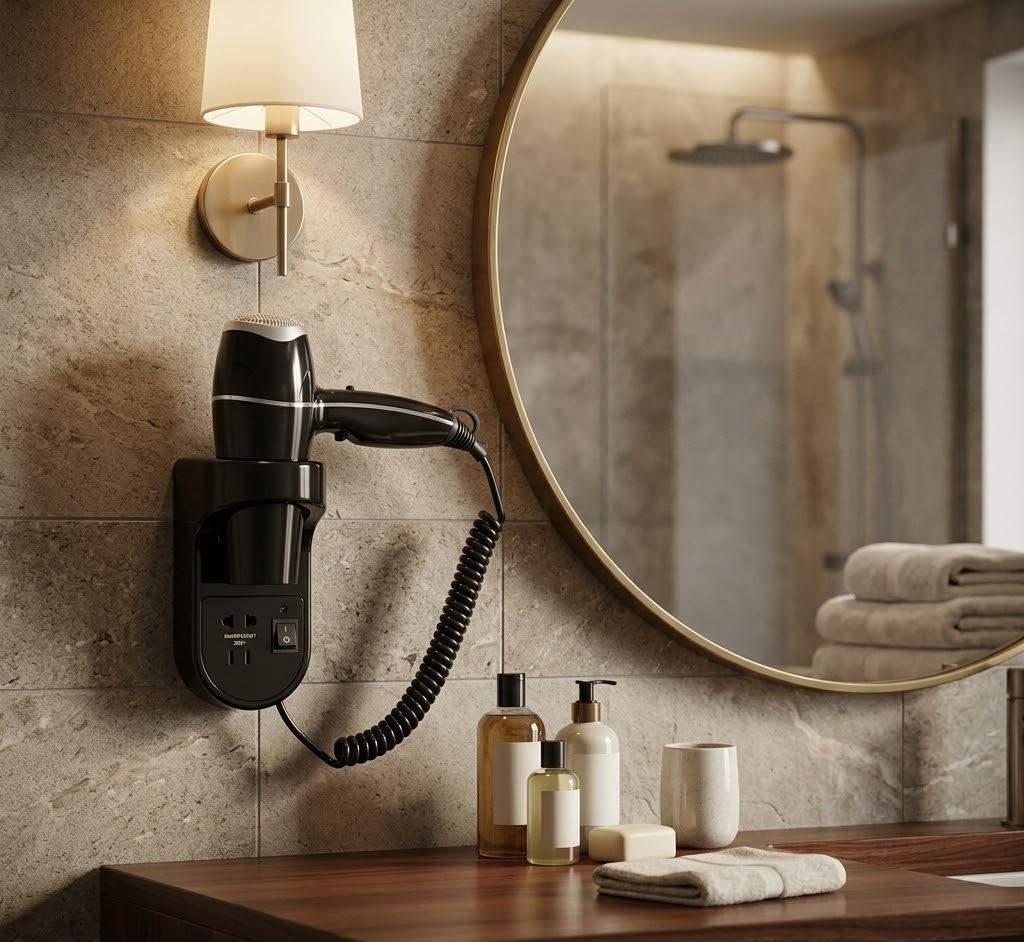
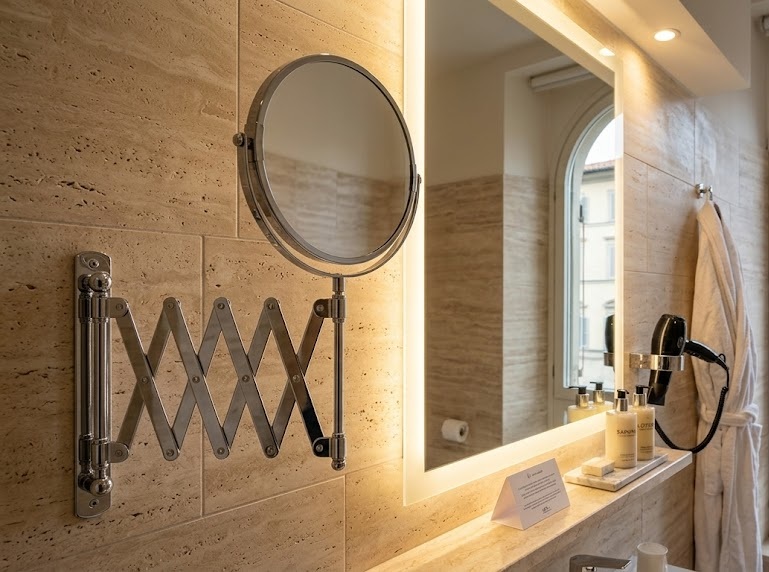
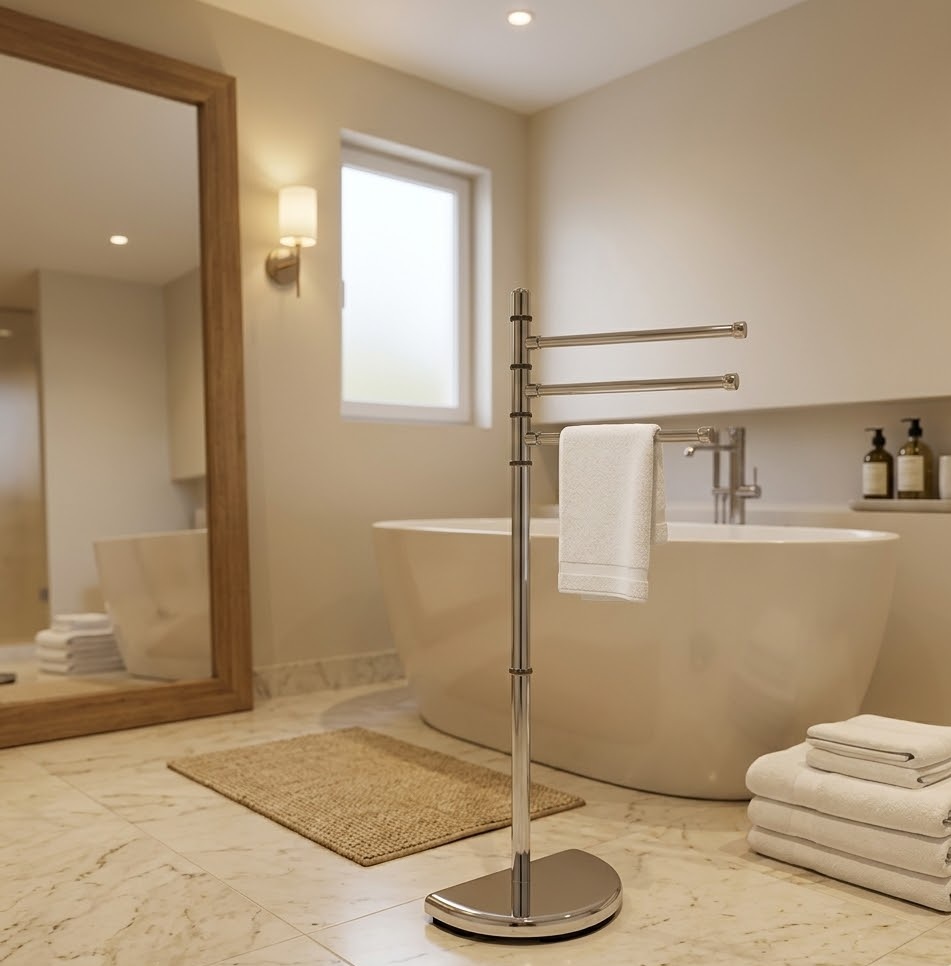
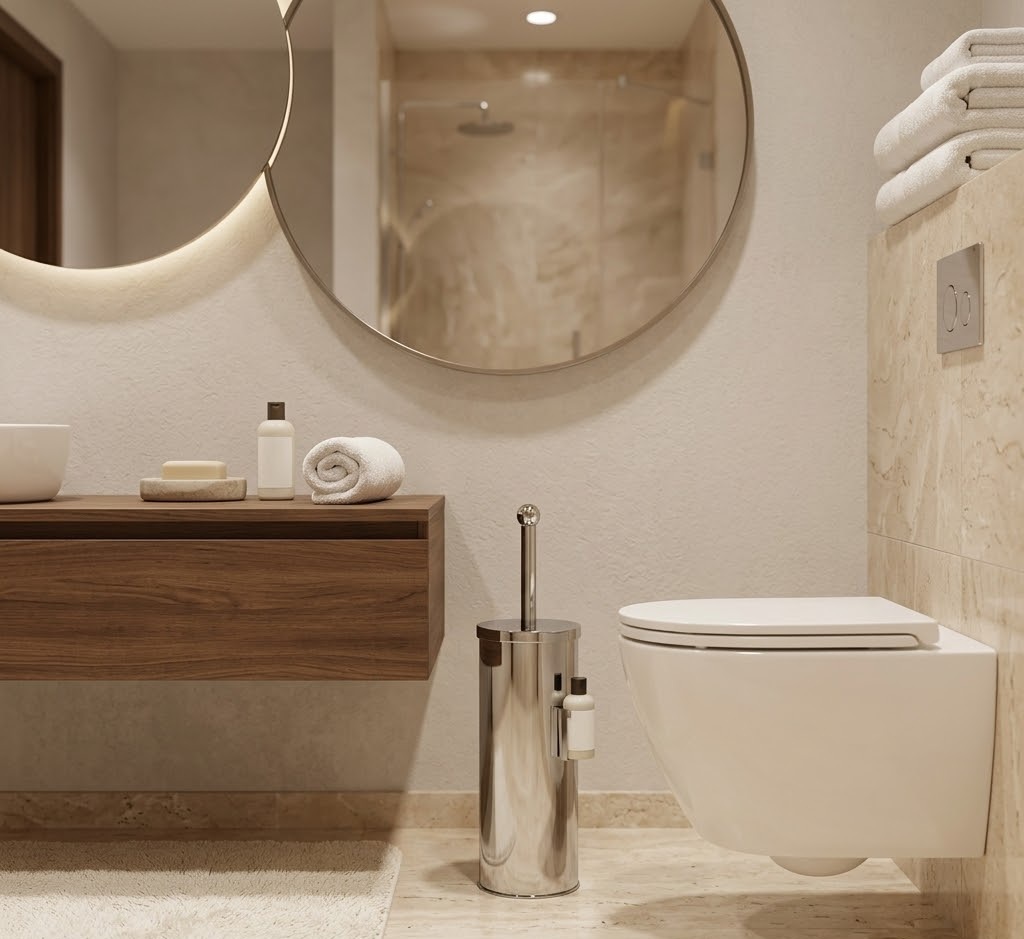
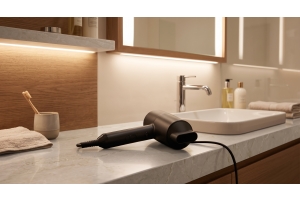
In addition to the technical aspects, design also plays an important role. A hairdryer that is well integrated into the furnishings helps create an orderly environment that is consistent with the style of the structure. In the most refined contexts, every detail contributes to the overall perception of the quality of the stay.
Structures can choose between models with a modern, minimalist, or classic design, selecting finishes and colors in line with the bathroom and bedroom furnishing project.
How to choose the best hairdryer for your property
The choice of the ideal hairdryer depends on the type of property, the number of rooms, the frequency of use and the level of service you wish to offer your guests. A small B&B will have different needs than a hotel with hundreds of rooms or an international resort.
Carefully evaluating power, safety, duration, consumption and installation methods allows you to identify the solution best suited to your needs. In this way it is possible to guarantee efficient service and improve the overall guest experience.
A detail that contributes to the quality of the stay
The hotel hairdryer is much more than a simple bathroom accessory. Its presence and quality influence the daily comfort of guests and contribute to the professional image of the accommodation facility.
Choosing a model designed for professional use means investing in reliability, safety, and durability. A careful evaluation of the technical characteristics allows hotels, B&Bs, and residences to offer a more complete service and effectively respond to the expectations of modern customers.
 English
  Italian
 French
 German
 Spanish
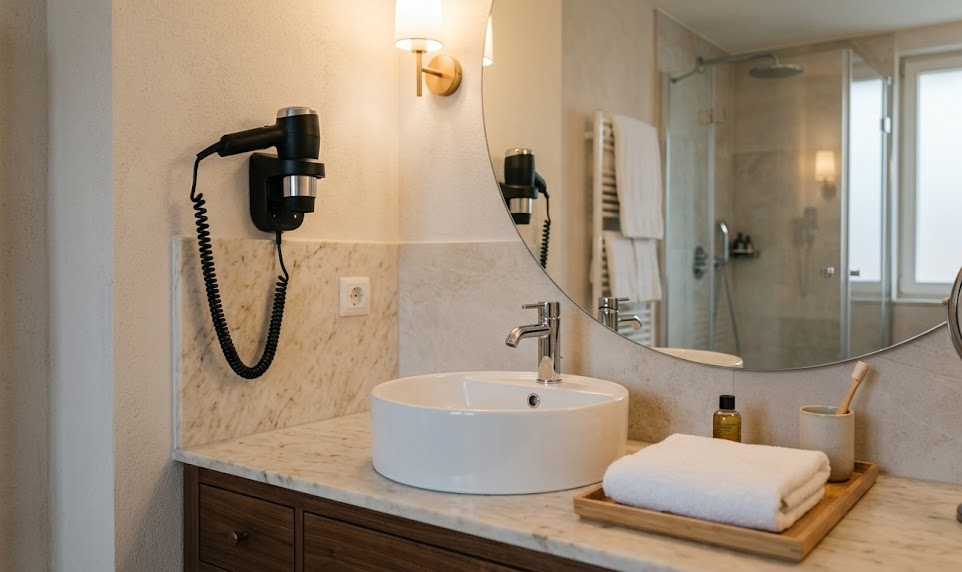
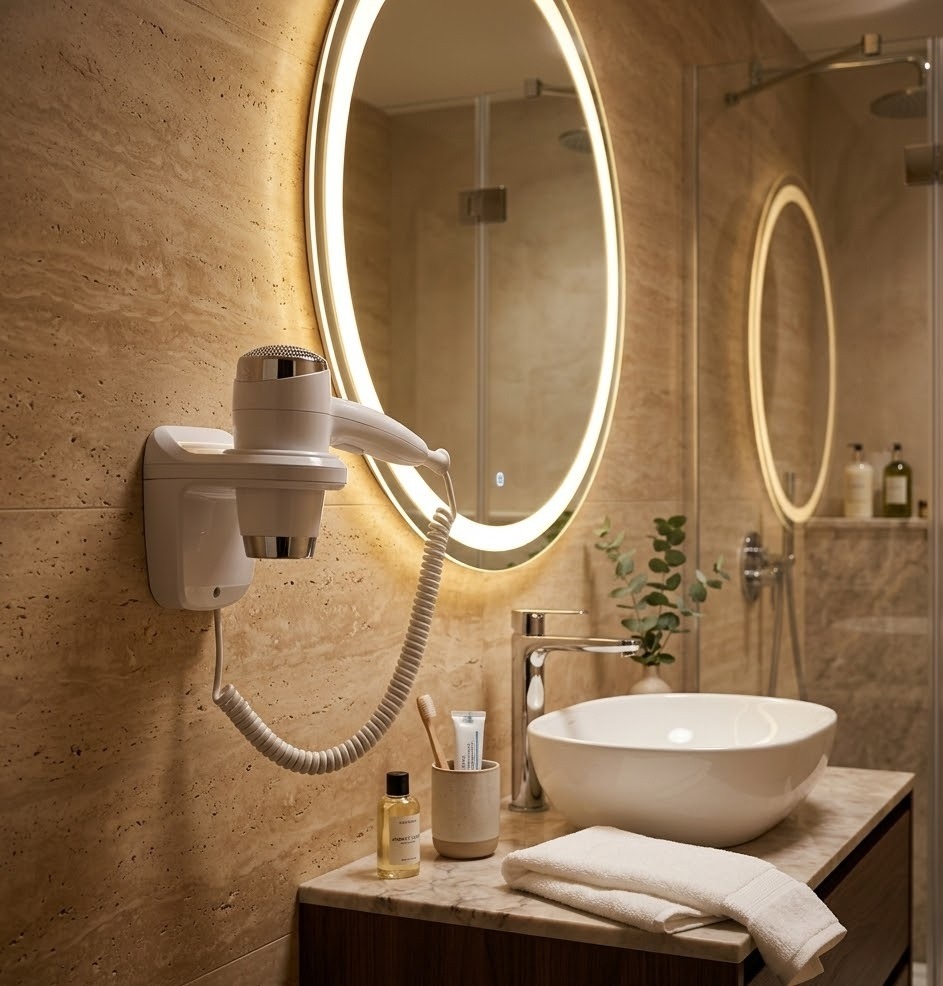 Guests expect to find a series of essential amenities in their room or bathroom that simplify their stay. Among these, the hairdryer plays a central role because it is used daily by a significant portion of customers. The absence of a hairdryer or the presence of a poorly performing model can negatively impact the overall experience.