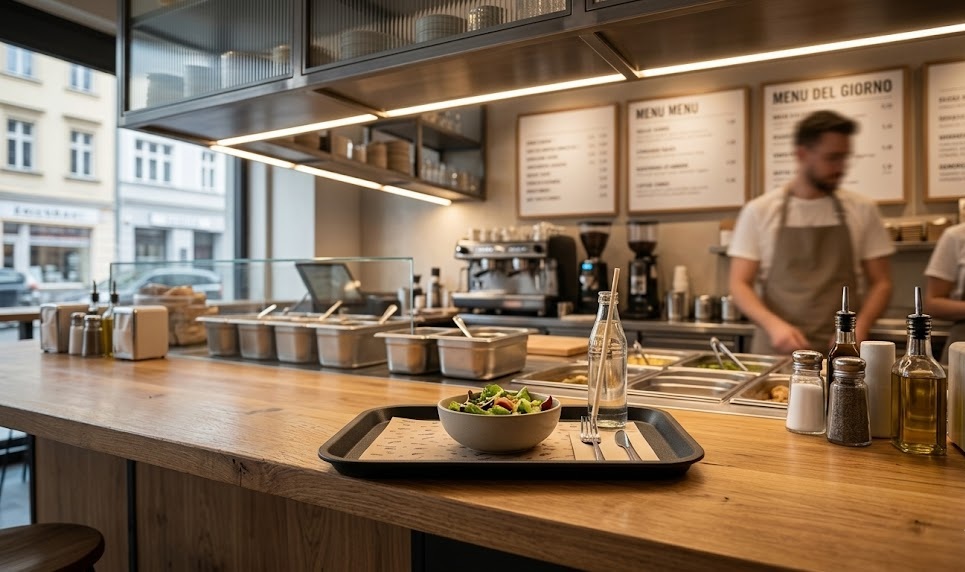
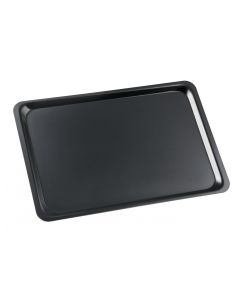
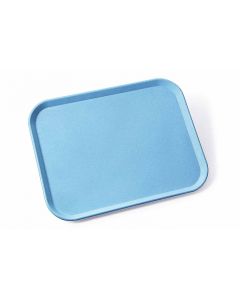
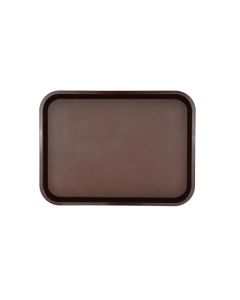
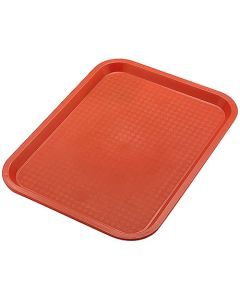
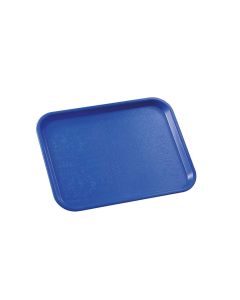
In the fast food sector, every element contributes to the efficiency of the service. Among these, the fast food trays play a fundamental role because they accompany the customer throughout the consumption experience and influence the speed of distribution, collection and cleaning operations. The choice of the most suitable tray is not only about aesthetics, but also involves practical, organizational and functional aspects that directly impact the daily management of the business.
Fast food restaurants, diners, company canteens, refreshment points and self-service businesses must manage high customer flows in short times. In these contexts it is essential to use trays designed to withstand intensive use, simplify the transport of meals and ensure rapid and efficient service. Correctly evaluating materials, dimensions and technical characteristics allows you to improve work organization and user satisfaction.
Why? Trays are important in fast food restaurants
In a fast food restaurant or a cafeteria, the tray represents much more than a simple support for transporting food. This tool helps organize the service, facilitates the movement of customers along the distribution route and allows for the management of multiple products at the same time in an orderly manner.
An adequate tray reduces the risk of accidental falls, improves the customer experience and speeds up collection and cleaning operations. For this reason, the choice of product should be made by carefully considering the operational needs of the business and the average volume of users served each day.
Resistance and durability for intensive use
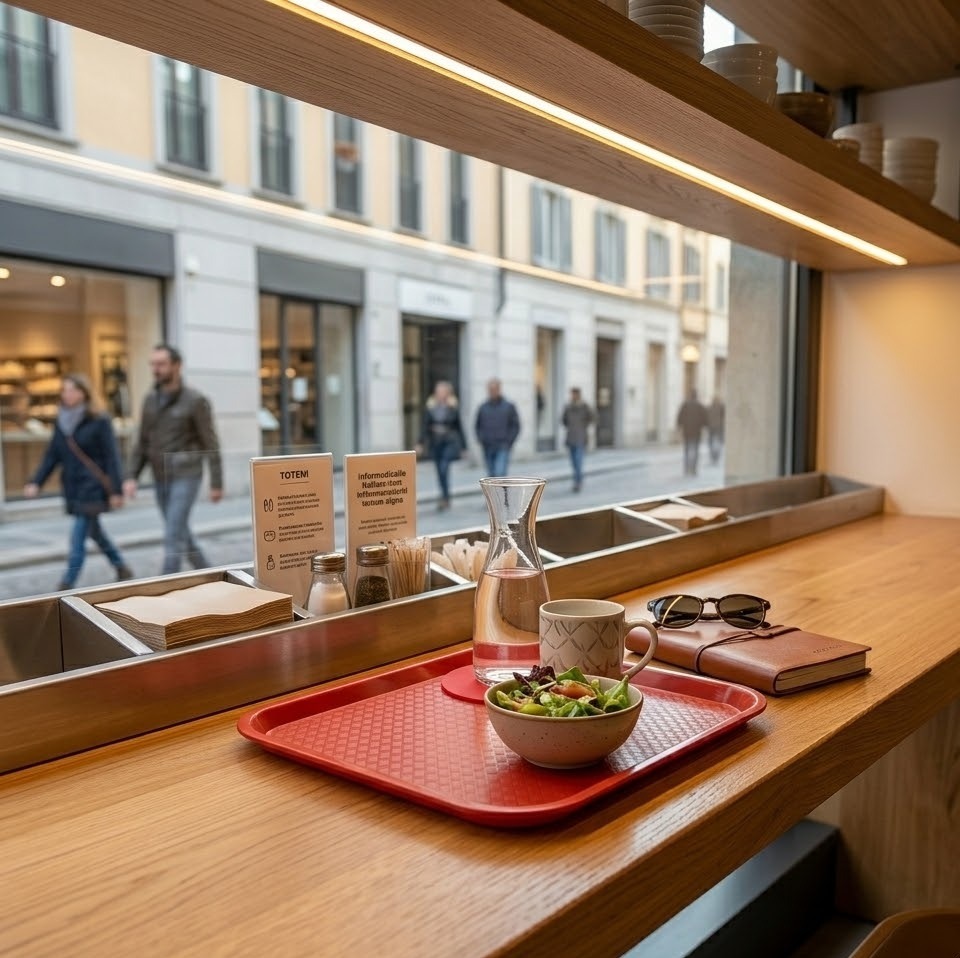
One of the main requirements of fast food trays is the ability to withstand continuous and repeated use. In high-traffic contexts, in fact, trays are used hundreds of times every day and must maintain their characteristics unchanged over time.
Robust materials and structures designed to withstand impacts, drops, and frequent washing help reduce replacement costs and ensure greater operational continuity. Longer life also translates into more efficient supply management and a better return on investment.
Materials suitable for professional catering
Professional trays can be made of different materials, each with specific characteristics. Among the most common solutions are polypropylene, polycarbonate, melamine, and other plastic materials designed for contact with food and for professional use.
The choice depends on the type of activity and frequency of use. Some materials favor lightness, others resistance to impacts or high temperatures. In any case, it is important to opt for products certified for food use and designed to withstand professional washing cycles.
Non-slip surfaces for greater safety
During service, customers often carry drinks, plates and containers at the same time. For this reason, many operators choose professional non-slip trays, designed to improve the stability of objects during movement.
Non-slip surfaces reduce the risk of accidental spills and help make the user experience safer. This feature is particularly useful in businesses characterised by high customer volumes and frequent movements within the room.
Size and capacity based on the service
The size of the tray must be proportionate to the type of menu and the number of items normally served. A fast food restaurant that offers sandwiches, drinks and side dishes will have different needs than a diner that distributes complete meals with multiple courses.
The standard sizes used in professional catering allow you to optimise the transport of meals and ensure compatibility with trolleys, shelves and washing systems. Correctly choosing the right dimensions improves flow management and user comfort.
Ease of cleaning and hygiene
Hygiene is an essential aspect in professional catering. Trays must be designed to be easy to clean and to withstand frequent washing without deteriorating or losing their functional characteristics.
Smooth surfaces, materials resistant to professional detergents and compatibility with industrial dishwashers allow you to simplify daily operations and maintain high hygiene standards. This aspect is particularly important in businesses with high customer turnover.
Stackability and space management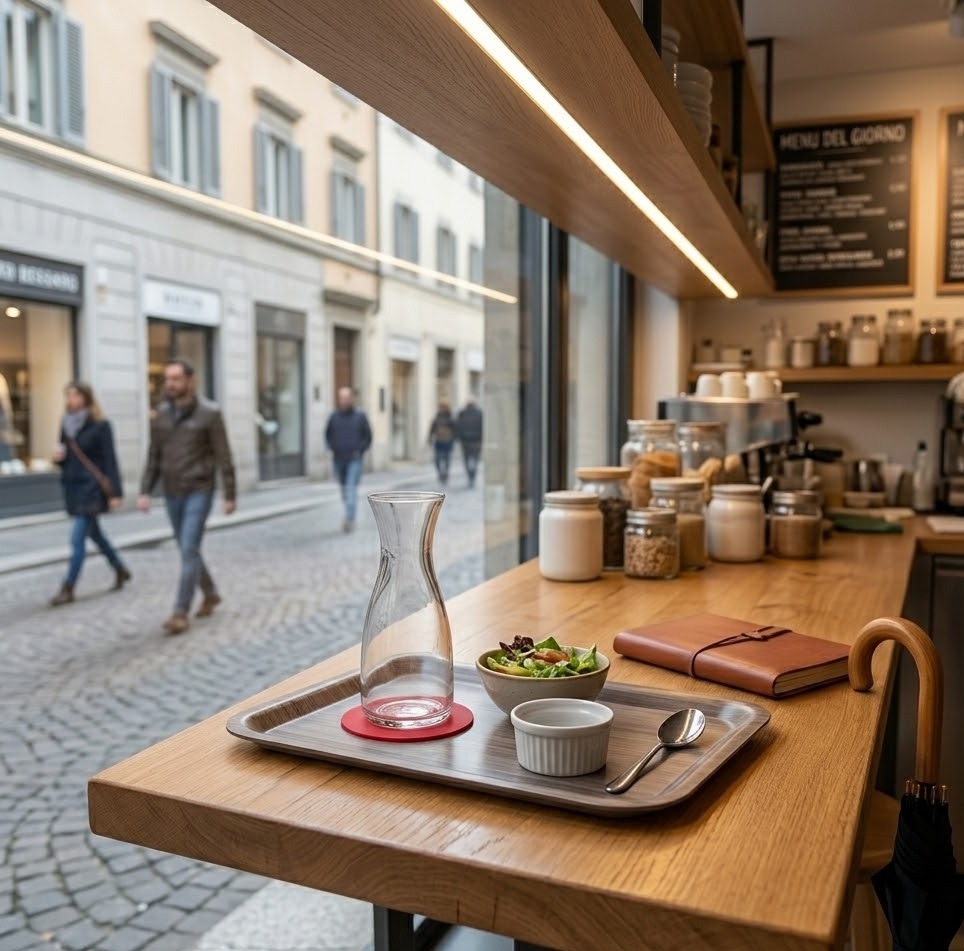
Fast food restaurants and snack bars often have to optimise every available space. For this reason it is essential to ensure that the space available is always accessible. It is useful to choose trays that are easily stackable and take up little space during storage and handling.
Stackability also makes the work of staff easier during collection, washing, and tidying. Correct space management helps improve operational efficiency and keep service areas tidier.
Design and image of the premises
Although functionality remains the main criterion, the design of the tray can contribute to the overall image of the business. Colors, finishes, and shapes can be chosen consistently with the concept of the premises and the brand identity.
Some businesses also opt for customized trays that strengthen brand recognition and improve the customer experience. In these cases, the tray becomes an integral part of the visual communication of the premises.
How to identify the most suitable tray suitable for your business
The choice of the ideal product depends on several factors: number of customers served, type of menu, method of meal distribution and frequency of use. A careful analysis of the operational needs allows you to identify the most suitable model and optimize the organization of the service.
Evaluating materials, resistance, anti-slip characteristics, dimensions and ease of cleaning allows you to select trays capable of guaranteeing reliable performance over time and effectively supporting the daily work of the staff.
Efficiency and practicality at the service of fast food restaurants
The fast food trays represent an indispensable tool for ensuring speed, order and safety in fast food restaurants. The choice of products designed for professional use allows you to improve the customer experience and make the operational management of the establishment more efficient.
 English
  Italian
 French
 German
 Spanish