The choice of a water storage tank requires evaluating several technical aspects, starting with the material it is made of. Available solutions include polyethylene and galvanized steel containers, used in agricultural, commercial, industrial, and professional settings. Both can meet water storage needs, but have different characteristics in terms of weight, mechanical resistance, corrosion protection, maintenance, and initial investment. polyethylene water tank It is often chosen for its lightness and practicality, while galvanized steel represents an alternative for applications that require specific structural characteristics.
However, there is no single best material, as the choice depends on the intended use and installation conditions. A container intended for irrigation may have different requirements than a storage system for production activities or a professional system. The required capacity, exposure to atmospheric agents, water composition, and maintenance also influence the evaluation. Comparing polyethylene and galvanized steel means considering the performance of the materials under actual conditions of use., avoiding relying solely on the purchase price.
Why material is important when choosing a water tank
The material It determines some of the main characteristics of a tank, influencing its weight, structural rigidity, and resistance to environmental conditions. A container intended to remain outdoors must be assessed for exposure to sunlight, temperature variations, and atmospheric agents. When placed in a technical room, space, ease of handling, and compatibility with the system may become more important. The choice of material must be linked to the actual installation conditions, because performance can change significantly depending on the environment.
The characteristics of the water to be stored must also be considered. Whether it's potable or non-potable, its pH, chemical composition, and any treatments can affect the container's suitability. In the case of galvanized steel, these factors are particularly important because they affect the behavior of the protective coating. A properly selected tank must be compatible with both the liquid contained and the operating conditions of the system..
Polyethylene water tank: features and advantages
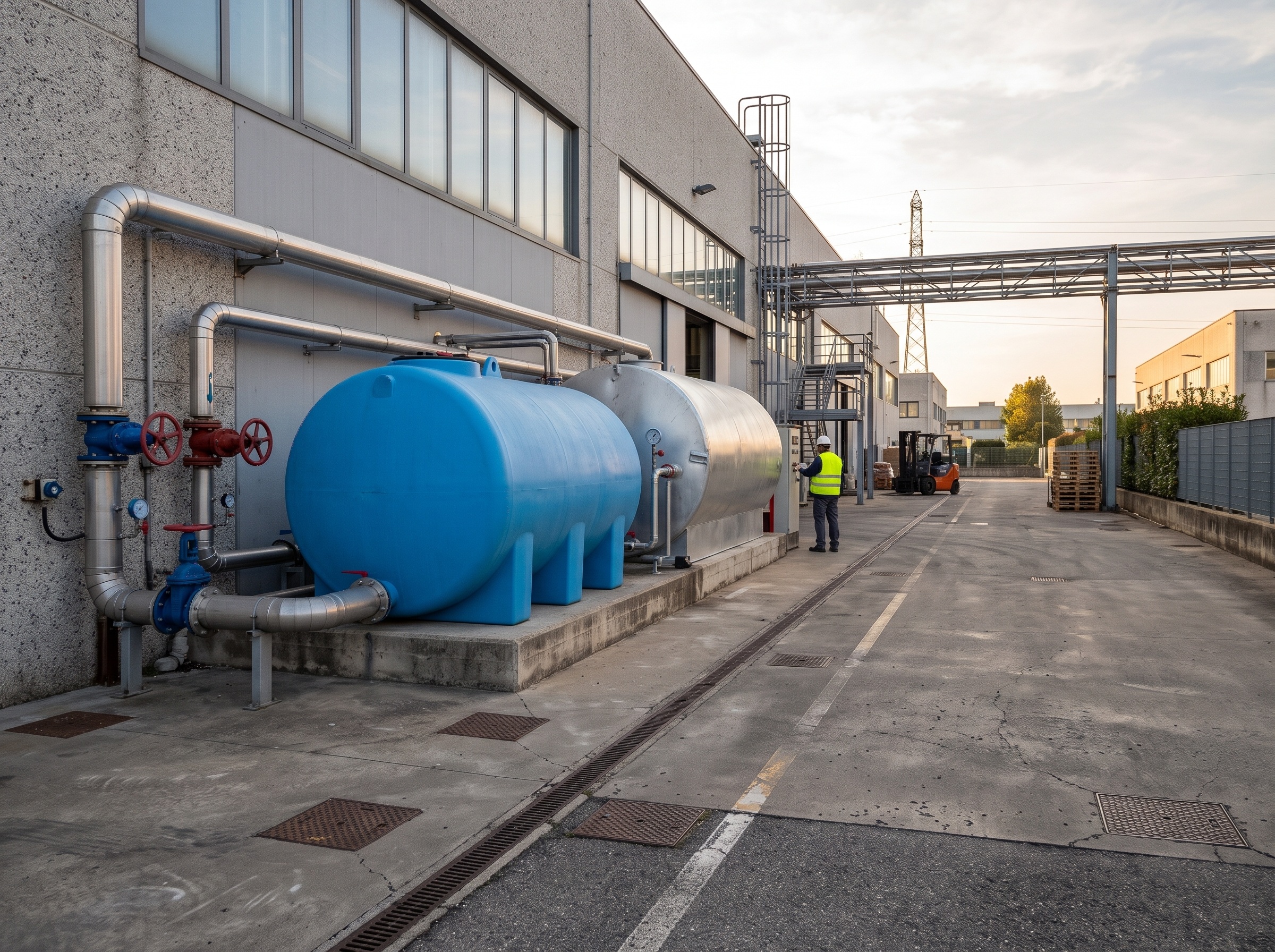
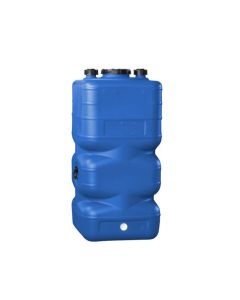
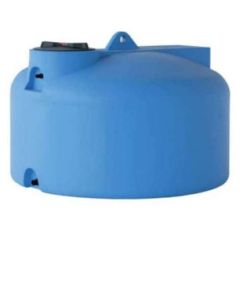
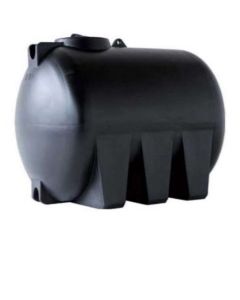
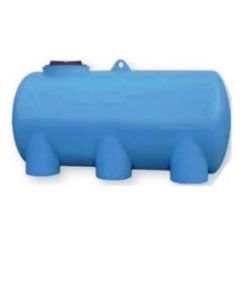
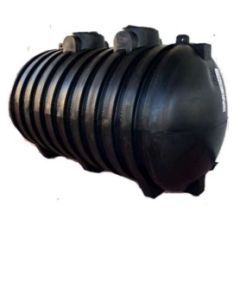
 The polyethylene water tank It's a solution used for water storage thanks to the material's lightness and versatility. Polyethylene allows for the creation of containers with different shapes and capacities, suitable for numerous installation configurations. Compared to a metal tank with comparable characteristics, the empty weight can be significantly lower, facilitating transport and positioning. This feature is advantageous when the container must be moved in spaces with limited access or placed in areas where logistics management is a key factor.
Another advantage is its resistance to electrochemical corrosion: polyethylene does not rust and does not require a protective metal coating. This does not mean, however, that it is immune to deterioration. Exposure to ultraviolet rays, high temperatures, and mechanical stress can affect its performance over time. For a polyethylene tank intended for outdoor use, it is important to check the UV resistance declared by the manufacturer., in addition to the permitted conditions of use and the compatibility with the water to be contained.
Galvanized steel tanks: features and advantages
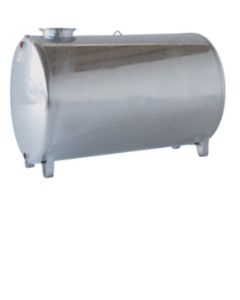
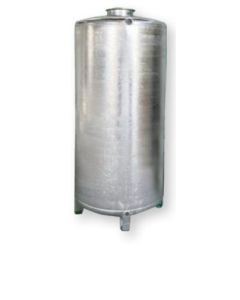
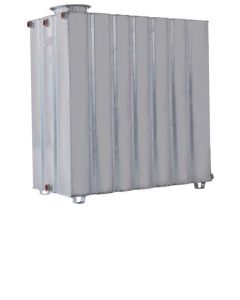
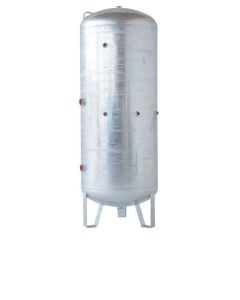
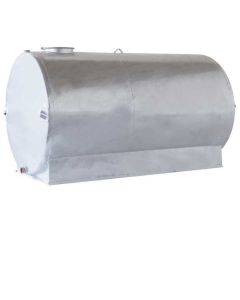
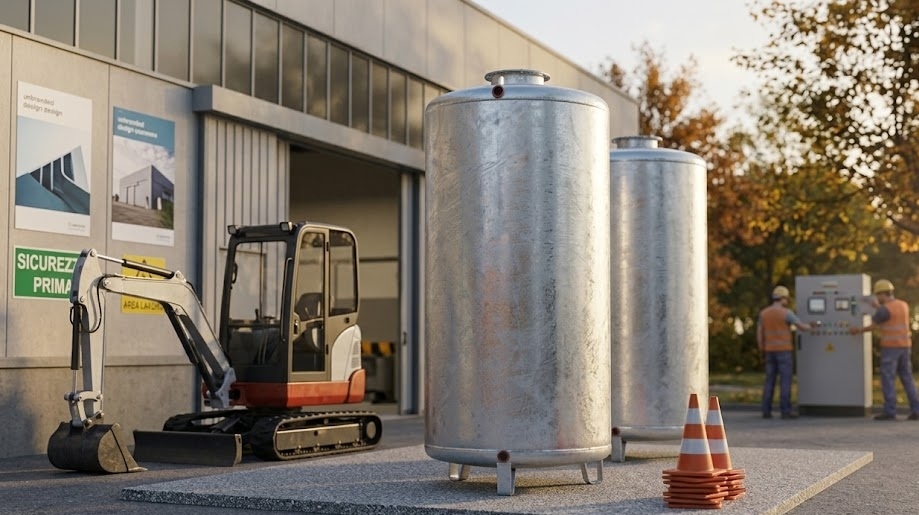
THE galvanized steel tanks for water They are made with a steel structure protected by a zinc coating, applied to limit corrosion. The galvanization provides a protective layer that separates the underlying metal from the environment and, under certain conditions, also offers electrochemical protection. Performance depends on the galvanization process, the thickness and continuity of the coating, the construction quality, and the characteristics of the water.
One of the main advantages of galvanized steel is the ability to create tanks with specific rigidity and mechanical resistance characteristics. This material can be useful for professional installations and storage systems that require robust structures. However, it's important to distinguish galvanized steel from stainless steel: The corrosion resistance of galvanized steel depends mainly on the effectiveness and preservation of the protective zinc layer.. When this coating deteriorates or wears away, the underlying metal can become more susceptible to rust formation.
Polyethylene vs. galvanized steel: the main differences
The most obvious difference between the two materials concerns the relationship between weight and structural behavior. Polyethylene allows for relatively lightweight tanks, while galvanized steel offers greater material rigidity and can be used in constructions with specific mechanical requirements. The performance of the finished product, however, depends on the geometry, thickness, and design of the container.
Their corrosion behavior also differs. Polyethylene is not subject to rust, while galvanized steel relies on a protective zinc coating. This can gradually wear away depending on the environment and the characteristics of the water. Economically, polyethylene tanks offer a low initial investment in many applications, while the cost of galvanized solutions depends on the structure, manufacturing process, and any additional protection. The choice must therefore consider weight, resistance, exposure to corrosion and management costs, comparing products with equivalent capacities and intended uses.
Mechanical resistance and behavior in different environmental conditions
There mechanical resistance This is an important criterion when the tank is installed in environments subject to shock, movement, or particular stresses. Polyethylene is relatively flexible and can deform under load depending on its geometry, temperature, and construction characteristics. Galvanized steel generally offers greater rigidity, but overall resistance depends on the thickness, reinforcements, joints, and structure of the container. The ability to withstand stresses must be verified on the finished product, without deducing it exclusively from the material.
Environmental conditions further influence the choice. A polyethylene tank exposed to the sun must be specifically designed for UV rays, while a galvanized steel container must be evaluated for humidity, water composition, and any aggressive environments. The zinc coating can deteriorate more rapidly in certain chemical conditions, including particularly aggressive water. Resistance to external agents depends on the compatibility between material, environment and characteristics of the tank.
Hygiene and compatibility with drinking water
 When the reservoir If the container is intended to contain water for human consumption, the choice of material requires specific assessments. Not all polyethylene containers are automatically suitable for contact with drinking water, and the same principle applies to galvanized steel containers. Suitability must be demonstrated by the product documentation and compliance with the provisions applicable to materials and objects intended for contact with water for human consumption. The name of the material does not, in itself, constitute a guarantee of suitability for potable use..
For galvanized steel, it's also important to consider the coating's compatibility with the water composition. Under certain conditions, corrosion of the galvanizing can promote the release of zinc and other substances that may be present in the coating. Some metal tanks may be equipped with specific internal linings or membranes, the suitability of which must be verified based on the intended use. For the storage of drinking water it is essential to check the conformity of the entire system, including internal surfaces, fittings, gaskets and accessories in contact with water.
Cleaning and maintenance of polyethylene and galvanized steel tanks
The ease of cleaning This is an important criterion when choosing a tank, especially when periodic checks and maintenance are planned. For polyethylene models, it's helpful to evaluate the presence of inspection openings, the internal structure, and the accessibility of surfaces. The detergents used must be compatible with the material and the container's intended use. An easily inspectable polyethylene tank can facilitate maintenance activities, provided that the manufacturer's instructions are followed.
Cleaning galvanized steel tanks must be performed without abrasive treatments or chemicals that could damage the protective coating. It is important to periodically check for scratches, oxidized areas, or surface alterations. For tanks with internal coatings, these components must also be inspected according to the applicable instructions. Maintenance of galvanized steel must help preserve the integrity of the corrosion protection, because a significant part of the container's lifespan depends on it.
Installation, weight and handling
The weight of the empty tank can affect the operation of transport and installation. A polyethylene water tank It generally has a lighter structure than a galvanized steel solution with comparable capacity and features. This advantage can simplify some handling operations, especially when the container must be placed in difficult-to-access spaces. However, it is important to check the dimensions, lifting methods, and the characteristics of the support surface.
THE galvanized steel tanks They may require different handling and positioning procedures, depending on their weight and structural configuration. Once the container is filled, the weight of the water represents a significant portion of the overall load in both cases. For this reason, the support surface must be adequate for the expected capacity. The lightness of the empty tank should not be confused with the weight of the full system, especially when installation takes place on floors or elevated structures.
The choice between polyethylene and galvanized steel tanks depends on the conditions of use: resistance, durability and maintenance requirements are determining factors for efficient and long-lasting water storage.
Capacity, shape and available space
There capacity The size of the tank must be defined based on the quantity of water to be stored and the intended use. Polyethylene containers are available in various configurations, including vertical, horizontal, and compact solutions. Galvanized steel tanks can also have different geometries, including cylindrical structures or modular systems, depending on the design and manufacturer. The shape must be chosen considering the available space and the installation conditions, without assuming that one configuration is always more convenient than another.
In addition to the dimensions of the main body, the overall dimensions of covers, fittings, valves, and accessories must be checked. The space required for inspection and maintenance must also be considered. In large metal tanks, accessibility of joints and any internal linings may be particularly important. The nominal capacity must be compared with the actual dimensions and the required operating space, thus avoiding installations that are difficult to manage over time.
Above-ground and underground tanks: what features to check
 The distinction between above-ground and underground installation is crucial when choosing a tank. Containers intended for surface installation must be evaluated with respect to environmental exposure, stability, and the characteristics of the supporting surface. Underground tanks, on the other hand, must be specifically designed to withstand the stresses exerted by the ground and any groundwater conditions. An above-ground tank does not have to be buried just because it is made of polyethylene or galvanized steel.
For underground installation, it's important to follow the guidelines regarding excavation, subgrade, backfill, and load conditions. For galvanized steel, contact with soil and moisture may require specific anti-corrosion protection systems and dedicated design. For polyethylene, it's also essential to verify that the model is certified suitable for underground installation. The installation destination must be expressly provided by the manufacturer, because it cannot be deduced from capacity or material alone.
Which material to choose for irrigation, storage and professional uses
For the accumulation of water intended for irrigation, the polyethylene It can be an attractive solution thanks to its lightweight design, availability of various capacities, and lack of rust. However, it is necessary to verify its suitability for outdoor installation and compatibility with water characteristics. For storage systems intended for buildings and commercial premises, the choice must also consider frequency of use, environmental conditions, and available space.
THE galvanized steel tanks They can be considered for agricultural, industrial, and professional applications requiring specific structural characteristics or storage configurations. The choice must, however, take into account the compatibility between galvanization and the contained water, as well as any internal protection required. For the storage of water intended for human consumption, both materials can only be considered if the product is declared suitable for the intended use. The most suitable solution depends on the specific application and the technical characteristics of the individual tank..
How to find the best tank for your needs
To choose between a polyethylene water tank and one galvanized steel solution It's helpful to start with some concrete information: water destination, required capacity, installation location, and operating conditions. You can then compare weight, dimensions, mechanical resistance, material characteristics, and maintenance requirements. Holity, specialist in professional supplies and equipment, represents a reference for those who wish to evaluate water storage solutions with different characteristics, identifying products consistent with the system's needs.
For an irrigation system or above-ground storage system, polyethylene can offer advantages in terms of lightness and practicality, when the model is suitable for the intended conditions. Galvanized steel, on the other hand, can meet different needs, especially when specific structural characteristics and corrosion protection compatible with the environment are required. On Holity it is possible to orient the choice towards water storage solutions suitable for different professional applicationsThe most effective choice is the one that combines suitable materials, correct installation, and sustainable management costs over time.
 English
 Italian
 French
 German
 Spanish