The choice of the hotel room linen It simultaneously impacts the housekeeping department's organization, the room's presentation, and the guest's perception of comfort. As the fall-winter season approaches, sheets, duvet covers, bedspreads, and comforters must be evaluated considering temperatures, washing frequency, and how the room is cleaned each day. Therefore, it's not enough to rely solely on the fabric's appearance. The technical characteristics must be compatible with continuous professional use.
A hospitality facility manages different needs than a home environment. Linens are used, collected, washed, and rearranged very frequently, while the bed must maintain a tidy and uniform appearance every time. Even small details, such as an incorrect size or easily creased fabric, can impact turnaround times. The most appropriate choice therefore begins with a balance betweenperceived quality, resistance, washability and operational practicality.
Bed linen as part of the in-room experience
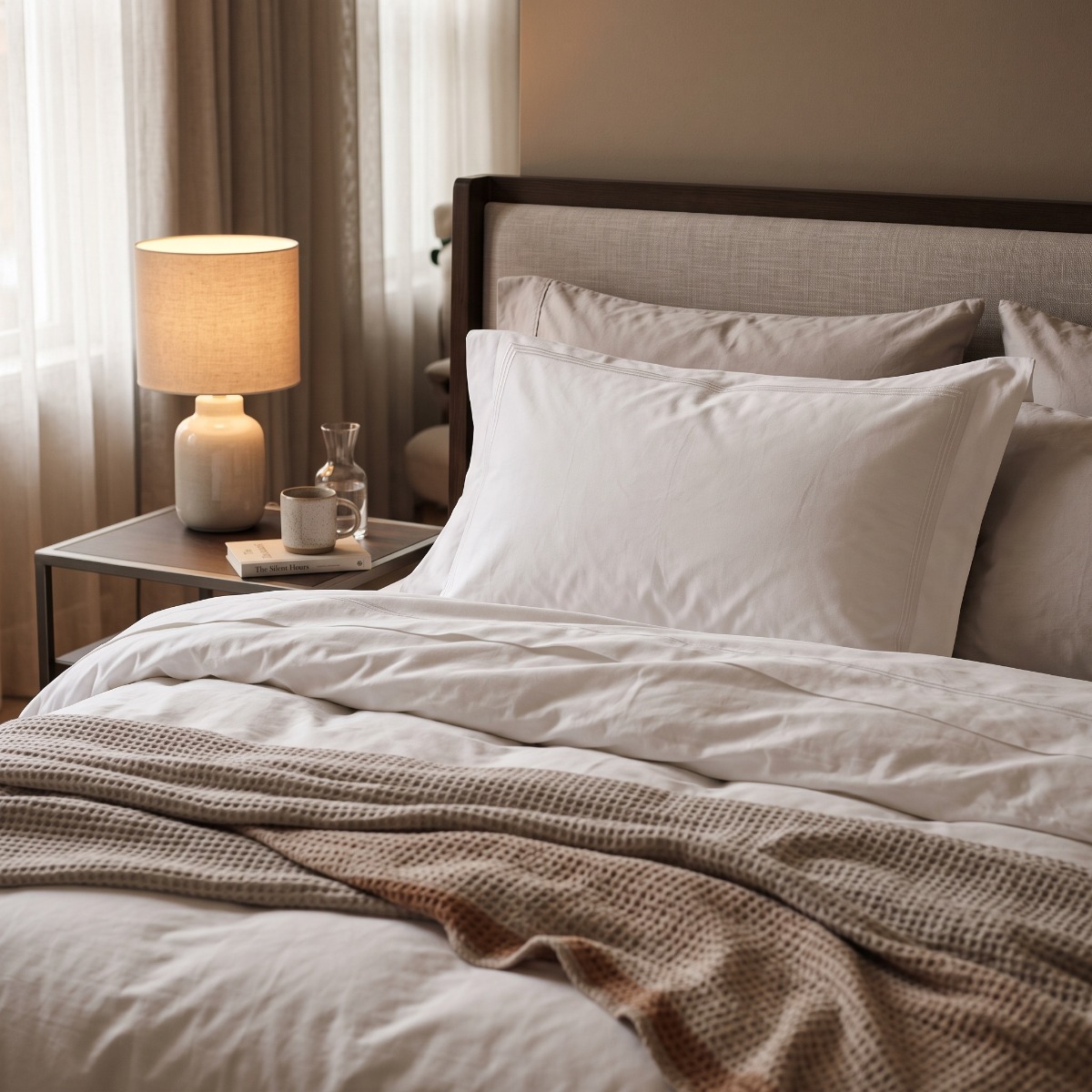
The bed is one of the most visible elements when a guest enters the room and immediately contributes to the overall impression of the space. Tightly draped sheets, matching textiles, and surfaces free of obvious signs of wear convey order and attention. This result depends not only on the staff's work, but also on the choice of products suitable for hotel use. Fabrics that are too delicate or difficult to handle can make it more difficult to maintain a consistent standard.
There linen It should also be consistent with the property's category and the type of stay offered. A business hotel may favor understated and easy-to-renovate solutions, while a leisure-oriented establishment may place greater emphasis on softness and decorative elements. In both cases, however, the basic requirement remains a consistent result. Comfort and presentation must be replicable room after room without unnecessarily increasing operating times.
How to choose sheets for professional hotel use
The sheet They represent the first layer in direct contact with the guest and must therefore combine comfort, durability, and ease of maintenance. When evaluating the bed, it's important to consider its composition, fabric texture, stitching quality, and washing behavior. A pleasant-to-the-touch surface is important, but it must remain so after numerous use cycles. Dimensional stability also helps avoid difficulties when making the bed.
In a professional setting, the ease with which staff can distinguish, fold, and store different sizes is also important. Standardizing measurements as much as possible can reduce errors and search times when tidying rooms. For single, double, or convertible beds, it's still necessary to provide assortments consistent with the actual types present. Good organization therefore begins with a precise inventory of beds and their respective dimensions.
Hotel duvets: Evaluating warmth, weight, and comfort
The down filled comforter Intended for the cold season, it must offer a level of insulation adequate for the room's conditions without being excessively heavy. The sensation of warmth depends not only on the season, but also on the building's climate control, geographic location, and structural characteristics. In rooms maintained at constant temperatures, intermediate padding may suffice. In colder environments, however, it may be necessary to opt for solutions with greater thermal capacity.
Perceived weight should also be carefully considered, as guests may have different preferences. A very bulky duvet doesn't necessarily mean greater comfort, especially if it makes the bed difficult to manage during the night. It's also helpful to consider filling distribution, stitching, and the ability to maintain even coverage. Holity, specialist in professional supplies for hotels and accommodation facilities, offers textile solutions designed to combine ease of management and room comfort.
Pillowcases and mattress covers: comfort, protection and ease of management
The pillowcases They are in direct contact with the guest and significantly contribute to the perception of cleanliness and comfort of the bed. When choosing, it's important to consider the quality of the fabric, its resistance to frequent washing, its size, and the ease with which they can be replaced during room cleaning. In a hospitality facility, it's helpful to adopt standardized sizes compatible with the pillows used, simplifying housekeeping and reducing linen management errors.
The mattress cover Instead, it serves a primarily protective function, helping to protect the mattress from direct contact with moisture, dust, and small residues associated with daily use. For hotel use, it's important to consider fit, stability on the mattress, ease of removal, and compatibility with standard washing cycles. A properly sized mattress protector must stay securely in place without creating creases or interfering with the guest's comfort. Again, durability and ease of maintenance are essential for efficient long-term management.
Materials and compositions: what to consider before purchasing
Cotton and fabric blends are among the most commonly considered options for hotel linens, but the choice must be made based on the facility's priorities. Cotton is appreciated for its natural feel, while blends can offer advantages in handling and drying speed. Rather than identifying an absolutely suitable material, it's helpful to assess its expected behavior under real-world conditions. Washing, ironing, and rotation frequency all impact overall cost-effectiveness.
It's also important to consider the texture, weave, and quality of the packaging. Regular stitching, well-finished edges, and fabrics consistent with professional use contribute to the product's durability. A particularly refined but delicate material may prove impractical if subjected to frequent handling. Therefore, the choice should consider the following: linen life cycle and not just how it looks when you buy it.
Washability and resistance to maintenance cycles
 In hotels, linens are subjected to much more intensive maintenance than in homes. Therefore, before purchasing, it's important to check the manufacturer's instructions regarding washing, drying, and fabric care. Temperatures compatible with the procedures adopted by the facility and good dimensional resistance facilitate maintenance. It's also important that colors and finishes maintain a uniform appearance over the course of multiple use cycles.
There washability It also has implications for operational organization. Textiles requiring special care can complicate the work of an internal or external laundry, especially when handling large quantities of garments. Therefore, it's important to compare maintenance needs with existing procedures. Resistance to washing and ease of treatment can significantly impact the cost of ownership over time.
Measurements and compatibility with beds, mattresses and duvets
One of the simplest aspects to check is also one of the most important: the correspondence between linen size and actual bed measurements. Insufficient sheets can be difficult to secure, while excessively large sizes increase the amount of fabric to manage during remaking and washing. For fitted sheets, the thickness of the mattress must also be considered. Nominal measurements alone don't always accurately reflect the required space.
The same principle applies to duvets and duvet covers. The two items must be compatible to prevent the filling from shifting and maintain a uniform surface during use. In facilities with beds that can be configured as single or double, it's a good idea to define in advance which combinations will be used. Organized measurement management reduces laundry errors, simplifies storage, and helps staff quickly locate the correct items.
There perception of cleanliness It's related to both actual hygiene and the appearance of the bed. Uniform fabrics, free of stains, smears, or obvious signs of wear, contribute to a sense of well-being. For this reason, many facilities favor light, easily coordinated shades, which make the condition of the linens immediately visible. Color, however, should be considered in conjunction with the overall style of the room.
Even theuniformity between rooms It plays an important role. Using consistent textile lines allows you to maintain a recognizable visual standard and makes it easier to replace individual pieces when necessary. Marked differences in shade or texture can become especially noticeable when multiple items are used on the same bed. Holity offers professional linens and textiles designed for the needs of hospitality facilities, with solutions suited to different service levels and room configurations.
Choosing hotel linens means evaluating comfort, wash resistance, size, and ease of management, especially in view of the autumn-winter season.
How to organize supplies for the autumn-winter season
 Preparing for the cold season This also means checking the quantity and condition of the available linens in advance. It's not enough to have one set for each bed, because some of the items will be in use, in the laundry, or waiting to be re-stocked. The number of sets must therefore be determined based on occupancy rates, laundry turnaround times, and the expected frequency of changes.
For duvets and bedspreads, it can be helpful to check the condition of each item before the start of the season, separating what can be reused from what needs replacing. Preventive management reduces the risk of having to make urgent purchases during peak periods. Warehouse organization should also facilitate distinguishing between sizes and types. Consistent labels and subdivisions help staff maintain a more orderly inventory rotation.
Mistakes to avoid when choosing hotel textiles
A common mistake is to evaluate the hotel room linen Based primarily on unit price. A cheap product may be unprofitable if it quickly loses shape, color, or texture and requires frequent replacement. Likewise, choosing a highly sought-after textile that is incompatible with laundry processes can increase operating costs. The comparison should therefore include expected lifespan, ease of maintenance, and consistency with the facility's level of service.
Another mistake is a lack of standardization. Purchasing different sizes, shades, and patterns over time can complicate inventory management and create inconsistencies between rooms. It's best to define a few consistent references and maintain a consistent logic in subsequent additions. Duvets and duvet covers should also be selected as part of the same system, avoiding combinations that slow down bedmaking or degrade the bed's appearance.
How to choose hotel room linens for a professional facility
To correctly compare the hotel room linen It's helpful to start with the facility's operating conditions: bed type, occupancy level, frequency of bed changes, laundry procedures, and desired comfort level. These factors inform the choice of sheets, duvet type, the presence of duvet covers or bedspreads, and the number of replacements needed. The fall-winter season also requires a specific assessment of the level of insulation provided by the linens.
Holity, leader in professional supplies for hotels and hospitality facilitiesoffers dedicated solutions for room preparation and management, including textiles and bed linens for hotel use. A consistent selection allows you to combine perceived quality, visual order, and practicality in housekeeping. Evaluating materials, sizes, washability, and inventory organization from the outset allows you to face the cold season with a more consistent set of supplies, suited to the service offered.
 English
  Italian
 French
 German
 Spanish