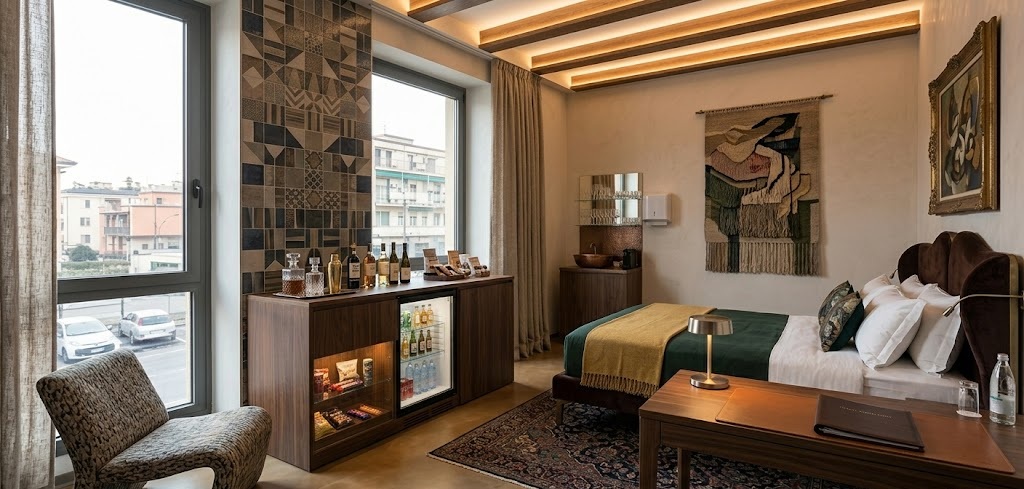
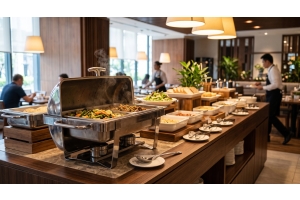
Boutique hotel furniture is not just a simple aesthetic element, but a strategic lever that directly impacts the positioning of the structure. In an increasingly competitive hospitality market, standing out means building a clear, recognisable identity that is consistent with the target audience. Furnishings therefore become a design tool that helps define the overall guest experience.
For owners of accommodation facilities, designing spaces requires an integrated vision that combines design, functionality and perceived value . Every choice, from materials to finishes, right down to the distribution of spaces, has a concrete impact on the customer's perception and on the structure's ability to position itself in a market segment consistent with its objectives.
The role of furnishings in the positioning of a boutique hotel
The term boutique hotel indicates a structure with a strong identity, often characterised by small dimensions and particular attention to detail. In this context, furnishings play a central role in brand construction, helping to differentiate the offering from standardised solutions.
The definition of a clear concept allows for the creation of coherent and recognisable environments. The absence of a precise design line, on the contrary, generates anonymous environments that fail to communicate value. Furnishings, therefore, must not be chosen in isolation, but inserted into an overall positioning strategy.
Visual identity and concept of the structure
The construction of the visual identity involves careful design of the aesthetic elements. Colours, materials, shapes and lighting must interact with each other to create a coherent language. This approach allows for the strengthening of the structure's recognisability and the conveying of a professional image.
A well-defined concept also helps guide all subsequent choices, avoiding design inconsistencies. This aspect is particularly relevant for properties that target a specific audience, where consistency between design and customer expectations becomes a determining factor.
Consistency between design and target audience
The furnishings must be designed according to the target. A hotel aimed at a business clientele will have different needs than a property oriented towards experiential or leisure tourism. Ignoring this distinction can compromise the overall perception of the property.
Consistency between design and target audience improves perceived quality and facilitates positioning. A coherently designed environment conveys professionalism and reduces the risk of misalignment between expectations and reality.
Materials, finishes and perceived quality of furnishings
The choice of materials is one of the most important aspects in furnishing a boutique hotel. Quality materials immediately convey a sense of solidity and attention to detail, fundamental elements for increasing perceived value.
In addition to the aesthetic aspect, it is necessary to consider the durability and resistance to the intensive use typical of hospitality structures. Furnishings designed for professional use guarantee greater reliability over time and reduce maintenance costs.
Choice of materials and durability
Materials must be selected taking into account both aesthetics and performance. Treated woods, resistant metals and technical fabrics are frequently used solutions to ensure long-lasting durability.
Particular attention to the quality of materials helps to avoid premature deterioration and to maintain an image consistent with the positioning of the structure over time.
Details, textures and the perception of luxury
The perception of luxury is not linked exclusively to the cost of the furnishings, but to the attention to detail. Textures, finishes and material combinations play a decisive role in defining the atmosphere of the rooms.
Elements such as stitching, surface finishes and colour combinations contribute to creating a visual and tactile experience that impacts the customer's overall perception.
Design and customer experience in the accommodation facility
The customer experience is closely linked to the quality of the environments. Design influences the perception of comfort, the functionality of the spaces and the ability of the facility to generate a positive memory.
A well-designed environment promotes the guest's well-being and helps improve the reputation of the facility, with direct effects on reviews and loyalty.
Impact of the environment on the customer experience
The physical environment represents one of the first points of contact between the customer and the facility. A consistent and careful design allows you to immediately convey a professional image.
Elements such as lighting, furniture arrangement and choice of materials influence the perception of space and the quality of the stay.
Atmosphere, comfort and memorability of the stay
The creation of a distinctive atmosphere helps make the stay memorable. Comfort, understood as a balance between aesthetics and functionality, is a key element in satisfying guests' expectations.
An environment that successfully combines design and comfort increases the probability of customer return and improves the competitive positioning of the facility.
Functionality of spaces and operational organization
The furnishings must also respond to operational needs. The daily management of the facility requires solutions that facilitate the work of the staff and optimize the use of spaces.
A functional design allows for improved operational efficiency and reduction of critical issues related to the management of spaces.
Optimization of spaces and layout
The distribution of spaces must be studied to ensure fluidity of movement and accessibility. A well-designed layout improves the customer experience and facilitates operational activities.
Space optimization is particularly important in small structures, where every element must be carefully designed.
Balance between aesthetics and practicality
Design cannot ignore functionality. Aesthetically pleasing but impractical furnishings can compromise operational efficiency.
A balance between aesthetics and practicality allows you to create environments that are pleasant for the customer and manageable for the staff.
Furnishings as a lever to increase the value of the structure
Furnishings directly affect the ability of the structure to position itself in a higher price range. A careful design increases the perception of quality and justifies a higher pricing.
This aspect makes furniture a real investment, capable of generating economic returns in the medium term.
Relationship between design and pricing
A carefully designed environment allows you to differentiate yourself from the competition and avoid competition based exclusively on price.
Design therefore becomes a tool to support a higher positioning strategy.
Investment and economic return in the medium term
Investing in quality furnishings can have a significant impact on the economic results of the property. Better reviews and greater attractiveness contribute to increasing the occupancy rate.
Over time, this approach allows you to consolidate your positioning and improve overall profitability.
Standing out in the boutique hotel market requires a clear and coherent design vision. Furnishings represent one of the most effective tools for building a strong and recognizable identity.
For owners of hospitality facilities, adopting a strategic approach means evaluating every choice based on positioning and customer experience. In this way, furnishings become an integral part of a system that supports the growth and competitiveness of the property.
 English
  Italian
 French
 German
 Spanish