English
  Italian
 French
 German
 Spanish
Post Contents [hide]

mon-fri 9-13 / 14.30-18.30
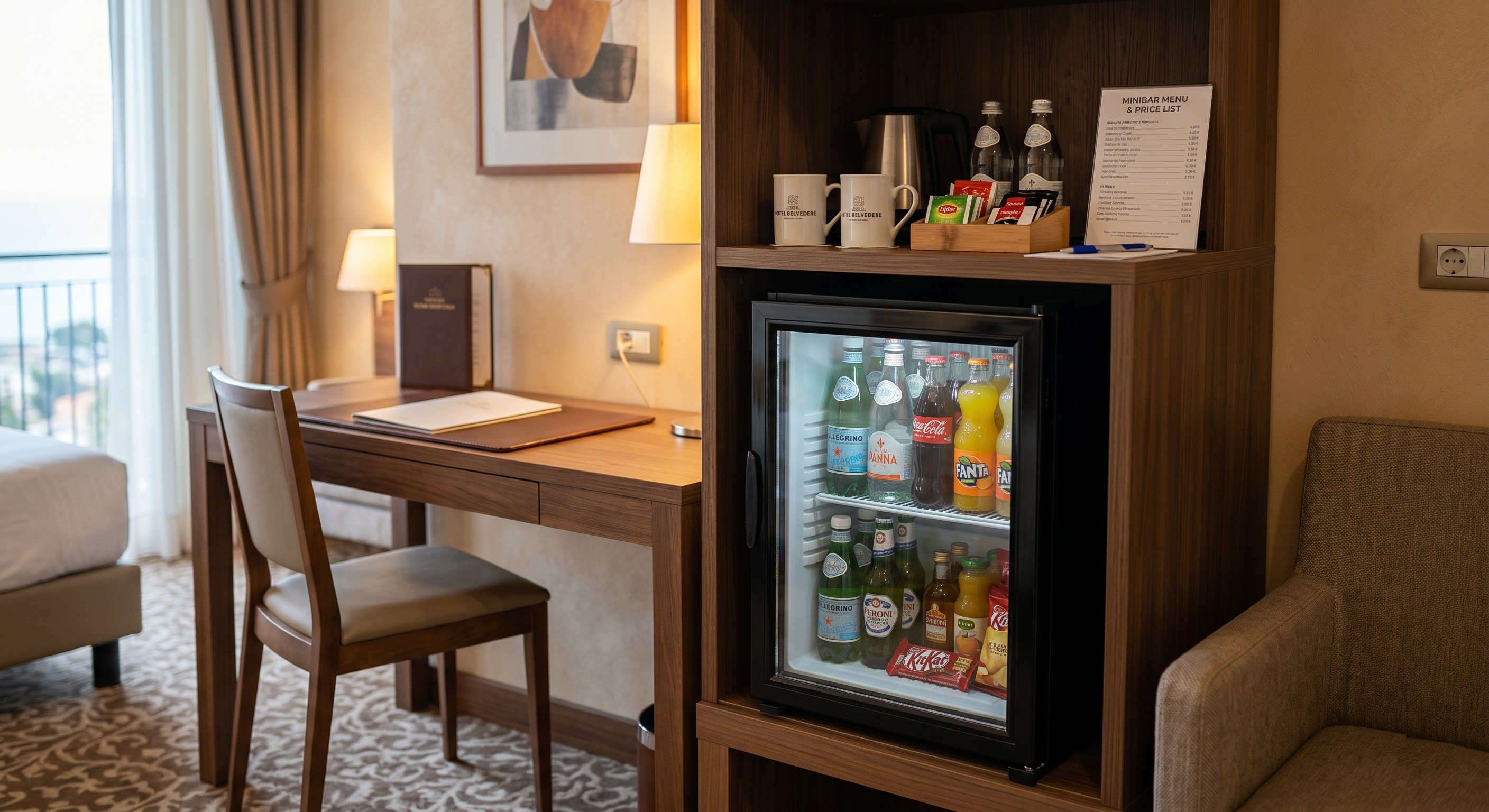
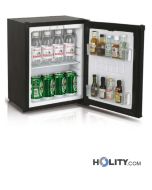
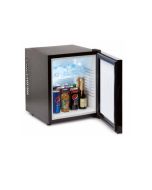
The choice of absorption, thermoelectric or compressor minibar for hotels represents a strategic decision for any accommodation facility. The minibar is an element that directly affects the guest experience, but also the operating costs and energy management of the facility.
There are mainly three technologies available: absorption, thermoelectric and compressor. Each has specific characteristics in terms of silence, performance and consumption, making an in-depth comparison necessary to identify the most suitable solution for rooms, suites or B&Bs.
The minibars for hotels are mainly distinguished by the technology used for cooling. Understanding how each solution works allows you to more consciously evaluate the advantages and limitations.
The choice should not be based on a single parameter, but on a balance between comfort, efficiency and intended use.
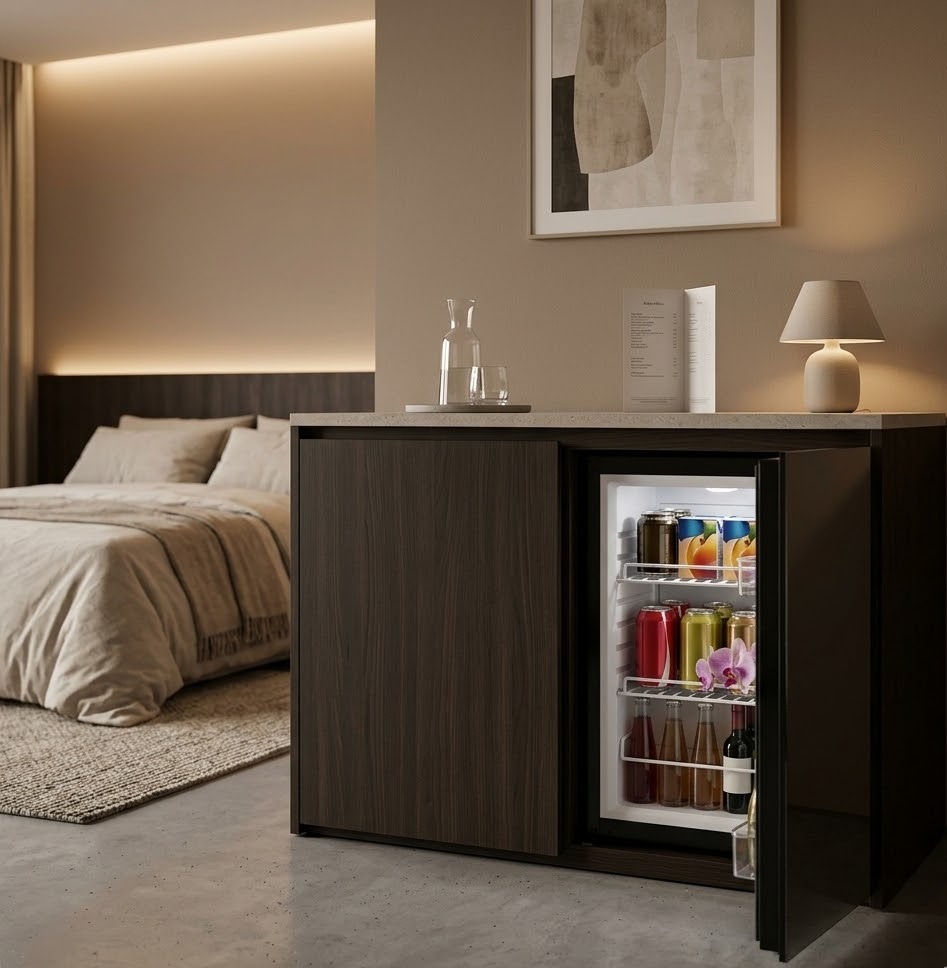 The Absorption minibars work without a compressor, using a chemical process to generate cold. This technology is particularly appreciated for its extreme silence.
They are often used in hotel rooms where acoustic comfort is a priority. However, the cooling capacity may be less efficient than other solutions.
The Thermoelectric minibars use Peltier cells to cool the interior. This technology is characterised by simple operation and good efficiency in controlled environmental conditions.
Compared to other solutions, they can be more sensitive to external temperatures, with variable performance in very hot environments.
The Compressor minibars use the same principle as traditional refrigerators. They offer a higher cooling capacity and greater temperature stability.
This solution is suitable when it is necessary to guarantee constant performance, even in difficult environmental conditions.
The differences between technologies are mainly reflected in performance. The ability to maintain stable low temperatures is a determining factor in the choice.
Evaluating these aspects allows you to avoid solutions that are not suited to the operating context.
Compressor minibars generally offer the best performance in terms of cooling. Absorption and thermoelectric models, however, may have limitations in particularly hot environments.
The choice must therefore consider the climatic conditions and the type of intended use.
Temperature stability is an important element to guarantee the quality of the service. Compressor systems are more reliable in this respect.
Other technologies may be more subject to variations, especially in the presence of sudden temperature changes.
Silence is one of the most important factors when choosing a minibar. A noisy device can compromise guest comfort, negatively impacting the overall experience.
For this reason, many facilities favor solutions that guarantee discreet operation.
Absorption minibars are generally the quietest, as they do not use moving mechanical components. Thermoelectric models have low noise levels.
Compressor minibars, on the other hand, can generate a perceptible noise, especially in very quiet environments.
Acoustic comfort is a key element in the overall evaluation of the room. A quiet environment helps improve the quality of the stay.
Integrating appropriate solutions allows you to maintain high standards and meet guest expectations.
Energy consumption is a key aspect in minibar management. A non-optimal choice can significantly impact operating costs.
Different technologies have different levels of efficiency, which must be evaluated in relation to the expected use.
Compressor models tend to offer greater energy efficiency, especially under intensive use conditions. Absorption systems can have higher consumption.
Thermoelectric minibars are positioned in an intermediate position, with variable performance.
Cost management requires a comprehensive assessment that includes consumption, maintenance and product lifespan. A higher initial investment can be compensated for by greater efficiency over time.
Analyzing these aspects allows for optimizing the economic management of the facility.
The choice of minibar must be adapted to the type of structure and specific needs. There is no one-size-fits-all solution.
Considering the level of service offered and the guests' expectations is fundamental to identifying the most suitable solution.
In high-end hotels, silence may be a priority requirement, favoring the use of absorption models. In structures with more intense operational needs, compressor models may be more suitable.
B&Bs and smaller structures may orient themselves towards thermoelectric solutions, based on the environmental conditions.
Operational needs include frequency of use, environmental conditions, and energy consumption targets. An accurate assessment helps avoid suboptimal choices.
Integrating these elements into the decision-making process helps improve the overall efficiency of the facility.
Navigating the different minibar technologies requires an analysis that takes multiple factors into account. The choice must balance comfort, performance, and costs, depending on the specific context.
An informed approach helps identify the solution that is most consistent with the facility's needs, improving both the guest experience and operational management in the long term.