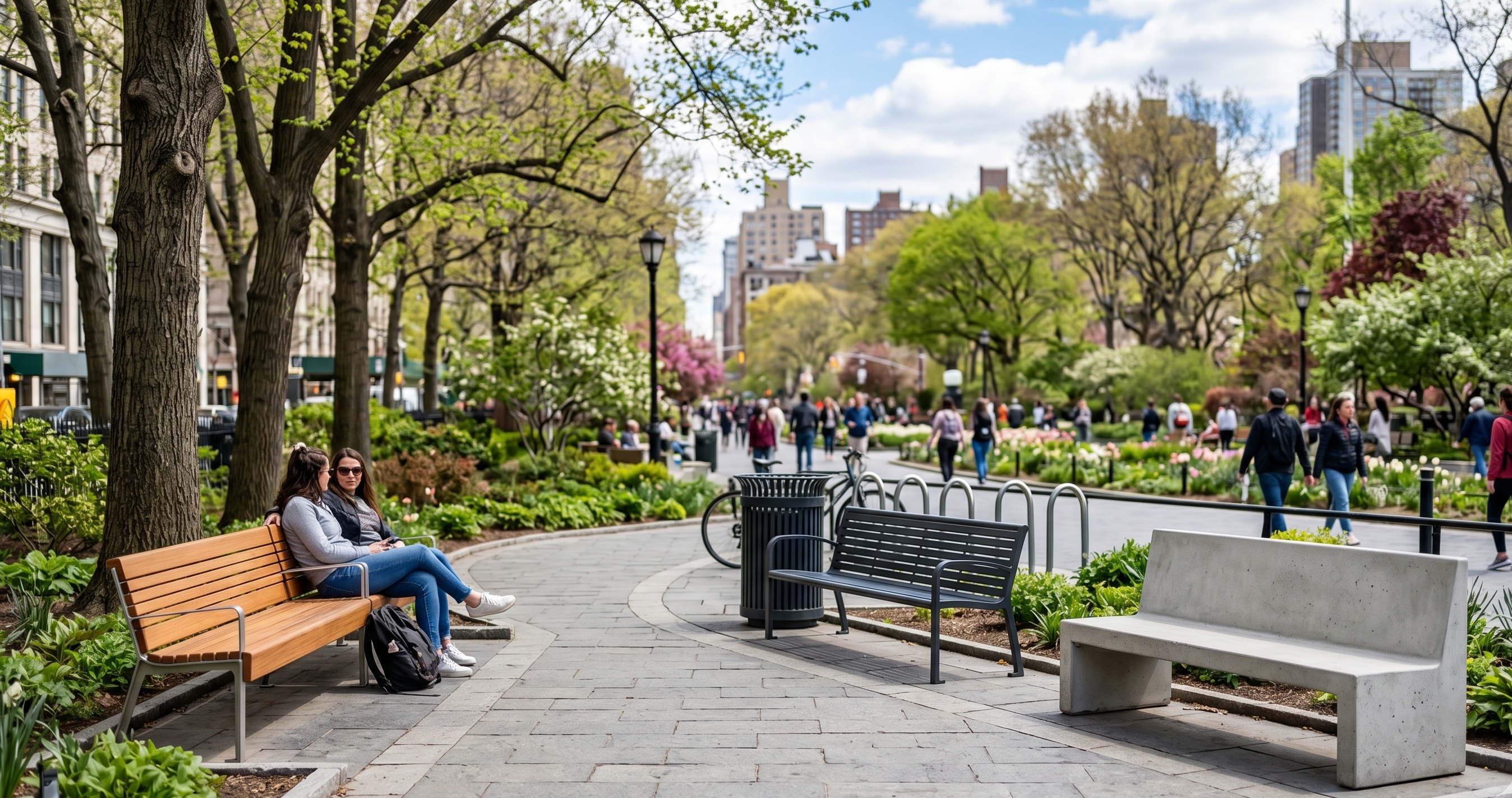
In the context of thestreet furniture, the choice of materials for benches and street furniture It represents a crucial variable both in terms of performance and integration into public spaces. Benches are not simply functional elements, but structural components that contribute to the perceived quality of squares, parks, and community areas. The choice of material directly impacts durability, maintenance, and aesthetic appeal over time.
Wood, metal, and concrete are the most popular solutions for outdoor benches. Each of these options has specific characteristics that meet different needs, from weather resistance to harmonious integration into the urban landscape. Understanding the differences between these materials allows for more informed choices, especially in professional and public settings.
Comparison of materials for outdoor benches
The comparison between the main materials used for outdoor benches is based on concrete parameters such as durability, maintenance and resistanceEach material responds differently to environmental stresses, such as rain, UV rays, temperature changes, and intensive use. In urban environments, these factors become crucial to ensuring an adequate life cycle and containing management costs.
Beyond the technical aspects, aesthetic adaptability must also be considered. Wooden benches easily integrate into natural settings, while metal and concrete are more coherent with contemporary urban environments. The choice of material is therefore not only a technical one, but also a design one, depending on the installation context.
Wooden benches: characteristics and uses
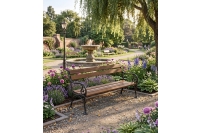
The wood It is a material traditionally used for benches thanks to its natural aesthetic value and its ability to integrate into green spaces. However, its outdoor performance is strongly influenced by the quality of the material and the treatments applied. Without adequate protection, wood can deteriorate due to humidity, sun exposure, and biological attack.
The most commonly used woods for street furniture are high-density types, such as teak or iroko, often treated with specific impregnating agents. These treatments increase weather resistance, but require periodic maintenance to maintain their performance over time. Wood, therefore, guarantees good results but requires constant maintenance.
Maintenance and contexts of use
From an operational point of view, wooden benches require a scheduled maintenance, which includes painting, oiling, or replacing damaged elements. This aspect must be considered during the design phase, especially for public entities or facilities with limited operating budgets.
Wood is ideal for parks, gardens, and natural areas, where visual impact is a priority. In high-traffic urban settings, however, it may perform less well than other more durable materials that are less susceptible to wear.
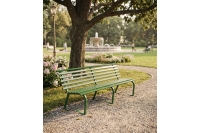
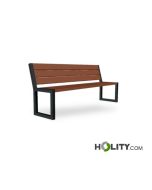
The metal, in particular galvanized or painted steel, represents a very popular solution for outdoor benches thanks to its high structural strengthThis material is able to withstand high loads and intensive use, maintaining stability and integrity over time.
Galvanizing and anti-corrosion treatments protect metal from rust, making it suitable for even the most challenging climates. Furthermore, metal allows for greater design freedom, with shapes and designs adaptable to a variety of urban contexts.
Maintenance and applications
One of the main advantages of metal is the reduced maintenance Compared to wood, maintenance is generally limited to periodic checks and, in some cases, repainting. This makes it particularly suitable for public installations where operating costs need to be minimized.
Metal benches are used in urban settings, commercial areas, and high-traffic public spaces. Their versatility allows them to be combined with other materials, such as wood or plastic, to create hybrid solutions that blend aesthetics and functionality.
Concrete benches: solidity and urban context
Strength and stability of concrete
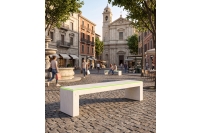
The cement, or concrete, is chosen primarily for its robustness and durabilityBenches made with this material are extremely resistant to atmospheric agents, impacts, and vandalism, essential characteristics in complex urban contexts.
The high mass of concrete ensures structural stability, reducing the risk of shifting or damage. This makes it particularly suitable for unattended or heavily used public areas.
Limits and contexts of use
Despite its advantages in terms of resistance, concrete has some limitations related to the poor design flexibility and comfort. Surfaces may be less ergonomic than other materials, especially in extreme weather conditions.
Concrete is ideal for plazas, sidewalks, and high-density urban settings where durability is a priority. It is often used in combination with other materials to enhance comfort and overall aesthetics.
Durability and maintenance of materials
The durability of outdoor benches depends on the material's ability to withstand time without losing functionality. In this regard, concrete offers the best performance, followed by metal and, finally, wood, which requires more frequent maintenance.
There maintenance of street furniture benches It represents a significant operating cost for institutions and businesses. Choosing materials with low maintenance requirements allows for reduced interventions and ensures continuity of use, especially in high-traffic public spaces.
Aesthetics and integration in the urban context
The aesthetics of benches influence the perception of urban space. Wood offers a warm and natural visual impact, while metal allows for more contemporary and versatile designs. Concrete, on the other hand, fits perfectly into minimalist contexts or modern architecture.
The choice of material must take into account its consistency with the surrounding environment. A correct balance between functionality and aesthetics contributes to improving the quality of public space and user experience.
Applications and contexts of use of benches
The outdoor benches They find application in various contexts, from urban parks to commercial areas. Material selection must be based on variables such as intensity of use, exposure, and level of maintenance available.
In the professional field, the choice of materials for benches and street furniture It is often driven by technical and management criteria. A preliminary analysis allows us to identify the most suitable solution, optimizing both performance and long-term costs.
The strategic role of materials in urban design
Designing street furniture requires careful consideration of materials, not only in technical terms but also in operational terms. Each choice impacts the installation's longevity, management, and users' perception of the public space.
Understanding the differences between wood, metal, and concrete allows decisions to be made toward solutions that are more consistent with the project's objectives. In this scenario, materials are not simply components, but strategic elements in defining urban quality.
 English
  Italian
 French
 German
 Spanish