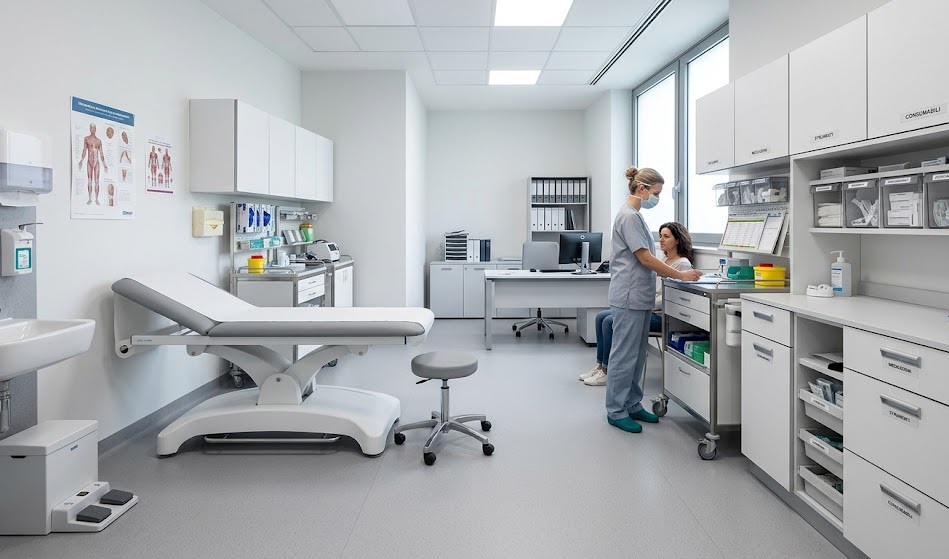
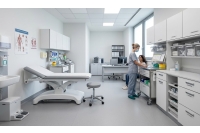
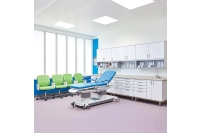
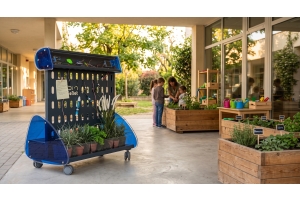
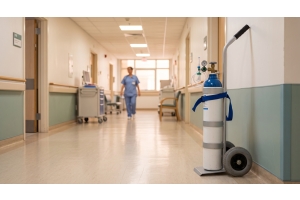
Within a healthcare space, each element contributes to defining the operational efficiency and quality of the service offered. The term technical furniture for outpatient clinics refers to the set of furniture and solutions designed to support clinical activities, organize instruments and ensure adequate conditions for both healthcare personnel and patients.
The choice of furniture is not just about aesthetics, but directly affects functionality, hygiene and the perception of the environment. In medical practices and clinics, a coherent organization of spaces is a fundamental element for working in an orderly manner and conveying professionalism.
The role of technical furniture in healthcare environments
Technical furniture for outpatient clinics plays a central role in the management of daily activities. It is not limited to containing instruments or documents, but helps to structure the space in a logical way, facilitating access to equipment and reducing operating times.
In a medical practice, every element must be designed to support the work of healthcare personnel, ensuring order and continuity in procedures. The arrangement of the furniture therefore becomes an integral part of the clinical process, influencing overall efficiency.
Organization of spaces and operational functionality
The design of a medical practice requires a careful evaluation of workflows. The term outpatient organization refers to the ability to distribute furniture and equipment in a manner consistent with the activities performed, avoiding overlaps or obstacles.
A well-structured layout improves time management and reduces interruptions during visits. The position of beds, trolleys and cabinets must be studied to ensure immediate accessibility and operational continuity.
Elements and components of office furniture
Beds and work surfaces
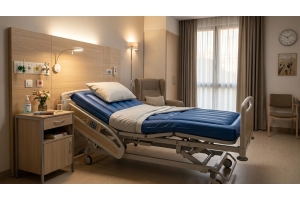
The medical bed is one of the main elements of the office. It must guarantee stability, ease of cleaning and comfort for the patient, adapting to the different types of visits.
Next to the bed, the work surfaces play an essential role in the management of instruments and clinical activities. Their arrangement must be functional and consistent with operational needs.
Containment and organisation
Cabinets , drawer units and trolleys allow materials and devices to be organised in an orderly manner. The presence of dedicated solutions facilitates the management of supplies and reduces the risk of errors.
A well-designed containment system helps keep the environment clean and easily manageable, improving the efficiency of daily activities.
Materials, hygiene and technical requirements
In the healthcare context, the choice of materials is closely linked to hygiene and safety needs. Washable, resistant surfaces compatible with specific detergents are fundamental elements to guarantee adequate standards.
Furnishings must also comply with technical and regulatory requirements, ensuring durability and ease of maintenance. The quality of the materials directly affects the longevity of the product and the safety of the environment.
Comfort for patients and operators
Comfort is an aspect that is often underestimated, but central to the design of a healthcare space. For the patient, an orderly and welcoming environment helps reduce stress and improve the perception of the visit.
For the healthcare worker, the ergonomics of the furnishings is crucial. Solutions designed to facilitate movement and reduce physical effort improve working conditions and promote greater operational continuity.
Image and professionalism of the medical practice
The furniture of the medical practice also affects the visual perception of space. A well-organized and coherent environment conveys order and competence, fundamental elements for establishing a relationship of trust with the patient.
The choice of appropriate technical furniture helps to build a professional image, in which every detail is functional and coherent with the healthcare context.
Mistakes to avoid when choosing furniture
Among the most common mistakes is the choice of furniture not designed for healthcare use. Inappropriate solutions can compromise hygiene, safety and functionality.
Another critical issue concerns the lack of planning. Without an overall vision, the practice risks becoming disorganized and inefficient. Avoiding these mistakes means adopting a conscious and functionality-oriented approach.
An integrated approach for efficient healthcare spaces
The technical furniture for outpatient clinics represents a key element in the design of healthcare spaces. Its choice must be guided by functional, technical, and aesthetic criteria, capable of responding to operational needs and improving the overall experience.
Correctly integrating furnishings means creating an orderly, efficient, and professional environment, capable of supporting daily work and conveying reliability to those who use it.
 English
  Italian
 French
 German
 Spanish