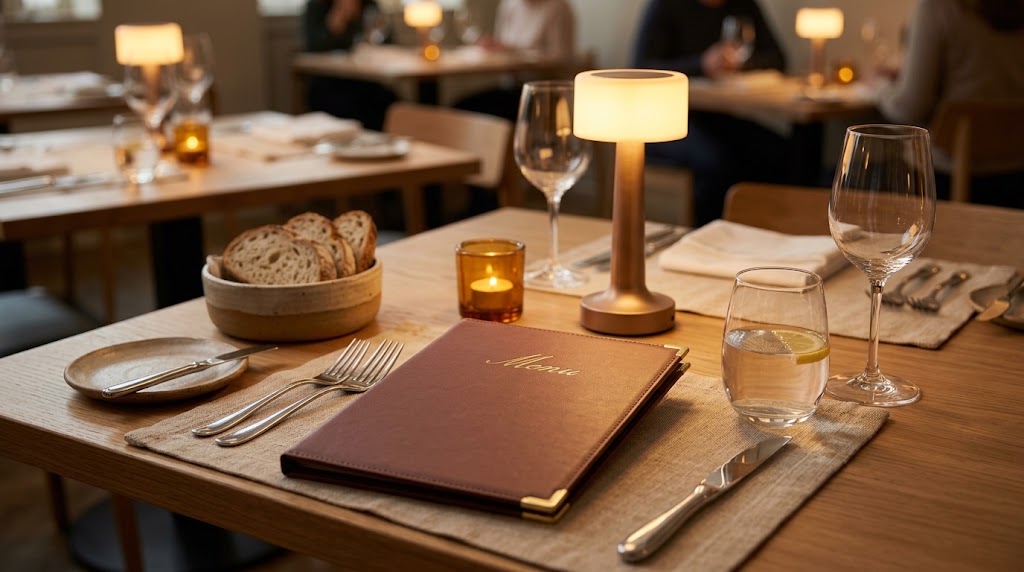
Choosing a restaurant menu holder means correlating the format, material, number of pages and method of replacing the sheets with the service actually provided in the establishment. A bar with synthetic paper has different needs than a restaurant with numerous courses or a hotel with multiple catering outlets. Cleanliness, frequency of updates and style of the room also influence the choice. The right support therefore arises from the balance between presentation and daily management.
The choice starts from the type of establishment and the service
The first criterion to define is not the material, but the way in which the menu will be used. In a restaurant with traditional service the menu holder is delivered, consulted and collected numerous times during the day, while in a bar it can remain on the table longer and contain a much more concise proposal. Hotels, bistros, pubs, and pizzerias all have different needs in terms of page count, style, and frequency of updates. Starting from the operational context allows you to avoid elegant but impractical products or robust solutions that are inconsistent with the room's image..
The number of seats is another important factor because it determines the number of units needed and the intensity of use of each support. A small venue may favor a limited and more aesthetically characterized supply, while a room with many tables must also consider uniformity, conservation, and ease of replacement. The same reasoning applies to structures with multiple rooms or different internal services. The choice should therefore be made on the basis of the number of seats, table rotation, and service modalities. with which the menu is managed by the staff.
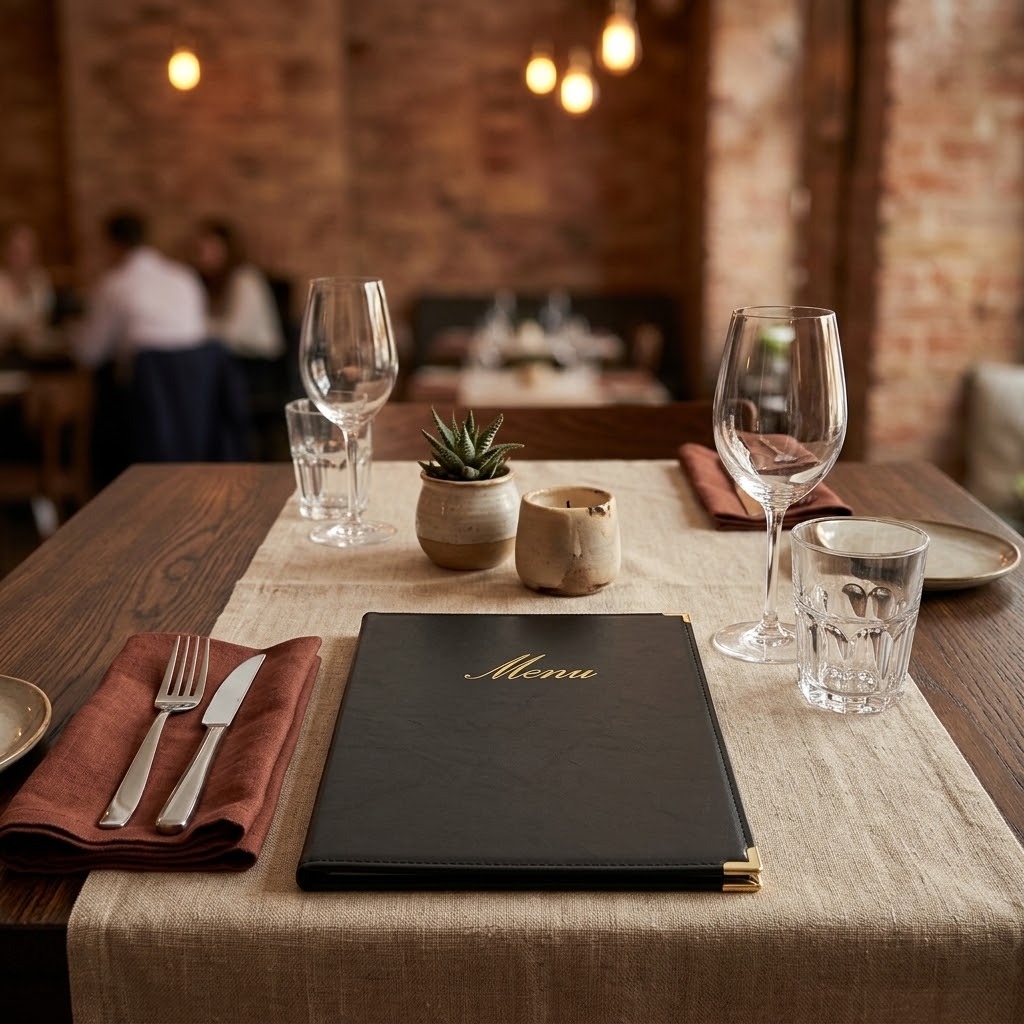 The A4 format offers a large surface area and is suitable when the paper includes numerous sections, detailed descriptions or a significant amount of information. The A5 format takes up less space and can be more practical for bars, bistros, drink lists and essential menus. However, there is no absolute best format, because readability also depends on the layout, characters used and number of pages. The size of the menu holder should therefore be chosen after having defined the graphic structure of the paper, not before.
The Holity catalogue includes models designed for A4 and A5 sheets, as well as configurations available in multiple sizes. This variety allows the support to be adapted to very different menus without necessarily changing the identity of the product. aesthetics of the venue. A restaurant can use a large format for the main menu and a more compact one for desserts, drinks or specific proposals. Holity, a specialist in professional supplies for catering and hospitality, thus allows you to compare solutions starting from the quantity of information that actually needs to be presented.
PVC and synthetic materials prioritize practicality
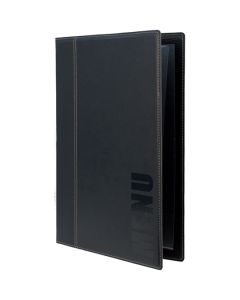
Synthetic materials are particularly interesting when the menu holder is used very frequently. Regular and easily manageable surfaces simplify ordinary cleaning and make these solutions suitable for restaurants, bars, cafeterias and other contexts with high turnover. Their appearance may be more essential than materials with a greater decorative component, but this very characteristic makes them versatile. When the priority is operational management, simplicity and ease of use are the key features. Maintenance requirements take on a decisive weight.
The material must however be evaluated together with the construction of the product. Protective corners, edges, quality of the inserts and the way in which the pages are held in place affect the overall resistance as much as the external covering. Even two menu holders made with the same material can therefore behave differently during service. Reading the technical data sheet allows you to check the number of pages, the compatible format and the construction characteristics before ordering the entire supply.
Wood and imitation leather enhance the presentation
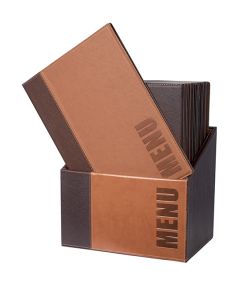
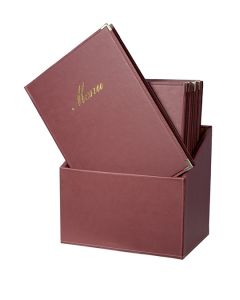
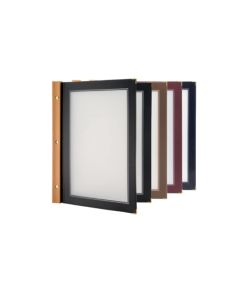
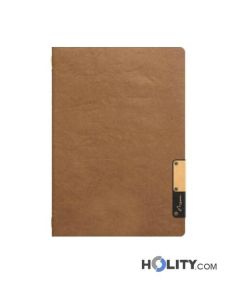
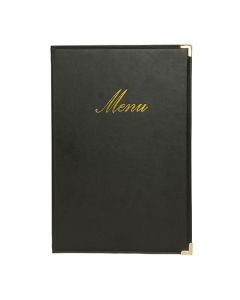
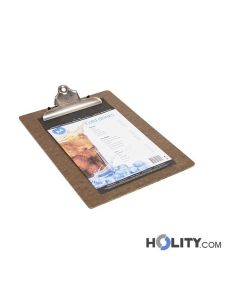
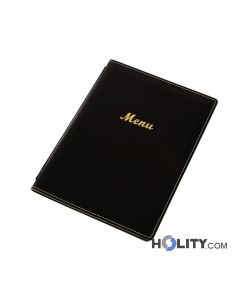
When the identity of the room takes on a more relevant role, the material can become an integral part of the presentation. Wood introduces a natural visual component that can integrate well in bistros, wine bars and restaurants characterised by textured surfaces and warm tones. Imitation leather, on the other hand, offers a more refined appearance. uniform and formal, suitable for classic rooms, hotels and contexts that require a refined presentation without sacrificing practicality. The menu holder should appear consistent with the location even before the customer starts reading the menu.
The aesthetic choice should not, however, overshadow the functional aspects. A wooden support must also be evaluated for the method of inserting the sheets and maintenance, while in imitation leather the edges, finishes and quality of the surface become important. Holity offers professional menu holders in different materials precisely to respond to different room settings. The most useful comparison is therefore not to establish which material is universally superior, but to identify the one that offers the best balance between the image of the location, frequency of use and daily management.
The insertion system must follow the frequency of updates
A menu that remains unchanged for months can be managed with a different configuration than a menu that changes weekly. Seasonal restaurants, pubs, wine bars, and venues that frequently change their menus need to be able to replace sheets and inserts without making the operation complex. Clips, elastic bands, removable screws, and other systems meet this need, but have different operating methods. The frequency with which the paper is updated should therefore be one of the main criteria in choosing the fastening system..
Fixed inserts can be convenient when the content is stable and you want to maintain a uniform configuration. A removable system, on the other hand, offers greater flexibility when dishes, prices, the wine list, or seasonal offers change. It is also useful to evaluate who will physically carry out the updates and how much time can be dedicated to the operation. A rapid system can become particularly important when dozens of menu holders need to be updated simultaneously.
Number of pages and capacity affect consultation
The number of pages available must be consistent with the amount of content to be displayed. Indiscriminately increasing the pages can make the menu more difficult to consult, while insufficient space often leads to concentrating too much information on the same surface. Before choosing the support, it is therefore useful to establish how many sections the card will contain and what reading order the customer should follow. The capacity of the menu holder should support the layout, not constrain it.
A restaurant with a few options can use a basic support, while restaurants with appetizers, first courses, second courses, desserts and dedicated sections may require more pages. The wine list can be kept separate when the number of items makes it appropriate, avoiding weighing down the main menu. Seasonal proposals can also be managed using specific inserts. Thinking about the content architecture in advance allows you to choose a configuration that is easier to use for both the customer and the waiting staff.
Cleaning and maintenance must be evaluated before purchasing
The menu holder is handled continuously and can come into contact with hands, tables, drinks and residues present during service. Ease of cleaning is therefore an operational requirement and not a secondary detail. Different materials require different maintenance methods and the manufacturer's specific instructions must always prevail over generic procedures. The most suitable solution is one that can be kept in order without unnecessarily complicating the activities of the staff.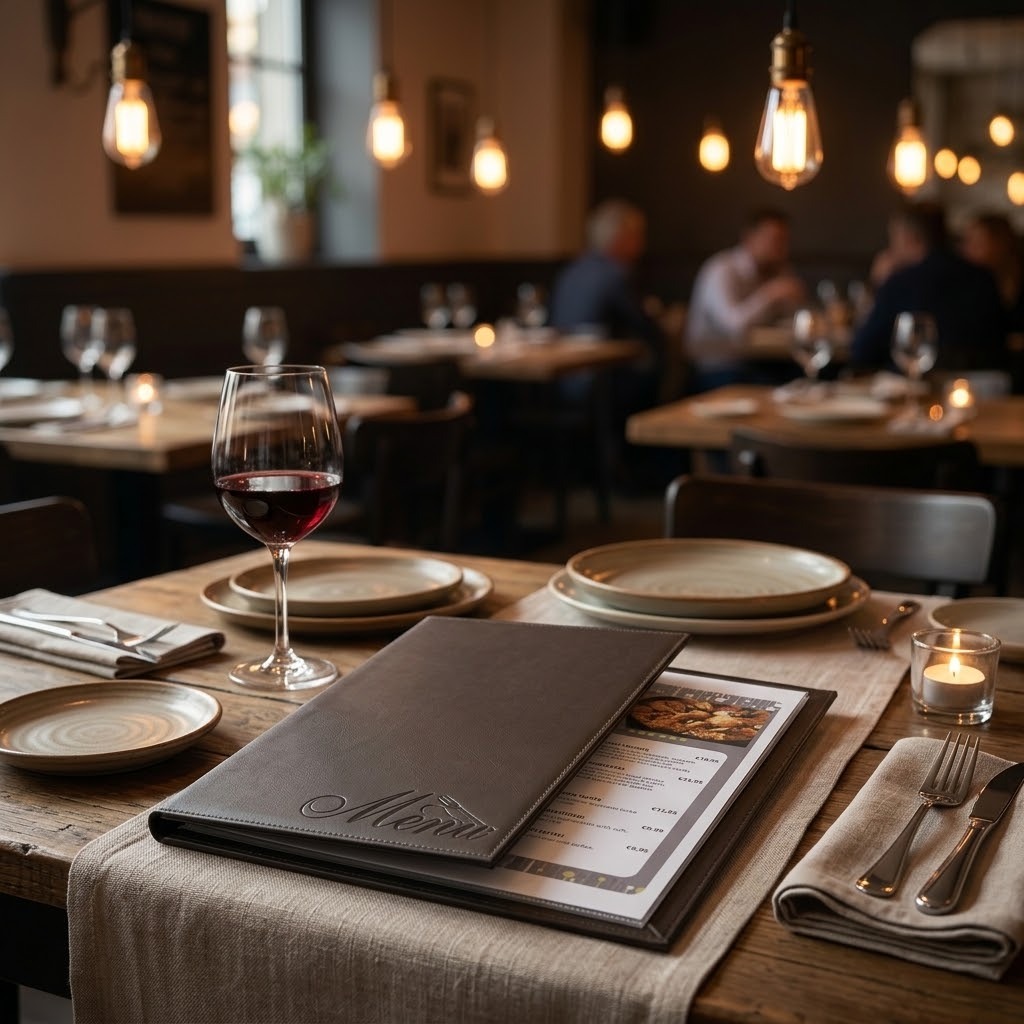
Before a large supply, it is also useful to check for the presence of joints, edges or inserts that require particular attention during cleaning. A very elaborate support can be consistent with an elegant room, but must still be able to cope with the expected frequency of use. On the contrary, in high-turnover environments, a simple surface can significantly facilitate management. Maintenance should therefore be considered already in the comparison phase between models and not only after purchase.
The customer comes into contact with the menu at a central stage of the experience at the table, for this reason the support contributes to the overall perception of the environment. Color, material, finish and format can strengthen the coherence between paper, furnishings and mise en place. In a contemporary restaurant, a simple solution may work, while a restaurant with more classic interiors may prefer more characteristic finishes. The goal is not to make the menu holder the protagonist of the room, but to insert it naturally into its visual identity.
This criterion becomes even more important. It is important in hotels and restaurants that maintain a precise coordinated image. Using uniform supports for the main menu, wine list, and other service materials can create a more orderly presentation. Holity, a point of reference in professional catering supplies, offers different configurations precisely because style and function do not coincide for all establishments. The choice should therefore relate product design to the actual positioning of the business, avoiding excessively refined finishes when they are not consistent with the context.
The supply must be sized based on the organization of the premises
Once the model has been chosen, it is necessary to establish how many units to purchase. Limiting one menu holder per table may be insufficient when there are large tables or when several customers want to consult the menu at the same time. It is also advisable to consider some units intended for temporary replacement in the event of maintenance or damage. The sizing of the supply should therefore start from the number of seats and the specific methods of service.
For large restaurants, accommodation facilities and businesses with multiple rooms, the possibility of maintaining uniformity over time is also important. An easily reorderable model allows you to replace individual units without suddenly changing the image of the room. Multiple supplies also require attention to the space needed to store the supports when they are not in use. Format, thickness and stackability can therefore also affect the organisation of the service spaces.
The final comparison must start from daily use
Before ordering, it is a good idea to gather a few essential data: type of establishment, number of seats, menu structure, frequency of updates and cleaning methods. Only at this point is it useful to compare materials, formats, number of sides, finishes and insertion systems. This method allows you to quickly eliminate models that are not consistent with the service. The price can thus be evaluated between truly comparable products and not between menu holders designed for completely different needs.
Holity, a leader in professional supplies for restaurants, bars and hospitality facilities, offers menu holders with different configurations in terms of material, format and management method. Choosing the most suitable restaurant menu holder means finding a balance between readability, resistance, practicality and the image of the room. The correct solution therefore does not depend on a single feature, but on the product's ability to fit seamlessly into daily work. A careful comparison of the technical data sheets finally allows you to build a supply that is consistent with the service and the level of presentation required by the venue.
 English
  Italian
 French
 German
 Spanish