Screws, nuts, bolts, washers, rivets, and small spare parts take up little space individually, but quickly become difficult to manage when stored haphazardly. In a busy workshop, searching for the right component every time means interrupting work, opening multiple drawers, and checking unidentified packages. A system screw and bolt holder well organized allows you to transform the small parts in immediately available material, reducing clutter and making the workstation more readable.
The same logic applies to hand tools, spare parts, and consumables. Cabinets, drawers, and containers shouldn't be purchased separately without considering how tasks are performed. The most functional solution depends on the relationship between the quantities to be stored, the frequency of retrieval, the size of the components, and the available space. For workshops, maintenance departments, and technical laboratories, organizing storage directly impacts the timing and continuity of work.
A messy workstation forces the operator to spend time searching instead of working. The problem becomes even more evident when multiple people share the same workshop: what is intuitively located for one worker may be difficult for a colleague to find. Assigning a stable location to small parts and tools makes it easier to transition between shifts and reduces dependence on individual habits.
Organizing your supplies also helps you identify missing items more quickly. When screws and bolts are arranged in visible and identifiable containers, it's easier to notice when a quantity is running low before finding yourself without the component during a repair. The same logic applies to wrenches, inserts, bits, and spare parts. Organize the workshop This means making both the available tools and the stocks to be replenished legible.
How to classify screws, bolts and small components
Classification should reflect the way small parts are actually searched for by operators. For screws and bolts, it can be helpful to first separate the families, then distinguish between diameters, lengths, or specific characteristics. Placing similar components in the same container because they appear nearly identical slows down picking and increases the risk of choosing the wrong size. However, too detailed a classification can unnecessarily increase the number of drawers.
The system must be simple enough for everyone to follow. If the workshop uses certain sizes much more frequently than others, they deserve dedicated, easily accessible containers. Occasional components can be placed in less central areas, while still maintaining clear identification. Before purchasing a new drawer unit, it's therefore a good idea to at least identify the main families of small parts and determine how many subdivisions are actually needed.
Screw and bolt storage: when to choose modular containers
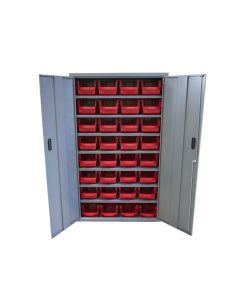
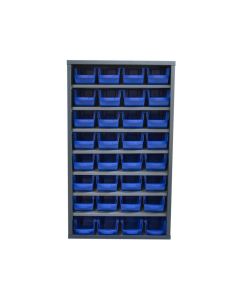
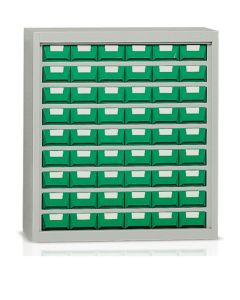
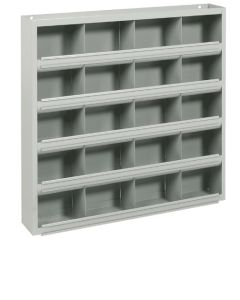
THE open-mouth modular containers They are particularly practical when the component needs to be removed frequently. The open front allows you to see the contents and remove screws or bolts without removing a drawer. The models can be used on shelves, panels, or dedicated structures, creating neat rows that can be expanded as the number of SKUs increases. This configuration is well suited to workstations where small parts are consumed throughout the day.
A good one screw and bolt holder It must have a capacity proportionate to consumption. A container that is too small requires constant refilling, while a very large one takes up space and encourages the accumulation of unnecessary inventory. In modular systems, it's helpful to keep the most frequently used items at hand height and move occasional items to the upper or lower rows. This way, the organization is based on picking frequency rather than purely aesthetic layout.
Drawer units for small parts: visibility and capacity in a small space
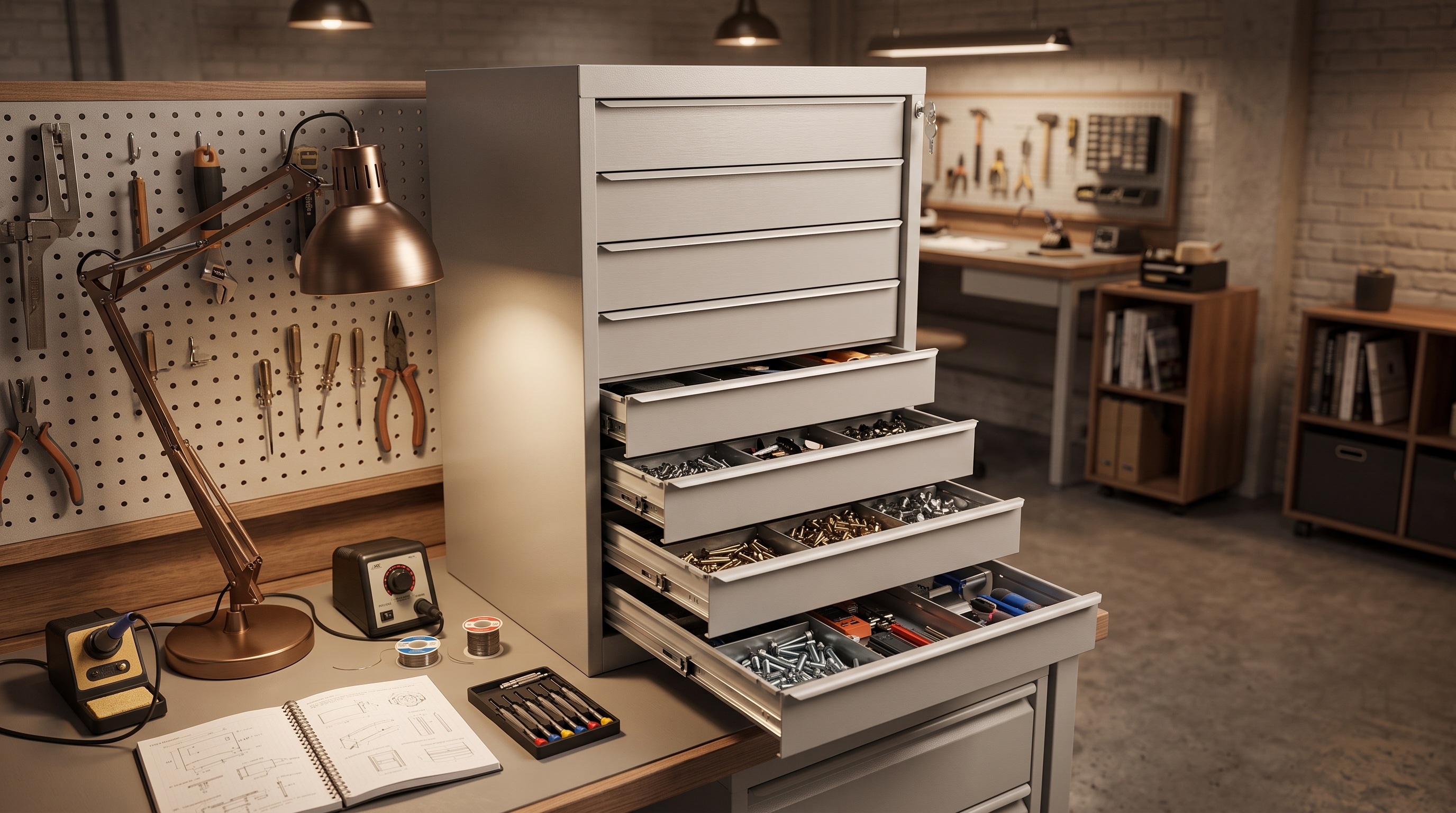
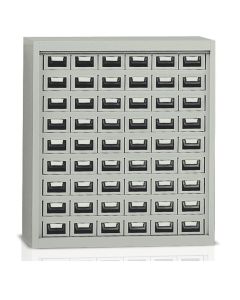
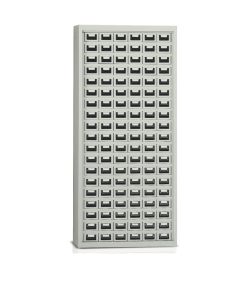
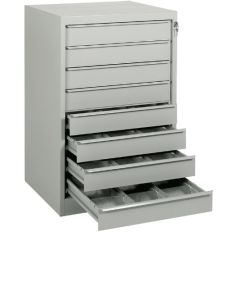
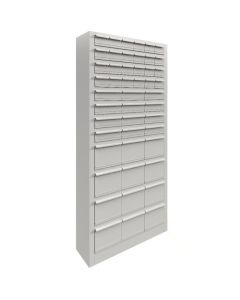
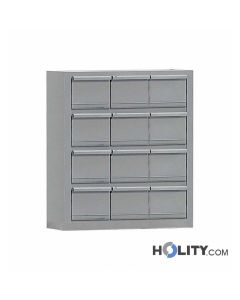
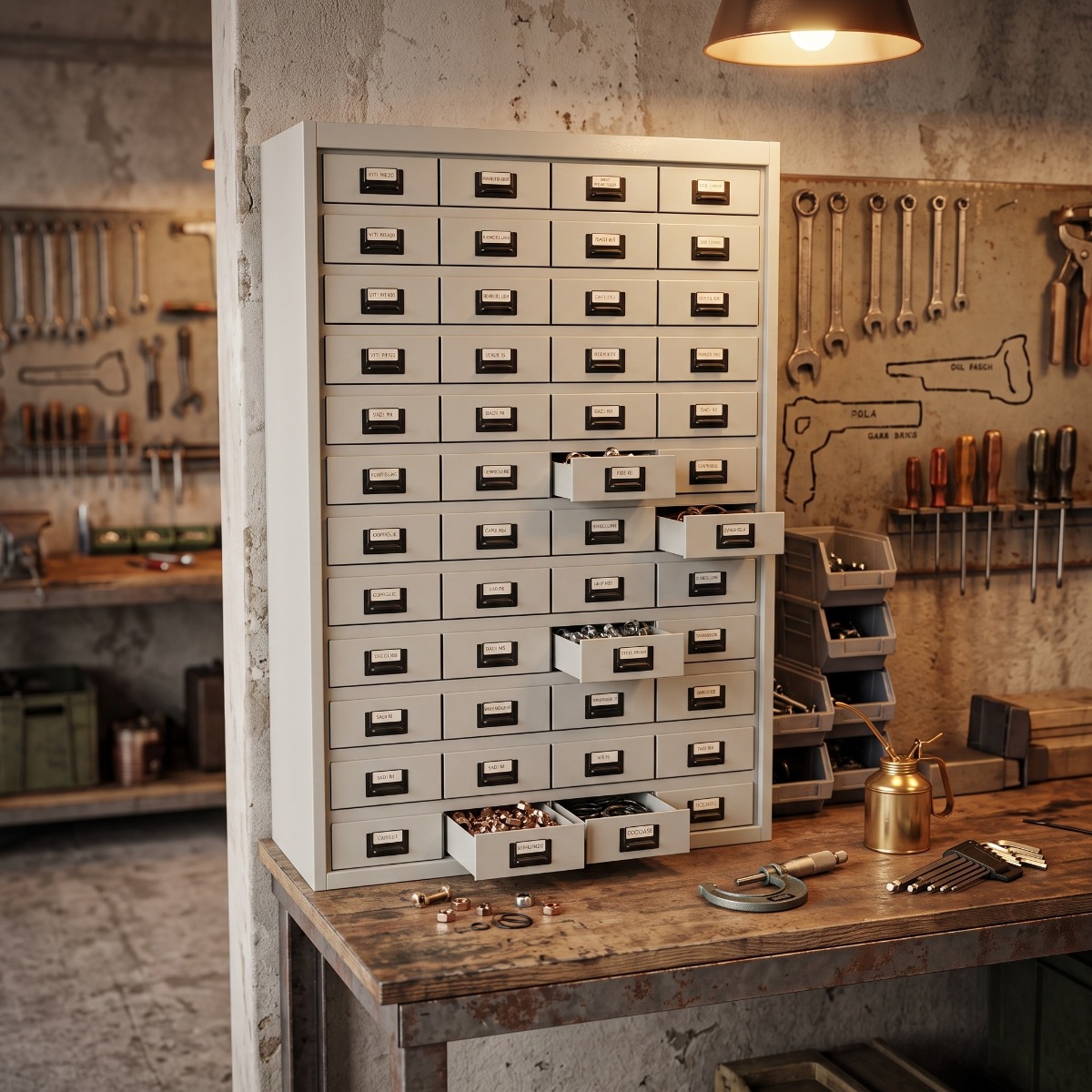 Thechests of drawers They're useful when you need to manage many items while taking up a small amount of space. Small drawers allow you to separate nuts, washers, connectors, cable ties, plugs, and other components that would otherwise end up mixed together. Transparent fronts, when available, make it easier to check contents and stock levels. Labeling remains important, especially when the differences between two components aren't easily visible.
The number of drawers should be chosen based on the actual variety of small parts. A drawer unit with many compartments is effective if each compartment has a specific function; it becomes less useful when several drawers are empty and others are overfilled. It's also a good idea to allow a small margin for new items, so as to avoid having to overhaul the entire system the first time your inventory expands.
Small parts represent only one part of the organization. Drills, screwdrivers, wrenches, measuring tools, and larger spare parts require spaces with different capacities and dimensions. workshop cabinets They keep these items protected and organized, leaving countertops and work surfaces free. Adjustable shelves can accommodate different materials and make it easier to reorganize the layout over time.
Frequently used tools, however, shouldn't be hidden away far from the workstation. The cabinet can be reserved for less frequently used tools, spare parts, and supplies, while everyday tools can be kept on panels, drawers, or readily accessible systems. Good organization isn't simply about stuffing everything in a cabinet. It should minimize the movement required to complete the most frequent tasks.
Organize your workstation based on frequency of use
Frequency is one of the most effective criteria for deciding where to place each item. Items used frequently during a shift should be located in the most easily accessible area, ideally without requiring the operator to leave the workbench. Occasional components and tools can occupy secondary positions. This distinction prevents the most convenient areas from becoming saturated with materials that are only removed a few times a month.
It can be helpful to observe the work over a few days and identify the most common movements. If workers have to repeatedly reach into the same cabinet to retrieve small components, those small items should probably be moved closer to the workstation. If, on the other hand, a central drawer contains rarely used materials, it can be freed up. Small changes in layout can improve productivity without necessarily requiring new furniture.
Manage inventory without turning your workshop into a warehouse
Keeping a large quantity of small parts near the counter may seem convenient, but it takes up space and makes it harder to understand how much material is actually being used. For fast-moving components, it's helpful to define a minimum quantity to indicate when to reorder. The container also becomes a visual indicator of availability. Any additional stock can be stored in a dedicated area and used for replenishment.
This method limits both shortages and duplicate purchases. If each operator keeps small personal reserves in different drawers, the company can purchase new components even if they already have them on hand. A shared system makes the overall quantity more legible and simplifies inventory. Holity, specialist in professional equipment for workshops and industrial environments, proposes storage systems which allow for the structuring of workstations and warehouses according to operational needs.
Mistakes to avoid when organizing small parts
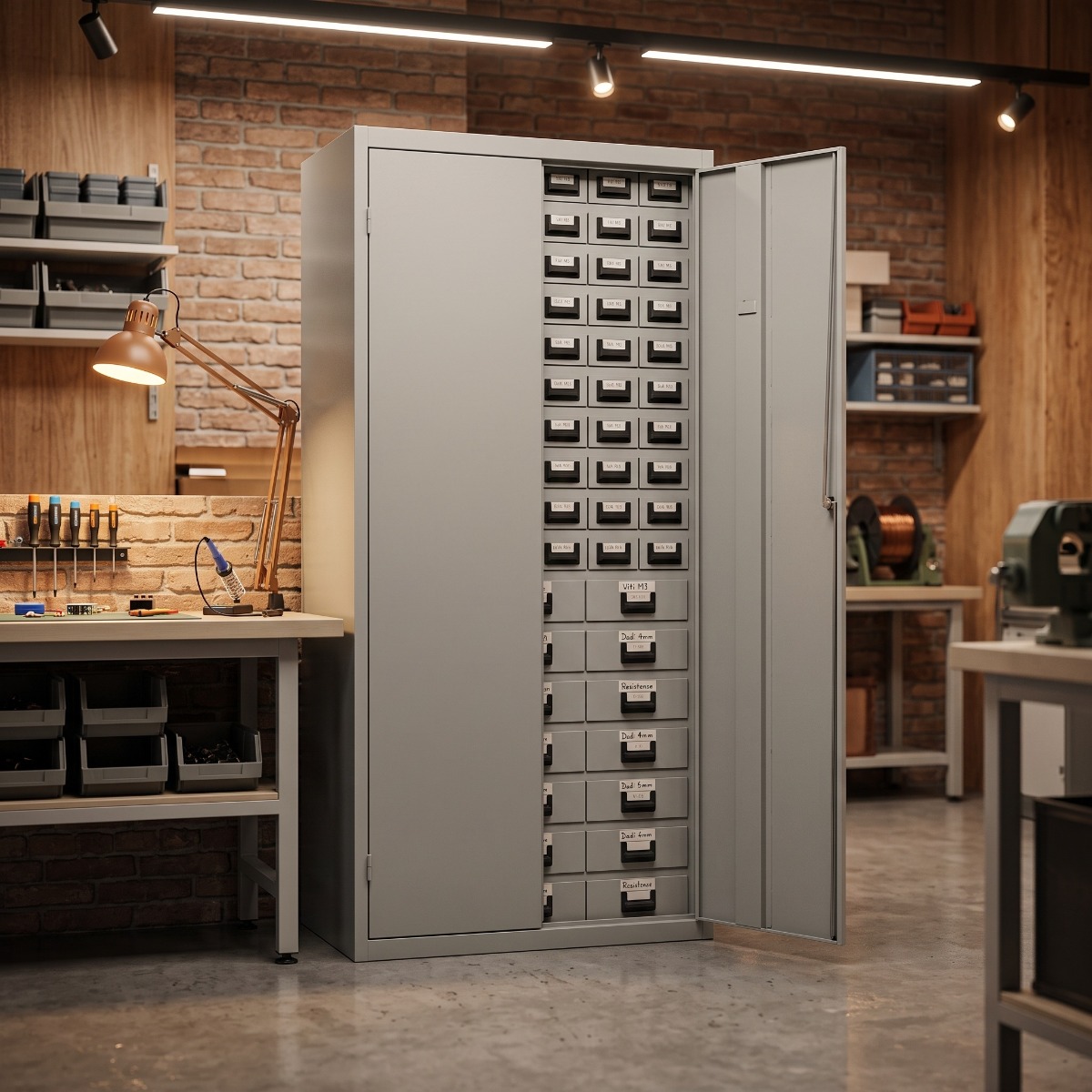 One of the most common errors Buying too many containers before classifying what needs to be stored can be a hassle. The result can be a wall full of underused compartments, while some categories are still crammed into boxes. It's best to start with actual quantities and allow for room for growth. Even choosing containers all the same size can be impractical when the items have very different consumption and volume requirements.
Another mistake is creating a system that only one person understands. Labels, locations, and replenishment rules must be shared, especially in workshops with multiple shifts. Maintaining order must also be simple: if putting a component away requires too many steps, it will tend to be left on the bench over time. An effective structure is one that makes it easier to put each item back in its place than to abandon it in a temporary location.
Professional systems for workshops and maintenance departments
When the organization concerns a complete workshop, it is worth evaluating wardrobes, chests of drawers And screw and bolt holder as parts of the same system. Size, capacity, and location can be defined based on actual flows, leaving high-movement materials close to workstations and moving inventory to dedicated locations. Holity, a leader in professional supplies for businesses and operational environments, offers solutions for organizing small parts, tools, and technical materials with a logic geared toward work continuity.
An orderly workshop does not necessarily require more space, but a more conscious use of what is available. Holity It represents a reference point for those who need to select professional equipment and storage systems consistent with quantities, locations, and frequency of use. Starting with classification, routes, and consumption, it allows you to choose truly useful containers and cabinets. The result is a more clearly organized workstation, with less time wasted searching, and easier inventory management during daily work.
 English
  Italian
 French
 German
 Spanish