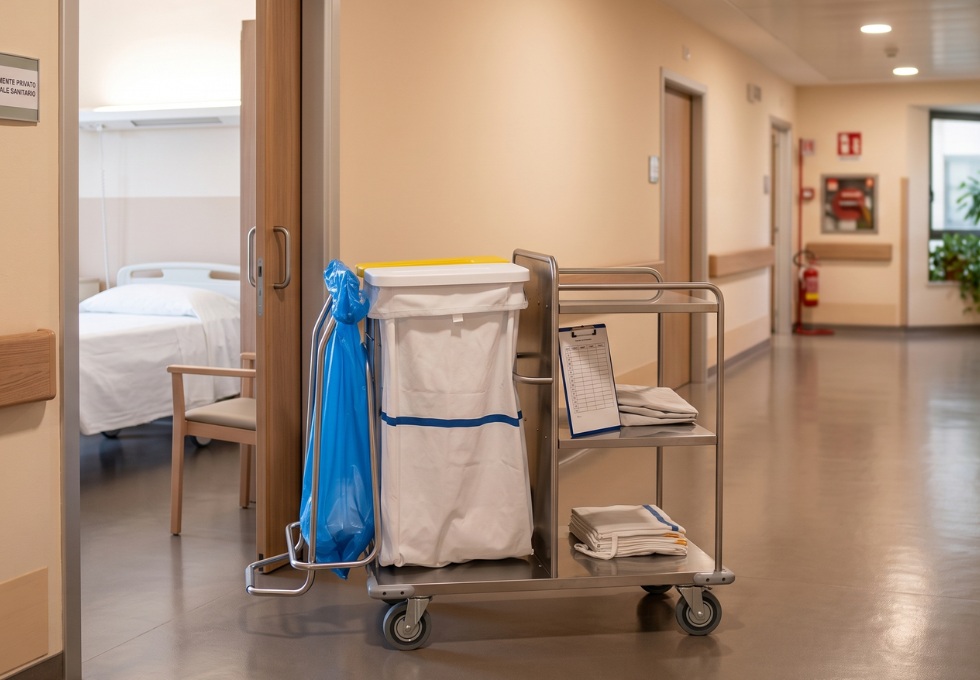
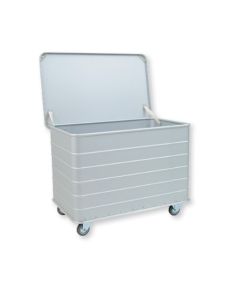
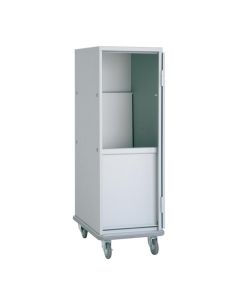
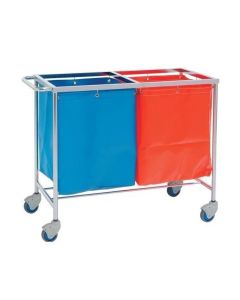
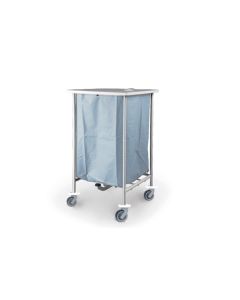
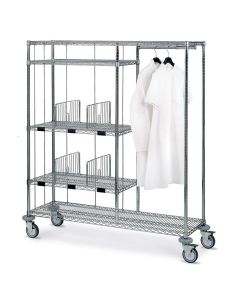
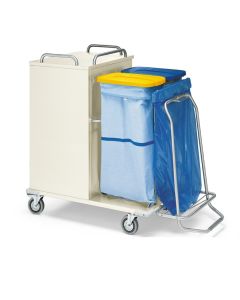
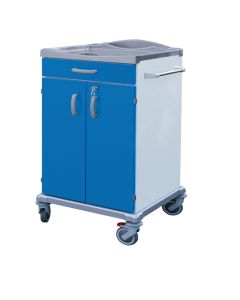
Laundry trolleys for nursing homes play a concrete role in the daily organization of nursing homes, nursing homes, and communities. Sheets, pillowcases, towels, and other textiles must be collected, transferred, and replaced regularly, without turning each change into a series of trips between rooms, storage, and laundry. A suitably sized trolley allows you to bring what is needed closer to the point of use and keeps the workers' work more orderly.
However, the choice must be proportionate to the structure. A nursing home organized into small units has different needs compared to a large hospital with long logistical routes, high volumes, and departments that are very far from each other. In a nursing home, maneuverability, ease of use, useful capacity, and compatibility are particularly important . with corridors and elevators . For this reason, it is not enough to choose the most capacious model: it is necessary to observe how the linen change actually takes place during the shift.
Why linen management in nursing homes requires dedicated solutions
In nursing homes, changing textiles is part of the recurring room assistance and tidying activities. Operators must be able to quickly find clean linen and remove used linen without accumulating it in corridors or making continuous trips to service rooms. The trolley therefore becomes a logistical tool that connects the room, the unit and the storage area, helping to streamline a procedure repeated many times during the day.
A functional solution must fit into the existing organization. The number of rooms, distribution of floors, frequency of changes and position of elevators influence the type of trolley needed. In a compact structure, a more agile and frequently used model may be preferable. times during the shift, while a larger unit may require greater capacity. The correct criterion is not to maximize the transportable volume, but to reduce movements without making the trolley difficult to maneuver .
Organize the collection of used linen in the care units
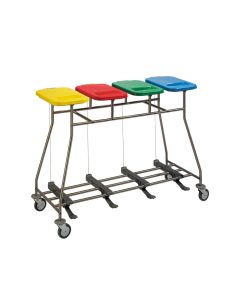
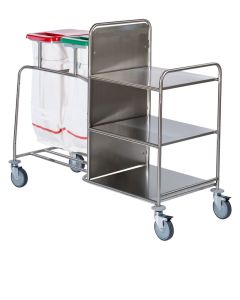
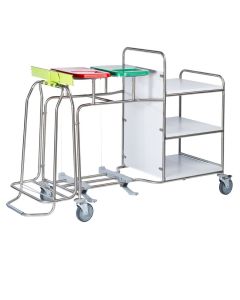
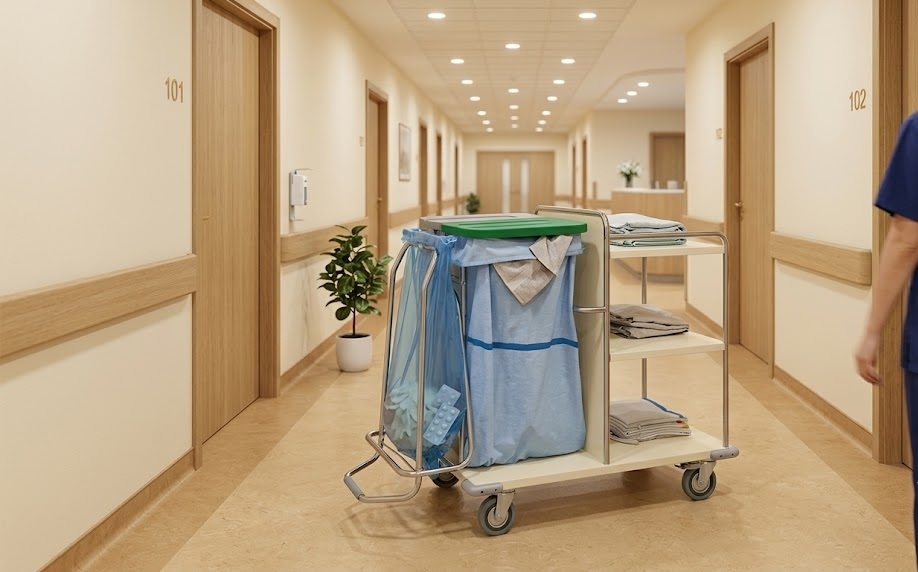
Used linen must be collected according to the procedures defined by the facility, avoiding it remaining temporarily on non-dedicated surfaces or interfering with clean material. Trolleys equipped with bag holders allow for the provision of a mobile collection point near the rooms. The size and number of bags must be evaluated based on the volume generated during the round, so as to limit overly frequent replacements without overloading the facility.
When the RSA provides internal differentiation of textiles, a configuration with multiple bags can facilitate separation already during collection. This organization must, however, reflect the actual procedures of the facility and do not complicate the work with unnecessary subdivisions. The system must remain intuitive even during shift changes. Bags, supports and opening systems must also be practical to manage and easily accessible during cleaning of the trolley.
Distribute clean linen in an orderly manner
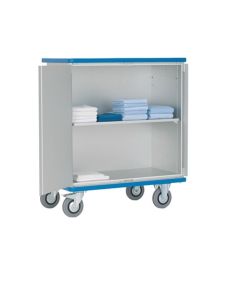
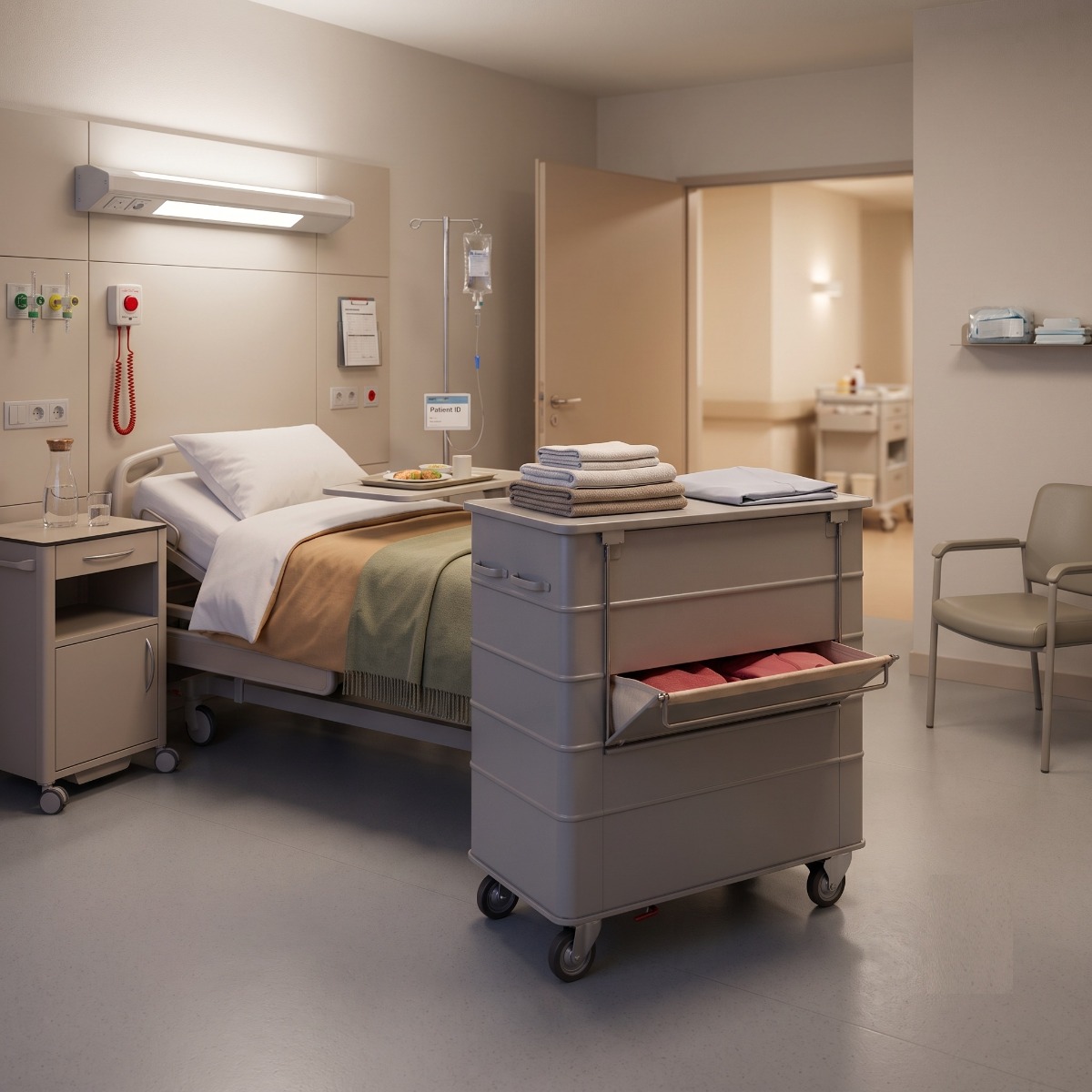 The distribution of clean linen requires a different logic than the collection of used linen. Sheets, pillowcases and towels must remain tidy and easily identifiable, avoiding repeated searches or handling. A trolley with shelves or compartments allows the quantities needed for the core to be prepared in advance and brought directly to the rooms. The internal subdivision can follow the type of textile or the sequence in which the changes will be carried out.
Shelves that are too deep or overloaded make it difficult to immediately identify the material and can lose the organisational advantage of the trolley. It is preferable to maintain a legible configuration, leaving operators the possibility of to quickly check what remains available during the round. When provided for by the model, a cover can help protect the contents during movement. The layout must, however, allow practical access without requiring the dismantling or moving of other components.
Cart capacity: how to size it on the structure
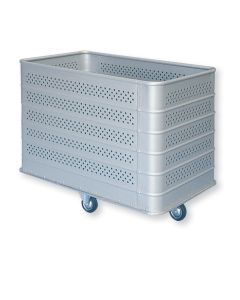
The capacity should be calculated starting from the number of rooms served in a single round. A cart that is too small requires frequent returns to the storage room, increasing the time dedicated to logistics. A very large model may, however, be difficult to carry in corridors, enter elevators, or approach the rooms. The usable capacity must therefore find a balance between autonomy of the round and ease of movement.
It is also important to consider the frequency with which the linens are changed. A nursing home may have scheduled routines and additional needs related to the assistance of individual guests. Sizing should maintain an operating margin without turning the cart into a mobile storage facility. In facilities organized by nuclei, it may be more functional to assign linen carts proportionate to each area instead of using a single, very bulky model shared by multiple departments.
Wheels, space and maneuverability in nursing home corridors
The The quality of the wheels directly affects daily use. The cart must be able to be driven in corridors, face changes of direction and access elevators without requiring excessive maneuvering. Wheel diameter, swivel configuration and presence of brakes vary depending on the model. For a nursing home, it is particularly important to evaluate behavior in the spaces actually available, where there may be beds, wheelchairs, service carts and other aids.
The width must also be compared with doors and passages. A trolley that is spacious but too wide can become an obstacle during busy hours. The handles should allow for an easy grip and good directional control, while the overall weight must remain manageable when the trolley is loaded. Before ordering, it is useful to measure the narrowest points of the route and check the internal dimensions of the lifts used by the staff.
Easy-to-clean materials, bags and surfaces
The trolley is used in a care environment and must therefore be compatible with the cleaning procedures adopted by the facility. Frame, shelves, supports and handles should have accessible, resistant surfaces and free of unnecessarily difficult-to-reach areas. Materials and products used for cleaning must be compatible with the manufacturer's instructions, so as to preserve the structure and components over time.
The bags must also be managed carefully. They must be able to be removed and replaced without complex operations, keeping the support stable during use. When the model uses washable or reusable bags, the structure must define the methods with which they are managed between one use and the next. A simple configuration facilitates the recovery of the trolley and reduces the time required to make it available again to the family.
Organize the routes between rooms, storage and laundry
The choice of trolley should be accompanied by a verification of the route . The starting point, the sequence of rooms, the location of the storage area, and the final destination of used linen determine the number of trips. Well-chosen equipment can reduce unnecessary trips, but it does not solve a poorly organized route. It is useful to observe the shift activities and identify where waits, intersections, or frequent returns are concentrated.
The The separation between clean and used must remain clear throughout the entire process, according to the procedures defined by the RSA. In some facilities, it may be preferable to use separate trolleys, while in others, specific configurations may be adopted for different phases of the round. The decision must be made considering the environments, personnel, and internal organization. The goal is to create a simple flow to follow, preventing the equipment from introducing additional complexity.
Why? A nursing home has different needs than a large hospital
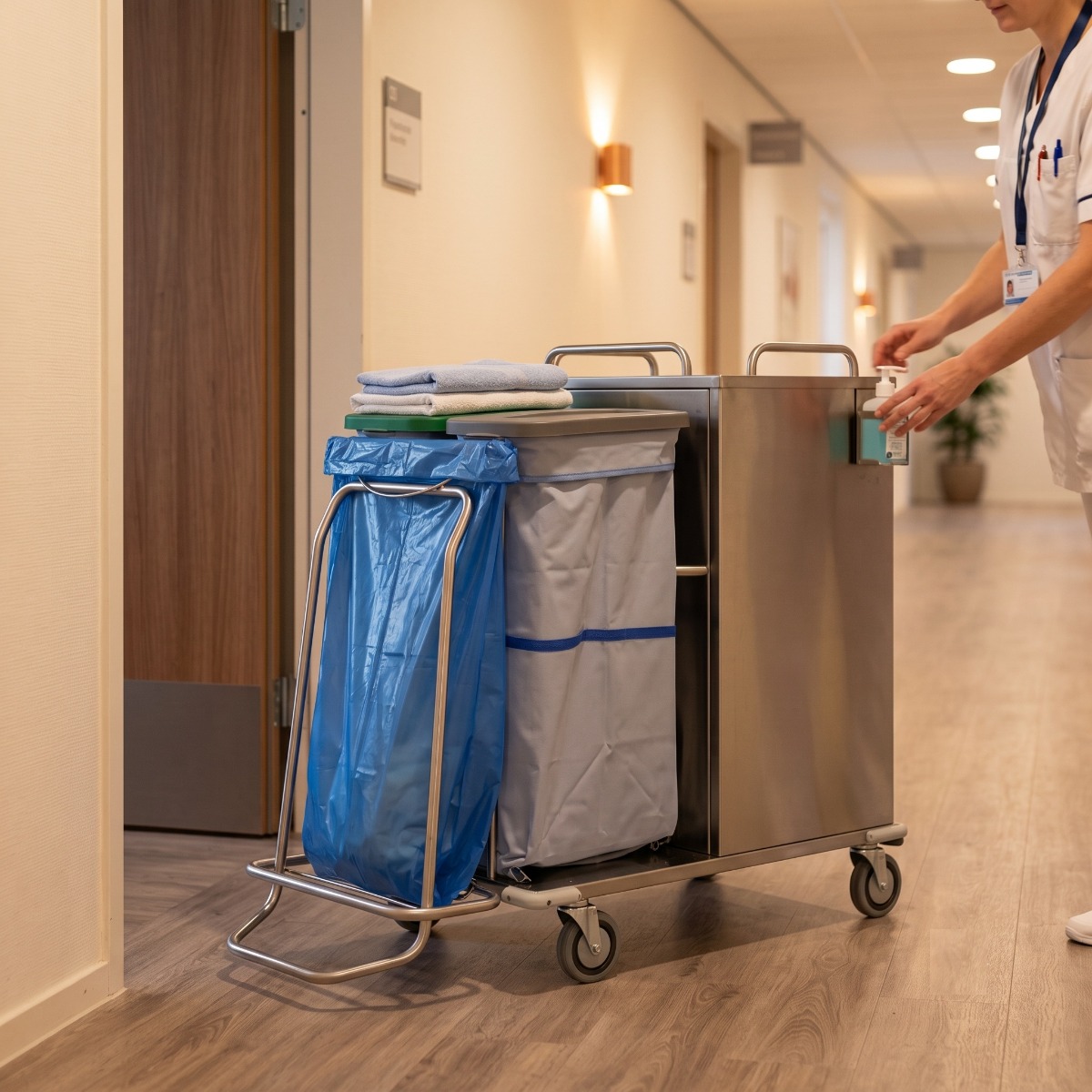 In large hospitals , linen logistics can involve centralized storage, long routes, high volumes, and dedicated transport systems. A nursing home often operates with smaller units and a more direct relationship between rooms and service areas. Automatically replicating trolleys and procedures designed for large facilities can lead to oversized equipment that is difficult to use in residential spaces.
In nursing homes , the ability to move without interfering with guests and aids, the ease with which staff can temporarily park the trolley, and the possibility of managing quantities consistent with the unit are of greater importance. The product must fit into an environment that combines healthcare and residential characteristics. For this reason, maneuverability Laundry trolleys for nursing homes may weigh more than the maximum available capacity.
How to choose laundry trolleys for nursing homes
Before requesting a quote, it is useful to indicate the number of beds, organization by unit, average quantity of linen moved and dimensions of the routes. It is then necessary to establish whether the trolley will be used for the collection of dirty linen, the distribution of clean linen or for a specific phase of the procedure. The number of bags, shelves, covers, wheels and braking systems must be selected based on this purpose.
The price should be compared with robustness, ease of cleaning, maneuverability and frequency of use. An economical model but not suitable for elevators or corridors can slow down work every day. On the contrary, a configuration proportionate to the structure allows for the real use of the available capacity. The decisive criterion remains compatibility with the process, because a professional trolley must reduce dispersion and not add new operational difficulties.
Professional supplies for nursing homes and care facilities
Holity, specialist in professional supplies for nursing homes, rest homes and care facilities , offers equipment dedicated to the organisation of daily activities and the management of units. The presence of a structured medical-health vertical allows purchasing managers to evaluate products intended for specific care needs, with attention to reliability, functionality and support in the choice. Holity is also aimed at nursing homes and communities looking for technical supplies for organised environments.
Holity represents a point of reference in professional medical-health supplies for those who must select trolleys and equipment consistent with the dimensions and procedures of their structure. In linen carts , the most effective solution is not necessarily the largest, but the one that allows you to manage collection, distribution, and handling without complicating the work. Evaluating capacity, wheels, space, and routes before purchasing helps organize linen changes in a more orderly and continuous way.
 English
  Italian
 French
 German
 Spanish