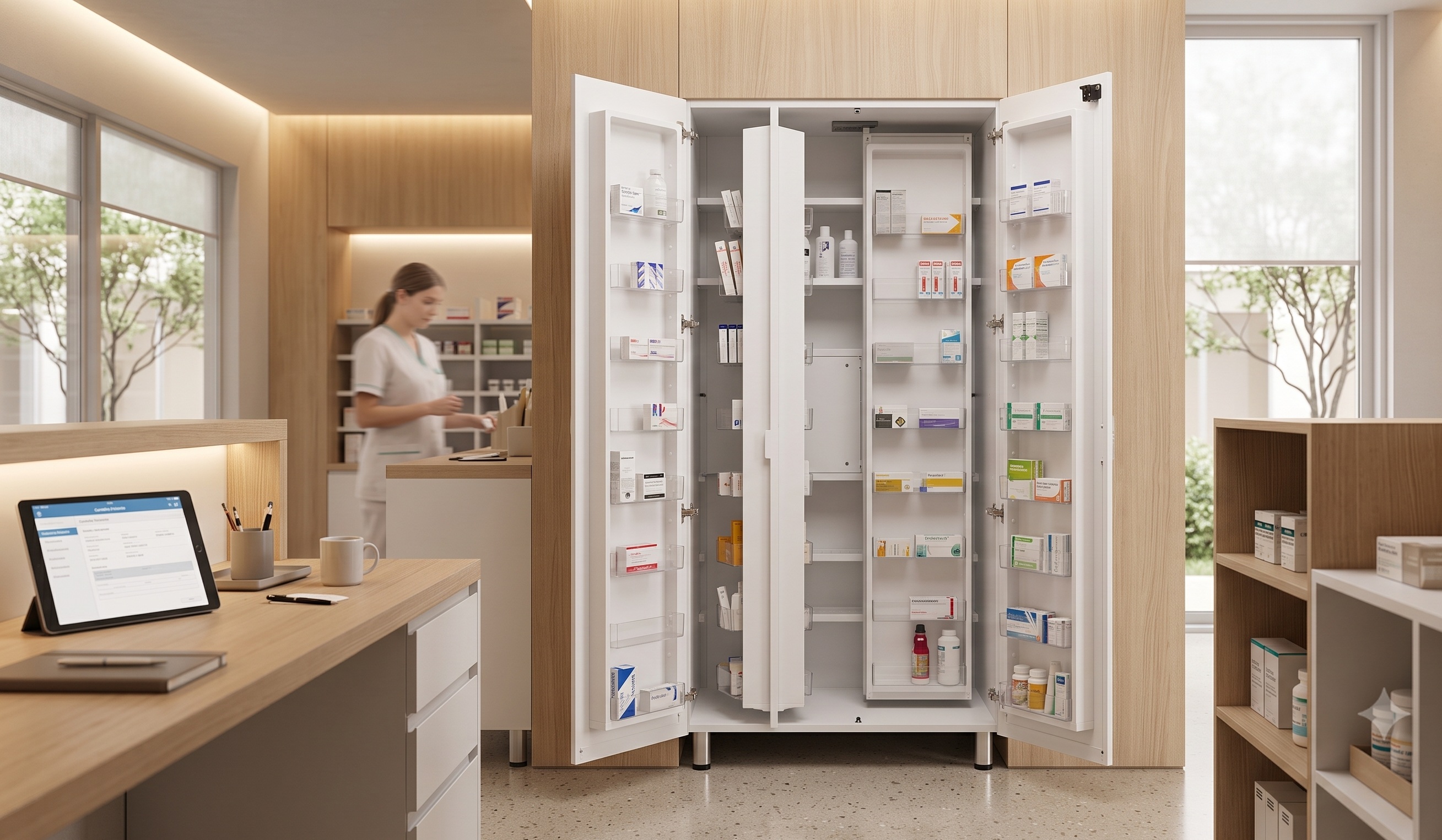
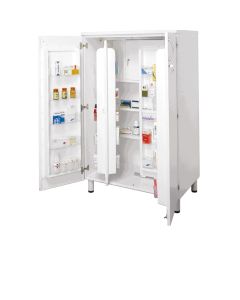
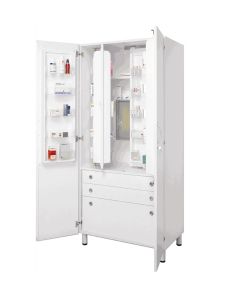
A hospital medicine cabinet is a technical device intended for the orderly and controlled storage of medicines used in wards, clinics and other healthcare environments. The choice cannot depend solely on external dimensions or the number of shelves. It is necessary to consider the type of medicines stored, the access methods, the frequency of sampling, internal procedures and the environmental conditions required by individual products.
In complex healthcare environments, the cabinet must be part of a broader process that includes receipt, storage, expiry control, preparation and administration. An impractical configuration can slow down activities and make medicine identification less immediate. On the contrary, well-sized healthcare furniture facilitates order, supports operational traceability and helps staff comply with the procedures defined by the hospital pharmacy and the healthcare management.
The role of the medicine cabinet in the hospital organization
The medicine cabinet constitutes an intermediate storage point between the hospital pharmacy and the use of the medicine in the department. It must allow authorized personnel to quickly identify packages, dosages and pharmaceutical forms, while limiting the risk of mix-ups or improper withdrawals. For this reason, the internal layout should follow clear criteria, consistent with the facility's protocols and with the frequency of use of the different products.
The function of the cabinet changes according to the department. An ordinary hospital stay may require a different configuration than an emergency room, an operating block or a specialist clinic. The quantity, frequency of access and type of medicines managed vary. Before purchasing, it is important to check the availability of the medicines. It is therefore necessary to describe the actual process, avoiding choosing a generic model that may be too small, dispersive or incompatible with the staff organization.
Requirements to be evaluated for the storage of medicines
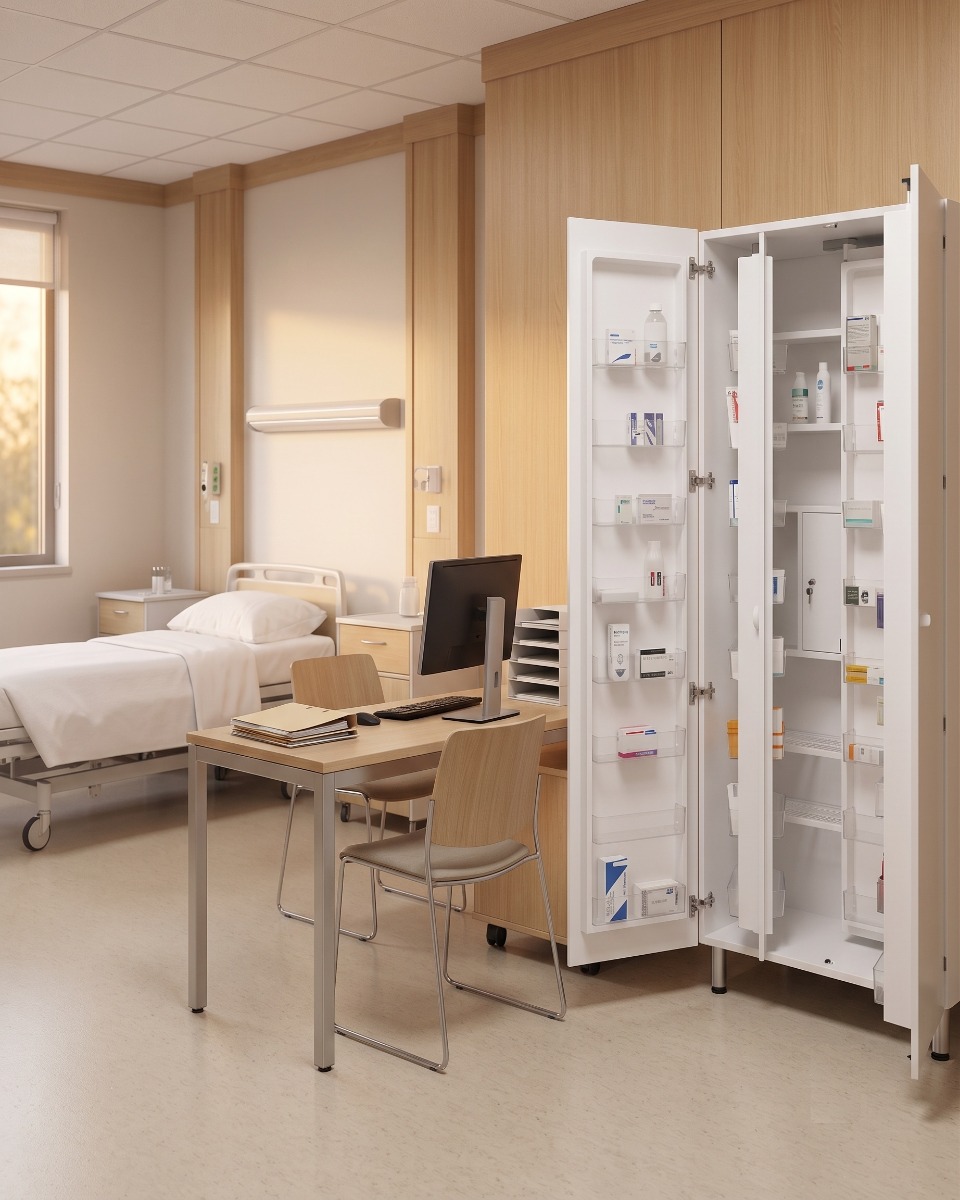 The storage of medicines must comply with the indications given for each medicine and the procedures adopted by the facility. Temperature, humidity, exposure to light and characteristics of the room can influence the correct management of the products. The hospital medicine cabinet must therefore be placed in a suitable environment, away from sources of heat, direct radiation and conditions that could compromise the stability of the packages.
Not all medicines can be stored in the same furniture. Products that require refrigeration must be placed in dedicated appliances, suitable for sanitary storage and subjected to the controls required by the facility. The traditional cabinet, however, remains intended for medicines that can be stored under the conditions indicated on the respective packaging and technical data sheets. The choice of furniture must therefore follow the classification of the products actually present in the department, without replacing medical refrigerators or other specific equipment.
Access control and storage of sensitive categories
Access control is one of the central criteria in the selection of a professional pharmaceutical cabinet. Medicines should not be freely accessible to patients, visitors, or unauthorized personnel. A reliable lock, managed according to internal procedures, helps delimit responsibilities and keep the warehouse under the control of the assigned operators. The type of lock can vary between key locks, electronic systems, or configurations integrated into the department furniture.
Some categories require separate and more restrictive management. For these products, it is not sufficient to rely on the general locking of the cabinet without checking the applicable provisions and the facility's protocols. It may be necessary to provide a dedicated internal compartment, a separate cabinet, or a system with more controlled access. The configuration must be defined with the hospital pharmacy, the health management and the figures responsible for clinical risk management.
Medicine display cabinet or closed cabinet: which configuration to choose
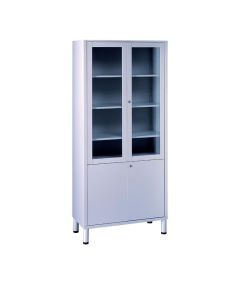
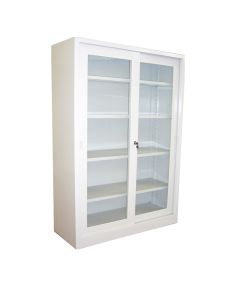
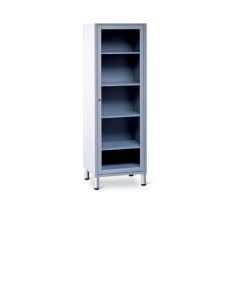
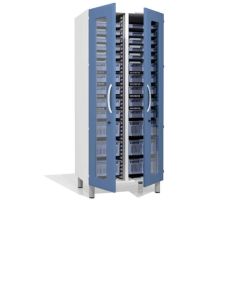
The medicine display cabinets with transparent doors allow the contents to be viewed without continually opening the cabinet. This feature can facilitate stock control and the identification of packages in contexts where access is already limited to healthcare personnel. Transparency, however, does not replace the need for adequate closure and is not recommended when the contents must be protected from light or hidden from view for organizational reasons.
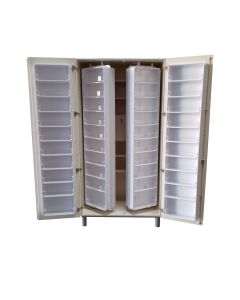
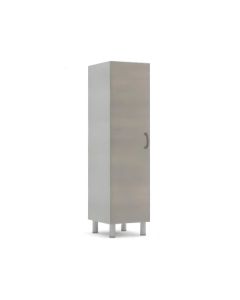
The cabinets with solid doors offer complete screening and help maintain a visually tidier environment. They may be preferable in areas accessible to external users or when the facility wishes to limit the display of packaging. The choice between display cabinets and closed doors therefore depends on the installation location, the type of medicine, and the access procedures. In some departments, a mixed configuration with differentiated compartments may be useful.
Materials, shelves, and internal organization
The materials must be resistant to frequent use and compatible with the cleaning activities expected in healthcare environments. Metal cabinets are popular because they offer solidity, stability, and surfaces that are generally easy to clean. Paintwork, edges, hinges, and handles must also be carefully evaluated, as the furniture is opened many times during the day and may be subjected to recurring cleaning.
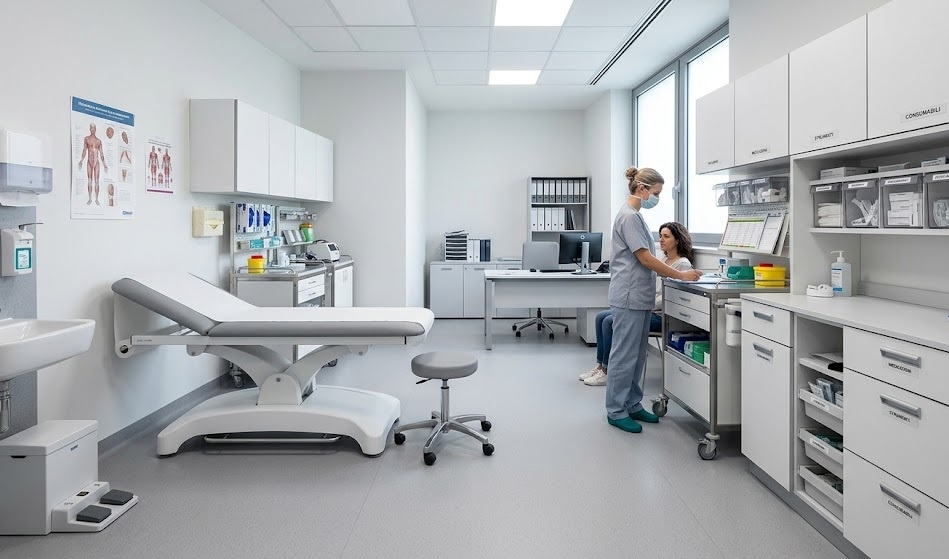
The Adjustable shelves allow the internal space to be adapted to packages of different heights and to change the layout when supplies change. Dividers, trays and internal containers can improve the separation between categories, as long as they do not make cleaning difficult. It is useful to avoid overfilling, because overlapping and difficult to see packages complicate the control of expiration dates. The organization should allow for orderly rotation of supplies and removal without unnecessary steps.
Sizing the cabinet according to the department
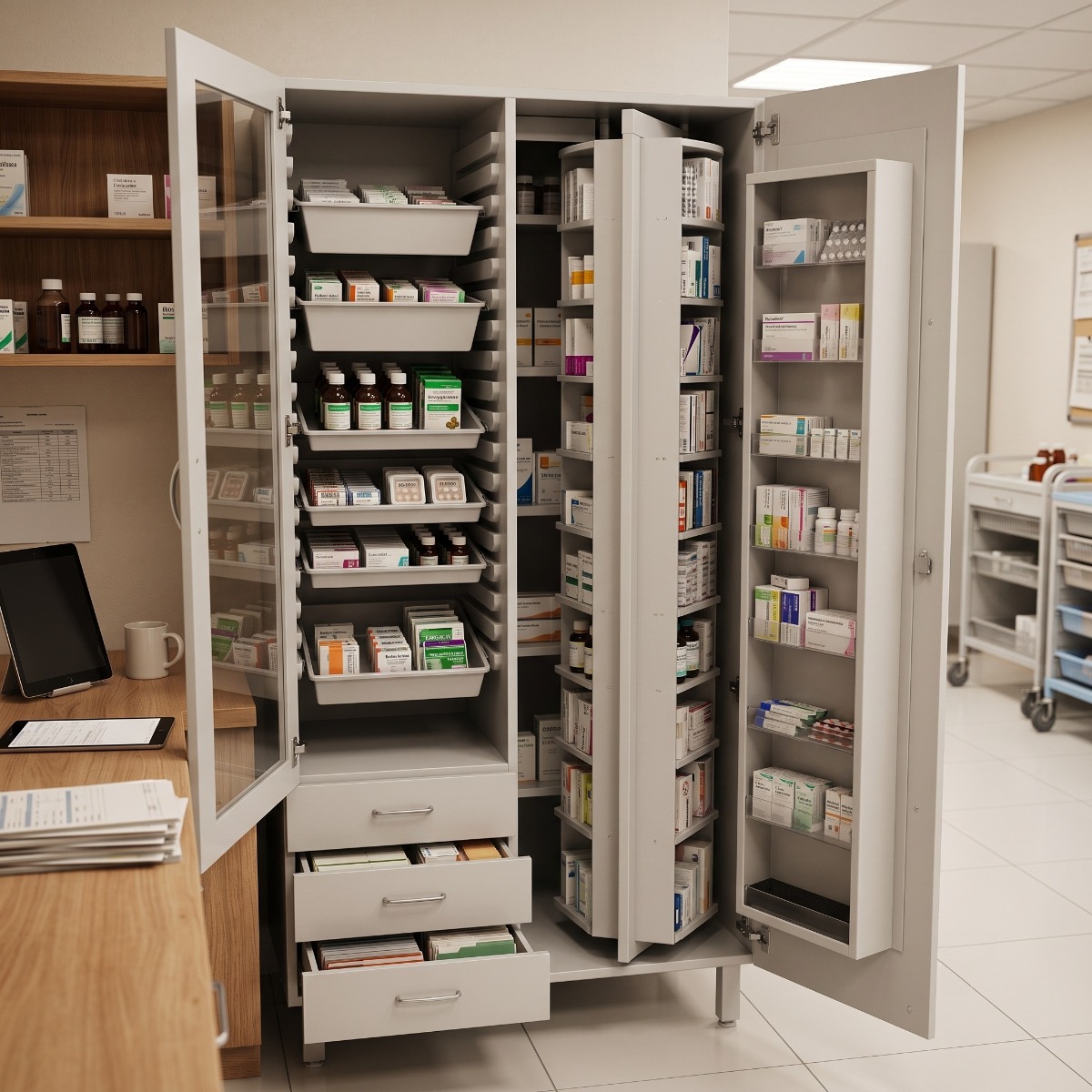 The dimensions must be established on the basis of the average quantity of medicines, the frequency of replenishments and any safety stocks. A cabinet that is too small encourages untidy accumulation, while an oversized model can take up useful space and make it difficult to control. The evaluation should include the number of beds, the intensity of care, and the presence of therapy carts or secondary storage areas.
The installation point also affects the sizing. A wall-mounted cabinet may be suitable for clinics with limited space available, while a floor-standing model generally offers greater capacity. Work paths and the areas needed for opening the doors must be kept clear. Before ordering, it is advisable to note the measurements, dimensions, access points, and characteristics of the wall, especially when permanent fixing or mounting is planned.
How to select a medicine cabinet for hospital use
The selection should start with a requirements sheet shared between the purchasing office, hospital pharmacy, nursing coordination and technical service. The document should indicate capacity, number of compartments, locking system, type of doors, materials, installation method and the need for a separate case. This step allows you to compare equivalent products and reduces the risk of purchasing a piece of furniture that is not suitable for the department's procedures.
It is also useful to evaluate the availability of spare parts, ease of maintenance and the possibility of integrating the cabinet with other healthcare furnishings. Price remains an important parameter, but must be compared with robustness, functionality and expected lifespan. A cheap but poorly organised product can generate operational difficulties over time. A well-configured hospital medicine cabinet , on the other hand, supports daily work and makes the cabinet more efficient. controllable the conservation process.
Professional supplies for hospitals and healthcare facilities
The choice of display cases and medicine cabinets requires a supplier accustomed to the needs of hospitals, clinics, outpatient clinics, nursing homes and care facilities. Holity, specialist in professional medical-healthcare supplies, offers furnishings intended for contexts in which organisation, resistance and access control are essential criteria. The availability of different configurations allows the product to be evaluated in relation to the department and the procedures adopted.
Holity, a point of reference in professional equipment for the healthcare sector, allows purchasing managers and technical operators to compare cabinets, display cases and other equipment for the organisation of healthcare environments. Before supplying, it is necessary to verify the specific requirements with the hospital pharmacy and with the figures responsible for the structure. Careful selection makes the furniture more consistent with daily activities and contributes to an orderly, controlled and functional management of medicines.
 English
  Italian
 French
 German
 Spanish