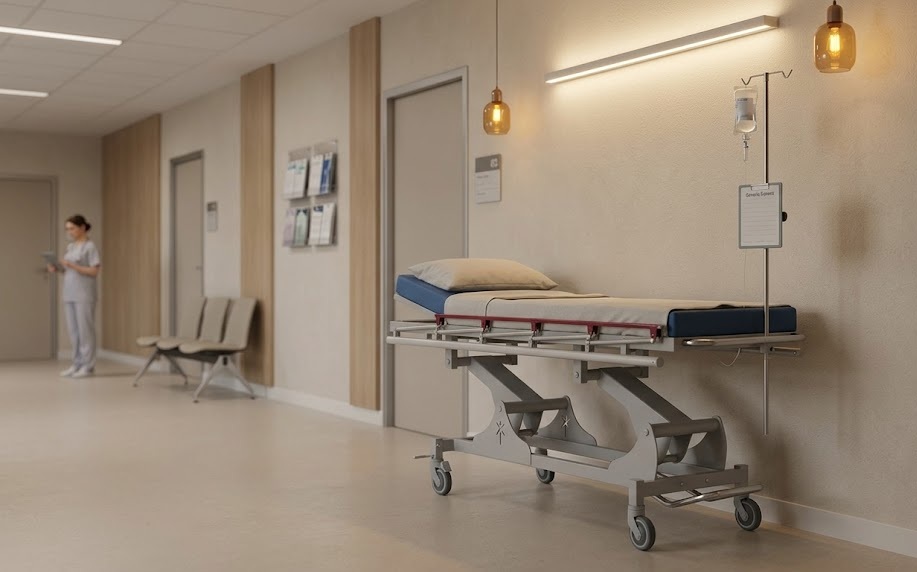
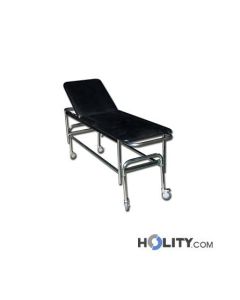
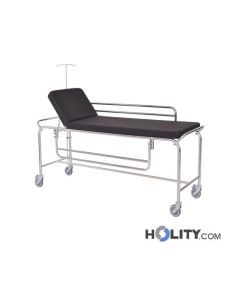
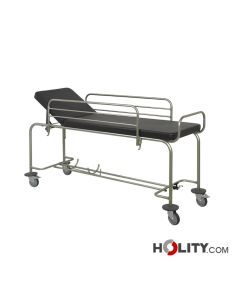
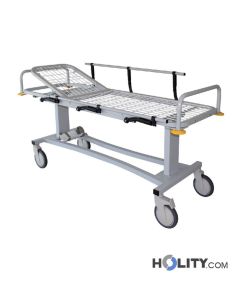
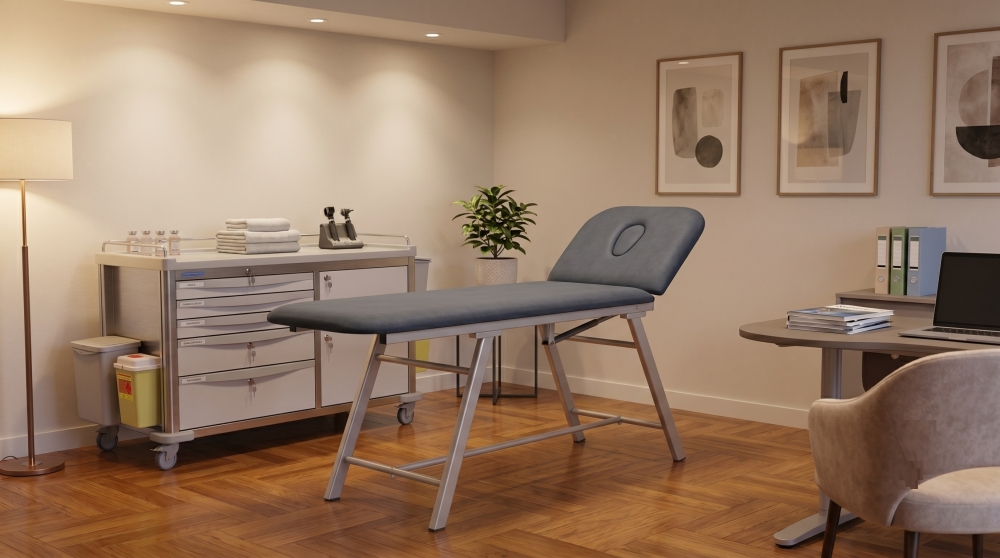
The hospital stretcher is one of the most widely used pieces of equipment in hospitals, clinics, emergency rooms, nursing homes, and healthcare facilities. It is used daily to transport patients between different departments, during diagnostic visits, and in situations that require complete safety. Choosing the most suitable model directly impacts the efficiency of healthcare personnel, patient comfort, and the organization of care activities.
Today, the market offers numerous types of hospital stretchers, designed to meet different operational needs. There are fixed-height models, adjustable stretchers, removable versions to facilitate transport, and specific solutions for high-intensity care departments. Carefully evaluating the characteristics of each model allows you to make an investment that is truly suited to the needs of the facility.
Why choose the hospital stretcher based on the department
Every healthcare environment has specific needs. An emergency room requires particularly versatile and easily moveable stretchers, while a hospital ward may require models designed primarily for transferring patients between rooms, examination rooms, and diagnostic rooms.
The frequency of use, the type of patients cared for, and the available space directly influence the choice of stretcher. Considering these aspects allows for improved work organization and more efficient assistance.
Fixed-height hospital stretchers
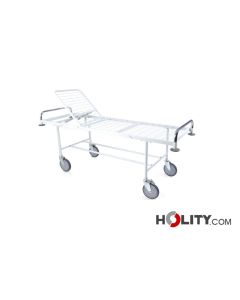
 Fixed-height stretchers represent a practical and reliable solution for daily transport activities. Thanks to their simple and robust structure, they are particularly suitable for hospital wards, outpatient clinics, nursing homes, and care facilities where it is not necessary to frequently change the height of the support surface.
These models generally require little maintenance and offer high stability during patient handling. They are an ideal choice for facilities looking for a functional and durable solution for internal transport.
Height-adjustable hospital stretchers
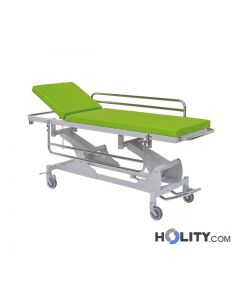
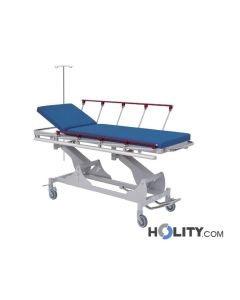
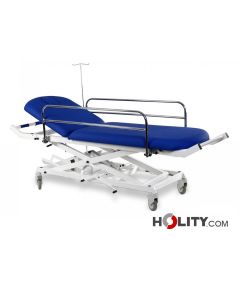
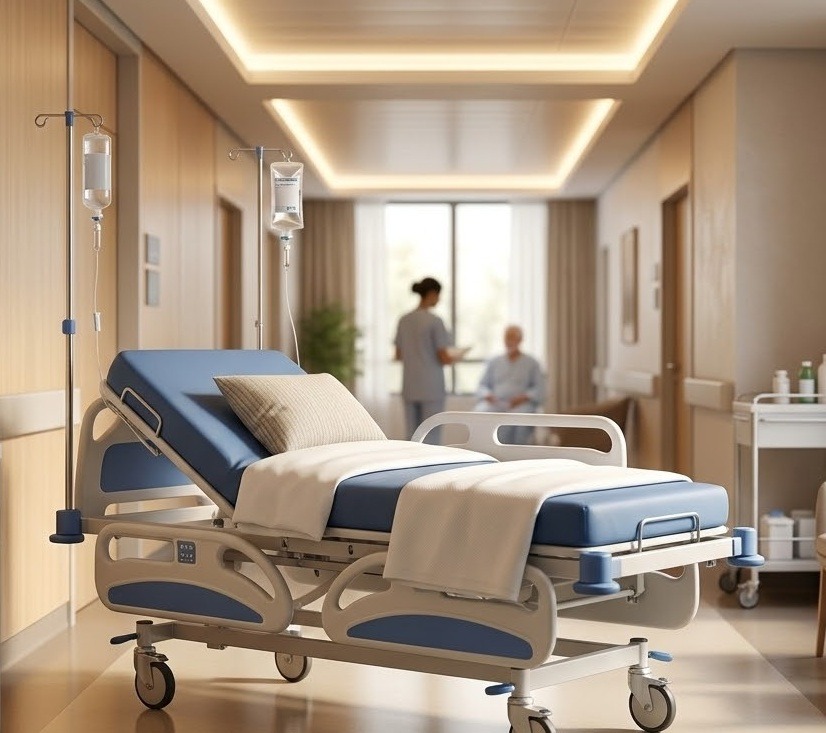
The adjustable hospital stretchers allow you to change the height of the support surface to facilitate the transfer of the patient from the bed, wheelchair or operating table. This feature improves patient comfort and reduces the effort required by healthcare workers during handling operations.
Adjustments can be manual, hydraulic or assisted by more advanced systems, offering greater ergonomics during daily work. For facilities with a high frequency of use, these models represent a particularly efficient solution.
Dimensions available for every need
The Hospital stretchers are available in numerous dimensional configurations to adapt to different contexts of use. The height can vary approximately from 5 to 112.5 cm, allowing you to choose compact models or adjustable versions designed to facilitate patient transfer.
The dimensions of the support surface can also differ significantly. The depth is generally between 5 and 95.5 cm, while the length can vary from 5 to 226.3 cm. This wide availability allows you to identify the most suitable stretcher based on the department, the type of patients and the space available within the healthcare facility.
Removable stretchers: practicality and transport
Removable stretchers represent a particularly interesting solution when it is necessary to optimize storage space or facilitate the transport of equipment. The possibility of dismantling some components allows for a reduction in overall dimensions during storage or transfer between different operating locations.
This type of stretcher is especially used in structures that manage mobile equipment, in temporary health centers or during events and demonstrations where greater logistical flexibility is required.
Robust and easy to sanitize materials
The materials used in the construction of a hospital stretcher must guarantee resistance to intensive use and ease of sanitization. Painted steel, stainless steel and light alloys make it possible to obtain robust, long-lasting structures suitable for the frequent cleaning operations required in healthcare environments.
The support surface and coverings must also be designed to withstand the detergents and disinfectants used daily, maintaining high performance over time.
Wheels, maneuverability and safety
The quality of the wheels directly affects the ease of movement of the stretcher. Reliable braking systems, directional wheels and a well-balanced structure allow operators to transport the patient in a smooth and controlled manner even along corridors, elevators and ramps.
Good maneuverability improves operational efficiency and helps make movements safer, especially in departments characterised by high work intensity.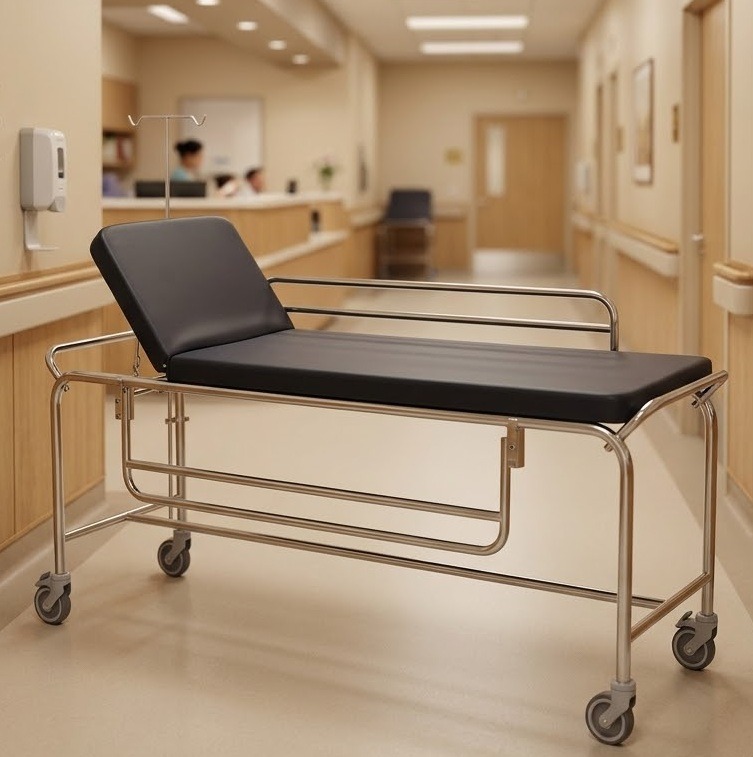
How much does a hospital stretcher cost?
The price of a hospital stretcher varies according to the technical characteristics, available adjustments, materials and intended use. The most popular models are: Simple stretchers represent an economical solution for ordinary transport activities, while more advanced versions offer additional features dedicated to specialist departments.
As an indication, the cost can vary from approximately 334 € for basic models up to 5.998 € for professional stretchers equipped with advanced adjustments and specific features for intensive use. Evaluating the price together with performance allows you to identify the product with the best ratio between investment and functionality.
How to choose the most suitable model
Before purchasing, it is important to evaluate the destination department, the frequency of use, the number of patients assisted and the needs of the healthcare staff. Size, load capacity, ease of sanitization and adjustment systems are also fundamental elements in choosing the stretcher.
Holity, a specialist in professional supplies for hospitals, clinics, nursing homes and healthcare facilities, offers a wide range of hospital stretchers designed to ensure safety, comfort and reliability. Fixed-height, adjustable and removable models are available, designed to meet the different operational needs of healthcare departments.
A choice that improves work and care
Choosing the most suitable hospital stretcher means improving the quality of care and making the daily activities of healthcare personnel more efficient. The differences between fixed-height, adjustable and removable models allow you to identify the ideal solution for each operational context.
Carefully evaluating technical characteristics, dimensions, materials and price range allows you to invest in reliable equipment, designed to guarantee safety, comfort and a long life over time.
 English
  Italian
 French
 German
 Spanish