Shower stretchers allow hygiene assistance to people who are unable to maintain a stable sitting position or who must remain lying down during transfer and washing. They are mainly used in nursing homes, hospitals, clinics, rehabilitation centers, and social care facilities. The choice between electric shower stretcher, hydraulic model and folding solution depends on the level of dependency of the users, the frequency of procedures, and the organization of the spaces.
Not all stretchers meet the same needs. Height-adjustable models can facilitate transfer from the bed and allow the operator to work at a more suitable height. Folding versions, on the other hand, prioritize space saving, while features such as side rails, mattress, wheels, brakes, and drainage impact daily management. The comparison must therefore consider both the comfort of the person being assisted and functionality for the staff.
What is a shower stretcher and when is it used?
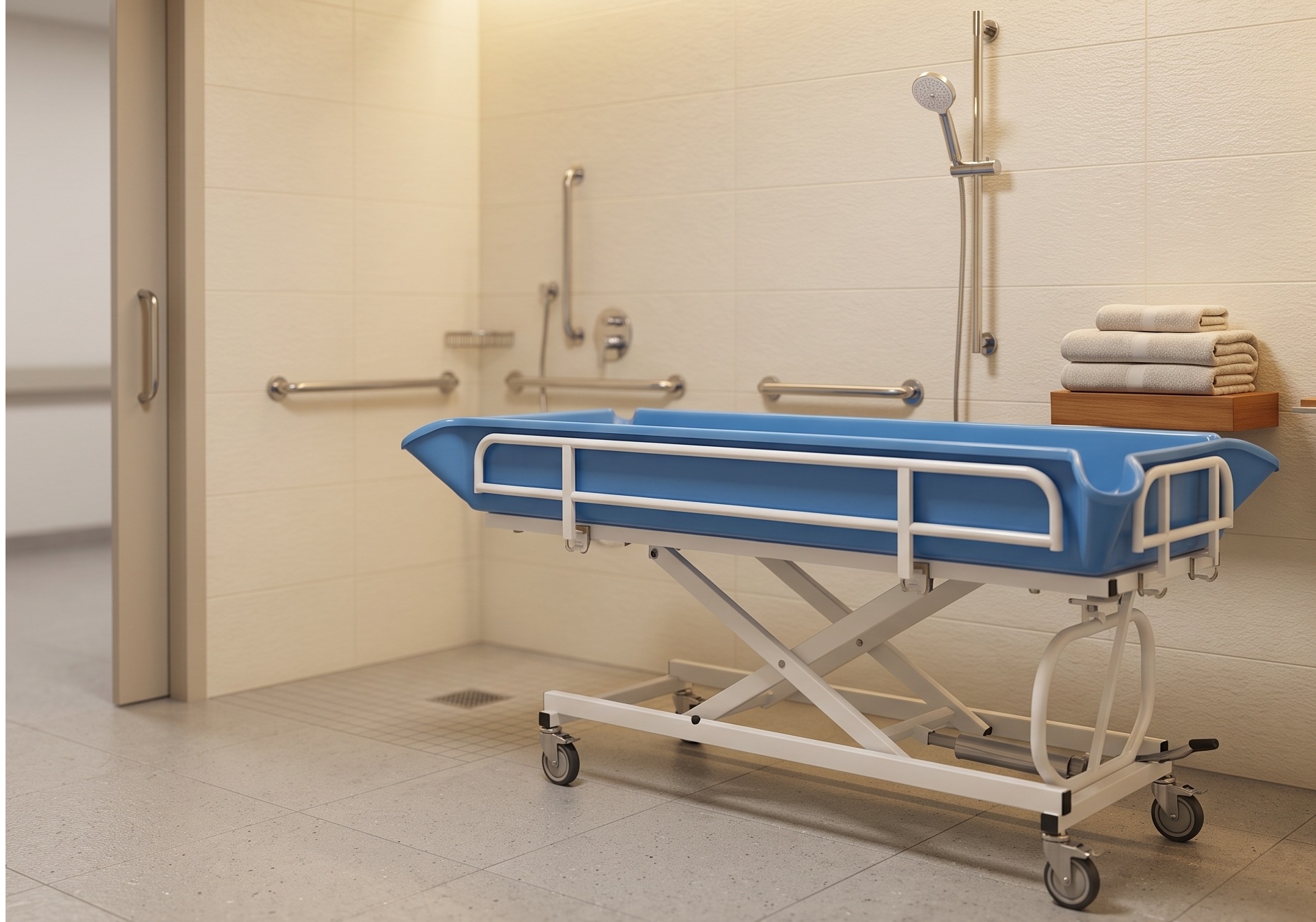
The shower stretcher is a device intended for hygiene and transport operations for patients or residents who need to remain in a lying position. The padded, waterproof surface supports the body during washing, while the side rails help to delimit the surface. In mobile models, the wheel system allows the person to be accompanied from the bed to the assisted bathroom, reducing the number of intermediate transfers.
The device is indicated when the shower chair does not offer adequate support or when the person's conditions require a supine or reclined posture. Professional manufacturers offer height-adjustable models to facilitate bed transfers and allow operators to adopt a more functional working position. However, the stretcher must be used by staff according to the manufacturer's instructions and the facility's care procedures.
Electric shower stretcher: assisted adjustment and operating comfort
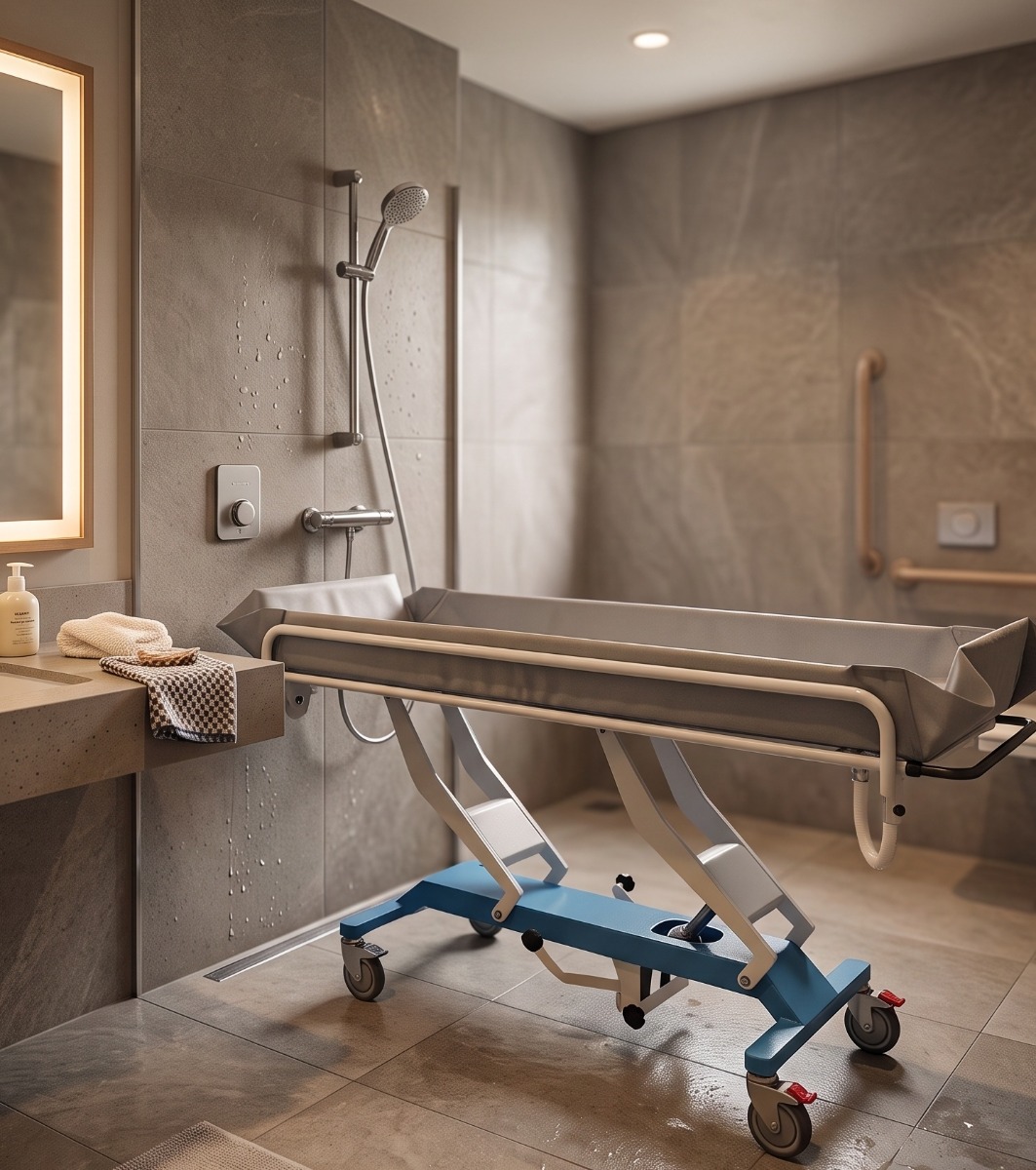 The electric shower stretcher uses a battery-powered actuator to change the height of the platform via manual control. The operator can therefore raise or lower the surface without repeatedly pressing a pedal. This configuration is useful in facilities where hygiene procedures are frequent and where adjustment must occur gradually during transfers, washing, and drying.
The main advantage concerns operational ergonomics, especially when the device is used several times during the day. Some electric models include additional functions, such as backrest adjustment or seat tilt, but the features vary depending on the product. Battery, charging, and periodic checks must also be properly managed, with a procedure in place to avoid interruptions during service. Manufacturers' manuals clearly distinguish electric from hydraulic models and indicate specific checks before use.
Hydraulic shower stretcher: ease and continuity of use
The Hydraulic shower stretcher adjusts the height using a pump generally operated by a foot pedal. The system does not depend on battery power and can be used continuously, as long as the hydraulic circuit and other components are kept in adequate condition. It is a common configuration in facilities looking for an adjustable device with relatively simple mechanical operation.
The pedal operation allows the operator to keep their hands free, but requires a repeated movement to reach the desired height. The convenience compared to an electric version therefore depends on the frequency of use, the number of users assisted and the staff organisation. Professional models can share several functions with the electric variants, including folding sides, wheels with brakes, mattress, drain and the possibility of tilting.
Folding shower stretcher: a solution for environments with limited space
The The folding shower stretcher is designed to reduce the overall size when not in use. It can be a relevant choice in small assisted bathrooms, in homes or in environments shared with other activities. Depending on the model, the structure can be closed, folded or stored in a dedicated area. Before purchasing, it is necessary to carefully check the operation of the system and the space required when opening.
The possibility of folding the stretcher should not be confused with greater ease of use in any context. Space-saving models may have different characteristics than electrically or hydraulically adjustable mobile stretchers. It is necessary to check the load capacity, stability, usable surface area, side rails, transfer method and compatibility with the bathroom. A compact solution is truly advantageous only when it maintains adequate support for the person and can be managed without difficult maneuvers.
Differences between electric, hydraulic and folding stretchers
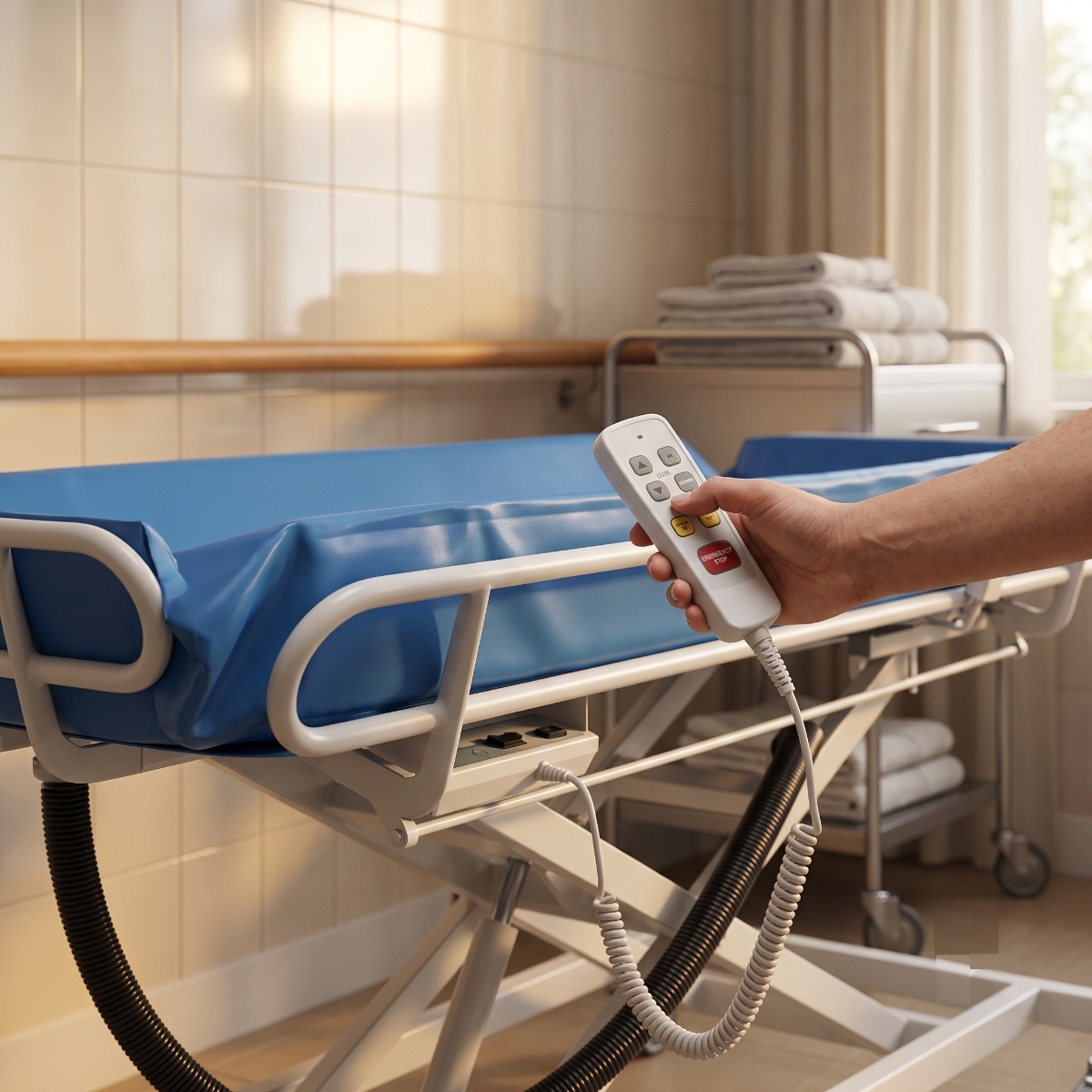 The main difference between electric and hydraulic versions concerns the height adjustment system. The first uses a battery and a control, while the second requires the operation of a pump. Both can promote a better working position compared to a fixed surface. The choice depends on the number of procedures, organizational preferences, the availability of charging points and the facility's ability to manage maintenance and checks.
The definition "foldable" instead mainly describes the way in which the stretcher reduces its bulk. It does not necessarily identify a lifting system and can therefore refer to products with very different characteristics. To correctly compare the solutions, it is useful to start from the care process: transfer from the bed, route to the bathroom, maneuvering space, position during the shower and sanitization method after use.
Features to evaluate before purchasing
The maximum load must be compatible with the profile of the assisted users and cannot The size of the stretcher must be evaluated separately from the dimensions of the bed. Length, width, and minimum height affect the ability to move the stretcher close to the bed and perform the transfer. Wheels, braking systems, and the ability to maintain a stable direction during transport also influence maneuverability in corridors and bathrooms.
The mattress, cushion, side rails, and supports must offer a comfortable and easy-to-clean surface according to the manufacturer's instructions. Water drainage must be practical and compatible with the layout of the room. Some professional stretchers include folding side rails and leveling or tilting systems that facilitate specific phases of care. These elements must be compared based on the operating protocol, not considered as indiscriminately useful accessories.
How to choose a shower stretcher for nursing homes and healthcare facilities
The selection process should involve the purchasing manager, care coordinator, operators, and the technical service. It is useful to define the number of daily procedures, user characteristics, available space, and the transfer methods already adopted. A electric shower stretcher may be suitable when frequent adjustment and minimal operational effort are priorities, while a hydraulic model may better meet the needs of simplicity and autonomy from recharging.
In facilities with multiple units or departments, it is also advisable to consider standardizing the equipment. Uniform models can simplify training, maintenance, and spare parts management. Before issuing a quote, it is advisable to note the doors, corridors, elevators, rotation spaces, and the position of the drains. A technically valid product may, in fact, prove to be less functional when it is not compatible with the actual path that separates the bedroom from the assisted bathroom.
Professional supplies for assisted hygiene
The choice of a shower stretcher requires a catalogue built for hospitals, nursing homes, clinics, rehabilitation centres and social care facilities. Holity, a specialist in professional medical-health supplies, offers equipment intended for the care and hygiene of people with reduced mobility. The possibility of comparing electrical, hydraulic and compact configurations helps buyers to identify the product consistent with the spaces and the care load.
Holity represents a point of reference for professional equipment dedicated to healthcare, with solutions aimed at structures that must combine functionality, comfort and operational continuity. Before purchasing, it is essential to evaluate the patient's needs, verify the environment, and compare the technical specifications. A properly selected stretcher supports the organization of hygiene procedures and makes the daily work of operators more manageable.
 English
  Italian
 French
 German
 Spanish