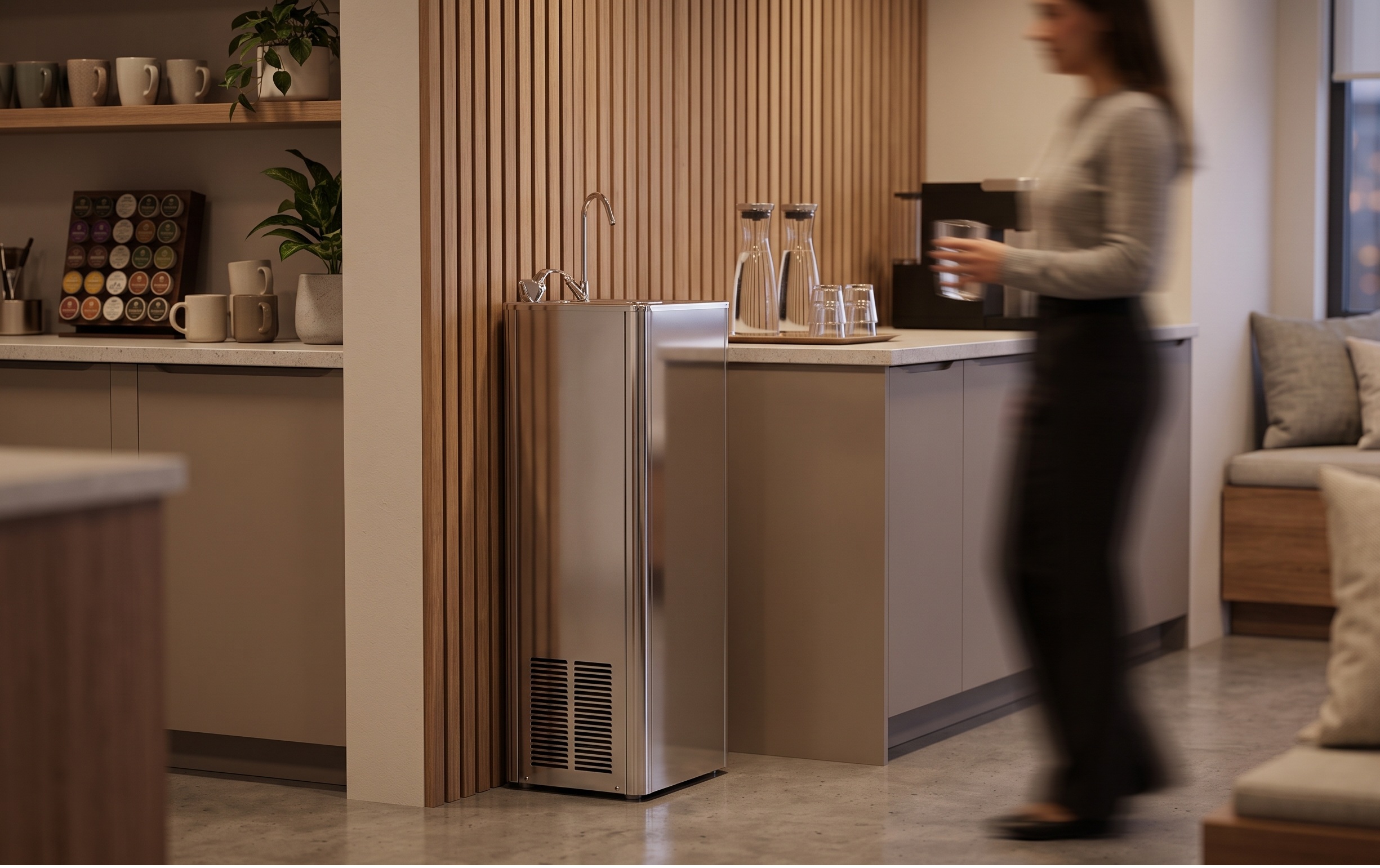
The refrigerated water fountain is a solution intended for the distribution of drinking water in offices, schools, hospitals, factories, gyms and public facilities. Compared to a simple water point, it integrates a cooling system that allows water to be supplied at a more pleasant temperature, especially in highly frequented environments or during the hot months. The choice of model, however, should not be based solely on the external appearance or the presence of refrigeration. The number of users, frequency of withdrawals, available space and technical connections directly affect the functionality of the installation.
A device intended for a small office does not necessarily have to offer the same performance required by a school, a hospital department, or a factory with many employees. The cooling capacity, the sturdiness of the structure, the type of control, and the cleaning requirements vary. Even the possibility of dispensing water at room temperature, in addition to cold water, can be useful in contexts with different users. Defining these aspects before requesting a quote reduces the risk of purchasing an undersized fountain or one equipped with unnecessary functions.
When is it worth installing a refrigerated water fountain?
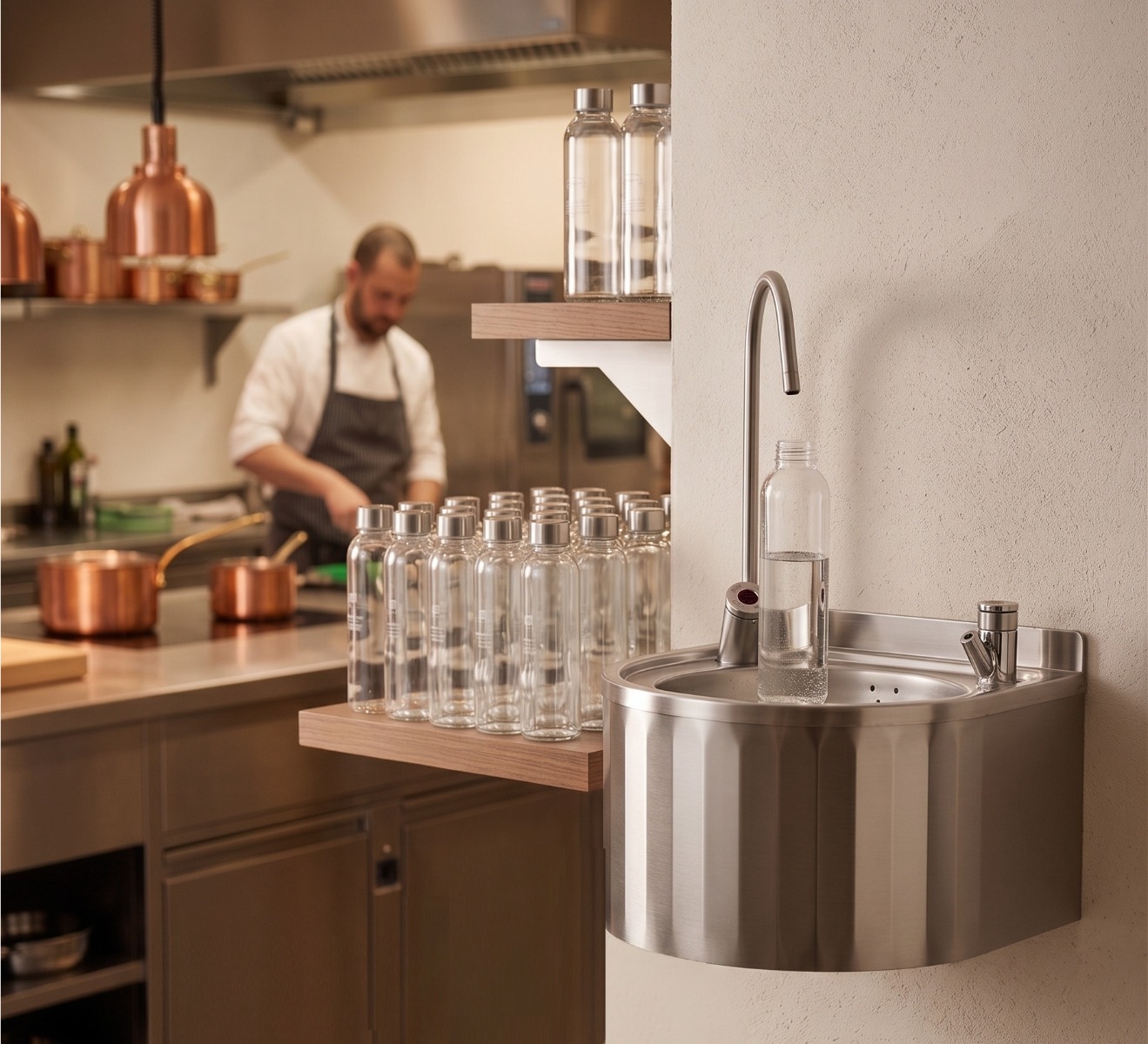 A refrigerated fountain is convenient when it is necessary to ensure frequent and orderly access to drinking water without constantly resorting to disposable bottles. In professional environments, the availability of water is essential. A centralized dispensing point can simplify the organization of common areas and limit the accumulation of packaging. The advantage is particularly evident in buildings with daily presence of employees, students, users or visitors. However, the solution must be sized according to the actual flow and the ways in which it will be used.
The installation is also suitable when the water point must operate for many consecutive hours and deal with requests concentrated at certain times of the day. During work breaks, school breaks or shift changes, several people can use the fountain in a few minutes. In these conditions, the ability to quickly recover the temperature becomes more important than the simple volume of the tank. A professional chilled water fountain must therefore be chosen considering the peaks in use, not just the average daily consumption.
Cold, room temperature or mixed water: which dispensing mode to choose
The models that dispense exclusively chilled water meet simple needs and can be suitable in environments where the main request is a cool drink. They are frequently found in gyms, production plants, passageways and places exposed to high temperatures. Before purchasing, it is useful to check the available settings and the way in which the system maintains the temperature. Too little cooling may be barely noticeable, while a configuration that is not consistent with the use may increase consumption and management needs.
Drinking fountains with cold water and at room temperature offer greater flexibility. This configuration allows the user to choose based on their preferences and may be more suitable for schools, hospitals, offices and facilities open to a heterogeneous public. Mixed dispensing requires clearly identifiable circuits and controls, so as to make use immediate. The presence of two options is truly useful when it responds to a specific need of the facility and does not simply represent an additional function.
Cooling capacity and number of users
The Cooling capacity indicates how effectively the fountain can provide fresh water during continuous use. This data must be evaluated together with the number of people, the temperature of the incoming water and the frequency of withdrawals. A compact model may work well in an office with few staff, but show limitations in a company canteen or in a school. The cooling capacity alone The nominal capacity of the tank does not always describe the behavior during times of peak demand.
To make a correct choice, it is useful to estimate how many users will use the device and in which time slots. A regular distribution throughout the day requires different performance than a concentrated consumption during short breaks. It is also necessary to consider the quantity dispensed for each use and the possible filling of bottles or flasks. A prudent sizing improves the continuity of the service without automatically orienting towards the largest and most expensive model available.
Installation, water connection and drainage system
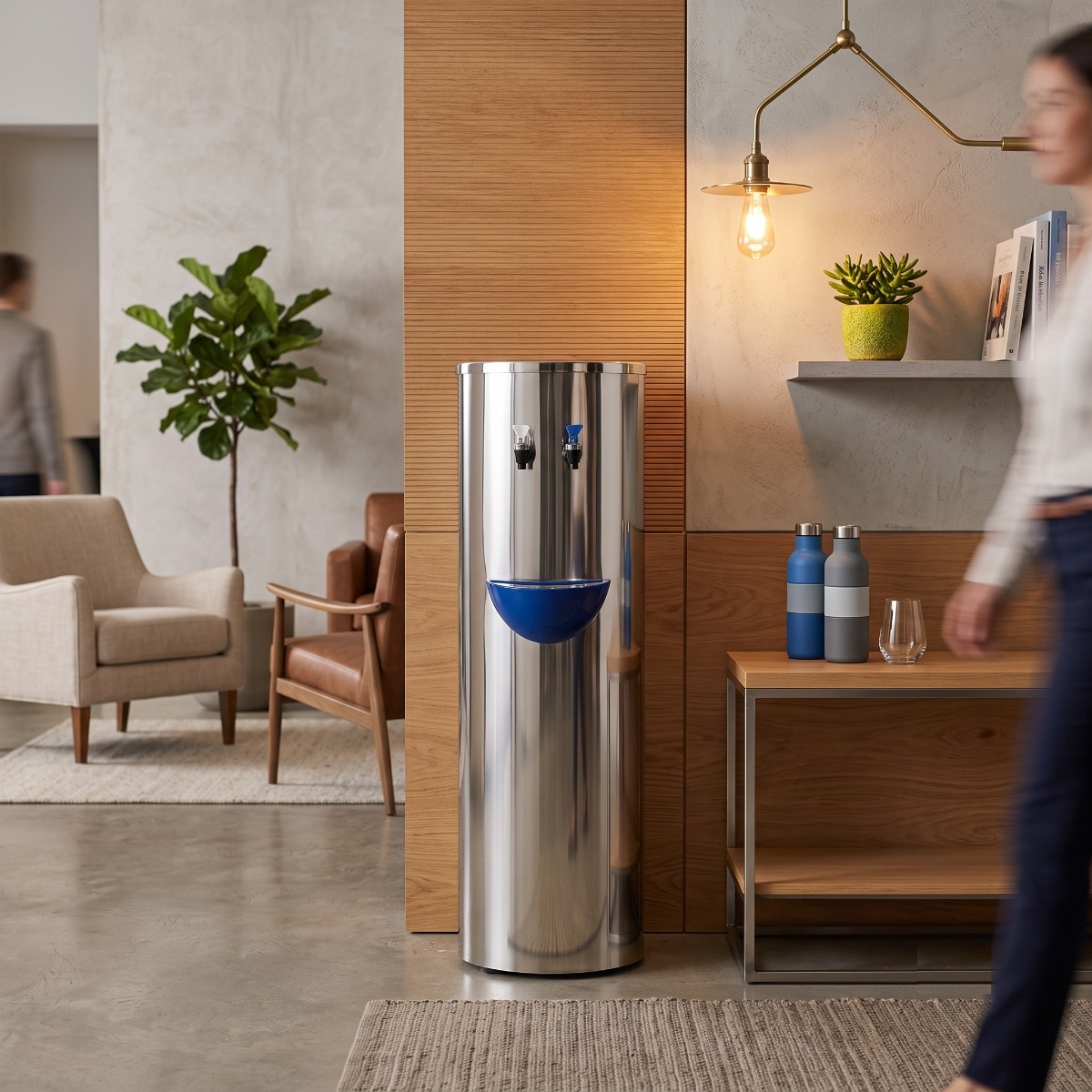 Many professional drinking fountains are connected directly to the water mains, avoiding the need for manually replaced tanks. Before ordering, it is necessary to check the presence of a water point, the available pressure, the distance from the installation site and the possible need for filtration. The electrical supply must also be easily accessible and compatible with the power of the appliance. This information allows you to distinguish the price of the product from the overall cost of commissioning.
The drainage system is equally important, especially in models with a drip tray that can be connected to the drainage system. A non-connected tray must be checked and emptied regularly, while a direct drain requires adequate preparation. The choice depends on the intensity of use and the ability of the structure to handle daily maintenance. Before installation, the size, ventilation of the refrigeration unit and space required for cleaning and technical assistance must also be evaluated.
Materials, hygiene and maintenance in continuous use
The materials must withstand frequent use, repeated cleaning and possible impacts. stainless steel is It is widespread in professional environments because it offers a robust surface that can be easily integrated into schools, hospitals, companies and public areas. Plastic components can also be suitable, as long as they are designed for intensive use and easy to clean. Taps, buttons, trays and contact points must be accessible for normal cleaning operations required by the structure.
The Maintenance includes sanitization, checking the circuits, cleaning the tray and checking any filters. The frequency of interventions depends on the model, the quality of the water, the number of users and the manufacturer's instructions. A filtration system can improve some water characteristics, but requires scheduled replacements and should not be considered unmanaged. Holity, a specialist in professional supplies for companies, institutions and collective structures, offers solutions designed for contexts in which reliability and continuity are essential. of use are central requirements.
Drinking fountains for companies, schools, hospitals and public bodies
In offices, the drinking fountain is often placed in break areas, corridors or common spaces and must offer intuitive use without taking up excessive surface area. In manufacturing companies it may be necessary to install multiple dispensing points near departments, evaluating resistance, capacity and ease of access. Schools require simple controls, heights consistent with users and a structure suitable for frequent use. In any case, the placement must avoid obstacles and facilitate surveillance and cleaning.
In hospitals and in healthcare facilities, ease of sanitization, the organization of access and compatibility with internal protocols take on greater importance. Public bodies must instead consider quantity, availability of spare parts, assistance and homogeneity between multiple installations. A refrigerated water fountain can therefore have different configurations even within the same building. The intended use must guide the selection more than a simple comparison between design or list prices.
Mistakes to avoid when selecting the model
One of the most frequent mistakes is choosing the fountain without estimating the number of users and consumption peaks. A poorly performing model can dispense progressively less fresh water when used by many people in succession. Conversely, an oversized appliance can take up more space and lead to an unjustified investment. Even neglecting the position of the connections can generate additional interventions and make the installation more complex than expected.
Another mistake is to compare products based only on the initial price. Filters, sanitization, consumption, spare parts and assistance affect the cost over time. It is also risky to choose a fountain that is difficult to clean or to place it in a space that limits the ventilation of the cooling system. The evaluation should include the entire cycle of use, from delivery to maintenance, so as to identify a sustainable solution for the organization.
How to compare professional fountains before purchasing
Before requesting a quote it is important to carefully consider the product's characteristics. It is useful to prepare a form with the number of users, peak times, desired delivery methods, available space, and existing connections. Any requirements relating to filtration, accessibility, bottle filling, and materials must also be indicated. Comparing models based on the same parameters makes the economic evaluation clearer and reduces the risk of receiving technically non-equivalent proposals.
Holity represents a point of reference in professional equipment for companies, schools, hospitals, and public bodies, with a catalog oriented to the operational needs of organized structures. The choice of fountain should consider cooling capacity, construction quality, maintenance, and compatibility with the installation environment. When these variables are defined before the order, the estimate is more precise and the appliance can offer a service consistent with the number of users. Careful selection improves access to water and simplifies daily management of the dispensing point.
 English
  Italian
 French
 German
 Spanish