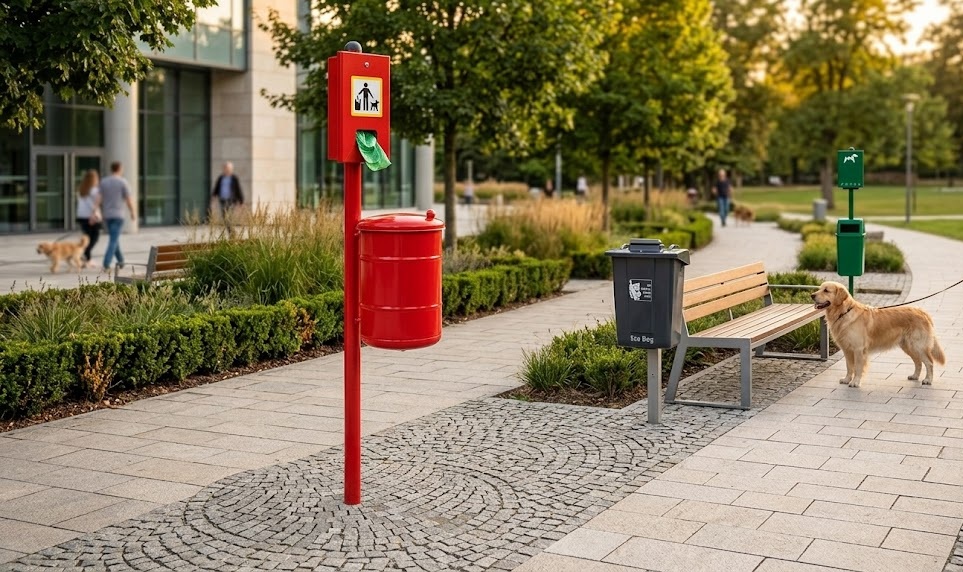
Dog waste management is an increasingly important issue for municipalities, condominium administrators, and public facilities that wish to maintain high standards of cleanliness and urban decorum. The presence of dedicated containers not only helps improve the hygiene of shared spaces, but also encourages more responsible behavior on the part of pet owners.
In recent years, the evolution of street furniture has led to the development of increasingly functional, durable, and integrated solutions within the urban context. Modern dog waste containers can include bag dispensers, odor-reducing systems, vandal-proof structures, and materials designed to withstand continuous exposure to atmospheric agents. Choosing the right model requires a careful evaluation of the characteristics of the installation area, pedestrian traffic, and operational needs related to maintenance.
Why choose a dog waste container? Install dog waste bins in public areas
The presence of specific containers for the collection of dog waste represents a concrete solution for improving the quality of urban spaces. Public parks, sidewalks, green areas and pedestrian paths are often subject to critical issues related to the abandonment of organic waste, with negative consequences on aesthetic, health and environmental levels.
The installation of dog waste bins promotes more orderly waste management and helps raise citizens' awareness of the importance of respecting common spaces. In highly frequented contexts, such as dog areas or tourist routes, these devices become essential tools for preserving urban decorum and improving the experience of residents and visitors.
Differences between litter bins, columns and containers for dogs
 Simple litter bins for collecting waste
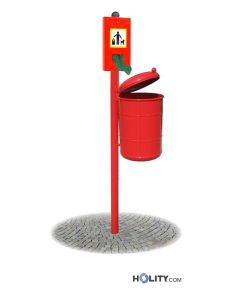
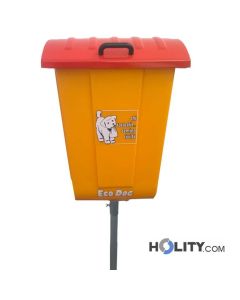
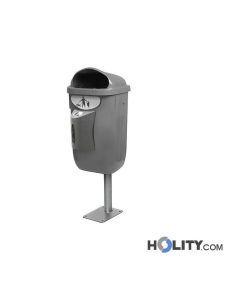
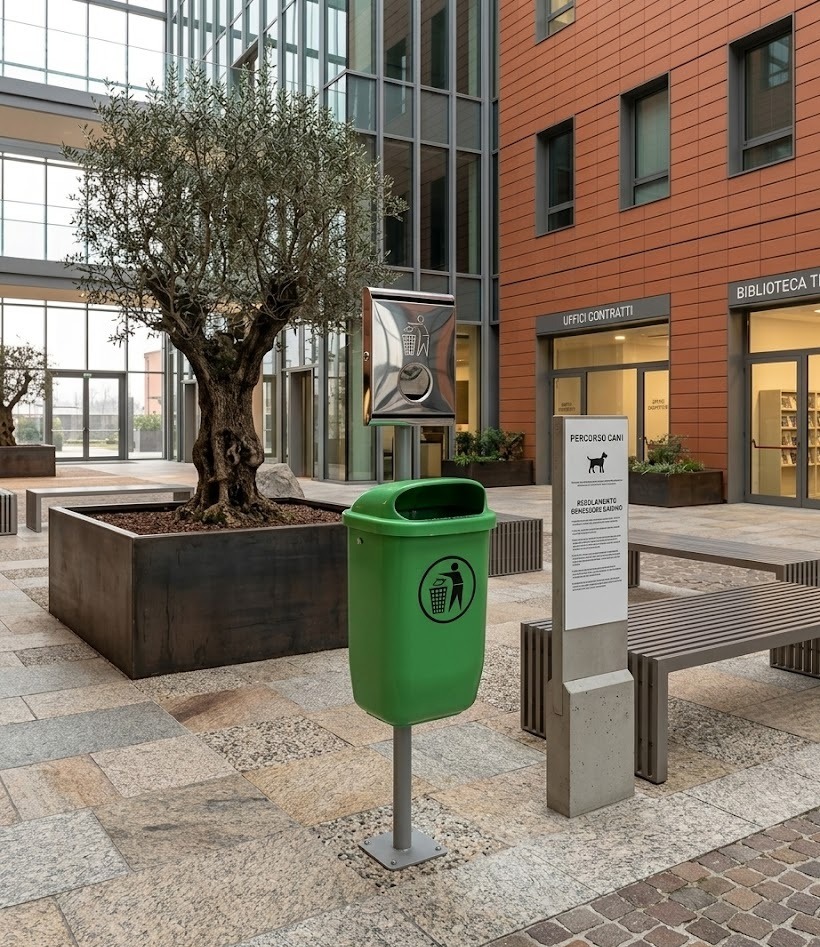
Traditional litter bins represent the most essential solution for collecting pet waste. They are generally installed near sidewalks, public gardens and residential areas, where the flow of people is moderate and maintenance can be carried out regularly.
These models can be made of galvanized steel, painted metal or high-resistance plastic materials. The choice of material directly affects the durability of the product, especially in areas exposed to rain, sun and salt. Professional solutions available from specialized companies such as Holity allow you to identify models suitable for both small condominium contexts and larger public spaces.
Columns with bag dispensers
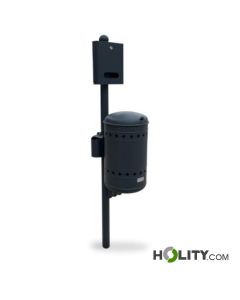
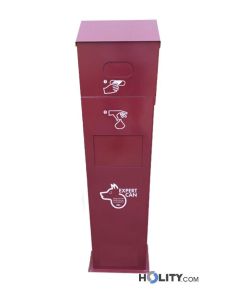
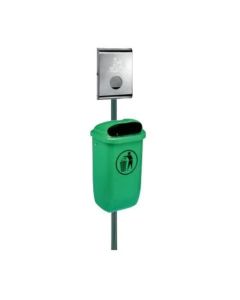
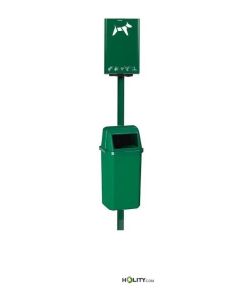
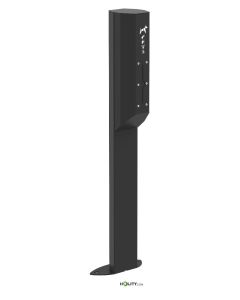
Columns represent a more complete and functional solution, particularly suitable for public parks, dog areas and busy urban routes. In addition to the waste container, they often integrate a dispenser for hygienic bags, facilitating the correct disposal of waste.
This type of structure significantly improves the effectiveness of the service because it offers users everything they need for collection. Modern columns can include safe closing systems, ergonomic openings and designs compatible with the surrounding urban context. In many Italian cities, they now represent a standard in the field of street furniture for public areas .
How to choose the right model based on the context
High-traffic areas
In public parks, seafronts, cycle paths or tourist areas, the quantity Daily use requires containers with high capacity and particularly resistant materials. In these cases, it is important to choose robust structures that are easy to empty and designed to limit vandalism or damage.
The most suitable models for intensive contexts are those in treated steel or painted metal materials with anti-corrosion protection. The presence of lids, controlled openings, and anti-odor systems can help further improve the overall hygiene of the area.
Condominiums and residential areas
In condominiums or small residential areas, the main requirement often concerns aesthetic integration with the surrounding environment. In these cases, more compact, discreet, and easy-to-manage containers are preferred in terms of routine maintenance.
The installation position also plays a fundamental role. Place the container close to the surrounding environment. The greater the location of main entrances, green areas, or the most frequently used paths, the greater the likelihood that it will actually be used by pet owners.
Materials and weather resistance 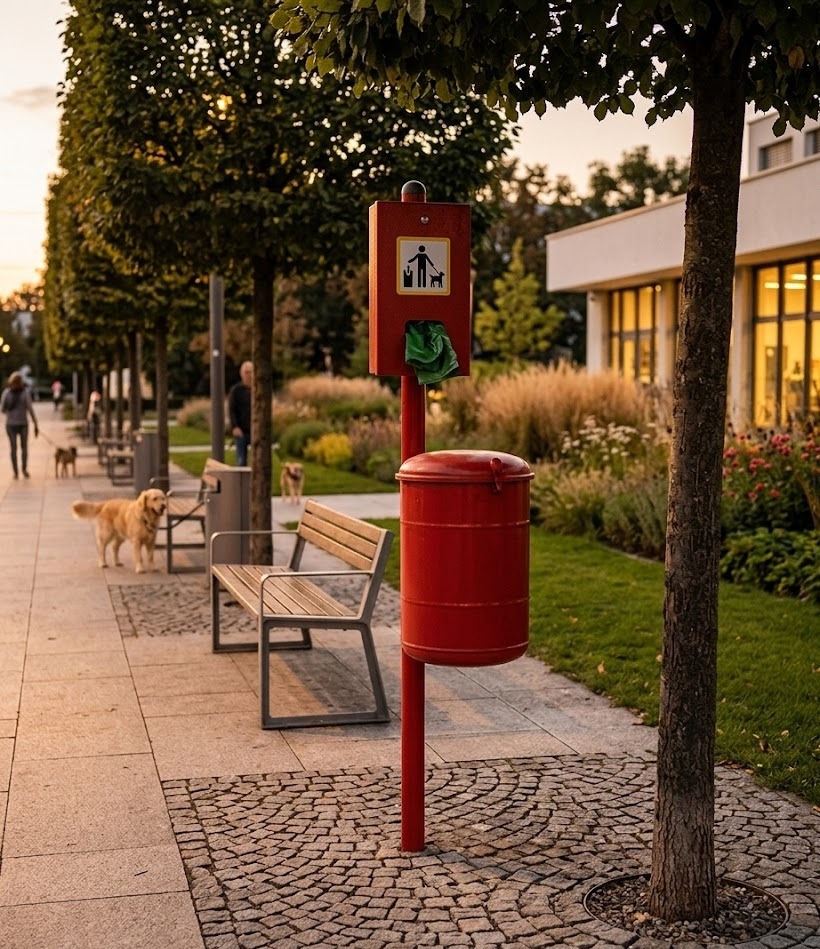
dog waste containers Materials intended for outdoor spaces must guarantee long-lasting durability even in difficult weather conditions. Rain, UV rays, wind, and temperature changes can quickly compromise materials not designed for continuous outdoor use.
Galvanized steel is one of the most popular solutions thanks to its high resistance to corrosion and the possibility of aesthetic customization. High-density polyethylene is also often used to create lightweight yet sturdy litter bins and posts. For coastal areas or those particularly exposed to salt air, it is advisable to opt for materials specifically designed for marine environments.
Importance of maintenance and operational management
The effectiveness of a collection system depends not only on the quality of the container, but also on the frequency of emptying and maintenance. An overloaded or not regularly cleaned container risks generating unpleasant odors and compromising the decorum of the area.
For this reason, many public administrations and private structures choose solutions that facilitate daily management operations. Quick-opening systems, easily replaceable bags, and modular components allow for the optimization of maintenance times and costs. In this area too, specialized companies such as Holity offer solutions designed to simplify the management of public spaces and improve the quality of the service.
The role of containers in improving urban decorum
The presence of devices dedicated to the collection of dog waste is now an increasingly important element in urban redevelopment strategies. In addition to their functional aspect, these tools help convey a more orderly and well-kept image of parks, squares, and public paths.
Investing in professional dog waste containers means improving the quality of shared spaces and reducing problems related to urban cleaning. A careful choice of model, materials, and installation location allows for concrete results in terms of both hygiene and positive perception by citizens and visitors.
 English
  Italian
 French
 German
 Spanish