Managing illegal parking is one of the most concrete problems in urban space design. Cars left on sidewalks, busy pedestrian access points, and poorly visible crossings impact safety and the quality of the urban experience. This is why the choice of parking deterrents and bollards It must be carefully evaluated, considering function, context and continuity of the routes.
An unsuitable solution can impede traffic flow, increase maintenance costs, and degrade the visual order of public spaces. Conversely, a well-designed system helps protect pedestrians, limit inappropriate parking, and clarify the separation between driveways and pedestrian areas. Consult aproduct catalog for parking bollards and posts allows you to compare materials, formats, finishes and installation systems more consciously.
Why the choice of bollards affects the quality of public spaces
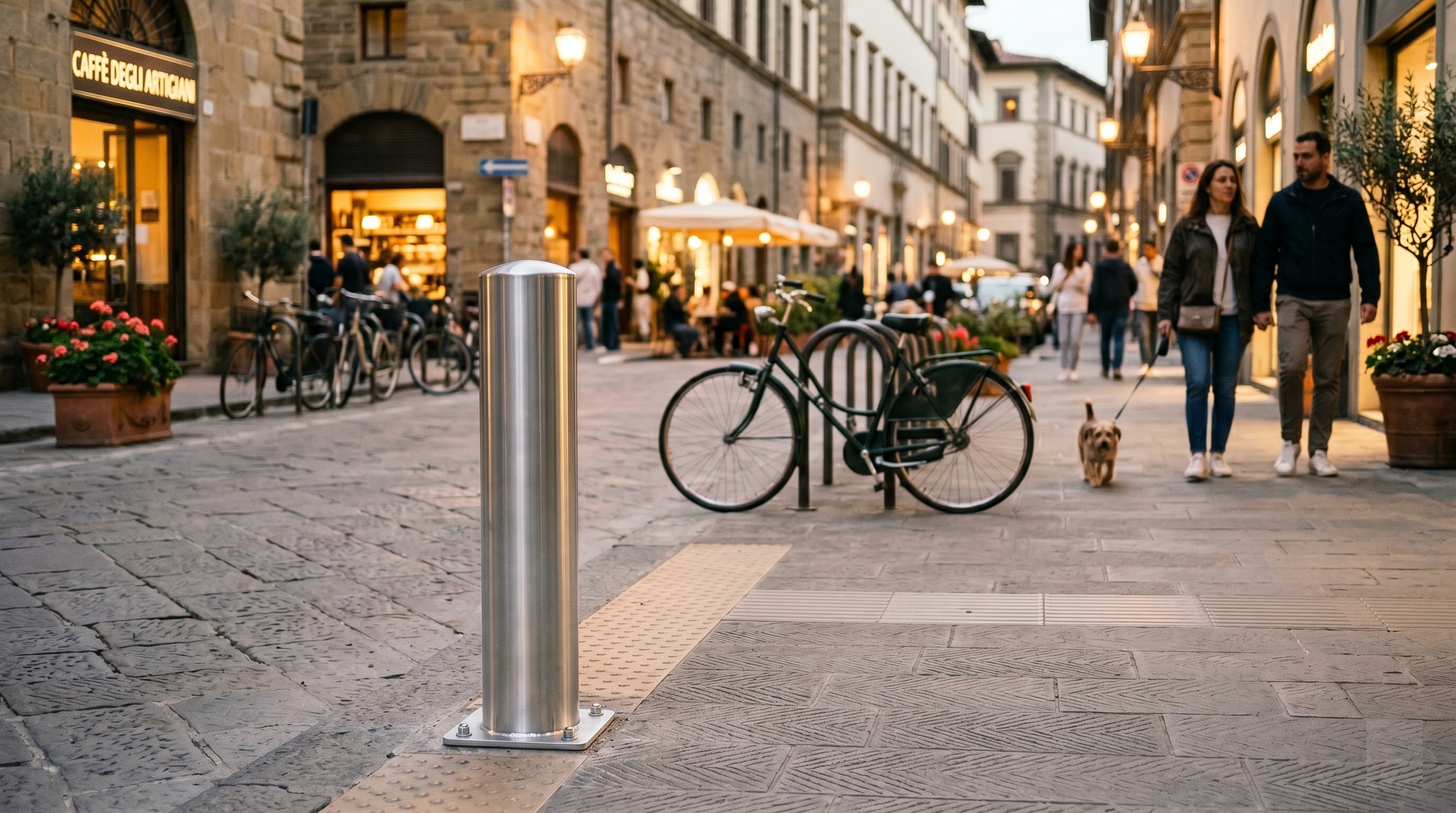
Bollards aren't just street furniture. Their function is to regulate behavior, protect paths, and define boundaries between areas with different uses. A properly placed bollard prevents vehicular access where it's not intended, without compromising pedestrian access or the clarity of the environment.
The choice must therefore begin with the problem to be solved. In some cases, the goal is to prevent parking on the sidewalk; in others, it's to protect a crossing, delimit a school entrance, or organize a residential space. Holity, specialist in the professional supplies for street furniture, offers solutions designed for institutions, municipalities, companies and managers of collective spaces who need to purchase functional products that are consistent with different contexts of use.
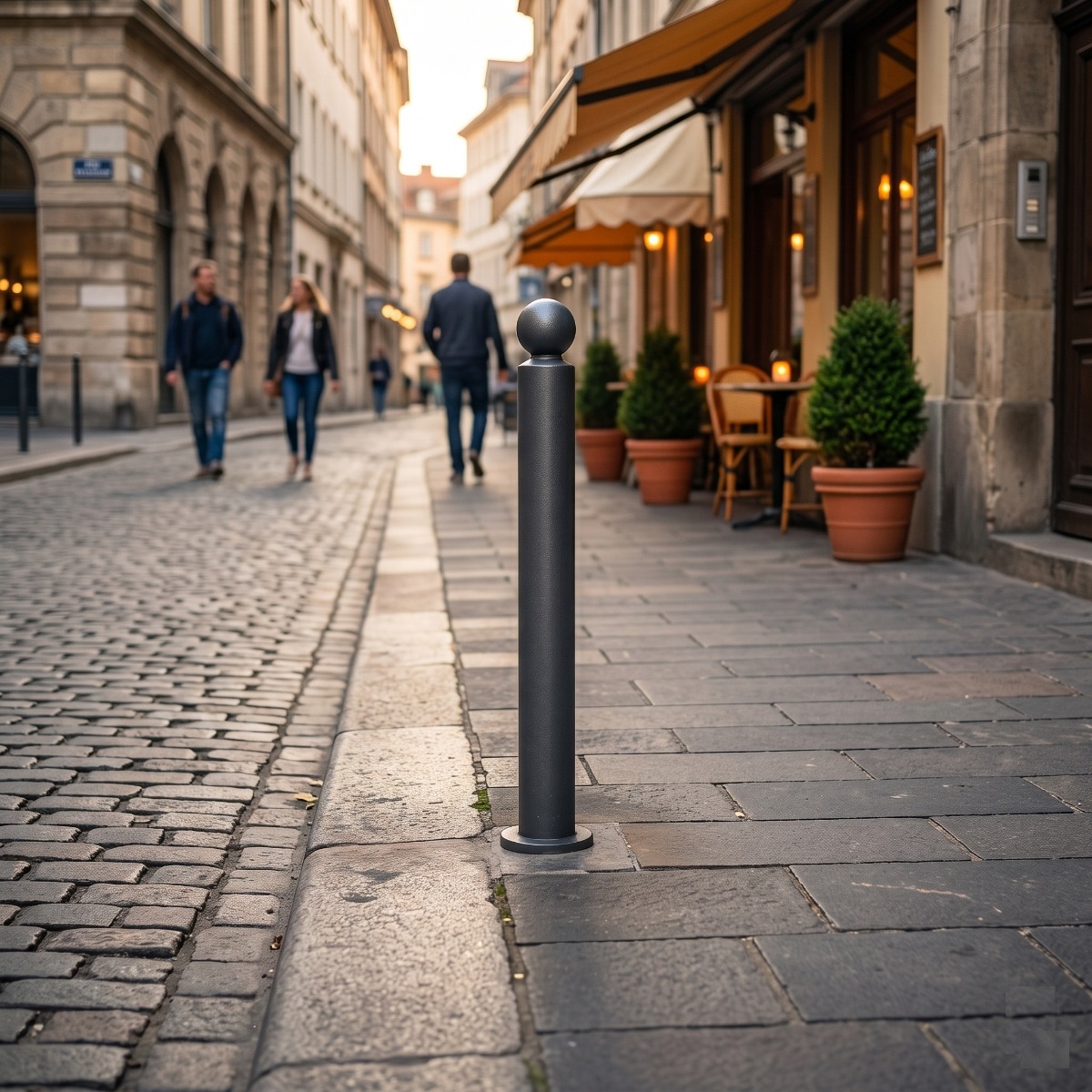 Axle spacing and positioning to protect pedestrian paths
The relationship between flows, accessibility and security
The distance between posts is one of the most important design considerations. Too much distance can make the system ineffective, allowing unauthorized vehicles to enter or park. Too little distance, however, can impede the passage of pedestrians, disabled people, strollers, or users with mobility aids.
Positioning must take into account the width of the sidewalk, the direction of traffic, and the areas of greatest traffic pressure. On continuous pedestrian walkways, it is important to maintain an orderly and recognizable line, avoiding random or inconsistent installations. Protection works when the system is noticeable, consistent, and integrated into everyday traffic.
Installation errors that compromise functionality
One of the most common mistakes is installing bollards only where space allows, without fully assessing the area. This approach can create unnecessary gaps, visual interruptions, and unclear transitions. Choosing elements that are too low or difficult to see can also reduce the effectiveness of the intervention, especially in high-traffic areas or near crossings.
Another problem is the lack of aesthetic continuity. Alternating different models without a design logic makes the space less orderly and more difficult to interpret. Therefore, it's helpful to choose coordinated products that maintain uniformity in function, material, and finish. Visual consistency isn't just an aesthetic issue; it contributes to urban clarity.
Materials and construction features to be evaluated
Steel, cast iron and other solutions for street furniture
The material affects resistance, durability, maintenance and integration into the context.galvanized steel It is suitable for many urban applications because it offers good weather resistance and functional performance in frequently used environments. Cast iron, on the other hand, is often chosen when a more traditional element is needed, consistent with historic centers or areas with a distinct architectural character.
In some situations they can be useful high visibility finishes, reflective bands or specific colors. This is especially true in school zones, parking lots, crossing areas, or spaces where the risk of accidental impact is greater. The choice of material must always be based on the intensity of use and the level of exposure of the product.
Durability, maintenance and costs over time
Initial cost isn't the only factor to consider. A cheap but poorly durable product can lead to subsequent expenses for repairs, replacements, or restorations. Conversely, a bollard designed for professional use reduces the need for maintenance over time and ensures greater functional continuity.
Maintenance also includes the ease of component replacement, the stability of the fastenings, and the durability of the finishes. In highly frequented public areas, these aspects directly impact operational management. For organizations and administrations, choosing durable products means reducing downtime, complaints, and hidden costs.
When to choose removable or permanent stakes
Access management and operational flexibility
THE permanent posts They are recommended when the goal is to permanently prevent vehicle access or parking. They are suitable for sidewalks, pedestrian areas, protected paths, and areas where frequent openings are not expected. They offer continuity, durability, and a clear function over time.
THE removable poles or removable They are useful when the space must remain accessible under certain circumstances. They can be used for maintenance, emergencies, loading and unloading, events, or authorized access. This flexibility allows you to protect the area without making it rigidly closed, maintaining a balance between security and operational management.
 Design differences between central, school and residential areas
Needs of high-traffic urban centers
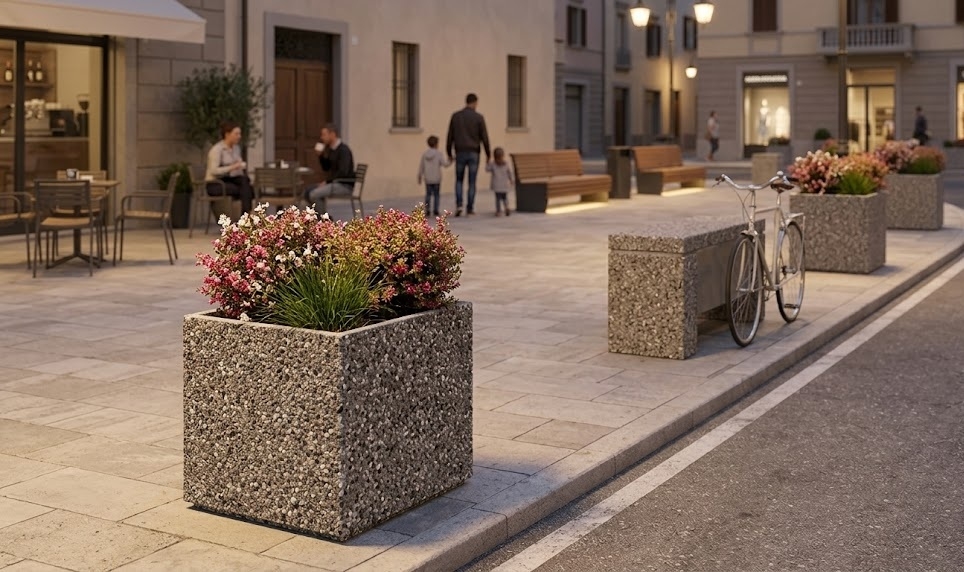
In highly frequented urban centres the deterrents They must ensure order without burdening the perception of space. The presence of shops, stops, crossings, and tourist flows requires durable, visible elements that are consistent with the existing furnishings. The protective function must integrate with the aesthetic value of the context.
In these areas, it's important to avoid improvised or overly invasive solutions. Well-aligned bollards, appropriate materials, and coordinated finishes help maintain urban continuity. Holity, as e-commerce specialized in professional equipment and supplies for public institutions and spaces, allows you to evaluate different models based on the installation context.
Protection and visibility in school zones
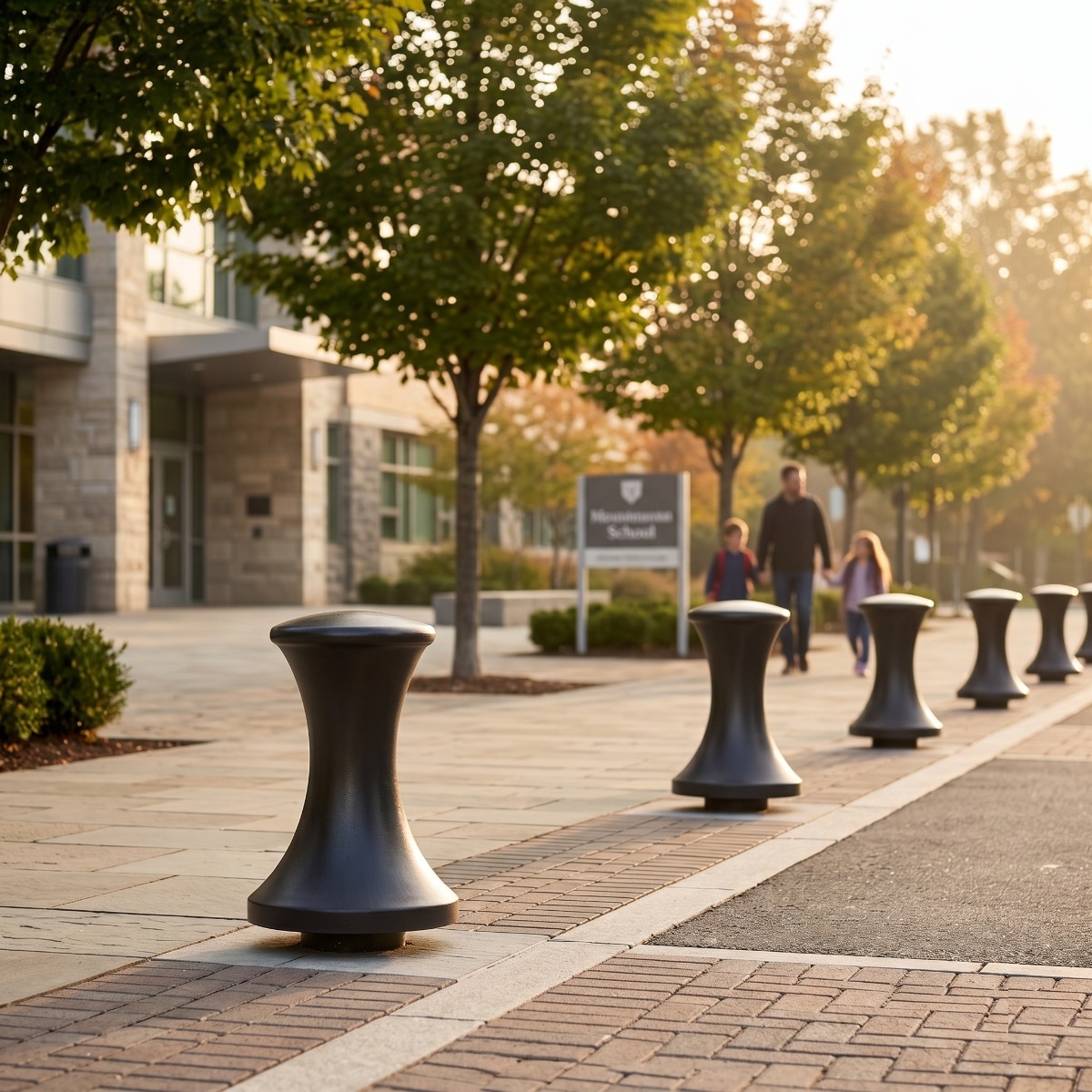
School zones require particularly careful planning. Student entry and exit generate flows concentrated at specific time slots, often during heavy traffic. In these cases, deterrents They must protect paths, prevent inappropriate parking, and make spaces intended for pedestrians more recognizable.
Visibility becomes a key criterion. Overly discreet elements can be ineffective, while clearly visible solutions help drivers and users correctly interpret the area. The layout must promote order, safety, and continuity, without creating unnecessary barriers at the entrances.
Order and safety in residential neighborhoods
In residential neighborhoods, the main issue is often protecting sidewalks, condominium entrances, driveways, and common areas. Here, the choice must balance effectiveness and discretion, avoiding elements that are too invasive compared to the scale of the space. The expected result is a tidier and safer environment for residents and pedestrians.
Aesthetic continuity plays an important role even in less formal settings than historic city centers. Consistent design elements in terms of shape, color, and material help to create order in the space without weighing it down. A proper choice reduces irregular parking and improves the daily usability of pathways.
The role of the product catalog in choosing the most suitable solutions
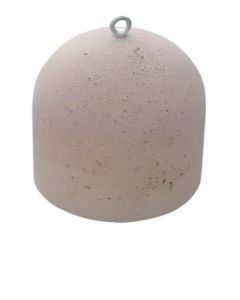
A product catalog for parking bollards and posts It allows you to guide your choice in a more technical and less approximate way. Comparing fixed, removable, steel, cast iron, or specific finish models helps you identify the solution best suited to the type of area and the level of protection required.
For administrations, designers, companies and managers of collective spaces, the availability of a wide range reduces the risk of inappropriate purchases. Holity represents a reference point for those seeking professional street furniture supplies, with solutions designed for safety, demarcation, and orderly space management. A well-considered choice helps protect pedestrian walkways, limit illegal parking, and maintain urban continuity over time.
 English
  Italian
 French
 German
 Spanish