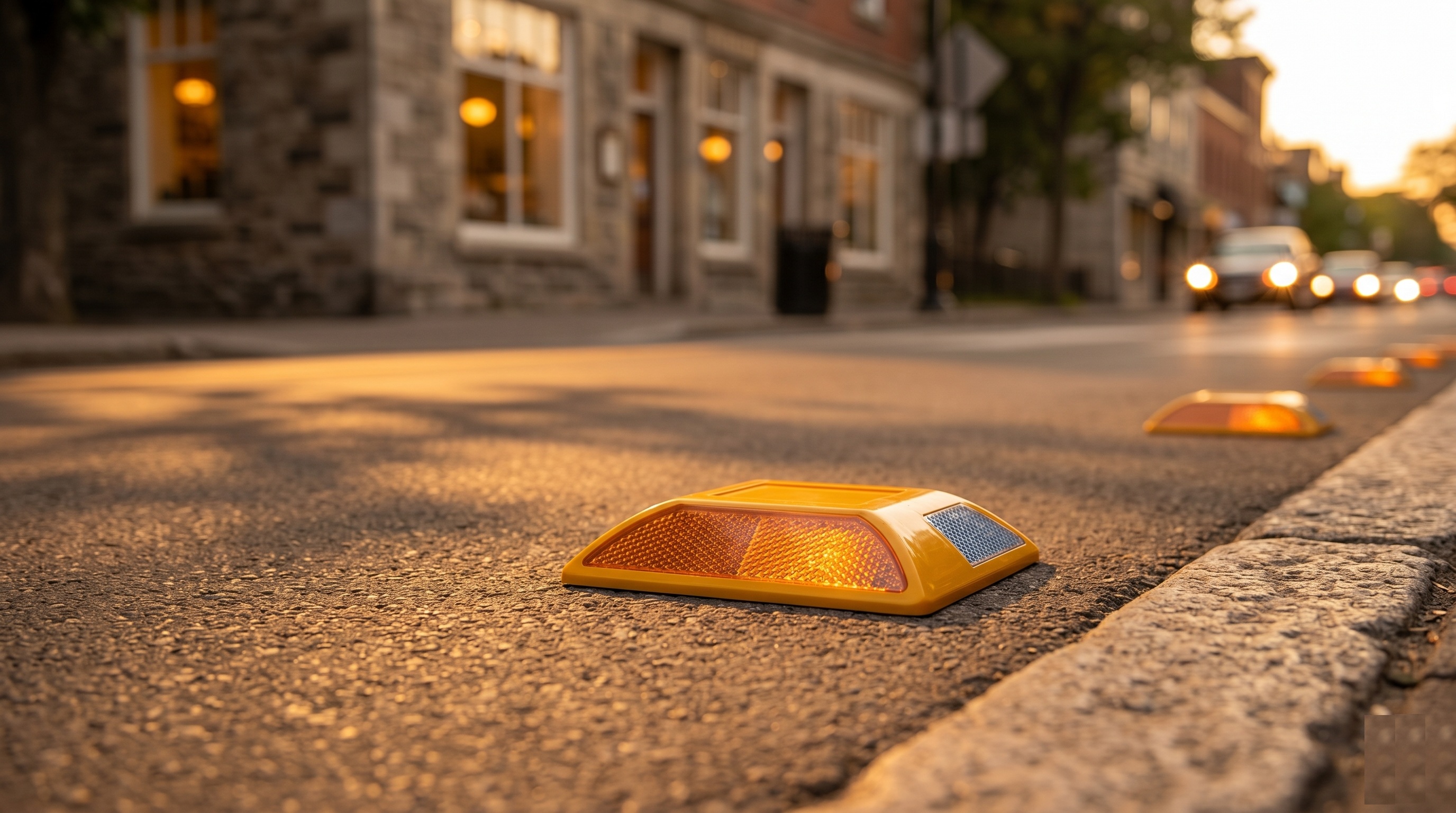
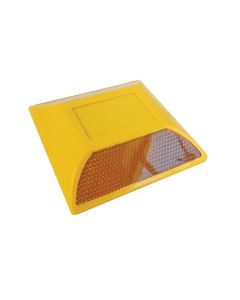
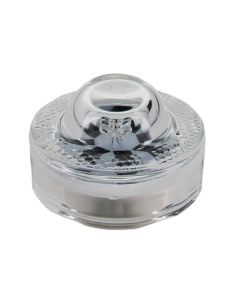
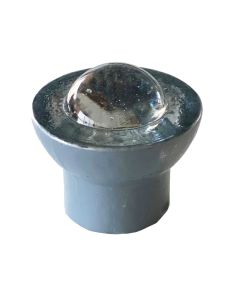
Road cat eyes are reflective devices used to improve the visibility of the roadway, lanes and roadsides, especially when driving at night or in low-light conditions. Also known as reflective road markers , they reflect the light from the headlights back towards the driver and complement the road markings. Available in traditional, LED and solar-powered versions, they are used on roads, car parks, roundabouts and other areas where it is important to make the route more recognisable.
What are road cat's eyes?
Road cat eyes They are signaling elements installed on the pavement to highlight lanes, curves, edges and other points of the road. The name derives from the luminous effect produced when they are illuminated by vehicle headlights.
These devices, also called road markers or reflective inserts, are used to integrate horizontal signage and improve the readability of the route. The choice depends on the installation context, the visibility required and the stresses generated by traffic.
 How do reflective cat eyes work?
The operation of reflective cat eyes is based on retroreflection: when the vehicle's headlights illuminate the device, part of the light is reflected back towards the source, making the marker visible to the driver.
Unlike electrically powered lights, passive models do not produce their own light. Their effectiveness depends on their reflective characteristics, orientation, cleanliness and visibility conditions. Active models, on the other hand, use LED light sources and can be equipped with solar power.
Cat eyes and road signs: what are they used for?
Cat eyes for road signs are used to reinforce the perception of lines and boundaries on the road. They are particularly useful in poorly lit sections and in places where it is important to quickly recognize the direction of the road.
Their function is complementary to horizontal road markings: they help make edges, lanes and changes of direction more identifiable, but they do not automatically replace the stripes and other signs required by the road project.
Where road cat's eyes are used
Cat's eyes are used on urban and extra-urban roads, on motorways, near bends, junctions and roundabouts. They can also be used in car parks, industrial areas and routes intended for internal circulation, selecting devices suitable for the type of traffic.
At pedestrian crossings, cycle paths or shared paths, the installation must be carefully evaluated so as not to introduce obstacles or surfaces incompatible with the safety of users.
Types of road markers: reflective, LED and solar
There are different types of cat's eyes, each designed for specific signalling needs. The main models differ in technology, power supply and installation method.
Traditional reflective cat's eyes
Passive reflective markers use the light from the headlights without requiring a power supply. They are suitable for integrating horizontal signage and delimiting lanes or road edges. Their simple construction makes them suitable for use in numerous contexts.
LED road cat's eyes
LED road cat's eyes integrate an active light source that improves the recognition of the indicated point even without direct illumination from the headlights. They can be used in situations where the project requires additional light signalling.
Solar road markers
Solar devices use photovoltaic panels and storage systems to power LEDs. They are particularly interesting in contexts where it is not practical to make an electrical connection, provided that the exposure to light and the autonomy of the device are adequate.
Materials and resistance of road cat's eyes
 Road markers must resist the passage of vehicles, atmospheric agents and temperature variations. They can be made of aluminium, polycarbonate, glass or other technical materials, depending on the model and intended use.
When choosing, it is important to consider the mechanical resistance, the quality of the reflective surface, the type of fixing and any need for maintenance. For LED devices, it is also necessary to check the water protection characteristics, power supply and autonomy.
How to install road markers
The installation of cat's eyes varies depending on the device. Some models are applied to the road surface using suitable fixing systems, while others require insertion into the pavement.
Before installation, the substrate, expected traffic, the position of the devices and the project requirements must be evaluated. Inadequate fixing can compromise the durability and safety of the installation.
How much do road cat eyes cost?
The price of road cat eyes depends on the material, technology and technical characteristics. Traditional reflective models generally have a simpler structure, while LED or solar versions integrate electronic components and power systems.
To evaluate the overall cost, it is also useful to consider the quantities required, installation, maintenance and any replacement of the devices. The comparison between products must therefore start from the expected use and not just the unit price.
How to choose cat eyes for road safety
To identify the most suitable model, it is useful to It is important to evaluate the installation location, traffic intensity, the required level of visibility, exposure to atmospheric agents and the need for passive or active luminous signalling. Public bodies and companies that manage roads, car parks and operational routes must also verify the characteristics of the device and its compatibility with the applicable technical requirements. For the supply of devices intended for road traffic, it is possible to consult the Holity catalogue , dedicated to professional equipment for institutions and companies, and the solutions for road signs .
Frequently asked questions about road cat eyes
What are cat eyes used for on the road?
They are used to make lanes, edges and road boundaries more visible, especially when driving at night or in low light conditions.
Do road cat eyes work without electricity?
Yes, traditional reflective models reflect the light from the headlights without using electricity. LED models, however, require a power source.
What is the difference between reflective markers and LED markers?
Reflective markers reflect the light received from the headlights, while LED models emit their own light thanks to a power system.
Can cat eyes be installed in car parks?
Yes, they can be used to highlight paths and boundaries, as long as devices compatible with the pavement and expected traffic are chosen.
Where can you buy cat eyes and road markers?
The solutions available in the Holity catalogue allow you to evaluate markers intended for different road signalling and safety needs.
 English
  Italian
 French
 German
 Spanish