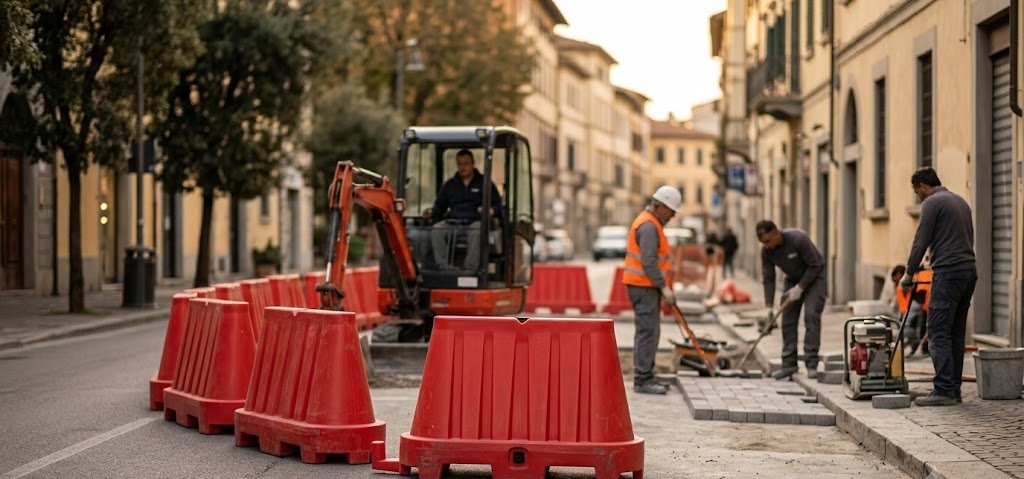
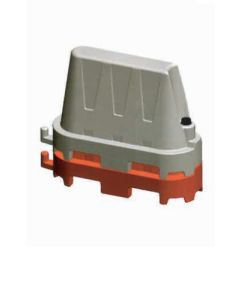
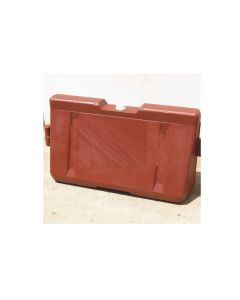
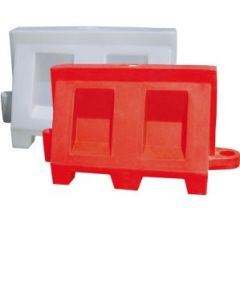
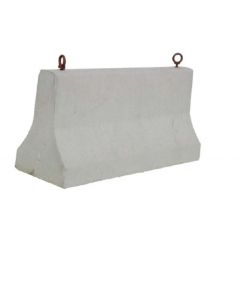
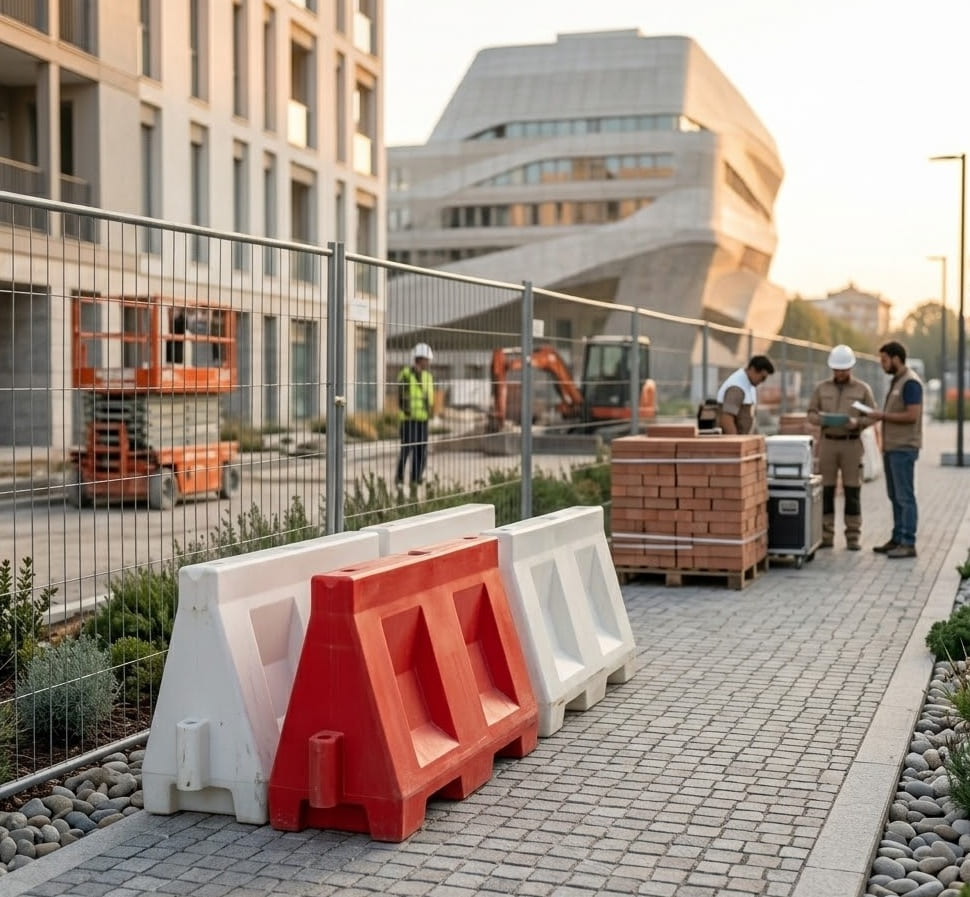
New Jersey barriers in plastic and concrete versions are used to delimit construction sites, separate traffic flows and protect public and private areas. Although they have a similar shape and function, they present important differences in terms of weight, resistance, handling, durability and intended use. The choice between plastic and concrete must therefore be made based on the operational context and the level of safety required.
Plastic barriers are generally lighter and easier to move, while concrete ones offer greater stability and are more suitable for permanent installations or situations where higher protection is required.
What are New Jersey road barriers
New Jersey barriers They are elements used to separate lanes, delimit construction site areas, organize temporary routes and protect areas where it is necessary to control the passage of vehicles or people.
The particular inclined shape was created for road applications and allows for the creation of a continuous physical separation. Today, New Jersey barriers are used not only on roads and infrastructure, but also in construction sites, car parks, events and industrial areas.
 Concrete New Jersey barriers: characteristics
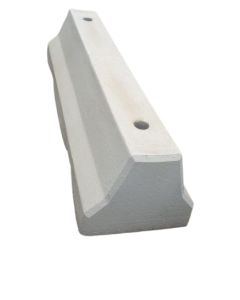
Concrete barriers are characterised by high weight, robustness and stability. For these characteristics, they are mainly used in permanent or semi-permanent installations and in contexts where it is necessary to limit the risk of accidental movements.
They can be used on roads, car parks, long-term construction sites, industrial areas and infrastructure where the delimitation must remain stable over time.
Advantages of concrete road barriers
Concrete road barriers mainly offer stability and resistance. The weight reduces the possibility of of involuntary movement and makes this type suitable for areas where a more consistent physical separation is required.
The main advantages also include long life and limited maintenance requirements. The main disadvantage concerns handling and transport, which require suitable means.
Plastic New Jersey barriers: characteristics
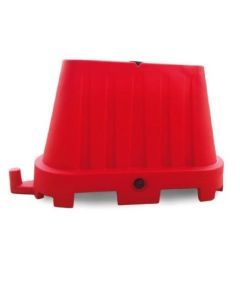
Plastic New Jersey barriers are generally made of resistant plastic material and are designed to be lightweight during transport and easy to handle.
Many models can be filled with water or sand after positioning, thus increasing the stability of the barrier during use without sacrificing practicality during transport.
When to choose a plastic New Jersey
Plastic New Jersey barriers are particularly suitable for temporary situations or those subject to frequent changes. They can be used in mobile construction sites, events, demonstrations, car parks and areas where the configuration needs to be changed quickly.
Their light weight also reduces the complexity of installation and removal operations. Highly visible colours and connection systems between modules allow you to create easily recognisable paths.
New Jersey in plastic or concrete: main differences
The most obvious difference concerns the weight. Concrete guarantees greater stability and resistance, while plastic favours ease of movement and flexibility.
In summary:
- concrete: suitable for stable installations, long life and more robust delimitations;
- plastic: suitable for temporary construction sites, events and situations that require frequent movement;
- transport: more complex for concrete, simpler for plastic;
- installation: generally quicker with plastic models;
- stability: greater in concrete models;
- operational flexibility: greater in plastic models.
New Jersey barriers and road safety
The choice of barrier must always be consistent with the type of use. Not all New Jersey barriers automatically have the same containment characteristics or the same performance.
When the barrier is used on roads or as a safety device, it is therefore important to check the technical characteristics of the model and its intended use.
Lightweight barriers intended for temporary delimitation must not be considered equivalent to systems specifically designed for vehicle containment.
New Jersey concrete barriers and regulations
The query “New Jersey concrete barrier regulations” is already well positioned in Google, but it is important to clarify that the applicable requirements depend on the intended use.
A barrier used simply to delimit a private area or a temporary construction site has different needs than a barrier intended for road safety or vehicle containment.
Before installation, it is therefore necessary to check the project, intended use, technical characteristics of the product and the requirements applicable to the specific context.
New Jersey barriers for construction sites
In temporary construction sites, the possibility of quickly moving and reconfiguring the barriers can be a decisive element. For this reason, plastic models are frequently used when the organization of the spaces changes during the different phases of the work.
On long-term construction sites or in areas where a more stable separation is required, concrete barriers may be considered.
Transport, installation and handling
Logistics is one of the main elements to consider when choosing. Concrete barriers are heavy and require adequate equipment for loading, unloading and positioning.
Plastic models, on the other hand, can be moved more easily when empty and subsequently filled with water or sand, if provided for by the product.
For temporary installations or those subject to frequent changes, this difference can significantly impact operating times and costs.
How much does a concrete New Jersey barrier cost? 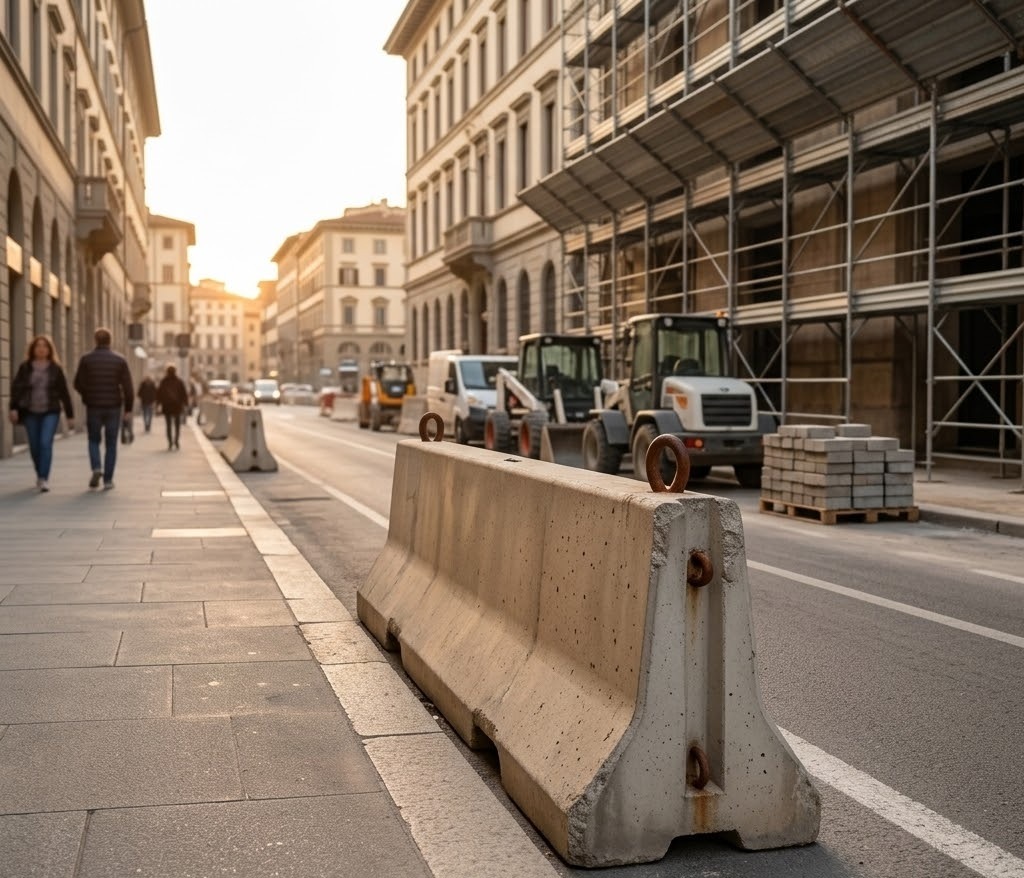
The price of a New Jersey barrier depends on the material, size, weight, technical characteristics and quantity purchased.
In the case of concrete New Jersey barriers, logistical costs must also be considered, because weight and size affect transport, unloading and installation. For this reason, the overall cost should not be evaluated solely on the basis of the unit price of the product.
For plastic barriers, however, transport can be easier thanks to the reduced weight of the empty product.
How to choose the most suitable New Jersey barrier
Before purchasing, it is useful to evaluate:
- expected duration of the installation;
- need to move the barriers frequently;
- type of area to be delimited;
- required security level;
- available space;
- transport and unloading methods;
- possible need filling with water or sand;
- technical characteristics required by the project.
For temporary construction sites, events and mobile boundaries, a plastic barrier may be more practical. For more stable installations and where weight represents an operational advantage, a concrete solution may be preferable.
Professional New Jersey barriers
Holity offers various professional solutions for road safety and the delimitation of operational areas, including plastic and concrete New Jersey barriers.
The choice of model must always start from the characteristics of the context and the intended use, so as to identify a solution consistent with the operational needs.
Frequently asked questions about New Jersey barriers
What are road New Jersey barriers?
They are elements used to separate lanes, delimit areas and organize traffic flows. They can be made of concrete or plastic and have different characteristics depending on their intended use.
Are plastic or concrete New Jersey barriers better?
It depends on the context. Plastic is more practical for temporary installations and frequent movements, while concrete offers greater weight and stability.
Can plastic New Jersey barriers be filled?
Many models can be filled with water or sand to increase stability during use. However, it is necessary to check the characteristics of the individual product.
How much does a concrete New Jersey barrier cost?
The price varies depending on size, weight, technical characteristics and quantity. It is also important to consider the costs of transport, unloading and installation.
Are concrete New Jersey barriers always road safety barriers?
No. Shape and material are not sufficient to automatically determine the safety function. It is necessary to check the intended use and the technical specifications of the model.
 English
  Italian
 French
 German
 Spanish