Why? Choosing dedicated containers for separate waste collection
Using specific containers for separate waste collection allows you to correctly separate paper, plastic, glass, organic waste and unsorted waste, simplifying daily operations and promoting compliance with municipal waste management regulations.
In professional contexts, this organization takes on an even more important role. Offices, companies, schools and accommodation facilities must ensure orderly waste management, improving the cleanliness of the environments and promoting sustainable behavior among employees, customers and visitors.
How to choose the most suitable system
The choice of Indoor waste sorting containers depends mainly on the quantity of waste produced, the available space and the number of users who will use the system. A small apartment will have completely different needs than an open-plan office, a company canteen or a hotel facility.
It is also important to evaluate the frequency of emptying and the ease of cleaning. access to containers. A well-organized system speeds up waste collection and reduces the risk of errors in separating different types of material.
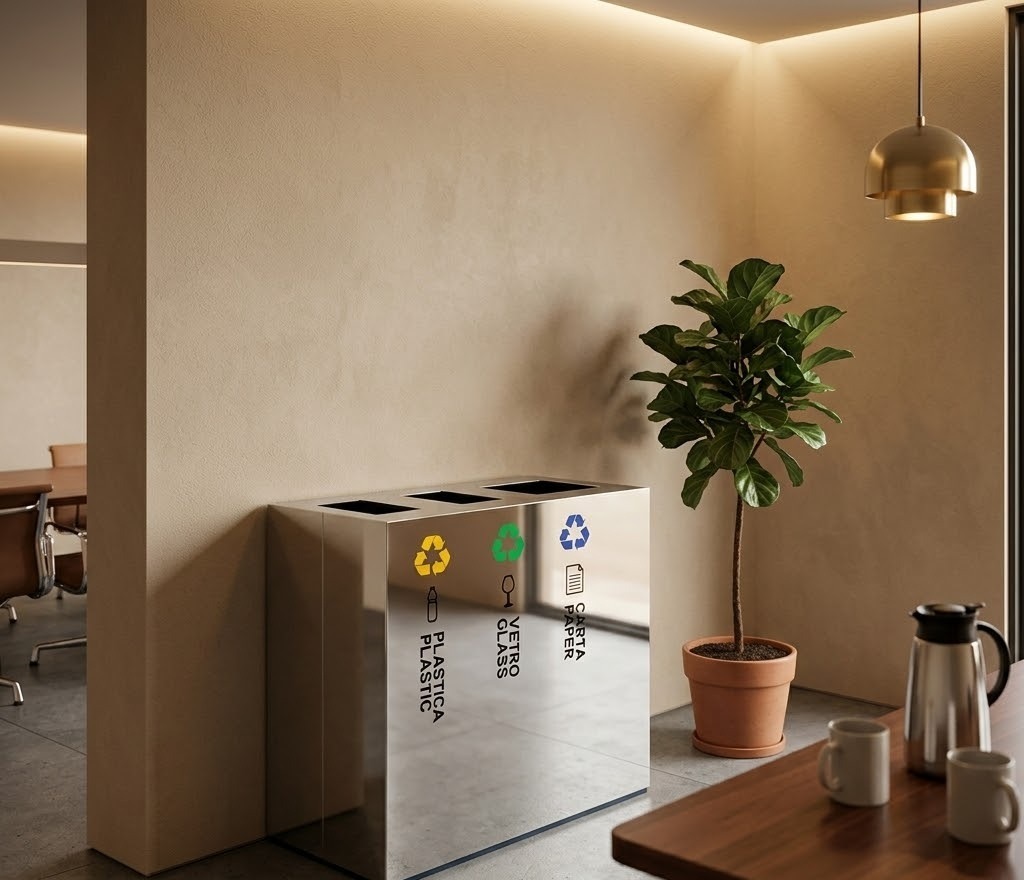 Capacity and number of compartments
One of the fundamental aspects concerns the capacity of the containers. Environments with a high influx of people require larger-capacity containers, while in homes more compact models may be sufficient.
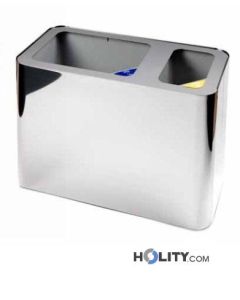
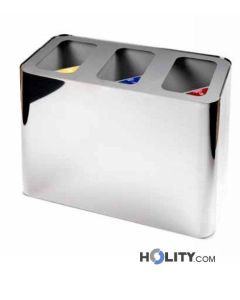
The number of compartments must also be chosen according to needs. Systems with two, three or four containers allow the main waste fractions to be managed simultaneously, facilitating separate collection and optimizing available space.
Modular and space-saving containers
Modular systems represent one of the most popular solutions because they allow the collection capacity to be easily expanded over time. Each module can can be added or removed as needed, offering great flexibility in both domestic and professional environments.
Space-saving containers are also available for kitchens, offices and small spaces, designed to occupy small surfaces while still maintaining good collection capacity. Vertical or side-by-side configurations allow you to make the most of every space.
Materials: practicality and resistance
Indoor containers are generally made of high-resistance plastic, painted steel or stainless steel. Plastic offers lightness, easy cleaning and an excellent quality-price ratio, while metal guarantees greater sturdiness and a more elegant design.
The choice of material must consider the type of environment. In executive offices, hotels or representative areas, steel models integrate perfectly with the furnishings, while in operational environments, resistant plastic containers are particularly appreciated.
Colors and labels for more intuitive waste collection
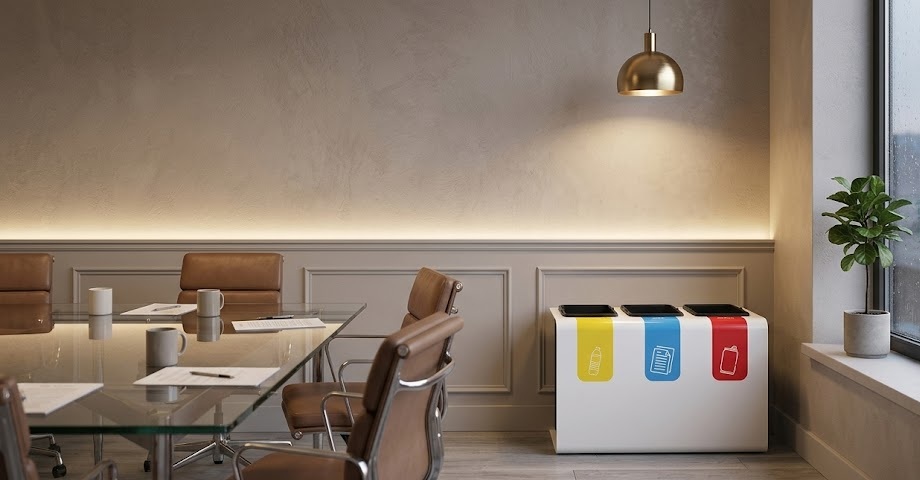
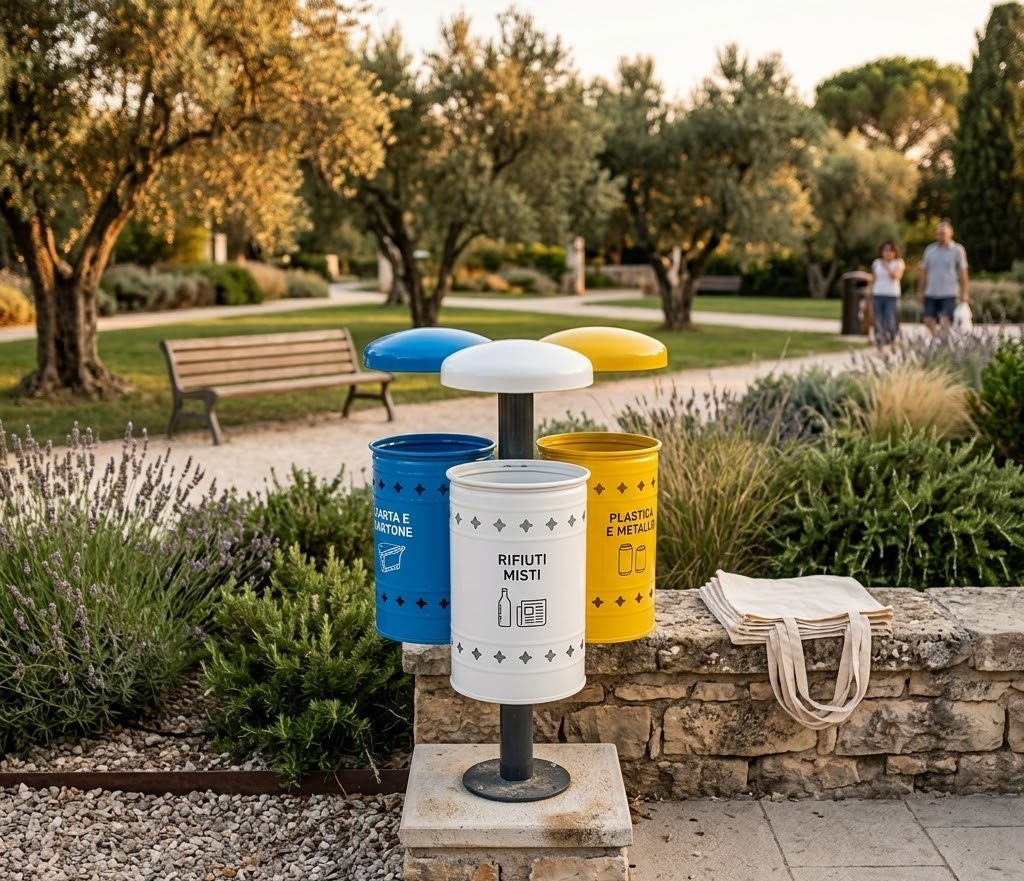
The immediate identification of different types of waste is essential to reduce disposal errors. For this reason, many containers are equipped with dedicated colors, symbols, and stickers that facilitate correct use by users.
Clear signage improves the quality of separate waste collection and reduces the risk of contamination between different waste fractions. This aspect is particularly important in shared environments, where different users must be able to quickly recognize the correct container.
Applications in offices, companies, and hospitality facilities
Indoor waste sorting containers find application in many professional contexts. In offices, they allow collection stations to be organized in an orderly manner, while in companies they encourage compliance with environmental policies and sustainability objectives.
Hotels, restaurants, schools, and healthcare facilities use dedicated containers to simplify daily waste management and improve the level of cleanliness of the environments. A well-designed system also helps convey a more environmentally friendly and socially responsible image.
Cleaning and maintenance of containers 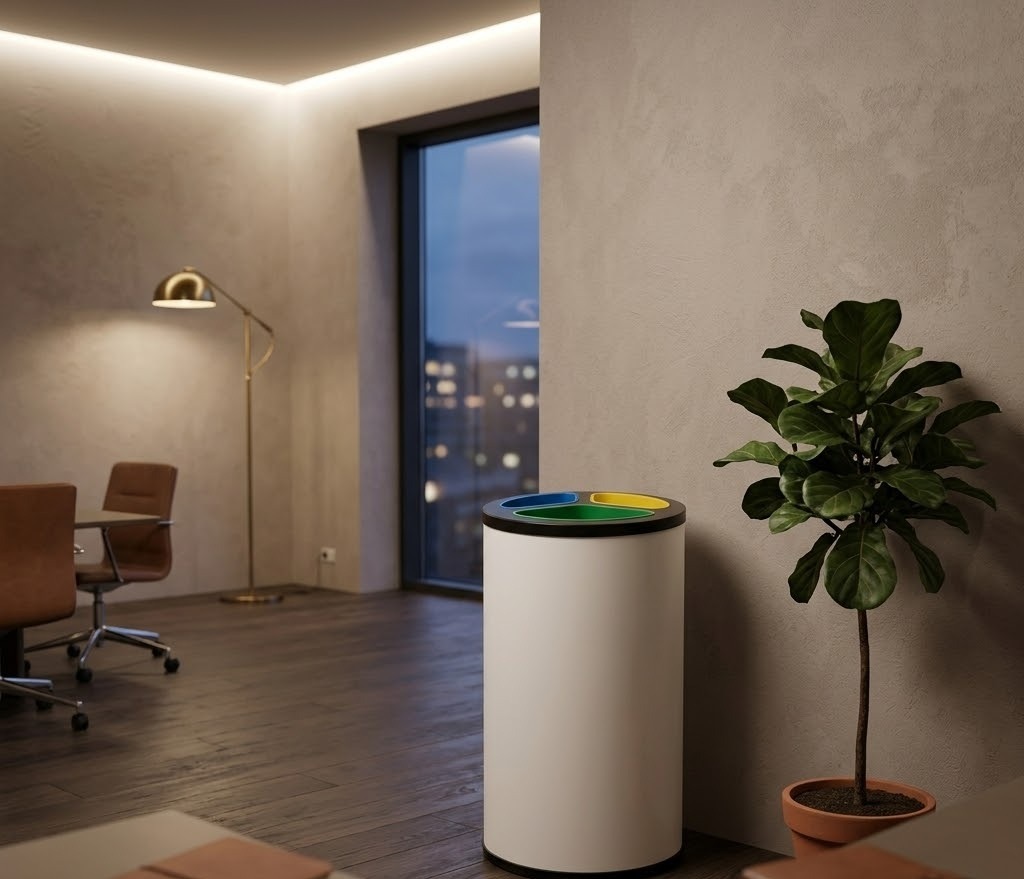
To ensure hygiene and long-lasting durability, it is important to clean the containers regularly using suitable detergents and periodically checking the condition of the surfaces, lids, and any opening systems.
Simple but constant maintenance helps avoid unpleasant odors, preserve the aesthetic appearance of the containers, and maintain high hygiene standards, especially in high-traffic areas.
How to choose the best model
Before purchasing, it is advisable to carefully evaluate the installation context, the quantity of waste produced, the number of users, and the frequency of emptying. Design can also be an important element, especially in environments open to the public or in representative spaces.
Holity , a specialist in professional supplies for companies, offices, hospitality facilities and collective environments, offers a wide range of containers for indoor waste sorting designed to ensure practicality, robustness and long life. Thanks to modular, space-saving solutions with a modern design, it is possible to effectively organize waste collection in any environment.
More efficient and sustainable waste management
Choosing the right Indoor waste sorting containers means improving the organization of spaces, facilitating the correct disposal of waste and making a concrete contribution to environmental sustainability.
A well-designed system makes waste sorting easier, reduces separation errors and allows for the maintenance of tidier, cleaner and more functional environments, both in the home and in professional settings.
 English
  Italian
 French
 German
 Spanish