The New Jersey concrete barriers are prefabricated concrete elements used to delimit road areas, separate vehicular routes and organize traffic flow in construction sites, car parks, industrial yards and public spaces. Thanks to their heavy weight and robust structure, they offer stable and resistant physical separation. To choose the most suitable model it is important to evaluate dimensions, weight, intended use, safety requirements, handling and installation costs, distinguishing simple delimitation barriers from certified devices for vehicle containment.
 What are New Jersey concrete barriers
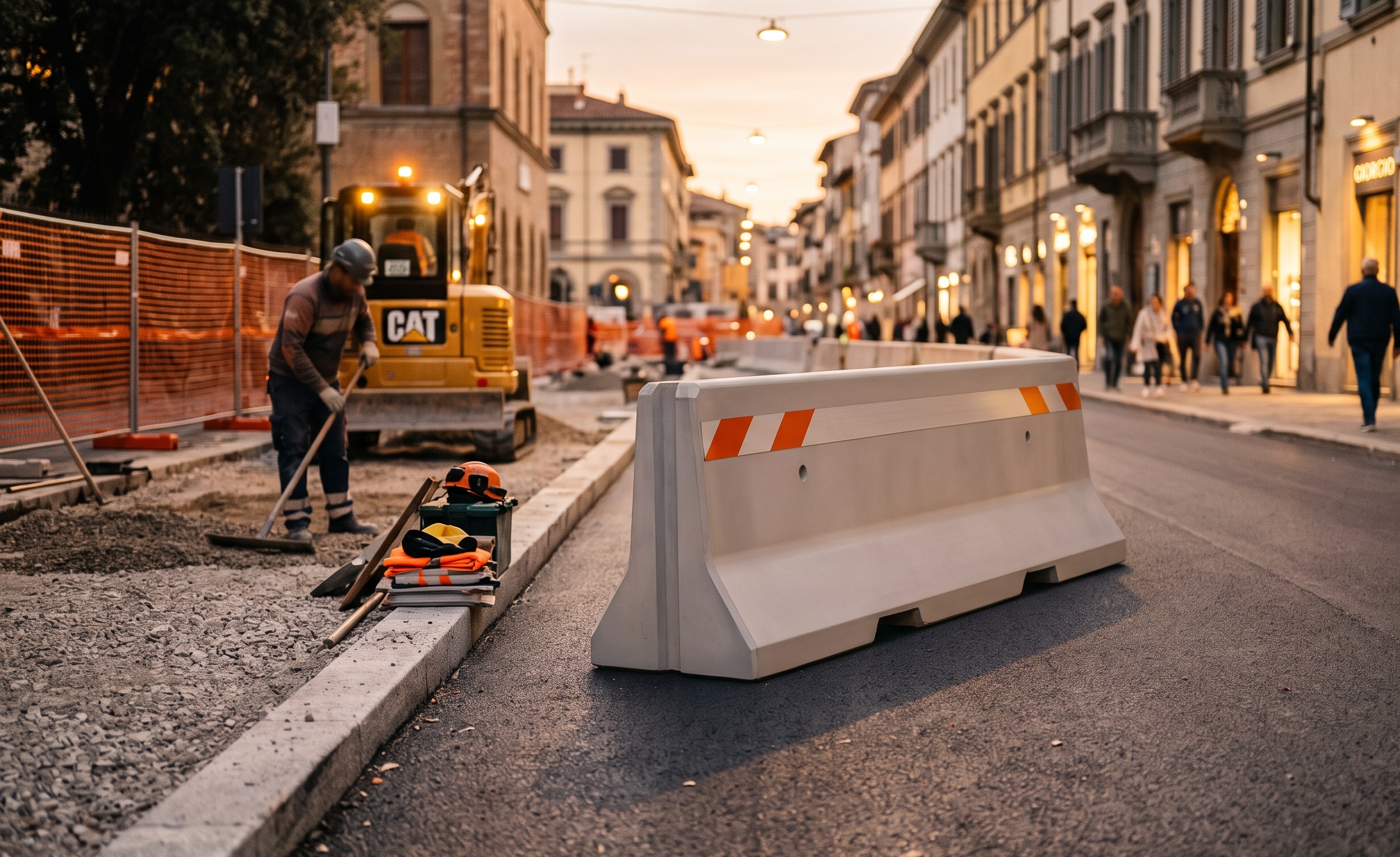
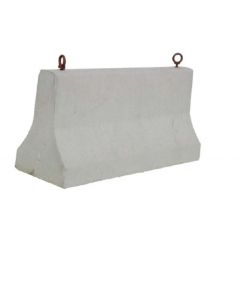
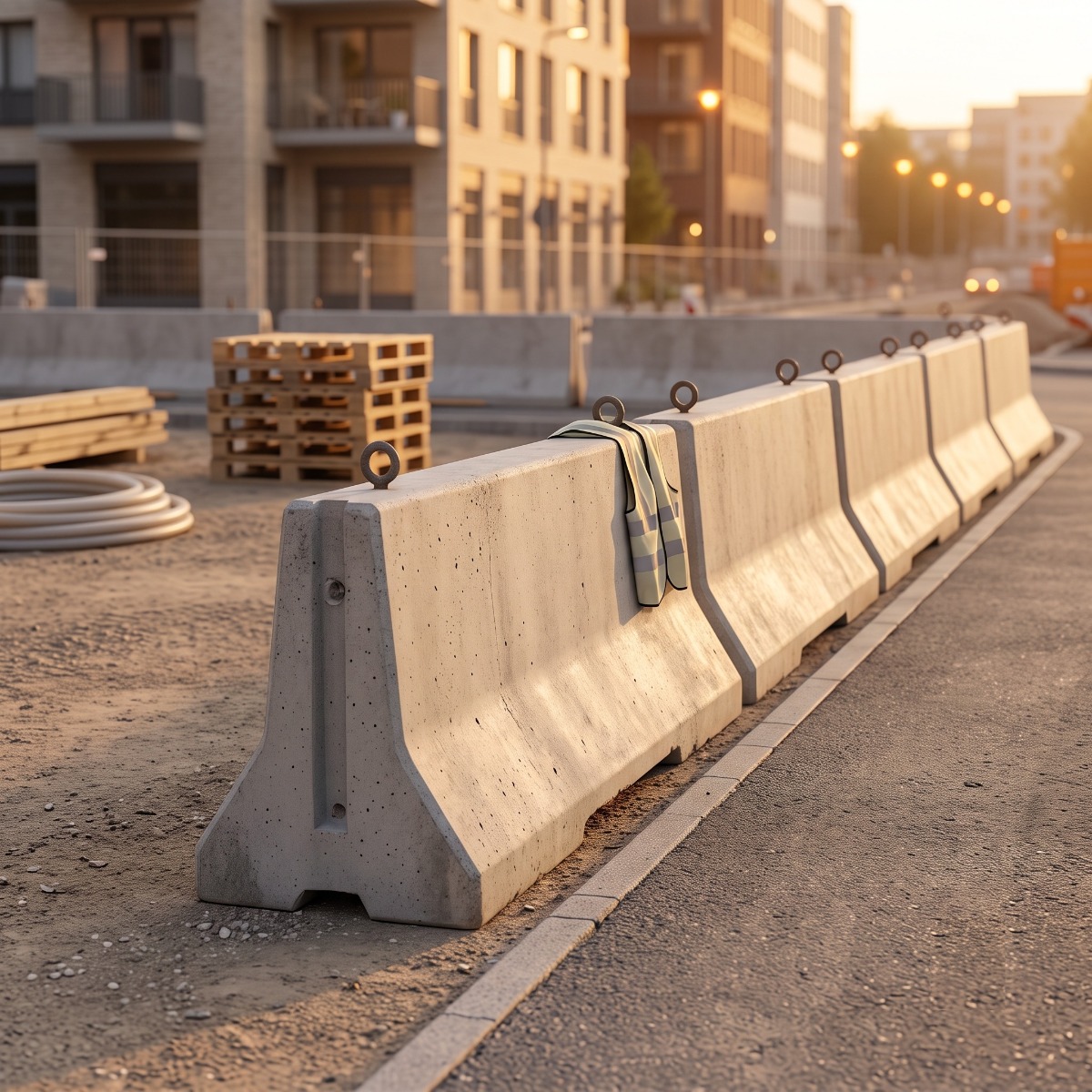
The New Jersey concrete barriers They are prefabricated products characterised by a section with inclined surfaces and a structure designed to create physical separations between different areas. They are used as delimiters, traffic dividers and, in specifically designed and qualified models, as components of road restraint systems.
Their shape facilitates the creation of continuous alignments using modular elements. However, not all concrete barriers with a New Jersey profile automatically have certified vehicle containment performance: these depend on the specific system, the tests carried out and the installation methods.
Characteristics of prefabricated concrete barriers
The Prefabricated concrete barriers are characterised by high mass, stability and resistance to external exposure. They can be made of simple or reinforced concrete, according to the characteristics specified by the manufacturer and the intended use.
The main characteristics to check are the weight, length, height, width of the base, any reinforcement and the presence of connections between elements. The possibility of handling using special lifting points is also important for correct organisation of the installation.
Dimensions and measurements of concrete New Jersey barriers
The The dimensions of concrete New Jersey barriers vary depending on the model and the application. There is no single size valid for all the products: a barrier intended to delimit a square may have different characteristics than a road restraint system.
Before purchasing, it is necessary to check the length of the module, overall height, width at the base and space required for installation. This data allows you to correctly calculate the number of elements and the overall dimensions of the area to be delimited.
How much does a concrete New Jersey barrier weigh?
The weight of a concrete New Jersey barrier depends on the size, geometry, volume of the material and the presence of reinforcement. For this reason, it is not correct to attribute a standard weight to all barriers.
The data must be verified in the product's technical data sheet, especially for planning transport, unloading and positioning. The heavy weight contributes to the stability of the product, but also requires the use of suitable handling equipment.
Where are concrete New Jersey barriers used?
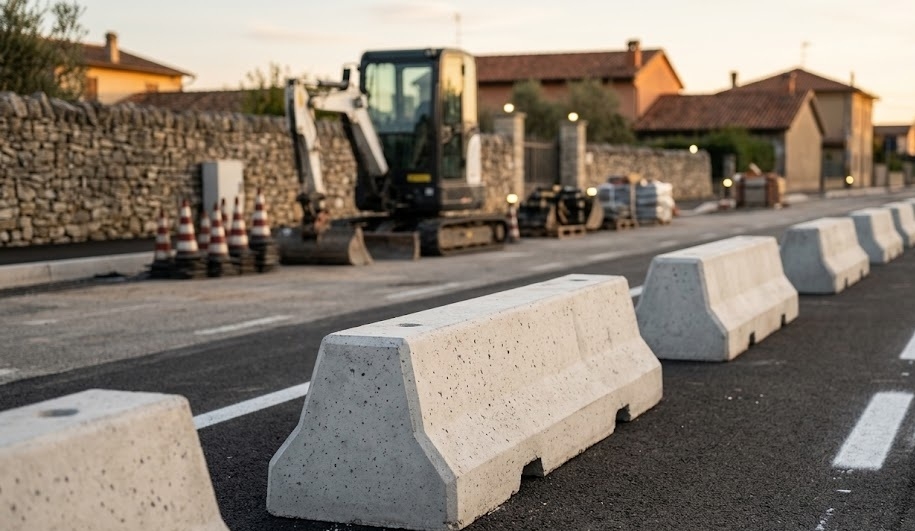
New Jersey barriers are used in various professional contexts, provided that the model is suitable for the required function. On construction sites, they can delimit operational areas and separate routes, while in car parks and industrial yards they help to organise internal traffic.
In the logistics, port and industrial sectors, concrete New Jersey barriers can be used to define accesses, vehicle routes and restricted areas. On roads open to traffic, when a vehicle restraint function is required, systems compliant with the applicable regulations must be used.
Concrete road barriers: delimitation or containment?
A fundamental distinction concerns the actual function of the barrier. A prefabricated product can be used as a demarcation element, but this does not mean it is a barrier. automatically suitable for containing the impact of a vehicle. Concrete safety road barriers intended for containment must be assessed as complete systems, considering declared performance, connections, configuration and installation conditions. The weight of the product alone is not sufficient to demonstrate the restraint capacity.
Advantages of concrete New Jersey barriers
The main advantage of concrete New Jersey barriers is their robustness. The mass of the concrete allows for the creation of a consistent physical separation that is difficult to move during normal use. Another advantage is their durability over time. Concrete, if properly designed and maintained, resists exposure to atmospheric agents and is suitable for prolonged installations. The prefabricated structure also allows for the use of modular elements, facilitating the planning of alignments and delimitations.
 Limits of concrete barriers
The main limitation concerns the weight, which requires adequate organisation of transport and handling operations. In many cases, lifting equipment is required to unload and correctly position the elements.
It is also necessary to consider the size of the barrier, the available space, the possible need to connect multiple modules and the frequency with which the delimitation will need to be modified. In applications exposed to traffic, visibility and integration with the required signage must also be evaluated.
How to install concrete New Jersey barriers
Installation begins with checking the installation point, the dimensions of the product and the handling methods indicated by the manufacturer. It is necessary to check that the surface is suitable for supporting the weight of the elements and that the unloading operations are carried out safely.
When is it necessary to install concrete barriers? If a modular arrangement is planned, the alignment and any connections between barriers must be checked. Road restraint systems must comply with the specific configurations provided for in the technical documentation and the project, without arbitrary modifications.
Transport and handling of prefabricated barriers
The transport of concrete New Jersey barriers requires particular attention to the overall weight, dimensions of the modules, accessibility of the delivery location and availability of unloading vehicles.
Before ordering, it is useful to check the number of elements, the access conditions to the construction site or yard and the methods with which they will be positioned. Correct logistical planning helps to limit operational difficulties and unexpected costs.
Concrete New Jersey barriers: price and installation costs
The The price of concrete New Jersey barriers depends on the size, weight, construction characteristics, any reinforcement and quantity required. The intended use and the required technical documentation can also influence the evaluation of the product.
To estimate the overall cost, it is necessary to distinguish the unit price of the barrier from the costs of transport, unloading, handling and installation. In supplies for construction sites, public bodies and companies, these additional costs can represent a significant part of the investment.
How to choose a concrete New Jersey barrier
The choice must start from the required function: simple delimitation, separation of internal traffic or road safety system with specific containment performance.
Once the intended use has been defined, it is necessary to evaluate the dimensions, weight, characteristics of the concrete, any connections, duration of the installation and transport methods. For road applications, it is also essential to check the documentation and the technical requirements foreseen by the project.
Concrete and plastic New Jersey barriers: a brief distinction
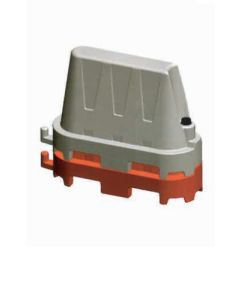
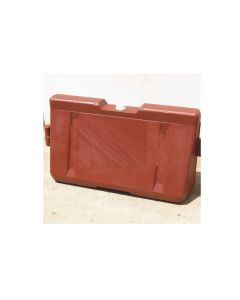
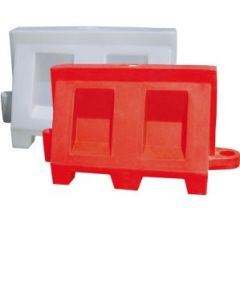
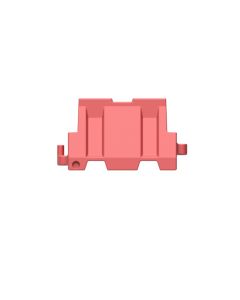
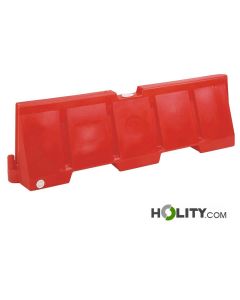
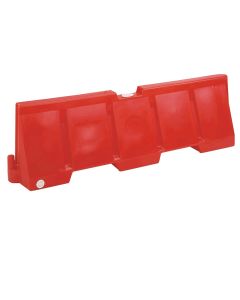
Concrete barriers are generally preferred when high mass and stable delimitations are required. Plastic barriers, on the other hand, are lighter and can be practical for temporary installations and frequent movements.
The differences between the two solutions also concern transport, installation and intended use. In any case, the vehicle containment capacity must be verified on the specific system and not deduced from the material alone.
Professional supplies of New Jersey concrete barriers
The choice of prefabricated barriers must take into account the operational characteristics of the area and the specific needs of the project. Holity offers professional supplies for institutions , companies, construction sites and urban furnishing interventions.
In the sector of professional equipment for construction sites and operational areas , evaluating in advance the dimensions, weight, technical requirements and logistics allows you to choose products consistent with the installation and management needs.
Frequently asked questions about concrete New Jersey barriers
How much does a concrete New Jersey weigh?
The weight varies according to the size, geometry and structure of the product. The value must be verified in the technical data sheet of the chosen model.
What are the dimensions of a New Jersey barrier?
There is no single standard size for all applications. The length, height, and width of the base depend on the type and intended use.
Are concrete New Jersey barriers always certified for road safety?
No. A prefabricated concrete product is not automatically a certified road restraint system. The product's performance and documentation must be verified.
Where are concrete New Jersey barriers used?
They can be used to delimit construction sites, parking lots, industrial yards, and operational areas. For applications with a road containment function, it is necessary to choose suitable systems.
How much does a concrete New Jersey barrier cost?
The price depends on the size, weight, characteristics, and quantity requested. Any transport, unloading, and installation costs must be added to the cost of the product.
 English
  Italian
 French
 German
 Spanish