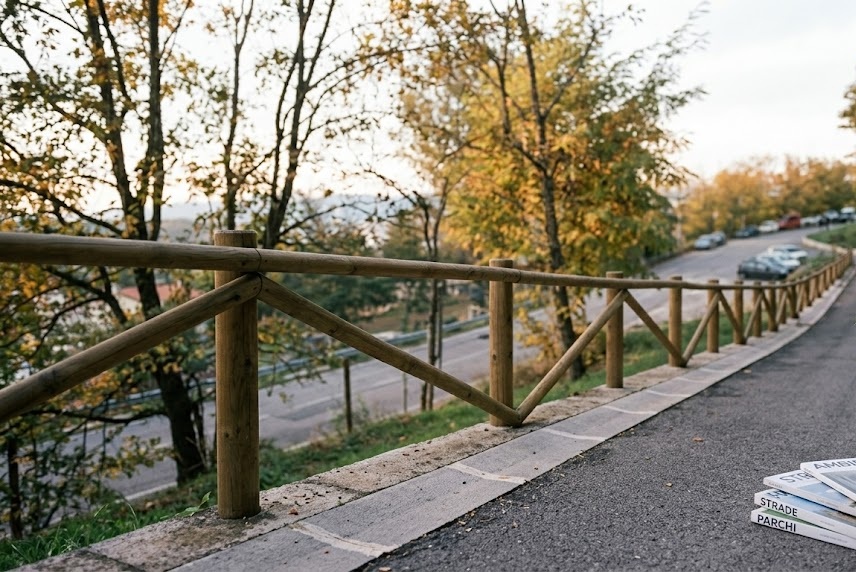
The wooden fence is one of the most used solutions for delimiting gardens, parks, green areas, pedestrian paths and public spaces. Its success depends on the ability to combine functionality, natural aesthetics and good integration with the landscape. When evaluating the purchase, however, one of the main aspects to consider concerns the prices of wooden fences, which can vary based on materials, dimensions, treatments and installation methods.
Knowing the factors that affect the cost allows you to choose a solution consistent with the budget and the context of use. A fence for a private garden may have different needs than a fence intended for a public park, a tourist area or a nature trail. For this reason it is It is useful to evaluate not only the price per meter, but also durability, maintenance, safety, and construction quality.
What determines the price of a wooden fence?
The cost of a wooden fence depends primarily on the type of wood used. Woods that are more resistant to atmospheric agents, such as chestnut, larch, or autoclave-treated wood, may have a higher price than simpler solutions, but guarantee greater durability over time. The type of workmanship also affects the final cost, especially when choosing models with refined finishes or non-standard dimensions.
Another important factor concerns the structure of the fence. A low decorative fence for flowerbeds will have a different cost than a tall fence for delimiting a park or public area. Posts, crosspieces, hardware, fixing brackets, and matching gates also contribute to the overall price.
Prices per meter: what to really consider
When talking about wooden fence prices, the reference to the cost per linear meter is useful for getting an initial estimate of the investment. However, the price per meter should not be evaluated in isolation. Transport, installation, ground preparation and any protective treatments also affect the final budget.
In the professional and public sectors, it is advisable to consider the cost over the entire life cycle of the product. A cheaper fence may seem convenient at the beginning, but require more frequent maintenance. A more robust and treated solution for exteriors may instead be more advantageous in the medium term.
Main models of wooden fences
Wooden fences can take on different shapes depending on their function and the desired style. Rustic models are widely used in parks, farmhouses, mountain areas and nature trails, because they integrate easily with the landscape. Modern versions, with cleaner lines and horizontal slats, are instead suitable for residential gardens, outdoor areas and contemporary urban spaces.
There are also low fences for flowerbeds and vegetable gardens, higher fences to delimit properties and professional solutions for public green areas. The choice of model must take into account the aesthetic effect, but also the practical function: delimiting, protecting, orienting paths or enhancing an outdoor area.
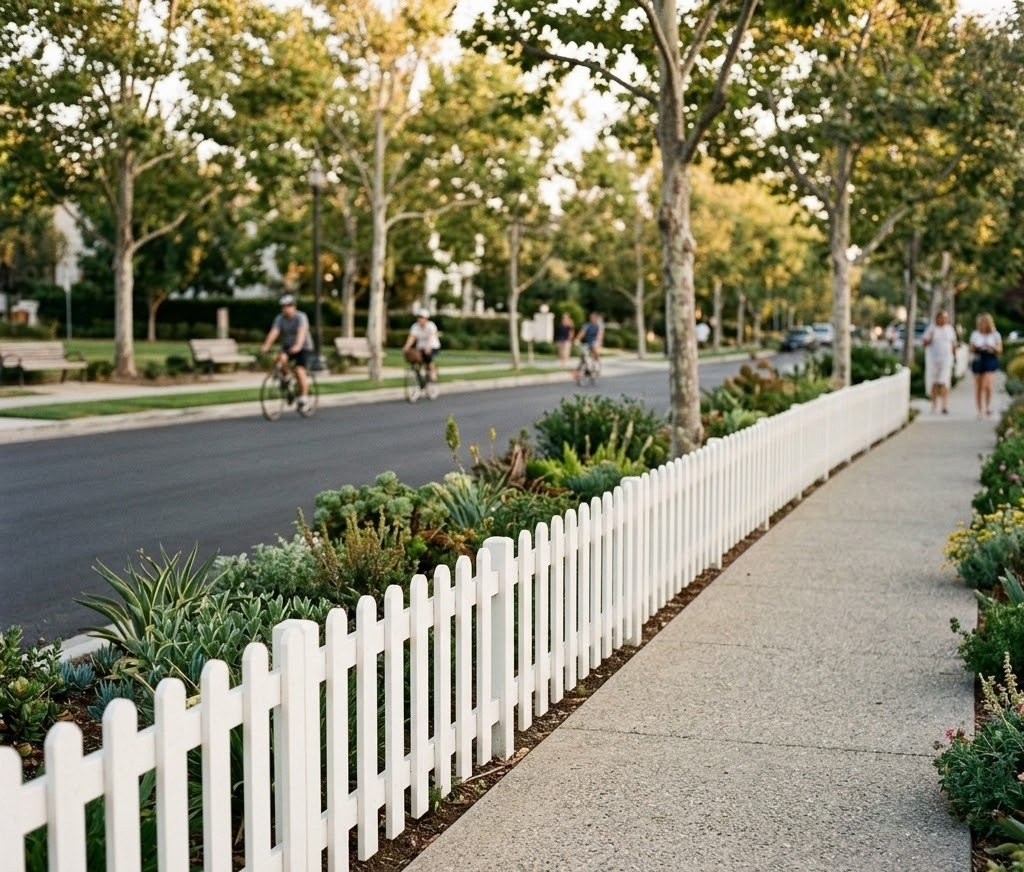
Wooden fences for private gardens
In a private garden, the fence often has a dual function: delimiting the space and enhancing the aesthetics of the environment. A wooden fence can create continuity with plants, paths, flowerbeds, and outdoor furniture, making the space more tidy and welcoming.
For residential use, it is important to choose a model proportionate to the size of the garden. A fence that is too high can be invasive, while one that is too light may not offer the desired level of delimitation. Treating the wood remains essential to resist rain, sun, and humidity.
Wooden fences for parks and street furniture
In public spaces, wooden fences are used to delimit parks, pedestrian paths, cycle paths, play areas, and green areas. In these contexts, sturdiness is a priority, because the fence must withstand intensive use, continuous exposure to atmospheric agents, and possible accidental impacts.
Holity, a specialist in professional supplies for street furniture and public spaces, offers solutions designed for municipalities, institutions, accommodation facilities and professional operators. The choice of fences designed for outdoor use allows you to improve the order, safety and decorum of public spaces.
Treated wood and maintenance over time
Wood is a natural material and, for this reason, requires attention in its choice and maintenance. Fences intended for outdoor use should be made with adequately treated wood to resist humidity, UV rays, mould and climate changes.
Impregnators, protective paints and autoclave treatments help increase the life of the structure. Periodic maintenance, even simple, allows you to preserve the aesthetic appearance and solidity of the fence over time, reducing the risk of early replacements.
Installation: DIY or professional installation?
For small decorative fences or lightweight boundaries, DIY assembly can be a viable solution. However, when the fence must cover many linear meters or be installed in public spaces, professional installation offers greater guarantees in terms of stability and durability.
Correct installation of the posts, fixing the crosspieces, and preparing the ground directly affect the resistance of the structure. For this reason, when evaluating the final price, it is advisable to also include the cost of installation and not just that of the materials.
How to choose the most suitable fence
The choice should start from the context of use. For a private garden, a decorative or medium-height fence may be sufficient, while for a public park it is preferable to opt for robust, durable, and easy-to-maintain models. The style of the environment should also guide the decision, especially when the fence has a strong aesthetic function.
Carefully evaluating the price per meter, wood quality, treatment, height, accessories and installation allows you to identify a balanced solution. Holity offers useful support for those looking for professional supplies and products suitable for public, private and hospitality contexts.
An investment that enhances outdoor spaces
A well-chosen wooden fence is not just a fence, but an element capable of improving the organization and aesthetics of outdoor spaces. In private gardens it creates order and visual continuity, while in parks and public spaces it helps define paths, protect green areas and improve urban decor.
Correctly considering prices of wooden fences means evaluating not only the immediate cost, but also durability, maintenance and overall quality. An informed choice allows you to obtain a functional, resistant fence that is consistent with the environment in which it will be installed.
 English
  Italian
 French
 German
 Spanish