Why is the table a strategic element in the meeting room
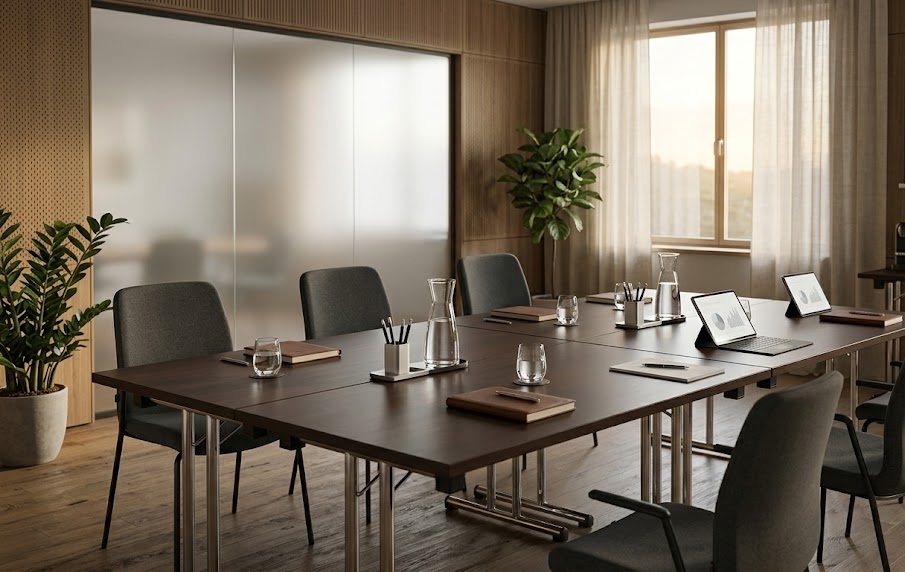
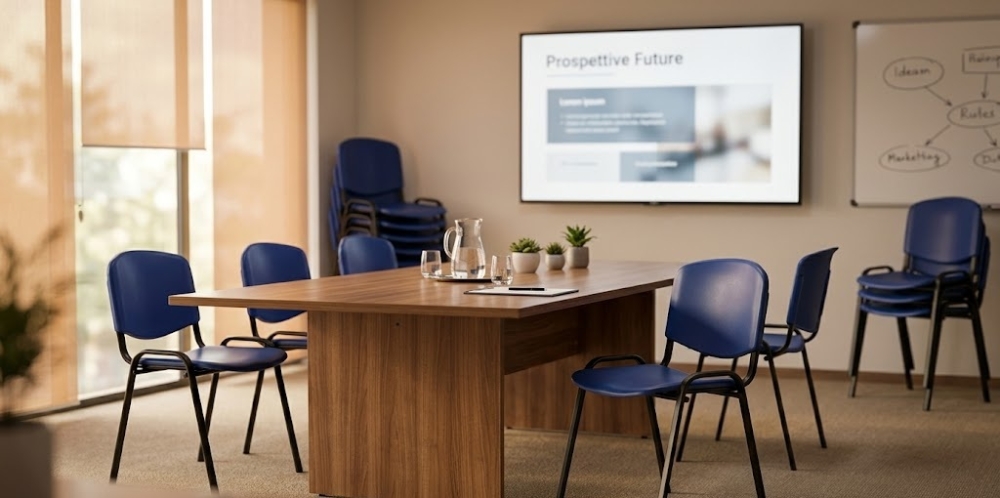
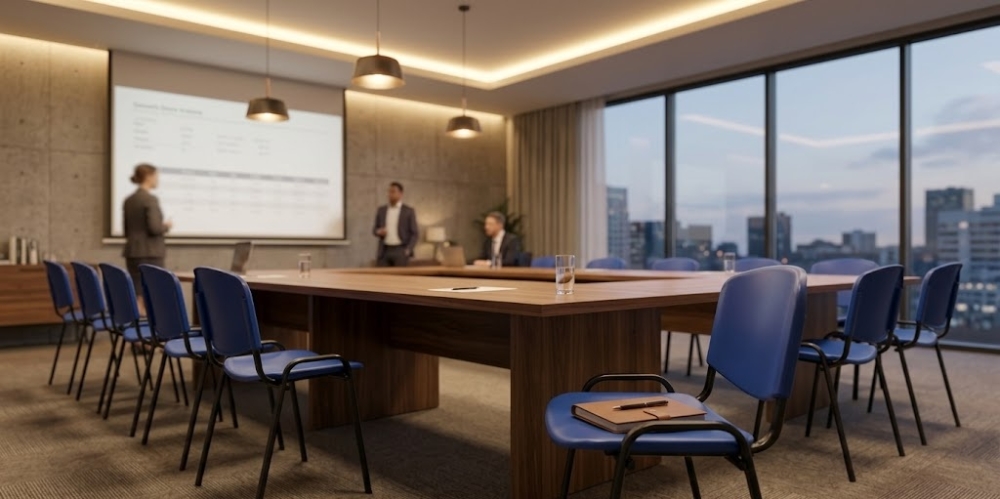
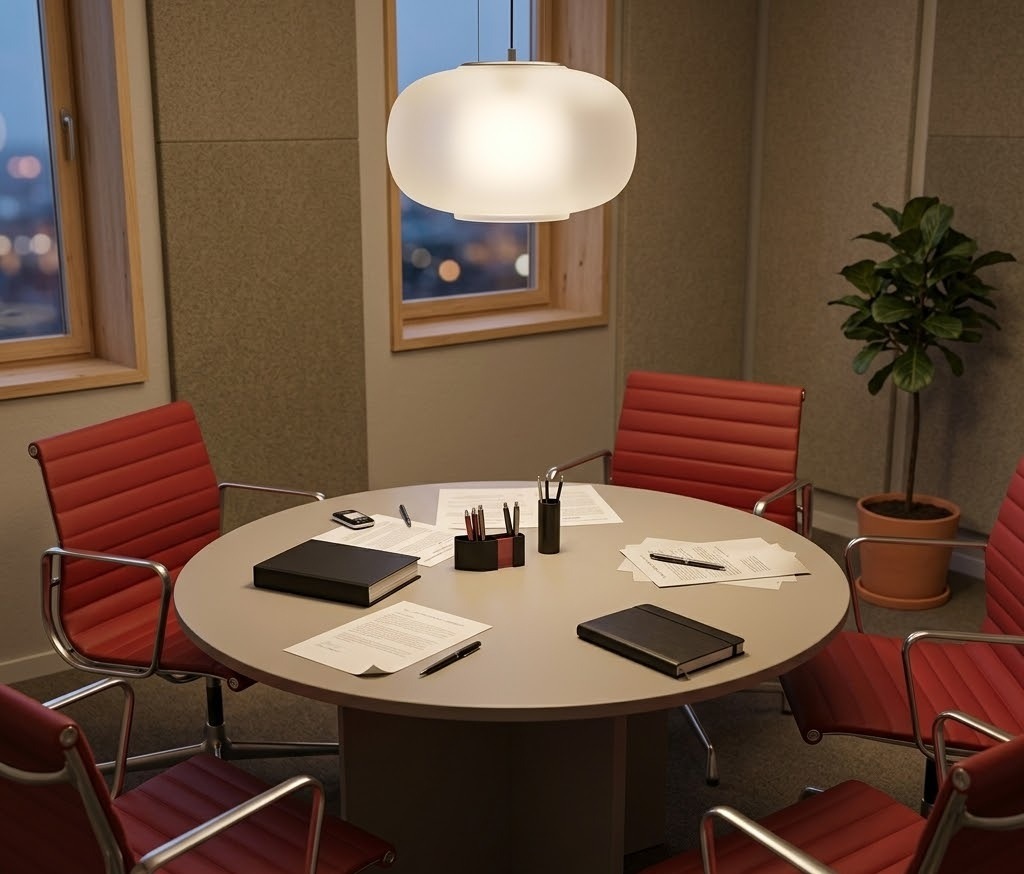
The table is the heart of the meeting room. Discussions, strategic decisions, presentations and collaboration sessions take place around it. For this reason, it must guarantee sufficient space for each participant, promote eye contact and allow easy use of laptops, documents and technological devices.
A well-designed table also helps convey a professional image of the company. Clients, partners and collaborators perceive greater order, organisation and attention to detail when the spaces are functional and well-furnished.
 How to choose the size of the meeting room table
The dimensions must be defined based on the average number of participants and the available space. It is important to guarantee each person a comfortable position, avoiding participants being too close or excessively distant from each other.
In addition to the space occupied by the table, the circulation areas must also be considered. A well-designed meeting room must allow easy movement, use of the seats without obstacles and easy access to screens, whiteboards or videoconferencing systems.
Which shape to choose: rectangular, oval or modular
The shape of the table influences the way communication takes place during meetings. Rectangular tables are the most popular solution and are particularly suitable for medium and large conference rooms, as well as for formal meetings.
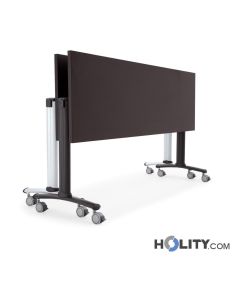
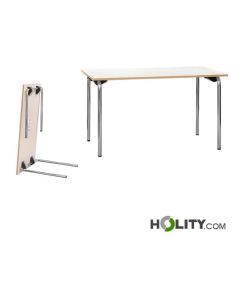
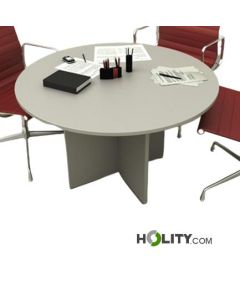
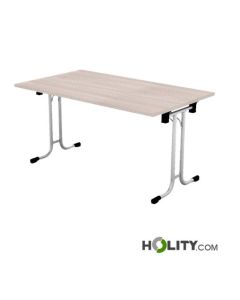
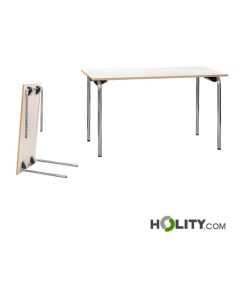
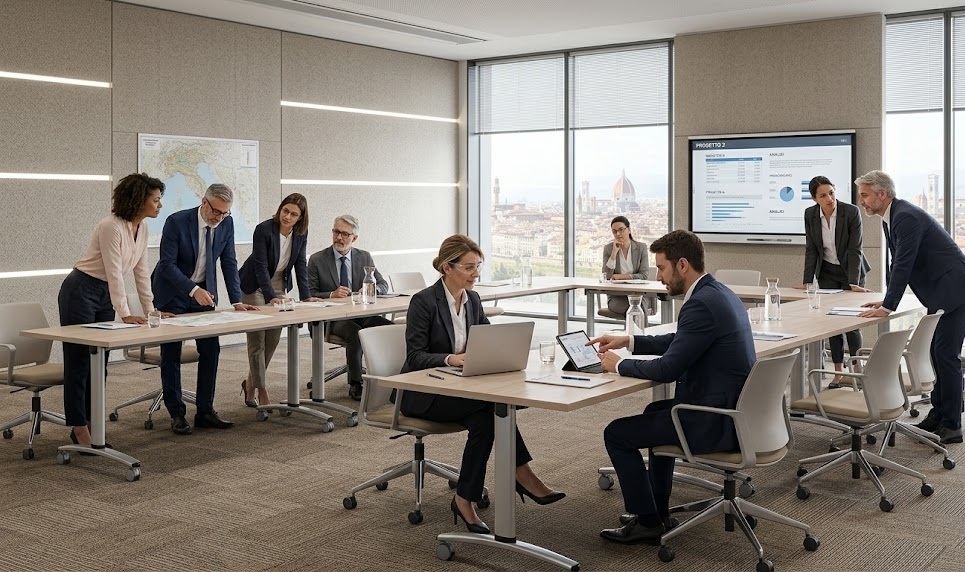
Oval tables, on the other hand, encourage more natural communication thanks to the absence of sharp edges and a more balanced distribution of participants. Modular solutions allow you to quickly change the configuration of the room, adapting it to meetings, training courses, workshops or corporate events.
Configurations for every type of meeting
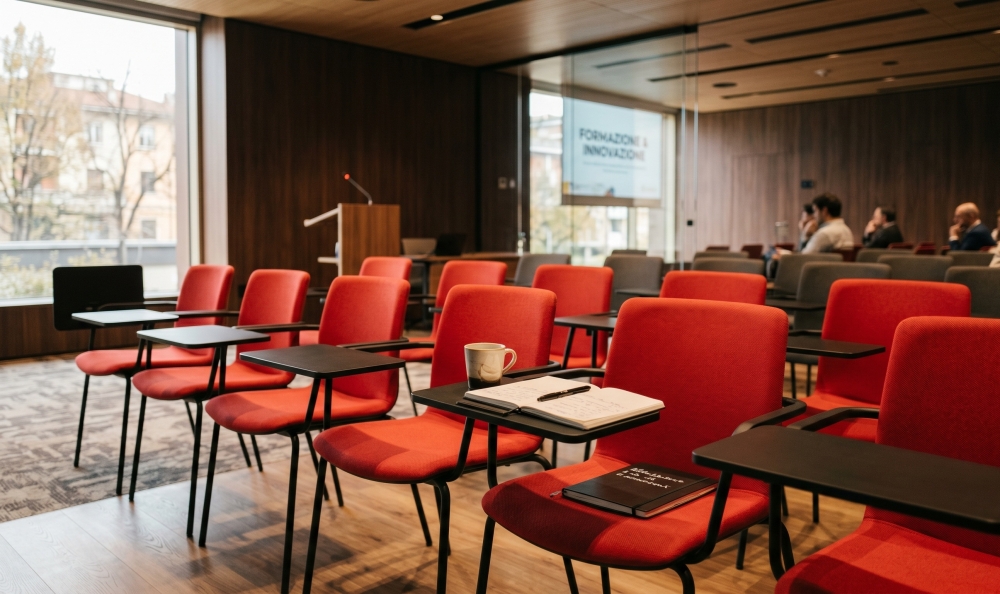
Not all meetings require the same set-up. For management meetings or board meetings, a large central table is often preferable to encourage discussion among all participants. In training courses or workshops, easily reconfigurable modular configurations may be more practical.
Video conferences also require special attention. The table must allow for the correct positioning of participants with respect to the camera and monitors, improving the quality of communication with remote interlocutors.
Materials, robustness and aesthetics
The meeting room tables must be designed for intensive and daily use. Materials such as laminate, melamine, wood or technical surfaces guarantee resistance to wear, ease of cleaning and long life over time.
Design also plays an important role. A modern and well-finished table helps create an elegant and professional environment, consistent with the company image and capable of conveying reliability during meetings with clients and partners.
Cable management and technological integration
Modern meeting rooms frequently host notebooks, monitors, audio systems and video conferencing devices. For this reason it is essential to have a suitable table. It is advisable to choose tables equipped with cable management systems, integrated sockets, or systems for the orderly management of electrical connections.
Correct cable organization improves safety, reduces clutter, and makes the environment tidier, facilitating the daily use of company technologies.
Participant comfort and productivity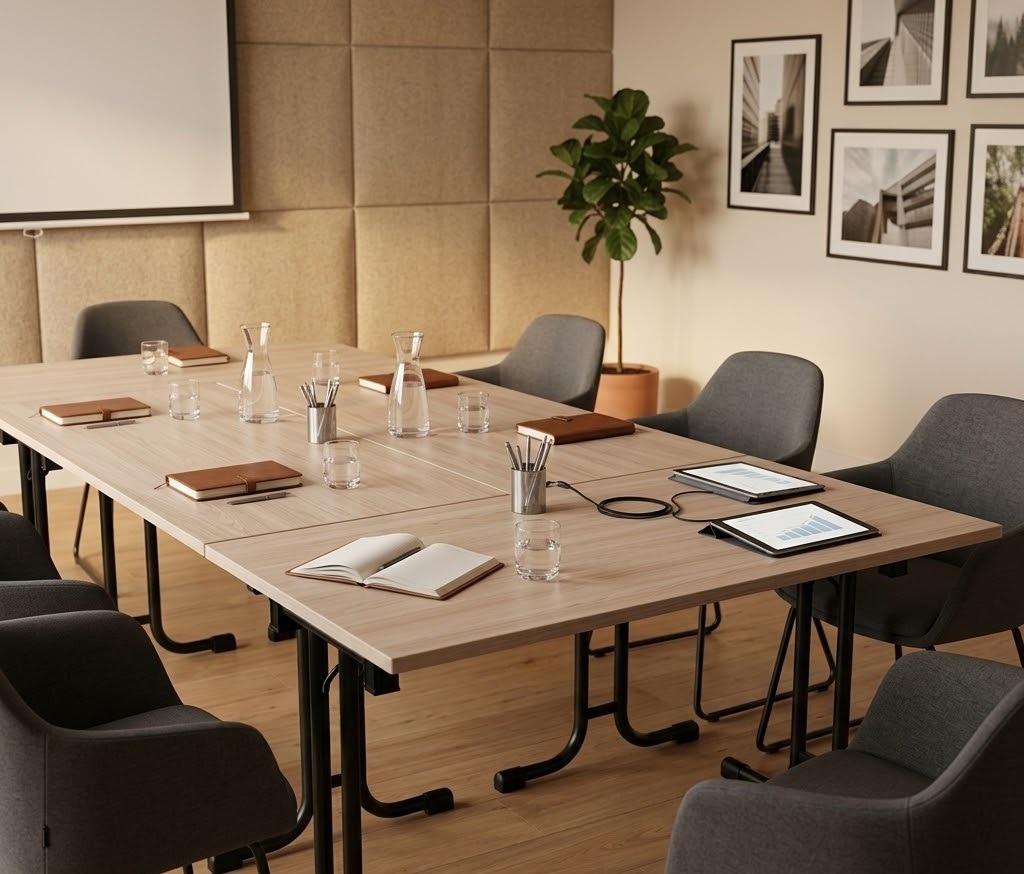
The quality of a meeting also depends on the comfort guaranteed to participants. Tables with an ergonomic height, sufficient legroom, and the correct distance between workstations allow for more comfortable work even during prolonged meetings.
When environments are functional and well-organized, concentration increases, communication improves, and greater productivity of the entire work group is promoted.
How to choose the most suitable table for your company
The choice of the ideal table must consider the number of users, the frequency of use, the size of the room, and future organizational needs. Investing in a modular solution can be an advantage for companies that organize different types of meetings throughout the year.
Holity, a specialist in professional supplies for offices, conference rooms and corporate environments, offers a wide range of meeting room tables designed to combine functionality, design and durability. Thanks to professional solutions, it is possible to furnish every space with products suited to the operational needs of companies, public bodies and management structures.
An investment that improves the efficiency of meetings
Choosing the right meeting room tables means creating more functional, comfortable and representative environments. Appropriate dimensions, shape, materials and configuration directly impact the quality of communication and the effectiveness of meetings.
A professional table represents an investment destined to last over time, improving the organization of the conference room and offering a more efficient, modern and welcoming working environment for employees, collaborators and customers.
 English
  Italian
 French
 German
 Spanish